Kenya–Somalia frontier reopens in April after long closure
After 15 years of closure, the border between Kenya and Somalia is set to reopen this April following a resolution by Kenya’s National Security Council. The decision marks a significant shift in policy and signals a new chapter in relations between the two neighboring nations, whose shared history, culture, and economy have long been intertwined despite years of strained ties and security concerns.
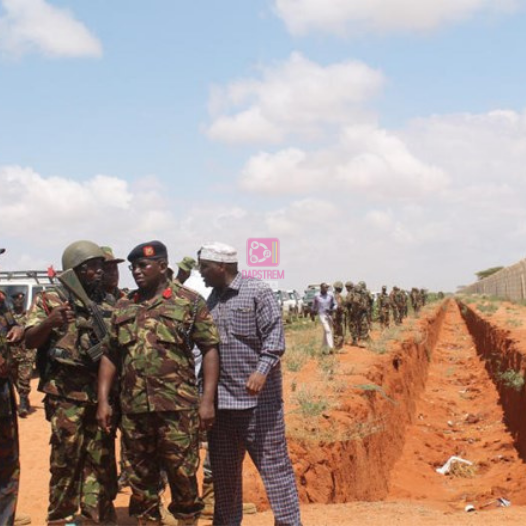
The border was officially closed in 2011 at the height of heightened security threats linked to the militant group Al-Shabaab. At the time, Kenya had launched Operation Linda Nchi, sending troops into Somalia to pursue militants accused of cross-border attacks and kidnappings. What followed were years of sporadic terror incidents within Kenya, particularly in counties bordering Somalia, reinforcing the government’s hardline stance on border controls. The closure was framed as a necessary security measure aimed at protecting Kenyan citizens and stabilizing the northeastern region.
Yesterday, President William Ruto addressed the matter, describing the reopening as a carefully considered step anchored in improved security cooperation and regional diplomacy. He emphasized that the decision was not made lightly but followed extensive consultations within the National Security Council and with Somali authorities. According to the President, Kenya’s security agencies have strengthened surveillance, intelligence-sharing, and border management systems, making it possible to reopen without compromising national safety.

President Ruto noted that the move aligns with Kenya’s broader foreign policy objective of fostering regional integration and economic recovery. He underscored the importance of peaceful coexistence and cross-border trade, stating that communities living along the frontier have borne the brunt of the prolonged closure. For many families, the border is not just a political boundary but a lifeline connecting relatives, livestock markets, and small businesses. Reopening it, he said, restores dignity and opportunity to thousands who depend on daily movement across the frontier.
The President also pointed to the improving diplomatic relationship between Nairobi and Mogadishu. In recent years, tensions between the two capitals have fluctuated, particularly over maritime boundaries and political disagreements. However, renewed dialogue and cooperation have paved the way for practical steps such as this. Kenyan and Somali leaders have repeatedly expressed commitment to joint security operations and intelligence sharing to combat extremist threats. By reopening the border, Kenya signals confidence in these collaborative efforts.
Economically, the implications could be substantial. Northeastern Kenya, including towns such as Mandera, Wajir, and Garissa, has long relied on cross-border trade in livestock, miraa, and essential goods. The closure disrupted supply chains, increased the cost of commodities, and forced traders to rely on unofficial routes, which often lack proper regulation and security oversight. The government expects the formal reopening to streamline customs procedures, increase revenue collection, and curb smuggling by channeling movement through designated entry points.
There are also humanitarian considerations. The Kenya-Somalia border has historically been a corridor for refugees fleeing conflict and drought. While Kenya continues to manage refugee inflows under international frameworks, reopening the border could improve coordination in handling humanitarian movements in a more structured and humane manner. It may also facilitate development projects aimed at stabilizing border communities on both sides.
Security experts caution, however, that reopening must be accompanied by vigilance. While Somali forces, supported by regional partners, have made progress against Al-Shabaab strongholds, the group remains active. Kenya’s security agencies will likely maintain strict screening protocols, biometric registration systems, and enhanced patrols to mitigate risks. The government has indicated that reopening will occur in phases, beginning with specific border posts deemed secure and strategically viable.
Politically, the move carries weight. It reflects Kenya’s balancing act between safeguarding its sovereignty and embracing regional integration under frameworks such as the East African Community and the Intergovernmental Authority on Development (IGAD). Stronger ties with Somalia could contribute to broader Horn of Africa stability, an outcome that benefits trade corridors, infrastructure development, and collective security.
For residents who have lived through years of uncertainty, April’s reopening represents hope. It suggests a future where commerce can flourish openly, families can reconnect without fear, and cooperation replaces isolation. President Ruto framed the decision as a testament to resilience, emphasizing that Kenya achieves sustainable security not only through force but by building partnerships, empowering communities economically, and fostering trust with its neighbors.
As April approaches, attention will turn to the practical details—designated crossing points, customs regulations, and joint security mechanisms. But symbolically, the reopening of the Kenya-Somalia border stands as a powerful statement: that even after years of closure driven by conflict and caution, dialogue and collaboration can chart a new path forward for two nations bound by geography and shared destiny.