

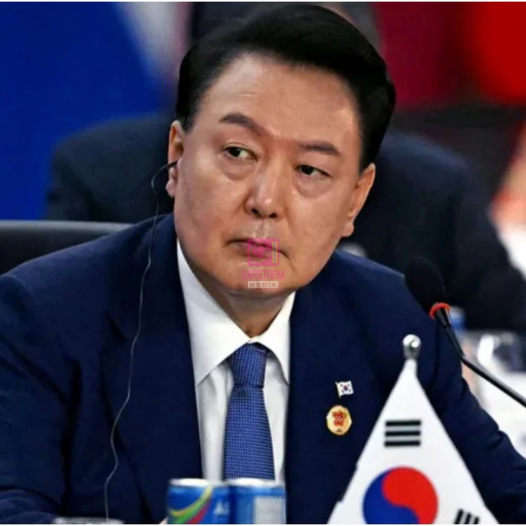
“Former South Korean President Found Guilty of Insurrection and Constitutional Violations”
South Korea has witnessed political scandals before, but few moments compare to the dramatic downfall of former president Yoon Suk Yeol. In a landmark ruling on February 19, 2026, a Seoul court sentenced him to life imprisonment after convicting him of leading an insurrection and violating the Constitution by imposing illegal martial law in December 2024. The verdict marked one of the most consequential judicial decisions in the nation’s democratic history.
Yoon’s story is a remarkable study in political ambition, deep national polarization, and the resilience of democratic institutions. He was a man who went from being a top prosecutor with a reputation for rigor and independence to becoming one of the most controversial leaders in modern Korean history. The nation watched as authorities charged, impeached, removed from office, and ultimately convicted him in one of its most consequential trials.
Yoon Suk Yeol was born in 1960 and rose to national prominence as a prosecutor known for his fearless investigations into high-profile corruption, including cases against powerful figures from both major political parties. His reputation as a “clean-hands” lawman helped propel him into mainstream politics, where conservative forces saw in him a fresh face untainted by traditional party infighting. After winning the presidency in 2022 on a platform of law, order, and economic growth, he initially carried significant public confidence.
However, during his time in office, Yoon’s leadership began to draw increasing criticism. His confrontational style, reliance on loyalists over experienced technocrats, and a series of high-profile controversies — including handling of public safety incidents and internal scandals — alienated many in the electorate. Even within his own conservative base, opinions grew sharply divided.
The defining and ultimately disastrous moment of his presidency came in December 2024. Faced with a liberal-led National Assembly that blocked parts of his agenda, Yoon declared martial law in an attempt to neutralize political opposition. He mobilized military and police forces around the legislature, effectively seeking to paralyze its functions and detain political rivals. Yoon claimed this extraordinary measure was necessary to counter what he called “anti-state forces” and defend the nation, but the court later determined that his actions aimed to block the legislature from fulfilling its constitutional duties.
The declaration lasted only about six hours, as lawmakers physically broke through a military blockade and unanimously voted to nullify the emergency order. The Constitutional Court suspended him on December 14, 2024, and formally removed him from office in April 2025. With presidential immunity gone, Yoon became subject to criminal prosecution.
The legal journey that followed was historic. Authorities arrested Yoon in July 2025 and charged him in multiple trials over his declaration of martial law and related misconduct. Prosecutors pushed for the death penalty, arguing his actions constituted a severe threat to the nation’s constitutional democracy — a charge that, under Korean law, may warrant capital punishment or life imprisonment. South Korea has not carried out an execution since 1997, effectively maintaining a moratorium on capital punishment.
In January 2026, prosecutors convicted Yoon of abuse of power, obstruction of justice, and falsifying documents related to his failed martial law attempt, and the court sentenced him to five years. Then, on February 19, the Seoul Central District Court found him guilty of leading an insurrection, mobilizing armed forces to block the National Assembly, and attempting to detain political figures. The court sentenced him to life in prison, marking a dramatic fall from the presidency.
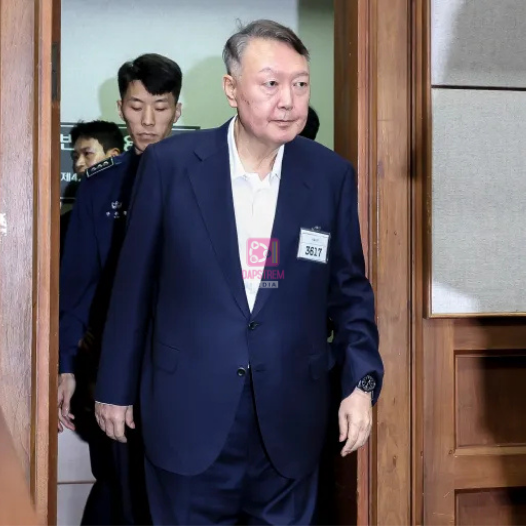
Authorities also convicted several of Yoon’s top aides and ministers, sentencing former Defense Minister Kim Yong-hyun to 30 years and ex-Prime Minister Han Duck-soo to 23 years for supporting the illegal martial law decree.
Public reaction split sharply. Yoon’s supporters staged rallies outside the Seoul court, insisting that people misinterpreted his actions and that he acted without malicious intent, believing he was defending the state from legislative obstruction. At the same time, critics — including many civil society groups and human rights organizations — hailed the verdict as a vital affirmation that no person, not even a former president, is above the law. Amnesty International described it as a critical step toward accountability and the protection of fundamental rights.
This saga raises profound questions about democratic governance, the separation of powers, and the risks inherent when executive authority is wielded without respect for constitutional limits. Yoon’s conviction underscores the strength of South Korea’s judicial and democratic institutions, even in moments of extreme political strife. The life sentence issued by the court is likely to be appealed, and debates will continue over the broader political and legal lessons to be drawn from this extraordinary episode.
In the end, the story of Yoon Suk Yeol — once a celebrated prosecutor, a democratically elected president, and now a convicted insurrectionist — epitomizes both the fragility and resilience of democratic systems when faced with internal challenges. It will remain a defining lesson for Korea and the world about the importance of constitutional boundaries, accountability, and the peaceful transfer of power.
