Kenyatta National Hospital urges families to identify and collect unclaimed bodies within seven days to comply with public health laws
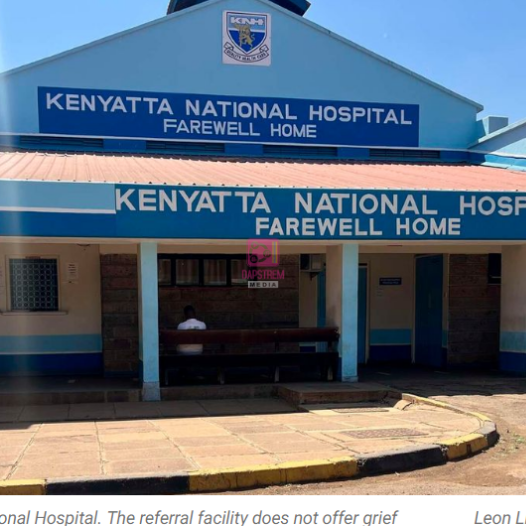
Kenyatta National Hospital has announced that it is holding 480 unclaimed bodies at its mortuary, including 102 adults and 378 children, in a situation that has drawn attention to the challenges faced by Kenya’s public health system in managing unclaimed remains. In a public notice issued on March 24, 2026, the hospital urged families to identify and collect the remains within seven days, warning that if the bodies are not claimed within this period, it will seek court approval to dispose of them in accordance with public health laws.
While the notice is administrative, it carries significant emotional weight. Behind each of the 480 bodies lies a story—some of loss, others of abandonment, poverty, or systemic gaps that prevent families from claiming the deceased. The situation underscores the complex intersection of healthcare, social challenges, and legal procedures that govern how unclaimed bodies are handled in Kenya.
According to the hospital, the directive is part of routine mortuary management, guided by strict capacity limits and public health considerations. Mortuaries, particularly at major referral hospitals like Kenyatta National Hospital, often operate under immense pressure due to the high volume of cases. When bodies remain unclaimed for extended periods, they occupy limited space and pose logistical and health challenges, making it necessary for institutions to take decisive action.
The seven-day ultimatum aligns with established legal procedures. If bodies remain unclaimed, the hospital will seek court approval for lawful disposal, ensuring that even in the absence of family intervention, remains are handled respectfully and in compliance with the law. Typically, this process involves documenting all unclaimed cases, attempting to trace next of kin, and coordinating with local authorities before a court grants permission for burial or cremation.
The large number of unclaimed bodies, especially the high proportion of children, raises troubling social concerns. It reflects broader issues such as abandoned infants, unidentified patients, and families unable to meet funeral or hospital costs. Some patients may be admitted without identification, and in emergency situations, the hospital may be unable to trace relatives before the patient passes away. Economic hardship also contributes, as some families cannot afford mortuary and burial fees, leading to delayed or unclaimed bodies.
The challenge is not unique to Kenyatta National Hospital, but the scale at the country’s largest referral facility makes it particularly visible. KNH serves patients from across Kenya and neighboring countries, handling complex cases, including road accidents, critical illnesses, and referrals from smaller facilities, many of which involve patients with limited identification.
To mitigate this issue, hospitals often collaborate with law enforcement, local administrators, and civil society organizations to identify unclaimed bodies. Public notices in newspapers or online platforms serve as final appeals to families searching for missing relatives. The seven-day window is both a legal requirement and a humanitarian effort, offering one last opportunity for families to claim and give a proper farewell to their loved ones.
The emotional impact of such announcements is significant. For families who may have lost contact with relatives or are still searching for missing loved ones, the notice could provide a painful yet necessary lead. At the same time, it emphasizes the importance of timely communication, documentation, and tracking within healthcare systems.
Calls for reforms to address the root causes of unclaimed bodies in Kenya are increasing. Suggested measures include improving patient identification systems, strengthening social support for vulnerable families, reviewing hospital and mortuary costs, and establishing centralized databases to help families locate deceased relatives more efficiently.
The high number of unclaimed children also raises critical social concerns, possibly pointing to neonatal deaths, abandonment, or children without clear guardianship, highlighting gaps in social welfare and support for families in distress.
Ultimately, the March 24, 2026 notice serves as a stark reminder of the challenges public health institutions face beyond providing medical care. It sheds light on the difficult realities that follow life’s end—requiring not only administrative procedures but also compassion, societal awareness, and policy attention.
As the seven-day deadline approaches, families are urged to come forward and verify whether their missing loved ones are among the unclaimed remains. For Kenyatta National Hospital, the process that follows will be guided by law, but the hope remains that as many bodies as possible will be claimed and given the dignity of a proper send-off. This story is ultimately not just about numbers or procedures—it is about people, loss, and the silent struggles that often remain unseen.