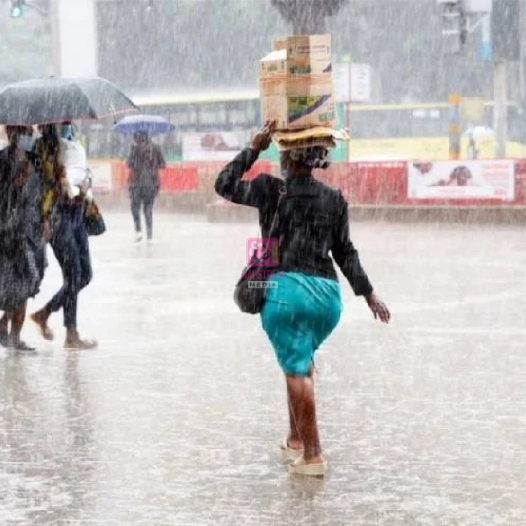
Kenya Met Warns of Heavy Rains and Possible Flooding From Thursday to Weekend
The Kenya Meteorological Department has announced that several regions across the country should prepare for increased rainfall in the coming days as Kenya gradually enters the long rains season. According to the latest weather outlook, rainfall is expected over parts of Central Kenya, the Lake Victoria Basin, Western Kenya, the Rift Valley, the South-eastern Lowlands, and the Coastal region.
The forecast signals the continued transition into the March-to-May rainy season, commonly known as the “long rains,” which is one of the most important climatic periods in the country. These rains are crucial for agriculture, water resources, and the overall economy, but they can also bring challenges such as flooding, transport disruptions, and damage to infrastructure if the downpours become intense.
The weatherman says the rainfall will vary in intensity across the country, with some areas likely to receive moderate showers while others may experience isolated heavy downpours. Regions surrounding the Lake Victoria Basin and the highlands west of the Rift Valley are traditionally among the areas that receive the heaviest rainfall during this period. Meteorologists warn that these regions could record rainfall exceeding 20 millimetres within 24 hours in some locations.
In Central Kenya, counties such as Nyeri, Murang’a, Kiambu, Kirinyaga, and parts of Laikipia and Nyandarua are expected to experience intermittent rainfall. These areas, which form part of the central highlands, often receive near-average to above-average rainfall during the long rains season.
The Lake Victoria Basin and Western Kenya, including counties like Kisumu, Kakamega, Bungoma, Busia, Siaya, and Homa Bay, are also expected to experience frequent showers. These areas typically record high rainfall totals due to their proximity to Lake Victoria and the influence of regional weather systems that enhance precipitation.
In the Rift Valley, rainfall is expected in counties such as Nakuru, Baringo, Narok, Kericho, Uasin Gishu, and Nandi. These regions often see significant rainfall during the season because of their elevation and location along the Rift Valley escarpments.
The South-eastern Lowlands, which include counties like Machakos, Kitui, Makueni, and Kajiado, are also expected to receive rainfall, though the amounts in these areas may be slightly lower compared to western Kenya and the highlands. Even so, the expected showers are considered important for farmers and pastoral communities in these semi-arid regions.
Along the Coastal region—including Mombasa, Kilifi, Kwale, and Tana River—rainfall is expected to occur intermittently, although overall seasonal totals in the coastal belt may be slightly below average compared to inland regions.
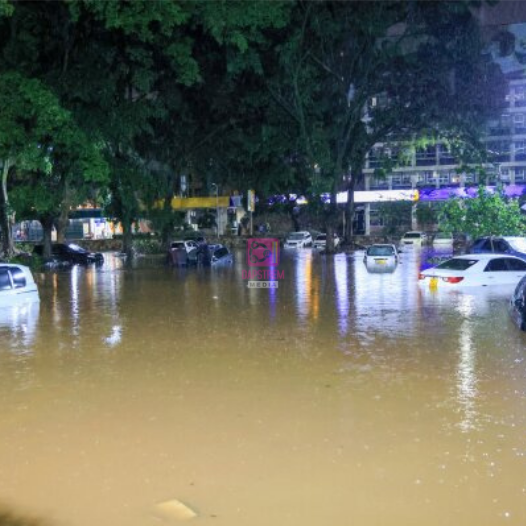
The forecast comes shortly after heavy rainfall episodes were reported in several parts of the country, particularly in urban areas such as Nairobi. Recent storms caused flooding in some neighborhoods, highlighting the challenges that arise when intense rainfall coincides with poor drainage systems and rapid urbanization.
Meteorologists have warned that isolated heavy rainfall events can lead to flash floods, especially in low-lying areas and locations near rivers. Residents in flood-prone regions are therefore being advised to remain vigilant and monitor weather updates regularly.
Authorities also caution motorists and pedestrians to exercise care during rainy conditions. Floodwaters can appear suddenly even in areas where rainfall has not been particularly heavy because water from upstream regions may flow downstream. Weather experts advise the public to avoid attempting to cross flooded roads or walking through moving water, as this can be extremely dangerous.
In addition to flooding risks, thunderstorms may bring lightning and strong winds in some locations. These weather conditions can sometimes uproot trees, damage roofs, and reduce visibility on roads.
The rainy season in Kenya is closely linked to the movement of the Intertropical Convergence Zone (ITCZ), a band of clouds and rainfall that shifts north and south across the equator throughout the year. When the ITCZ moves over East Africa between March and May, it triggers widespread rainfall across much of the region.
For farmers, the onset of the long rains is a critical period that determines the success of planting seasons for key crops such as maize, beans, and vegetables. Many farmers depend on these rains to begin land preparation and planting activities. Adequate rainfall during this period can significantly improve food production and reduce the risk of drought later in the year.
However, meteorologists caution that rainfall during the season may not always be evenly distributed. Some areas may experience heavy downpours while others could face temporary dry spells between rainy periods.
Despite these variations, the expected rainfall across much of the country is generally seen as a positive development following periods of drought that have affected several parts of Kenya in recent years.
As the rainy season progresses, the Kenya Meteorological Department says it will continue issuing regular weather updates and advisories to help residents prepare for changing conditions. Authorities are urging the public to stay informed through official forecasts and to take precautionary measures where necessary.
For now, the outlook suggests that many regions across Kenya should brace for wetter days ahead as the long rains season gradually gains momentum across the country.