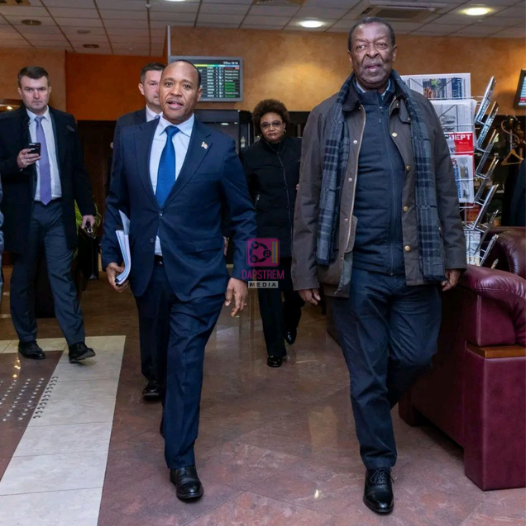
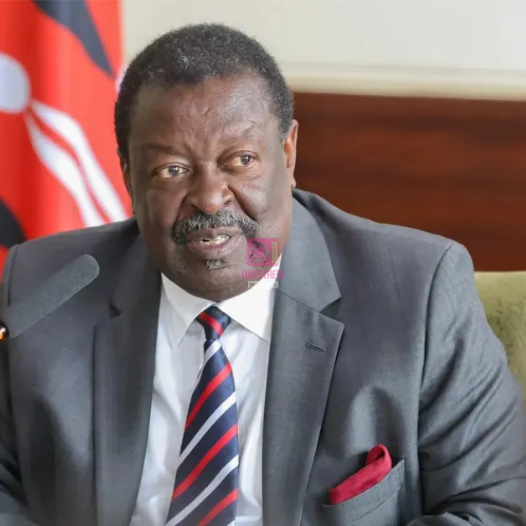
Musalia Mudavadi arrives in Moscow for talks with Russian officials over Kenyans recruited into Russian special forces.
Musalia Mudavadi, Kenya’s Prime Cabinet Secretary and Cabinet Secretary for Foreign and Diaspora Affairs, has arrived in Moscow, Russia, for high-level diplomatic talks concerning the growing number of Kenyans who have been recruited into Russian military units involved in the ongoing war in Ukraine. The visit marks one of the most sensitive diplomatic engagements between Kenya and Russia in recent years, as Nairobi seeks answers and solutions regarding its citizens who have reportedly been drawn into the conflict.
Mudavadi departed Nairobi earlier this week for the Russian capital as part of a government mission aimed at addressing the troubling reports that hundreds of Kenyans have travelled to Russia and later ended up fighting on the frontlines of the Russia-Ukraine war. Upon arrival in Moscow, the Prime Cabinet Secretary is expected to hold bilateral discussions with senior Russian government officials, including representatives from the foreign ministry and defence authorities, to clarify the status of Kenyan nationals currently in the country.
The talks, which Kenyan officials say are scheduled to take place during Mudavadi’s visit this week, will focus on several key issues. These include verifying the number of Kenyans who have joined the Russian armed forces, determining the condition of those reported to be injured or hospitalised, and exploring ways to safely repatriate citizens who may have been misled into joining the conflict. Kenyan authorities are also seeking assurances from Moscow that recruitment networks targeting Kenyan nationals will be investigated and dismantled.
The Kenyan government has become increasingly alarmed after intelligence reports suggested that a significant number of Kenyans have been recruited to fight for Russia in its war against Ukraine. Some reports indicate that more than 1,000 Kenyan nationals may have travelled to Russia under arrangements that later led them to military training camps and combat zones.
According to investigations presented to Kenyan lawmakers, many of those recruited were allegedly lured with promises of well-paying civilian jobs in Russia. Recruiters reportedly advertised opportunities in areas such as construction, security services, warehouse operations, or industrial work. However, upon arrival in Russia, some recruits were allegedly pressured or forced to sign military contracts that placed them directly in combat roles on the Ukrainian frontlines.
The issue has sparked significant concern in Kenya, particularly among families who say their relatives travelled abroad seeking employment opportunities but later disappeared or surfaced in reports from the battlefield. Kenyan authorities say some of the recruits include former soldiers, ex-police officers, and unemployed youth who were promised salaries of up to KSh350,000 per month along with bonuses and potential Russian citizenship.
Officials say that the recruitment process often begins in Kenya through agents or employment agencies that advertise foreign job opportunities. Many recruits reportedly leave Kenya on tourist visas and travel through transit hubs such as Turkey or the United Arab Emirates before reaching Russia. After Kenya tightened surveillance at major airports, some recruiters began routing travellers through neighbouring countries to avoid detection.
The Kenyan government has strongly condemned the practice, describing the use of its citizens in foreign conflicts as unacceptable. Authorities have also launched investigations into the role of local recruitment agencies suspected of facilitating the travel of Kenyan nationals to Russia under false pretenses.
Mudavadi’s visit to Moscow is therefore aimed not only at resolving the fate of Kenyans already caught up in the conflict but also at preventing further recruitment. Kenyan diplomats hope the discussions will produce concrete agreements that will protect Kenyan citizens seeking employment abroad and ensure that they are not exploited by international recruitment networks.
Another key agenda item during the Moscow talks is the welfare of Kenyans who are already involved in the war. Kenyan officials say some nationals are currently hospitalised in Russia after sustaining injuries in the conflict, while others are believed to be missing or still fighting on the battlefield. The Kenyan government is also seeking information about any citizens who may have been captured or detained during the fighting.
In addition, the diplomatic mission is expected to explore broader labour cooperation between Kenya and Russia. Some officials believe that establishing a formal labour agreement between the two countries could help regulate employment opportunities for Kenyans abroad and prevent illegal recruitment schemes from exploiting vulnerable job seekers. However, critics warn that such arrangements must be carefully structured to avoid exposing Kenyan workers to risky or exploitative conditions.
The issue has become part of a wider global concern about the recruitment of foreign nationals into Russia’s military ranks as the war in Ukraine continues. Reports indicate that citizens from several African countries have been targeted by recruiters seeking additional manpower for the conflict.
For Kenya, the matter has taken on both diplomatic and humanitarian urgency. Families of the affected individuals have repeatedly called on the government to intervene and help bring their loved ones home. Some Kenyans who managed to return from the war zone have recounted how they travelled to Russia expecting civilian employment but instead found themselves undergoing military training and deployment to the frontlines.
Kenya has already managed to repatriate several citizens who were trapped in the conflict, but officials acknowledge that many more remain unaccounted for. Mudavadi’s visit to Moscow is therefore seen as a crucial step in addressing the crisis and ensuring that the safety and rights of Kenyan nationals abroad are protected.
As the diplomatic engagements unfold in Moscow, Kenyan authorities hope the discussions will lead to a clearer understanding of how recruitment networks operate and what steps can be taken to prevent further exploitation. The government is also expected to intensify awareness campaigns warning Kenyans about suspicious overseas job offers that could lead them into dangerous situations.
Mudavadi’s mission ultimately reflects Kenya’s broader effort to protect its citizens abroad while maintaining diplomatic engagement with Russia. The outcome of the Moscow talks could shape future cooperation between the two countries and determine how Kenya responds to the growing challenge of foreign recruitment into international conflicts.