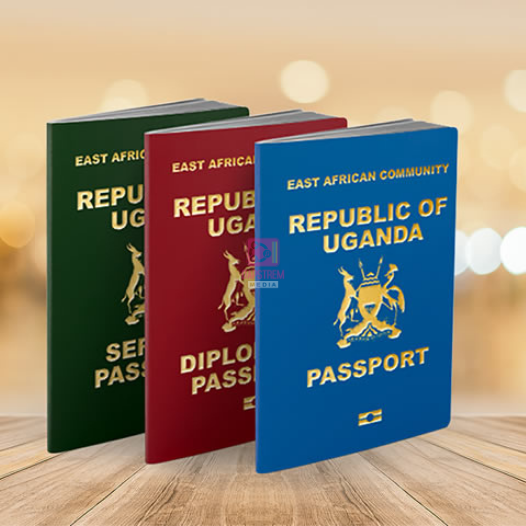
Uganda waives visa requirements for citizens of 40 countries, allowing stays of up to three months for tourism or business.
Uganda has taken a major step toward strengthening regional integration and boosting tourism by announcing visa-free entry for nationals from 40 countries around the world. Under the new visa exemption arrangements, travelers from the listed nations will no longer be required to obtain a visa before traveling to Uganda and will be allowed to stay in the country for up to three months for tourism or business purposes.
The announcement marks a significant shift in Uganda’s travel policy and reflects a broader effort by the government to make the country more accessible to international visitors while encouraging trade, tourism, and cultural exchange.
Among the countries benefiting from the new visa-free policy are several African nations, including Kenya, Tanzania, Rwanda, Burundi, South Sudan, Seychelles, Mauritius, Mozambique, Zambia, Zimbabwe, Malawi, Botswana, Lesotho, Madagascar, Comoros, Eritrea, Gambia, Ghana, Sierra Leone and Eswatini. The list also includes several Caribbean, European, Middle Eastern, and Asian countries such as Ireland, Malaysia, Singapore, Malta, and the United Arab Emirates, among others.
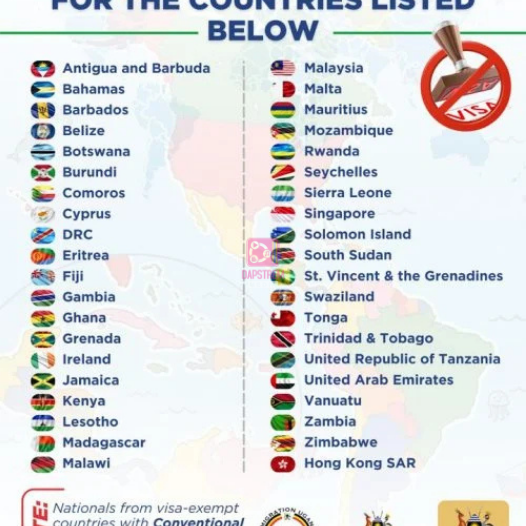
For citizens of these countries, the new policy means they can simply travel to Uganda without the lengthy visa application processes that often involve online submissions, embassy visits, and additional fees. Instead, they will be granted entry upon arrival and permitted to remain in the country for up to three months.
The move aligns with Uganda’s efforts to position itself as a major tourism and business hub in East Africa. Known as the “Pearl of Africa,” Uganda boasts a wide range of attractions, including mountain gorillas in Bwindi Impenetrable National Park, the powerful waters of Murchison Falls, and the source of the Nile at Jinja. By removing visa barriers for travelers from key markets, the government hopes to attract more visitors and stimulate growth in the tourism sector, which is a major contributor to the country’s economy.
Visa policies around the world have long been a critical factor influencing travel and international cooperation. Many countries require visitors to obtain visas in advance as a way of controlling immigration, enhancing national security, and regulating the length and purpose of stays. However, such procedures can sometimes discourage tourists and business travelers due to the time and cost involved.
In recent years, several African nations have begun reviewing their visa regimes in order to encourage easier movement across the continent. The concept of visa liberalization has gained support among policymakers who believe that simpler travel policies can promote regional trade, tourism, and diplomatic ties.
Within East Africa, regional cooperation frameworks such as the East African Community have already introduced measures that make it easier for citizens of member states to move across borders. Citizens of partner states often enjoy simplified travel arrangements, including the ability to use national identification cards instead of passports when crossing borders.
Uganda’s new visa exemption arrangement therefore builds on these regional integration efforts while also extending similar privileges to countries beyond Africa. The policy signals the government’s willingness to deepen global connections and strengthen its presence in international tourism and business networks.
For travelers, visa-free entry significantly simplifies the planning process. Instead of applying for a visa weeks or months in advance, travelers can decide to visit on shorter notice. This flexibility often leads to increased tourism flows, particularly for leisure travelers who may choose destinations where entry requirements are simpler.
The business community is also expected to benefit from the new arrangements. Business travelers frequently need to move quickly between countries for meetings, trade negotiations, and investment opportunities. By eliminating visa barriers for many countries, Uganda hopes to make itself a more attractive destination for investors and entrepreneurs looking to explore opportunities in sectors such as agriculture, energy, technology, and infrastructure.
Despite the advantages of visa-free travel, governments typically maintain certain requirements for visitors. Travelers must still present valid passports and may be required to show proof of return travel, accommodation arrangements, or sufficient funds for their stay. Immigration authorities also retain the right to deny entry if a traveler fails to meet the necessary conditions.
Security concerns also remain a key consideration in visa policies worldwide. Governments must strike a balance between encouraging tourism and protecting national security. As a result, even countries with visa-free arrangements may still conduct background checks or maintain strict border controls to prevent illegal immigration or criminal activity.
Uganda’s decision comes at a time when many countries are reviewing travel policies following disruptions caused by global health crises and economic challenges in recent years. Tourism industries across the world have been working to recover, and visa facilitation has become one of the strategies used to attract visitors and rebuild travel demand.
For Uganda, the move could help strengthen its reputation as one of Africa’s most welcoming destinations. By simplifying travel for visitors from 40 countries, the government hopes to unlock new opportunities in tourism, trade, and cultural exchange while reinforcing its commitment to regional cooperation and global connectivity.
As the new visa exemption policy takes effect, both travelers and businesses will be watching closely to see how the changes influence tourism numbers and economic activity in the months ahead. If successful, the initiative could serve as a model for other countries looking to open their borders while maintaining effective immigration systems.