

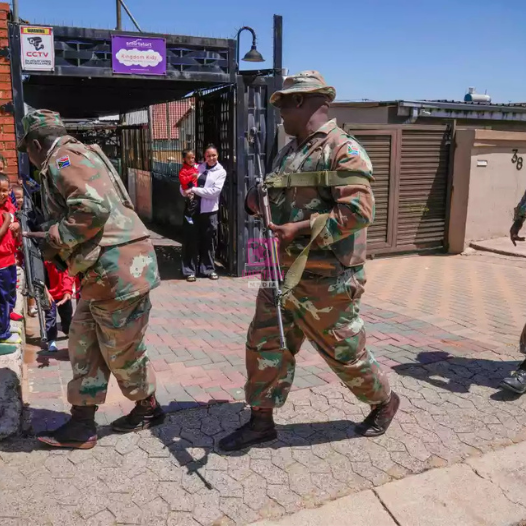
South African troops deployed to Johannesburg to help police tackle gangs and illegal mining.
South Africa has deployed soldiers to the streets of Johannesburg in a dramatic escalation of efforts to combat rising gang violence and illegal mining operations that authorities say are fueling crime and instability in parts of the country. The move follows an announcement by President Cyril Ramaphosa, who authorized the military to assist law enforcement agencies in restoring order in communities that have been grappling with organized criminal networks.
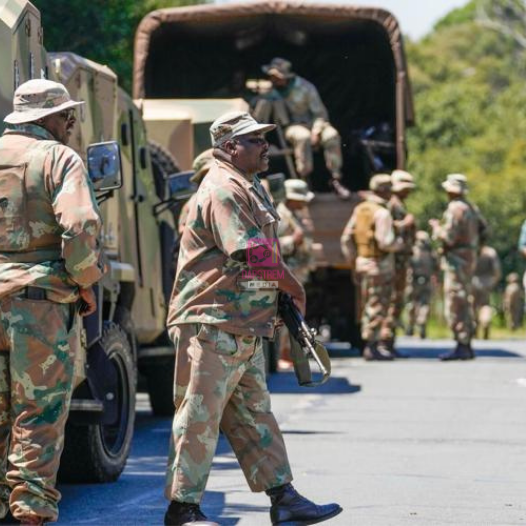
The deployment marks one of the most visible uses of the country’s armed forces in civilian areas in recent years. Armored vehicles and heavily armed soldiers from the South African National Defence Force (SANDF) were seen moving into neighborhoods across Johannesburg, particularly in communities that have long struggled with gang-related crime and illegal mining syndicates. Areas such as Riverlea and Westbury have become focal points of the operation, with soldiers conducting patrols, assisting police with raids, and entering apartment blocks suspected of harboring criminals.
Residents in these communities say violence has become a daily reality. Gunshots are frequently heard at night, and gangs often clash over territory linked to illegal mining routes and drug distribution networks. For many locals, the arrival of both police and soldiers has brought a sense of cautious optimism. Community members say they hope the increased security presence will finally curb the violence that has disrupted daily life for years.
President Ramaphosa has described organized crime as a serious threat to South Africa’s democracy and economic development. In a statement announcing the deployment, he emphasized that criminal syndicates involved in illegal mining, arms trafficking, and drug trade have grown increasingly sophisticated, making it necessary for the military to assist police forces. According to the president, these networks undermine the rule of law, destabilize communities, and drain billions of rand from the country’s economy every year.
Illegal mining, commonly known locally as “zama zama” operations, has become one of the most pressing security challenges facing South Africa. The term “zama zama” refers to individuals who enter abandoned or unused mines to extract gold and other minerals illegally. While some are desperate workers seeking income, many operations are controlled by powerful criminal syndicates that exploit undocumented migrants and use violence to protect their activities.
Authorities say these syndicates operate deep underground and in abandoned mine shafts scattered across Gauteng province. Rival groups often fight over control of profitable tunnels, and these battles sometimes spill into nearby communities, leading to shootings and intimidation. The presence of illegal miners has also contributed to environmental damage, unsafe working conditions, and increased criminal activity such as robbery and human trafficking.
Security experts say Johannesburg’s western suburbs, including Riverlea and Westbury, have become hotspots for these operations because of their proximity to old gold mines that date back to South Africa’s mining boom in the late 19th and early 20th centuries. Many of these mines were closed decades ago but remain accessible through underground tunnels that criminal groups exploit.
The South African Police Service has struggled to contain the problem on its own. Limited resources, corruption allegations, and the sheer scale of the illegal mining networks have made enforcement extremely difficult. By deploying the military, the government hopes to strengthen security operations and send a strong message that organized crime will not be tolerated.
Officials say the soldiers will primarily support police by conducting joint patrols, securing crime hotspots, and assisting with intelligence-driven raids. They are not expected to take over law enforcement duties but will act as a force multiplier for the police. The operation will focus on dismantling criminal networks, confiscating illegal weapons, and arresting suspects linked to gang violence and illegal mining.
While many residents support the deployment, the move has also sparked debate among political analysts and civil society groups. Some experts warn that relying on the military to address crime could signal deeper problems within the country’s policing system. Others argue that the situation in Johannesburg has reached a point where extraordinary measures are necessary.
South Africa has faced rising crime rates in recent years, including increases in armed robbery, extortion, and gang violence in several urban areas. Communities in Johannesburg, Cape Town, and Durban have repeatedly called for stronger action from the government, saying criminal gangs have become increasingly bold.
For residents of Riverlea and Westbury, however, the issue is less about politics and more about daily survival. Many say children are afraid to walk to school, businesses close early due to security fears, and families live with the constant risk of stray bullets during gang shootouts.
Local community leaders have urged authorities to ensure that the deployment leads to long-term solutions rather than temporary relief. They argue that in addition to security operations, the government must invest in job creation, youth programs, and community development to prevent young people from being drawn into gangs and illegal mining networks.
As soldiers continue patrolling the streets of Johannesburg, the government hopes the combined effort of the military and police will bring some stability to neighborhoods that have endured years of violence. Whether the operation will deliver lasting change remains uncertain, but for now many residents say the visible presence of armed forces offers a rare sense of protection in areas long overshadowed by crime.