NCIC Declares CS Geoffrey Ruku’s Remarks Divisive and Orders Immediate Cessation as Political Tensions Rise Ahead of 2027
The National Cohesion and Integration Commission (NCIC) has ruled that remarks made by Public Service Cabinet Secretary Geoffrey Ruku in Tharaka Nithi County crossed the line into divisive ethnic generalisation and collective blame.
In a determination issued on Wednesday, October 7, 2026, the commission ordered Ruku to immediately stop repeating, publishing, endorsing or encouraging the remarks that formed the basis of the inquiry.
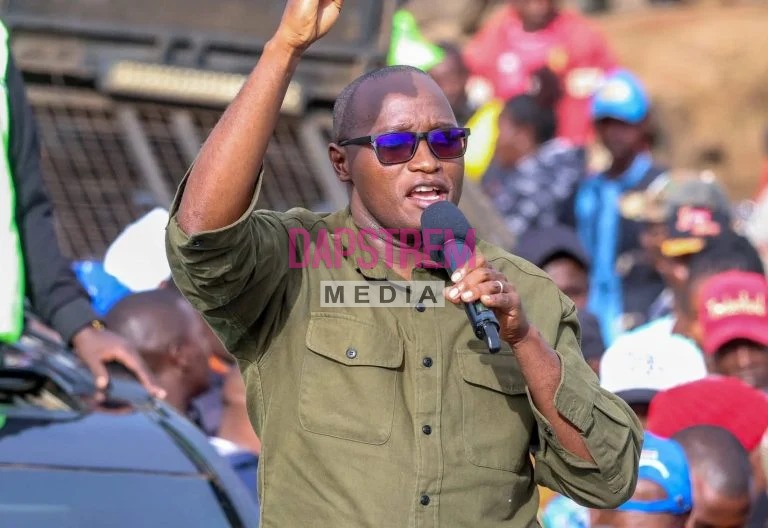
The decision follows an investigation into comments Ruku made at Kiang’ondu in Tharaka Nithi County in July while speaking about the political identity, development and representation of the Mt Kenya East region.
According to the NCIC, the Cabinet Secretary’s remarks went beyond legitimate advocacy for his community and regional interests.
The commission said the comments undermined equal dignity and harmonious relations and fell below the level of restraint expected from a senior government official.
“The Commission finds that Hon. Geoffrey Kiringa Ruku’s remarks at Kiang’ondu, Tharaka Nithi County, in July 2026 crossed from legitimate advocacy for identity and equitable development into divisive ethnic generalisation and collective blame,” NCIC stated.
The finding places Ruku at the centre of a growing national debate over the language used by political leaders as Kenya approaches the 2027 General Election.
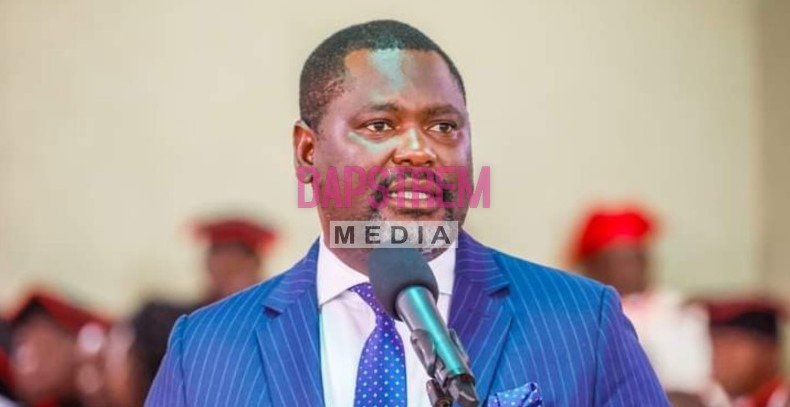
The commission has also proposed a series of corrective and reconciliation measures, including a public withdrawal of some of the statements, a peacebuilding initiative and an audit of ethnic diversity in national public institutions.
The latest determination follows Ruku’s appearance before the commission on September 1, when he was questioned over allegations of hate speech, ethnic incitement and statements that could undermine national cohesion.
At the time, Ruku said he had appeared before the commission out of respect for constitutional institutions and had provided an explanation of the circumstances in which his remarks were made.
The NCIC has now completed that process and issued its determination.
NCIC says Ruku crossed from regional advocacy into collective blame
At the centre of the case was Ruku’s discussion of the political relationship between Mt Kenya East and Mt Kenya West.
The Cabinet Secretary had been advocating for greater political independence and recognition for Mt Kenya East, which comprises Meru, Embu and Tharaka Nithi counties.
He had argued that the region had historically supported political leaders from Mt Kenya West but had not received what he considered an equitable share of development and political representation.
Ruku’s campaign for a distinct Mt Kenya East political identity had become increasingly prominent in the months preceding the NCIC investigation.
He rejected the description of the region as a political “trailer” of Mt Kenya West and pushed for residents of the eastern side of the region to pursue their own political interests.
The issue became particularly sensitive because of the country’s history of ethnic and regional political mobilisation.
NCIC said it recognised that leaders have the right to advocate for their communities, demand equitable development and discuss regional political interests.
However, the commission said such advocacy must not turn into collective accusations against an entire ethnic community.
It specifically cited Ruku’s references to Kikuyu people, his assertion that people in Mt Kenya West regarded Kenya as their property and his use of ethnic surnames when discussing development and public appointments.
According to the commission, these statements transformed legitimate concerns about institutions and representation into collective ethnic blame.
NCIC said the remarks demeaned the equal standing of Kikuyu people and undermined harmonious relations between communities.
The commission therefore determined that Ruku had gone beyond protected political advocacy.
The immediate cessation notice means that he must stop repeating or promoting the specific collective allegations identified by the commission.
Ruku has seven days to respond to proposed corrective measures
The NCIC has given Ruku seven days from the date of the determination to communicate whether he accepts the proposed conciliation terms or wishes to suggest changes.
One of the most significant requirements is a public withdrawal of specific allegations concerning the Kikuyu community.
The commission wants the withdrawal delivered in both English and Kiswahili.
The wording of the withdrawal will have to be jointly issued with, or approved by, NCIC as part of the proposed conciliation process.
Ruku has also been directed to affirm the equal citizenship and dignity of all Kenyan communities.
He is expected to recognise the freedom of communities to make political choices while also acknowledging their right to maintain their distinct identities.
The measures are designed to draw a distinction between community advocacy and statements that could create hostility towards another community.
NCIC has also warned that if the conciliation process fails or the agreed measures are not implemented, it may take further lawful action.
The commission’s approach therefore goes beyond simply censuring the Cabinet Secretary.
It seeks to use the case as an opportunity for reconciliation and to address some of the underlying grievances that Ruku raised during his political engagements.
Ruku defended his remarks before the commission
When he appeared before NCIC in September, Ruku defended his position and argued that his comments had been taken out of context.
He maintained that Mt Kenya East had experienced marginalisation for decades despite supporting political leaders from Mt Kenya West.
He argued that residents of Meru, Embu and Tharaka Nithi had a constitutional right to demand equitable development and political representation.
Ruku also maintained that his advocacy was not intended to create ethnic hostility.
His argument was that communities should be able to identify their interests and organise politically without being accused of threatening national cohesion.
The Cabinet Secretary also addressed controversial language he had used in relation to former Deputy President Rigathi Gachagua.
During the remarks under investigation, Ruku repeatedly used imagery of stepping on Gachagua’s neck until he had no room to “breathe”.
Ruku explained that the language was figurative political language intended to describe political defeat rather than physical violence.
NCIC accepted that the reference was figurative in the circumstances established during the inquiry.
However, the commission said the repeated imagery still demanded greater restraint from a senior public official.
The distinction is important because the NCIC determination does not treat every controversial political statement as hate speech.
Instead, the commission examined the wider context and concluded that the ethnic references and collective allegations were the elements that crossed the line.
NCIC says Cabinet Secretaries have a higher responsibility
The commission placed particular emphasis on Ruku’s position as a Cabinet Secretary.
NCIC argued that senior government officials have a significant influence over public discourse.
Statements made by a Cabinet Secretary can reach large audiences and may be interpreted differently from similar comments made by an ordinary political supporter.
The commission therefore said Ruku was expected to exercise greater restraint because of his position.
NCIC also addressed the argument surrounding Cabinet Secretaries and political activity.
It noted that Section 25 of the Conflict of Interest Act excludes Cabinet Secretaries from the specific political-neutrality prohibition contained in that provision.
However, the commission clarified that this does not exempt Cabinet Secretaries from constitutional obligations or requirements under the National Cohesion and Integration Act.
In other words, the ability of a government official to engage in political discussions does not give them unlimited freedom to make statements that could unfairly target an ethnic community.
The commission’s position is that political participation and community advocacy must still operate within the boundaries of equality, dignity and national cohesion.
That distinction is likely to remain important as Kenya moves closer to the 2027 election.
Commission protects community advocacy but rejects ethnic generalisations
Despite its adverse finding against Ruku, NCIC made clear that it does not consider community advocacy itself unlawful.
The commission recognised that the Constitution protects distinct ethnic and cultural identities.
It also acknowledged that communities have legitimate concerns about development, political representation and access to opportunities.
Ruku was therefore entitled to identify himself as Mbeere, discuss the interests of Mt Kenya East and demand equitable treatment.
The problem, according to NCIC, arose when those grievances were attributed collectively to another ethnic community.
The commission said demands for fair public appointments should be based on evidence rather than assumptions drawn from people’s ethnic surnames.
This distinction is particularly important in Kenya, where questions about ethnic representation in government and public institutions have historically generated strong political debate.
NCIC has therefore proposed a process that could move the debate from political claims to verified data.
NCIC orders audit of ethnic diversity in public institutions
One of the most significant consequences of the determination is an order for an audit of ethnic diversity across national public establishments.
The commission said it will assess individual public institutions to determine whether they comply with constitutional and legal requirements on ethnic representation.
The National Cohesion and Integration Act requires public establishments to seek to represent Kenya’s diversity and prohibits more than one-third of an establishment’s staff from belonging to one ethnic community.
The Constitution also requires public service institutions to provide adequate and equal opportunities for members of Kenya’s diverse ethnic communities.
However, NCIC stressed that the Ruku inquiry did not itself establish whether any specific institution was complying with these requirements.
The commission said verified staffing and appointment records would be necessary before such conclusions could be reached.
The commission intends to request relevant data from public institutions.
Institutions will have an opportunity to verify the information and respond before any adverse findings are published.
NCIC also said public reporting from the exercise would rely on aggregate information and would protect personal data.
The audit could therefore provide an evidence-based picture of ethnic representation in public institutions.
It could also help separate genuine concerns about representation from political allegations that may not be supported by official records.
Ruku’s political campaign had already attracted controversy
The NCIC determination comes after months of political activity surrounding Ruku’s push for greater autonomy for Mt Kenya East.
The Cabinet Secretary had repeatedly argued that Meru, Embu and Tharaka Nithi should not automatically be treated as part of the political bloc associated with Mt Kenya West.
He argued that the three counties had their own political interests and should negotiate from a position of strength.
The debate intensified as political parties and leaders began positioning themselves ahead of the 2027 election.
At one point, Ruku was at the forefront of efforts to promote the division of the wider Mt Kenya region into eastern and western blocs.
However, he later said he had abandoned the push after meeting elders from the region who agreed to recognise Deputy President Kithure Kindiki as the region’s senior political leader and spokesperson.
The political debate also attracted criticism from former Deputy President Rigathi Gachagua.
Gachagua accused Ruku and Kindiki of attempting to divide the wider Mt Kenya region, allegations that the two leaders rejected.
Ruku subsequently returned a symbolic axe that had been associated with the campaign and was handed a flywhisk by elders.
The episode became another illustration of the increasingly intense political debate over identity, regional representation and political leadership ahead of 2027.
NCIC recognises Ruku’s subsequent peace efforts
Although the commission found that Ruku’s original remarks were divisive, it also acknowledged that he had taken steps towards reconciliation.
NCIC cited the symbolic return of the axe and his acceptance of a flywhisk during an engagement with elders on September 19.
The commission also referred to subsequent peace activities announced by Ruku.
NCIC described these actions as genuine and substantial first steps towards reconciliation.
However, it made clear that the actions did not erase its adverse finding or complete the corrective process.
Instead, the commission wants Ruku to build on those efforts through a structured peace initiative.
He has been directed to develop a peace caravan in collaboration with NCIC involving communities from Mt Kenya East and Mt Kenya West.
The initiative must be non-partisan.
It should not depend on support for a particular presidential candidate, political party, government or regional political spokesperson.
Ruku has also been directed to organise and fund a restorative peacebuilding and social cohesion activity, subject to NCIC approval of the programme, participants, messaging, venue and date.
The approach suggests that NCIC is seeking to turn the controversy into an opportunity for reconciliation rather than allowing it to deepen political divisions.
The wider national debate ahead of 2027
The case comes at a particularly sensitive time for Kenya.
The country is already entering an increasingly active period of political mobilisation ahead of the 2027 General Election.
Political leaders are travelling across the country, building alliances and positioning themselves ahead of the next election.
In such an environment, questions of ethnicity and regional identity can quickly become politically sensitive.
Kenya’s electoral history has repeatedly demonstrated the risks associated with ethnic mobilisation.
Political competition itself is protected by the Constitution.
Communities are also free to advocate for their interests.
But the language used during political campaigns can determine whether competition remains peaceful or becomes a source of hostility.
That is why institutions such as NCIC continue to monitor public statements by political leaders.
Ruku’s case also illustrates the difficult balance between political speech and national cohesion.
A leader should be able to criticise government policy, demand development and challenge perceived inequalities.
At the same time, criticism directed at institutions or political decisions can become problematic when it is framed as collective blame against an entire community.
The NCIC determination has therefore provided another warning to political leaders that the country’s political debate will be closely watched as the 2027 election approaches.
What happens next for Ruku?
The immediate requirement is for Ruku to respond to NCIC within seven days.
He will have to indicate whether he accepts the proposed conciliation terms or wants to propose variations.
He will also be expected to participate in the proposed reconciliation process.
The commission’s determination does not automatically remove Ruku from his position as Cabinet Secretary.
Instead, it sets out corrective measures relating to his remarks and requires him to stop repeating the statements identified by NCIC as divisive.
The proposed public withdrawal will likely become one of the most closely watched aspects of the process.
It will provide Ruku with an opportunity to clarify his position and distance himself from statements that NCIC says unfairly attributed political and development grievances to an ethnic community.
At the same time, the proposed ethnic diversity audit could broaden the issue beyond Ruku himself.
If the audit finds disparities in public institutions, it could provide an opportunity for the government to address concerns about representation using official data.
If it finds that some of the allegations are unsupported, it could also help settle some of the political claims surrounding ethnic representation.
Either way, NCIC’s intervention has moved the discussion from political rallies into an institutional process.
The case also sends a wider message to Kenya’s political class.
As the 2027 election approaches, leaders will remain free to campaign, criticise opponents and advocate for their communities.
But NCIC has made clear that such freedom does not extend to collective ethnic blame.
For Ruku, the determination now creates a requirement to publicly address remarks that the commission has found to be divisive.
For the government, it presents another test of how senior officials balance political engagement with the responsibilities of public office.
And for Kenya, the case serves as another reminder of the delicate relationship between political competition, ethnic identity and national cohesion.
The debate over development and representation is unlikely to disappear.
Communities will continue demanding a fair share of national resources and political opportunities.
The challenge will be ensuring that those demands are pursued through evidence, constitutional rights and peaceful political engagement rather than language that portrays entire communities as responsible for the country’s inequalities.
With the 2027 election approaching, the NCIC determination against Ruku is likely to be closely watched.
It could become an important reference point in how the commission handles similar cases involving senior political leaders.
More importantly, it reinforces the responsibility of public figures to consider the wider consequences of their words.
In a country as politically diverse as Kenya, words from influential leaders can either build bridges or deepen existing divisions.
The NCIC has now made its position clear on where it believes Ruku’s remarks crossed that line.