Ruto Leads Dedication of Raila Odinga Mausoleum in Bondo as Kenya Honours His Enduring Legacy of Democracy and Public Service
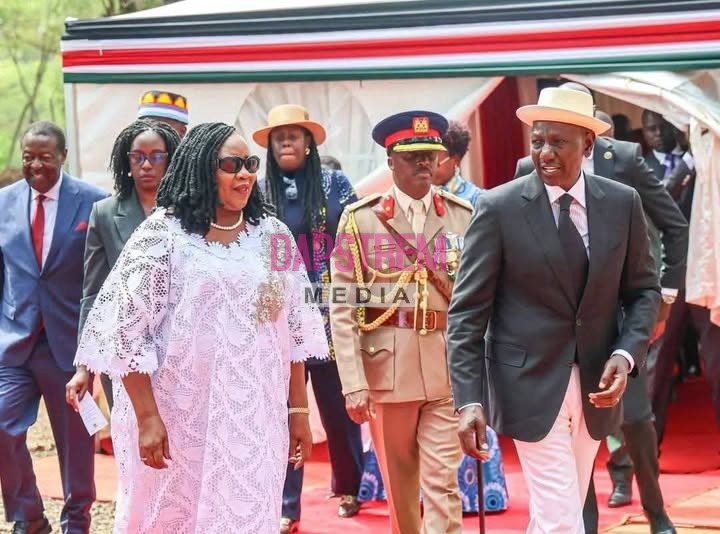
President William Ruto on Wednesday, October 7, presided over the dedication and official handover of the Raila Amolo Odinga Mausoleum at Kang’o Ka Jaramogi in Bondo, Siaya County.
The ceremony marked a significant moment in the preservation of the memory and legacy of the late former Prime Minister Raila Odinga, nearly one year after his death.
Ruto led the ceremony in the presence of Raila’s widow, Mama Ida Odinga, members of the Odinga family, senior government officials, religious leaders and political leaders.
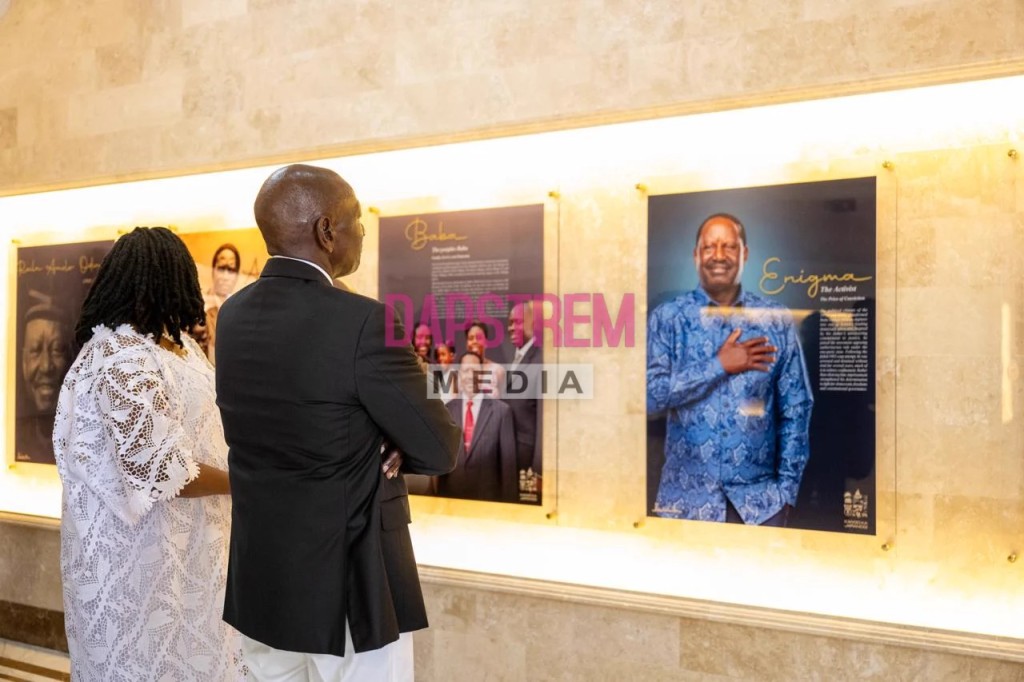
The President also officially unveiled the memorial site, which is expected to become an important heritage and historical centre where Kenyans can learn about Raila’s life, political journey and contribution to the country.
During the ceremony, Ruto read a presidential citation honouring Raila’s contribution to Kenya, describing him as a courageous leader, patriot and Pan-Africanist who dedicated much of his life to the pursuit of freedom, justice and democracy.
The event was held at Kang’o Ka Jaramogi, the historic Odinga family home where Raila was laid to rest alongside his father, Jaramogi Oginga Odinga.
The choice of the location gave the occasion an added historical significance.
For decades, Kang’o Ka Jaramogi has been associated with the Odinga family and Kenya’s political history. The site already houses the mausoleum of Jaramogi Oginga Odinga, Kenya’s first Vice President and one of the leading figures in the country’s independence struggle.
Raila’s mausoleum now adds another important chapter to the history of the site.
The completion of the facility also means that the Bondo homestead is set to become an even more important destination for people seeking to understand the political history of Kenya and the role played by the Odinga family in shaping it.
Ruto honours Raila’s contribution to Kenya’s democracy
President Ruto used the ceremony to reflect on Raila’s decades in public service and his contribution to Kenya’s democratic development.
In his presidential citation, Ruto highlighted Raila’s long political journey, including the difficult periods he experienced during his pursuit of political and democratic reforms.
The President noted that Raila remained committed to his political ideals despite facing detention, political opposition and other challenges throughout his career.
Raila’s political career stretched across several decades.
He served as Kenya’s Prime Minister between 2008 and 2013 under the Grand Coalition Government and remained one of the country’s most influential opposition leaders before and after his time in government.
His political career was closely connected to some of Kenya’s most significant moments.
He was involved in the struggle for multiparty democracy and later became a major voice in the push for constitutional reforms.
His name became closely associated with the political changes that eventually resulted in the promulgation of the 2010 Constitution.
Raila also remained a prominent figure in discussions surrounding devolution, governance, electoral reforms, human rights and national unity.
For his supporters, he represented the struggle for a more democratic and inclusive Kenya.
For his political opponents, he was often regarded as one of the country’s most formidable political competitors.
Regardless of political affiliation, however, his influence on Kenya’s political history was difficult to ignore.
That is part of what makes the mausoleum significant.
It is not simply a structure built over a grave.
It is intended to preserve the memory of a politician whose life intersected with several important chapters in the country’s history.
Mama Ida dedicates the mausoleum
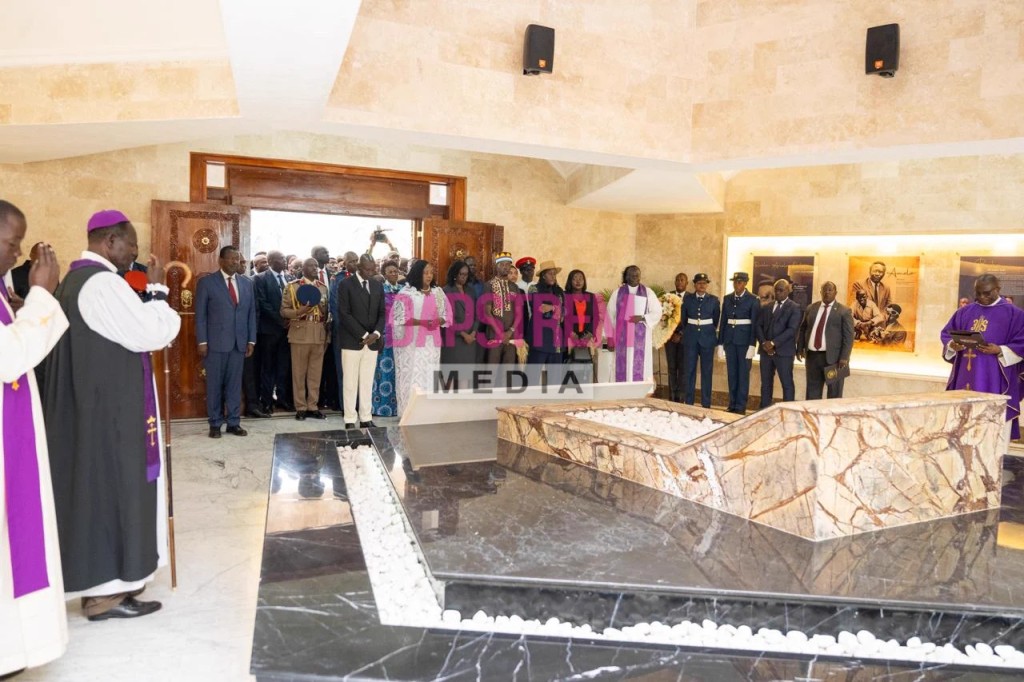
Following the President’s remarks, Mama Ida Odinga formally dedicated the site to God and invited the church to bless the grounds.
Ida said the mausoleum should remain a sanctuary of peace and serve as a reminder of Raila’s life and public service.
Her role in the ceremony was particularly significant because she was not only Raila’s widow but also one of the people who closely walked with him throughout his long public career.
The dedication therefore carried both a religious and personal meaning.
The mausoleum represents the physical preservation of Raila’s final resting place, but it also provides the family with a permanent location where relatives, friends and members of the public can remember him.
The ceremony culminated in the unveiling of a commemorative plaque by President Ruto and Mama Ida.
A memorial service subsequently followed at Kang’o Ka Jaramogi.
The gathering brought together people from different parts of the country as Kenya continued a series of activities marking the life and legacy of the former Prime Minister.
From family home to national heritage site
One of the major developments surrounding the mausoleum is its transition from a family memorial into a site with national heritage significance.
The government has said the facility will be placed under the stewardship of the National Museums of Kenya.
The Ministry of Defence and National Museums of Kenya worked together on the project, with the Kenya Defence Forces taking charge of construction in July.
The project moved at a fast pace, with officials reporting that the mausoleum was about 98 per cent complete by early October.
The construction was undertaken as part of efforts to have the facility ready ahead of the first anniversary of Raila’s death.
Government officials have described the mausoleum as more than a physical structure.
Gender, Culture, the Arts and Heritage Cabinet Secretary Hannah Cheptumo said the facility should be regarded as a repository of memory, history and identity.
She said the National Museums of Kenya would have the responsibility of ensuring that the site is professionally conserved, documented, interpreted and protected for future generations.
That responsibility could make the site important beyond Raila’s supporters.
A properly preserved historical site can provide researchers, students, historians and ordinary visitors with an opportunity to understand the political developments that shaped modern Kenya.
The facility can also help preserve photographs, records, personal stories and other materials associated with Raila’s life.
This would ensure that future generations encounter his story through documented history rather than through political narratives alone.
A project completed under tight timelines
The construction of the mausoleum was launched in July 2026 after the government and the Odinga family agreed to establish a permanent memorial at Kang’o Ka Jaramogi.
At the groundbreaking ceremony, the government described the project as a national heritage initiative intended to preserve Raila’s contribution to Kenya’s political evolution, national unity and constitutional reforms.
The Kenya Defence Forces were tasked with implementing the construction within a short timeframe.
By August, officials reported that the project had reached about 50 per cent completion.
The Defence Ministry later reported that the works had surpassed 95 per cent completion by the end of September, before the final preparations for the October 7 handover.
The speed of construction reflected the importance attached to completing the facility before the first anniversary of Raila’s death.
The mausoleum was also designed to complement the existing Jaramogi Oginga Odinga Mausoleum.
The two facilities are located within the same historic family compound.
The development therefore brings together the legacies of father and son at a location that has long been associated with Kenya’s political history.
Public access to begin after the official ceremony
Although Wednesday’s dedication was restricted to invited guests because of space and security considerations, the public will have an opportunity to visit the mausoleum from Thursday, October 8.
Authorities had advised members of the public not to travel to the site on the day of the official ceremony.
Instead, public viewing areas were arranged at selected locations, including Nyamira School, Jaramogi Oginga Odinga University of Science and Technology and Bondo town, where Kenyans could follow the proceedings.
The opening of the mausoleum to the public is expected to attract visitors from across Kenya.
Raila had a large political following, particularly in Nyanza, but his political influence extended far beyond the region.
Throughout his career, he developed relationships with communities and political leaders across the country.
His supporters have often referred to him as “Baba”, a name that became strongly associated with his political identity.
The mausoleum is therefore expected to attract both political supporters and people interested in Kenya’s history.
The site could eventually become one of the most prominent political heritage destinations in the country.
Bondo prepares for wider memorial activities
The handover of the mausoleum is only one part of a broader programme marking Raila’s life.
The October activities are taking place during what has been described as “Mwezi wa Baba”, a period dedicated to remembering the former Prime Minister and reflecting on his contribution to Kenya.
The programme is expected to continue beyond the official dedication.
A family-led candlelight vigil is scheduled for October 14 at Kang’o Ka Jaramogi.
The main public memorial service will then be held on October 15 at Migwena Cultural and Sports Ground in Bondo. The public memorial is expected to bring together Raila’s family, political allies, supporters and other Kenyans who want to commemorate his life.
The timing is significant because Raila died on October 15, 2025, aged 80.
The anniversary therefore provides an opportunity for the country to reflect on both his achievements and the political debates that surrounded his long career.
The memorial events are also expected to provide an opportunity for people who could not attend earlier ceremonies to pay tribute to him.
Raila’s political legacy remains a major part of Kenya’s history
Few Kenyan politicians have had a political career as long and influential as Raila Odinga.
His journey was shaped by both political success and adversity.
He spent years in opposition and experienced detention during periods when Kenya’s political environment was less open than it is today.
He later became a major player in the push for political reforms and eventually served as Prime Minister.
His career also included several presidential campaigns.
Although he never became President, his influence on Kenyan politics remained considerable.
He shaped political alliances, influenced national debates and played an important role in the country’s opposition politics for decades.
His supporters credited him with standing firm on issues such as democracy, electoral reform, constitutionalism and social justice.
His political opponents, meanwhile, often challenged his methods and policies.
The debates surrounding his career will likely continue for many years.
The mausoleum, however, provides an opportunity to preserve the historical record of that career.
The challenge will be ensuring that the site captures the complexity of Raila’s life rather than presenting only one side of his political story.
A national heritage centre can become most valuable when it allows future generations to study different perspectives and understand the historical context surrounding major events.
The meaning of the mausoleum for future generations
The establishment of the mausoleum comes at a time when Kenya continues to grapple with questions about how it preserves the memory of people who have shaped its history.
For a country whose political history has often been contested, preserving physical sites and historical records can help provide future generations with a stronger connection to the past.
Kang’o Ka Jaramogi already plays that role through the Jaramogi Oginga Odinga Mausoleum.
The addition of Raila’s memorial creates an opportunity to build a broader historical centre around the Odinga family and Kenya’s political development.
The government has also announced other initiatives linked to Raila’s legacy, including the establishment of a Democracy Institute in his name at the University of Nairobi and additional projects at the Kenya School of Government.
Such initiatives could ensure that his legacy is remembered not only through political rallies and annual commemorations but also through education, research and public dialogue.
For young Kenyans who did not experience many of the political events of Raila’s early career, these institutions could provide an opportunity to understand the circumstances that shaped the country.
They could learn about the struggle for multiparty politics, constitutional reform, political freedoms and the evolution of Kenya’s democratic institutions.
A moment that brings political history and the present together
President Ruto’s role in the ceremony also gave the occasion a broader national dimension.
Ruto and Raila had been political rivals at different stages of their careers.
Their political paths were often on opposite sides of Kenya’s political divide.
Yet Wednesday’s ceremony brought the two legacies into the same national conversation.
Ruto stood at the mausoleum to honour a former political rival who had become one of the most influential figures in Kenya’s history.
His participation underscored the government’s decision to treat Raila’s memory as part of the country’s wider national heritage.
The ceremony was therefore not only about the Odinga family.
It was also about how Kenya chooses to remember its political history.
Raila’s career touched different generations of Kenyans.
He was active during the final years of the Jomo Kenyatta era, remained politically engaged under Daniel arap Moi, became a central figure during the transition to multiparty democracy, served in governments under Mwai Kibaki and Mwai Kibaki-era coalitions, and later worked with successive political formations.
His career therefore mirrors many of the political changes Kenya experienced after independence.
That history is now physically represented at Kang’o Ka Jaramogi.
The beginning of a new chapter for Kang’o Ka Jaramogi
The completion and handover of the Raila Odinga Mausoleum marks the beginning of a new chapter for Kang’o Ka Jaramogi.
For years, the site was primarily known as the home and resting place of Jaramogi Oginga Odinga.
It will now carry the memory of both father and son.
The site is expected to remain a place of mourning for the Odinga family and Raila’s supporters, but it will also increasingly serve as a place of education and historical reflection.
Its management by the National Museums of Kenya is expected to help protect the site and preserve its historical value.
The challenge now shifts from construction to preservation.
The physical structure may have been completed, but the larger task of documenting Raila’s life and placing it within Kenya’s broader history will continue for years.
That could include preserving photographs, speeches, documents, personal belongings and other records connected to his political career.
It could also involve documenting the memories of people who worked with him, opposed him or interacted with him throughout his life.
In that sense, the mausoleum can become more than a place where people come to mourn.
It can become a place where Kenya remembers, studies and debates its own history.
President Ruto’s dedication of the Raila Odinga Mausoleum therefore marks an important moment in the country’s ongoing effort to preserve the memory of one of its most influential political figures.
At Kang’o Ka Jaramogi, Raila’s final resting place now stands alongside that of his father, Jaramogi Oginga Odinga.
The site brings together two generations of the Odinga family whose political careers left a lasting mark on Kenya.
For the Odinga family, the mausoleum provides a permanent place to preserve Raila’s memory.
For his supporters, it offers a place to honour a leader they regarded as a symbol of resistance and democratic struggle.
For historians and future generations, it could become an important source for understanding Kenya’s political journey.
And for the country as a whole, the site represents an opportunity to preserve a complicated but important chapter of its national story.
As the mausoleum opens to the public from October 8, attention will now shift from its construction and official dedication to its long-term role.
The true measure of the project will ultimately be how effectively it preserves Raila Odinga’s history, educates future generations and keeps alive the national conversations that defined his remarkable public life.
Raila may no longer be here to participate in those conversations.
But at Kang’o Ka Jaramogi, his story now has a permanent home.