Lecturers Begin Nationwide Strike
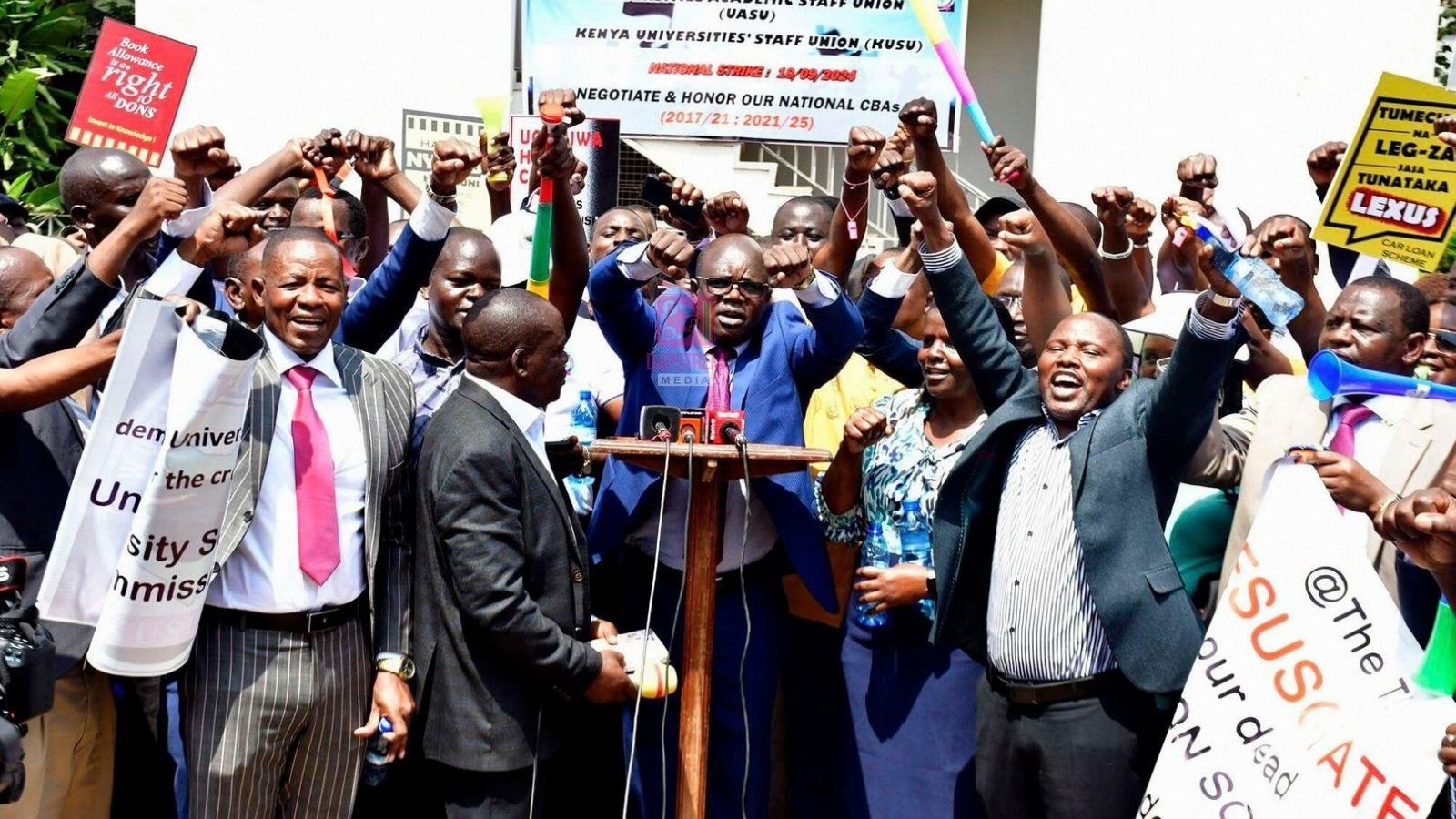
Lecturers and other university workers across Kenya have begun a nationwide strike after negotiations over pay and working conditions failed to produce an agreement.
The industrial action began on Friday, October 2, after talks between the unions representing university employees and the Inter-Public Universities Councils Consultative Forum (IPUCCF) ended without a deal.
The dispute centres on the delayed implementation of the 2025–2029 Collective Bargaining Agreement (CBA), which covers salaries and other employment terms for workers in public universities.
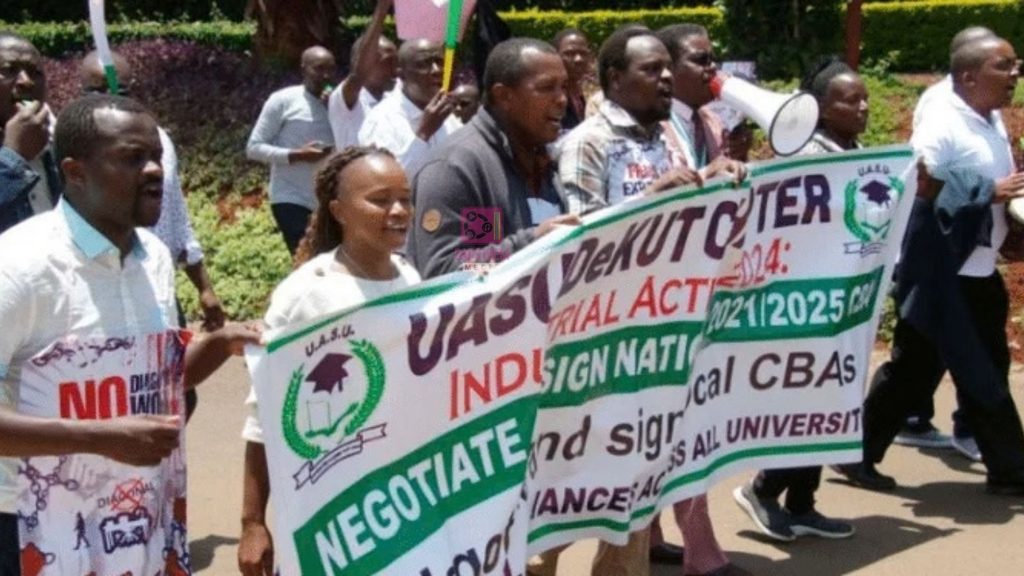
The unions have demanded that the agreement be implemented immediately.
Why Lecturers Rejected the 4% Proposal
A major sticking point in the negotiations was a proposed 4% annual salary increase.
The unions rejected the proposal, arguing that it was insufficient to address the rising cost of living and their broader demands under the new CBA.
UASU organising secretary Jacob Musembi said the proposed increase was below prevailing inflation, which the union said was above 6%.
The unions also raised concerns about medical benefits, staff recruitment and other employment conditions.
The disagreement shows that the negotiations are about more than basic salaries, with workers seeking changes across several areas of their employment package.
3 University Unions Take Part
The industrial action involves 3 major university unions: the Universities Academic Staff Union (UASU), the Kenya Universities Staff Union (KUSU), and the Kenya Union of Domestic, Hotels, Educational Institutions, Hospitals and Allied Workers (KUDHEIHA).
Their members include academic and non-academic staff working in public universities and constituent colleges.

The unions announced the action after talks held in Machakos failed to bridge the differences between their demands and the counter-offer from IPUCCF.
The unions had previously issued a seven-day notice warning that employees would withdraw their labour if the outstanding issues were not resolved.
Lecturers Demand Immediate CBA Implementation
At the centre of the dispute is the 2025–2029 CBA.
Workers want the agreement concluded and implemented instead of further delays in negotiations.
UASU has previously raised concerns about prolonged delays in completing the agreement, while KUSU also warned that its members would strike over unresolved issues surrounding the deal.
The unions have also pointed to commitments contained in a Return-to-Work Formula signed in November 2025.
They argue that previous commitments have not been adequately addressed, contributing to the latest breakdown in negotiations.
More Issues Behind the University Strike
Although salaries are a major issue, Lecturers and other workers have raised several additional concerns.
These include medical benefits, allowances and the recruitment of additional academic staff.
UASU has also previously highlighted inadequate staffing and the increasing use of part-time academic workers in public universities.
Other concerns include promotions and pension-related issues affecting some university employees.
The unions therefore view the CBA dispute as part of a wider problem involving funding, staffing and working conditions across the public university sector.
What the Strike Means for Students
The industrial action is expected to disrupt teaching and learning in public universities.
Classes, examinations, academic supervision and administrative services could all be affected while the dispute continues.
The extent of the disruption will depend on how long the industrial action lasts and whether the two sides return to negotiations.
Public universities have previously experienced disruptions during labour disputes, with strikes affecting academic calendars and forcing institutions to make adjustments.
For students, the immediate concern is whether the disagreement will be resolved quickly enough to prevent significant changes to academic schedules.
Government and University Councils Face Pressure
The latest development puts additional pressure on university councils, the Ministry of Education and the National Treasury to help resolve the dispute.
The unions have argued that funding commitments are necessary before negotiations can produce a workable agreement.
Earlier reports indicated that UASU had raised concerns about the lack of a written government commitment on financing the 2025–2029 CBA.
The employers, meanwhile, have presented salary proposals as part of the negotiations.
Finding common ground will require both sides to address the financial implications of the agreement while also considering the concerns raised by university employees.
Lecturers Strike Puts University Sector Under Pressure
The nationwide action has created another difficult moment for Kenya’s public university sector.
The unions want the delayed CBA addressed, while university employers must consider the financial resources available to meet the proposed terms.

For Lecturers, the rejection of the 4% annual increase demonstrates the depth of the disagreement between the two sides.
Until an agreement is reached, students and university staff will remain uncertain about when normal academic activities will fully resume.
The latest strike has therefore placed renewed attention on university funding, employee welfare and the long-running challenge of implementing collective bargaining agreements in Kenya’s public universities.