Madagascar’s Military Ruler Michael Randrianirina Dismisses Parliament and Entire Cabinet Amid Deepening Political Crisis
Madagascar has once again entered a period of political uncertainty after the country’s military ruler, Michael Randrianirina, dismissed the prime minister, the entire cabinet, and key government structures in a sweeping move that has shaken the island nation’s fragile transitional administration. The decision, announced by the presidency in the capital Antananarivo, marks the most dramatic restructuring of government since the military takeover that brought Randrianirina to power in 2025.
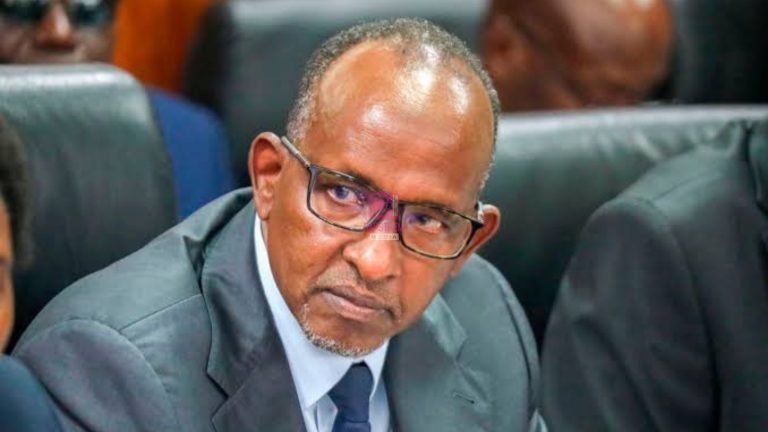
The announcement confirmed that Prime Minister Herintsalama Rajaonarivelo and all cabinet ministers had been relieved of their duties with immediate effect. According to officials, the president will appoint a new prime minister who will then form a fresh government under the procedures outlined in the country’s constitutional framework. Until a new administration is established, the day-to-day functions of ministries will be handled by senior civil servants and ministry secretaries to ensure that government operations continue.
Authorities did not provide detailed reasons for the abrupt decision, though analysts say it may be part of an attempt by Randrianirina to consolidate his authority and reorganize the transitional government amid mounting political pressure and economic challenges.
Madagascar’s current political turbulence traces back to the dramatic events of late 2025, when weeks of nationwide protests erupted against former president Andry Rajoelina. Demonstrators—many of them young people—took to the streets in the capital and other major cities accusing the government of corruption, economic mismanagement, and worsening living conditions.
As the protests intensified, divisions emerged within the country’s security forces. Soldiers eventually sided with demonstrators, triggering a political crisis that culminated in the military seizing control of the country. Rajoelina fled abroad and was later impeached by parliament as the crisis escalated.
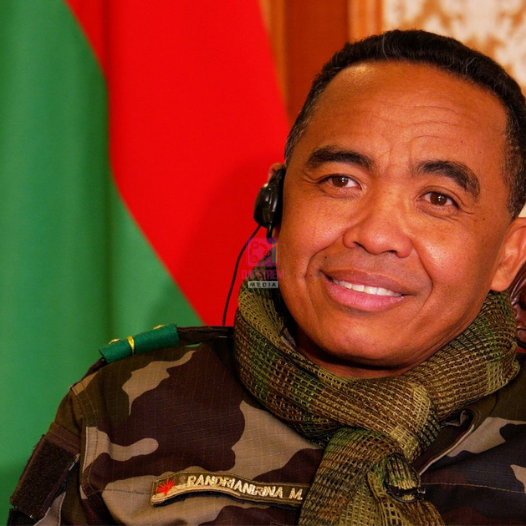
During the upheaval, Colonel Randrianirina, who had previously been a relatively little-known military officer, emerged as the leader of the uprising. Backed by elements of the army and other security forces, he announced that the military had taken control of state institutions and would establish a transitional authority to govern the country.
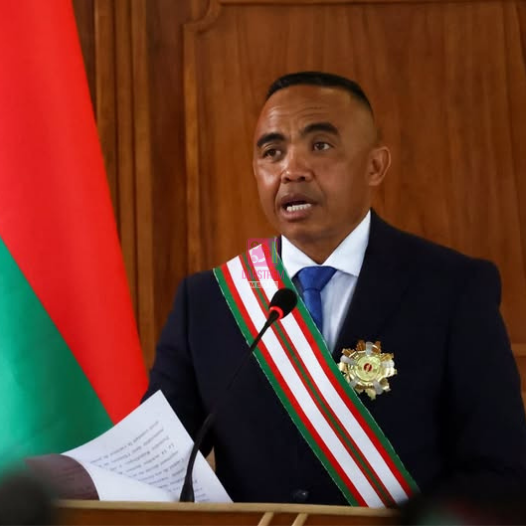
Shortly afterward, Madagascar’s High Constitutional Court approved a transitional arrangement that installed Randrianirina as president and head of a military-led governing body known as the Council of the Presidency for the Re-Foundation of the Republic. The council brought together officers from the army, the national police, and the gendarmerie to oversee the country’s governance during the transition.
When he assumed power, Randrianirina promised sweeping political reforms and pledged to organize elections within roughly two years in order to restore civilian rule. He also announced plans to draft a new constitutional framework through a referendum aimed at establishing what he described as a “new democratic order” for Madagascar.
To stabilize the government after the coup, Randrianirina appointed Rajaonarivelo as prime minister in October 2025. The businessman and economist was tasked with forming a technocratic cabinet that would manage the country’s economy, oversee public administration, and prepare the groundwork for political reforms.
However, governing Madagascar has proved extremely difficult. The country faces deep economic challenges including poverty, rising food prices, infrastructure shortages, and persistent power outages. Madagascar is one of the poorest nations in the world despite its rich biodiversity and natural resources. Large segments of the population depend on agriculture, particularly rice farming, while the economy also relies heavily on exports such as vanilla, cloves, and minerals.
Political instability has historically compounded these economic challenges. Madagascar has experienced several coups and leadership crises since gaining independence from France in 1960. Each episode of instability has disrupted development programs, weakened institutions, and discouraged foreign investment.
Randrianirina’s administration has attempted to present itself as a reformist leadership focused on rebuilding state institutions and restoring public trust. One of the priorities announced early in his presidency was investigating alleged corruption in key state companies, including the national water and electricity utility Jirama, which has long been criticized for inefficiency and financial mismanagement.
The dismissal of the cabinet is therefore seen by some observers as part of a broader attempt to restructure the transitional government and accelerate reforms. By dissolving the existing administration, the president may be seeking to appoint new officials who are more closely aligned with his political agenda and capable of implementing economic recovery policies.
Nevertheless, the move has also raised concerns about the concentration of power in the hands of the military leadership. Critics fear that repeated political shake-ups could delay the promised transition to civilian rule and undermine democratic institutions.
For ordinary citizens in Madagascar, the immediate concern remains economic stability and the delivery of basic public services. Many people hope that the political restructuring will lead to stronger governance, improved economic management, and progress toward the elections that Randrianirina pledged to hold within the coming years.
As the country awaits the appointment of a new prime minister and cabinet, Madagascar stands at another pivotal moment in its political evolution. Whether the latest decision will strengthen the transitional government or deepen political uncertainty remains to be seen, but it underscores the fragile nature of power and governance in the Indian Ocean island nation.