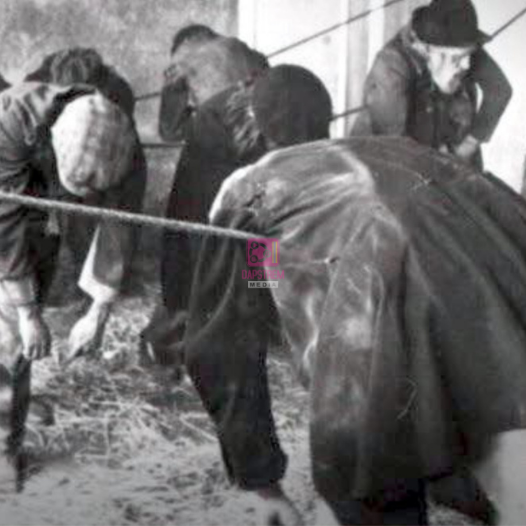
Was the term “hangover” really inspired by drunken sailors on ropes, or is it simply a myth masking the true linguistic origins of the word?
The idea that the word “hangover” comes from drunken sailors sleeping on ropes is a colorful and entertaining story—but it’s not actually true. While it makes for a vivid image of life at sea, linguists and historians have found no credible evidence linking the origin of the term to sailors or maritime practices. Still, the myth persists, perhaps because it captures the rough, gritty reality people often associate with both sailors and heavy drinking.
To understand where the confusion comes from, it helps to look at the broader context of sailors’ lives in earlier centuries. On crowded ships, especially in the 17th to 19th centuries, space was extremely limited. Sailors often slept in hammocks—canvas beds suspended by ropes—which swayed with the motion of the sea. These hammocks were practical, helping prevent injury during rough waters, and were easy to stow away during the day. Over time, stories about sailors and ropes blended with exaggerations about drunken behavior, giving rise to the imaginative but inaccurate tale that intoxicated sailors would “hang over” ropes to sleep off their excesses.
In reality, the word “hangover” has a much more grounded linguistic origin. It comes from the idea of something “Was the Word ‘Hangover’ Derived from Drunken Sailors Sleeping on Ropes?” from a previous time—essentially, a lingering effect. The term was used as early as the 19th century to describe anything that carried over, such as unresolved business or emotional aftereffects. Eventually, it became specifically associated with the unpleasant physical and mental symptoms that follow excessive alcohol consumption. By the early 1900s, “hangover” had firmly taken on its modern meaning.
So why has the sailor story survived? Part of it comes down to how language and storytelling work. People are naturally drawn to vivid, visual explanations. The image of a drunken sailor draped over a rope is far more memorable than a dry linguistic evolution. Over time, such stories spread through word of mouth, social media, and casual conversation, often being repeated without verification. It’s a classic example of how myths can attach themselves to everyday words.
Interestingly, while the sailor origin isn’t real, the connection between alcohol and seafaring life is not entirely fictional. Sailors historically consumed large quantities of alcohol, often because clean drinking water was scarce on long voyages. Rum, in particular, became a staple in naval life. This cultural association between sailors and drinking may have helped the myth feel more believable, even if it isn’t accurate.
Today, the word “hangover” is widely used across the world and has even expanded beyond its original meaning. While it still primarily refers to the aftereffects of drinking—headaches, nausea, fatigue, and general discomfort—it is also used metaphorically. People might talk about a “political hangover” after a heated election, an “emotional hangover” after a stressful event, or even a “holiday hangover” when returning to normal life after a festive season. In all these cases, the core idea remains the same: something lingering unpleasantly after the main event has passed.
Modern culture has also shaped how we talk about and deal with hangovers. From home remedies like drinking water, eating greasy food, or taking painkillers, to commercial products marketed as hangover cures, the experience has become a shared social phenomenon. Movies, music, and social media often portray hangovers humorously, reinforcing their place in everyday life. Yet behind the jokes lies a real physiological response, as the body works to process alcohol and recover from its effects.
There are also countless personal stories tied to hangovers—some funny, others cautionary. Many people recall their first hangover as a rite of passage, often accompanied by lessons learned the hard way. Others share tales of waking up with no memory of the previous night, piecing together events through messages, receipts, or friends’ accounts. These experiences, while sometimes embarrassing, contribute to the collective understanding of what a hangover feels like and why moderation matters.
While the tale of drunken sailors sleeping on ropes is a compelling one, it belongs more to the realm of folklore than fact. The true origin of “hangover” reflects the natural evolution of language, where words shift and adapt over time to capture human experiences. And if anything, the persistence of the myth says just as much about our love for storytelling as the word itself does about the aftereffects of indulgence.