
Nairobi Governor personally meets Senate committees after police search, urging dialogue to resolve ongoing disputes between county governments and the Senate
Nairobi Governor Johnson Sakaja on Tuesday personally appeared before the Senate of Kenya, ending hours of tension and uncertainty that followed a police search for him the previous day over his failure to appear before the County Public Accounts Committee (CPAC). The dramatic developments began on Monday when the Governor did not respond to summons issued by the committee, prompting authorities to prepare a warrant for his arrest. Police officers reportedly camped at City Hall, ready to execute the order, creating a heightened sense of urgency and public attention. In response, Sakaja opted to take a proactive approach by personally driving to Parliament to meet with Senate leadership and members of the CPAC, signaling his commitment to accountability while also calling for an amicable resolution of the ongoing dispute between the Senate and the Council of Governors (CoG).
Sakaja emphasized that his presence at the Senate was intended to demonstrate his willingness to engage with oversight committees, underlining his long-standing cooperation with accountability processes. “I came to the Senate to meet the leadership and members of the committee. First, I am a law-abiding citizen. I have appeared before these committees many times — six times this year alone and about ten times last year,” he said. The Governor also noted that he has responded to audit queries dating back to 2015, covering issues handled by his predecessors, further illustrating his commitment to transparency and good governance.
Despite this, Sakaja defended his initial failure to appear, explaining that it was in line with guidance from the Council of Governors. The CoG had raised concerns over alleged intimidation and extortion by certain members of the CPAC, directing that these issues be addressed before governors complied with the summons. “When the CoG raised issues regarding that specific committee, we were guided that those concerns be resolved first. Accountability is important, but it must be undertaken in the right way,” he said. He also pointed out that this situation was not unique to Nairobi, revealing that 29 other governors had been summoned to appear before the same committee. Many either did not attend or, in solidarity with the CoG, chose not to engage substantively with the committee, highlighting broader systemic tensions between the Senate and county governments.
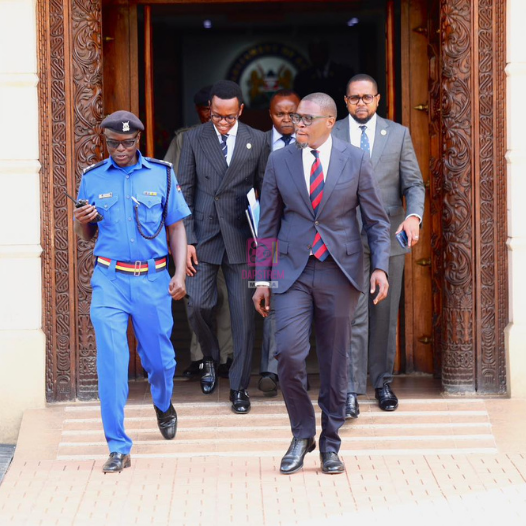
Governor Sakaja further stressed that his engagement with both Senate and CoG leadership had been ongoing in an effort to de-escalate the standoff. “I have spoken to the Speaker of the Senate, the Chair of the Council of Governors, and my fellow governors. We need to resolve these issues so that we can be held accountable as required by the Senate,” he said. By taking the initiative to appear in person, Sakaja sought to calm rising concerns and show that he is committed to finding solutions rather than allowing the matter to escalate into a prolonged standoff.
The Governor also dismissed claims that he was evading accountability. He noted that police officers had reportedly been looking for him at City Hall at around 7pm on Monday, yet he remained accessible and compliant. “Who is in the office at 7pm? They were looking for me, yet I am here at the Senate as required. I have no problem with the Senate. There is just an issue that needs to be resolved. I have nothing to run away from,” he said. His statement was a clear attempt to counter narratives that portrayed him as unwilling to cooperate with oversight authorities, emphasizing that the core of the dispute lies in procedural disagreements rather than personal reluctance.
Sakaja also criticized what he described as an unfair attempt to single him out, arguing that the issue should be addressed collectively between the Senate and the CoG. “It is wrong to single out one county or one governor. The drama we are seeing is not fair. The CoG is an institution just like the Senate; let the two institutions resolve the matter collectively,” he added. He reiterated his readiness to appear before the committee once the broader issues between the two institutions are resolved, underscoring that he has no intention of avoiding accountability while advocating for a clear and fair framework for interactions between county governments and national oversight bodies.
The developments surrounding Sakaja come at a time of heightened scrutiny over the relationship between Kenya’s county governments and the Senate, particularly regarding oversight and accountability mechanisms. The CPAC, chaired by Moses Kajwang’, is responsible for ensuring that county officials comply with audit queries and financial accountability standards. While the Senate has insisted on strict adherence to summonses and compliance protocols, the CoG has expressed concerns about the potential for intimidation, extortion, and selective targeting of governors, leading to repeated standoffs and public disputes.
The Monday police search for Governor Sakaja and the threat of a warrant of arrest highlight the intensity of the standoff. The fact that authorities considered taking such measures indicates how seriously the situation had escalated, with implications not just for Nairobi but for all county governments facing similar scrutiny. Sakaja’s proactive decision to appear personally before the Senate the following day effectively defused the immediate crisis and demonstrated a willingness to prioritize dialogue over confrontation.
This episode also underscores the delicate balance between oversight, law enforcement, and county autonomy in Kenya’s devolved system of governance. Governors are constitutionally required to cooperate with national oversight bodies, but they also operate under the guidance and protection of the CoG, which serves as a collective voice in matters affecting all county governments. Disputes like the one involving Sakaja highlight the challenges inherent in this system, where accountability and independence must be carefully balanced to ensure effective governance.
By personally engaging with Senate committees, Governor Sakaja has set an important precedent for conflict resolution through dialogue and cooperation. His actions demonstrate that even amid disagreements over procedures and authority, accountability and transparency can be maintained without escalating tensions unnecessarily. Moving forward, both the Senate and the CoG are expected to work together to establish clear frameworks for engagement, ensuring that governors can be held accountable while addressing legitimate concerns about intimidation, fairness, and procedural clarity.
Ultimately, the events surrounding Governor Sakaja’s appearance at the Senate highlight broader institutional challenges within Kenya’s devolved governance system. The police search, the potential warrant of arrest, and the Governor’s proactive response all reflect the complex interplay between law enforcement, oversight bodies, and county leadership. By taking the initiative to appear personally and call for an amicable resolution, Sakaja has illustrated a pragmatic approach to governance — one that values dialogue, fairness, and accountability while seeking to protect the integrity of both county governments and national oversight institutions.
As discussions continue, the focus will likely shift to finding sustainable solutions that prevent similar standoffs in the future. This includes developing clear protocols for engagement between the Senate and county governments, addressing concerns of intimidation or unfair targeting, and reinforcing mechanisms that ensure accountability without undermining the operational independence of counties. Governor Sakaja’s decision to appear personally may well serve as a blueprint for other leaders, highlighting the importance of proactive engagement, transparency, and the pursuit of peaceful, constructive resolution in Kenya’s political and administrative landscape.