NCIC Orders Mukurwe-ini MP Kaguchia to Apologise and Withdraw Intimidatory Remarks as 2027 Political Tensions Intensify
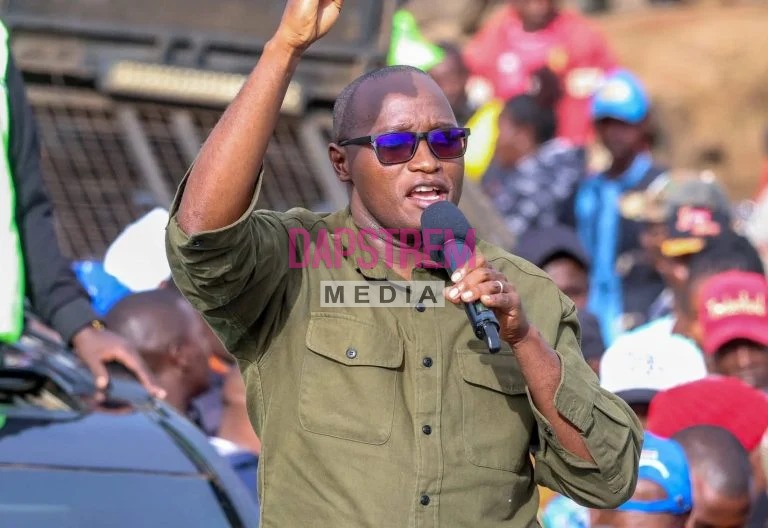
The National Cohesion and Integration Commission (NCIC) has ordered Mukurwe-ini Member of Parliament John Philip Gichohi Kaguchia to publicly apologise and withdraw remarks it has found to be threatening, intimidatory and coercive.
The commission issued the directive on Wednesday, October 7, 2026, following an investigation into statements Kaguchia made during a political gathering in Kieni, Nyeri County, on or around August 1.
According to NCIC, the remarks called on members of the public to identify, pursue and socially exclude people because of their political choices.
The commission said the statements created a risk of intimidation and collective punishment, particularly because they were made in a public political setting by an elected leader.
NCIC has now directed Kaguchia to immediately cease making, repeating, publishing, endorsing or encouraging similar remarks.
The commission has also ordered him to issue a public retraction and apology in Kikuyu, Kiswahili and English.
The apology and corrective statement must have a level of prominence and reach reasonably comparable to the original remarks, according to the determination.
Kaguchia has further been directed to affirm the right of every Kenyan to support a political leader of their choice without fear of intimidation, discrimination or exclusion from community activities.
The determination comes at a politically sensitive period as Kenya moves closer to the 2027 General Election, with political leaders across the country already mobilising supporters and positioning themselves for the contest.
The NCIC decision therefore places renewed attention on the language being used by political leaders and the potential consequences of rhetoric that targets citizens because of their political choices.
NCIC says Kaguchia’s remarks amounted to intimidation
The controversy stems from remarks Kaguchia made while addressing a political gathering in Kieni.
According to the certified translation of the speech relied upon by NCIC, the MP told his audience that supporters of President William Ruto, whom he referred to as “Kasongo” or “Kasongo’s people”, would be identified and pursued.
The commission said the speech included language suggesting that people supporting Ruto would be followed to their homes and removed from beneath their beds.
It also cited remarks calling for records to be kept of people who supported the President.
The statements did not stop at political criticism, according to the commission.
NCIC said Kaguchia’s remarks also called for community members to withdraw social support from people because of their political choices.

This included withholding assistance during funerals, dowry ceremonies and periods of illness.
The commission considered this particularly serious because community support plays an important role in many Kenyan communities.
Funerals, weddings, dowry ceremonies and support during illness are traditionally occasions when families depend on neighbours, relatives and members of their wider communities.
NCIC said using such social relationships as a tool to punish people for their political choices amounted to coercion and could create an environment where citizens feel compelled to support a particular political position.
“The Commission finds that Hon. John Philip Gichohi Kaguchia’s public utterances were threatening, intimidatory and coercive,” NCIC said in its determination.
The commission added that the remarks undermined citizens’ freedom to choose their political leaders without fear of consequences.
It also found that the public setting of the speech and Kaguchia’s position as an elected representative increased the potential impact of the statements.
Kaguchia had challenged the translation of his remarks
Kaguchia previously disputed the interpretation of his speech when he appeared before NCIC.
The MP appeared before the commission with his legal team on August 31 as part of the investigation.
During the proceedings, he challenged the English translation of the remarks and argued that the original Kikuyu words should be considered in their proper context.
His lawyers also questioned the interpretation used by the commission, maintaining that translating political remarks from Kikuyu into English could alter their intended meaning.
Kaguchia had earlier made a similar argument after his arrest in August, saying that portions of his speech had been taken out of context and portrayed differently from what he intended.
He maintained that the original recording should be played and interpreted in the language in which the remarks were made.
The MP also argued that political statements should not be interpreted without considering the circumstances in which they were delivered.
However, in reaching its latest determination, NCIC said it relied on the recording and a certified translation of the original remarks.
The commission said Kaguchia’s decision not to make a substantive statement during the inquiry was not held against him.
Instead, NCIC said it based its findings on the evidence available, including the recorded speech and certified translation.
The decision means the dispute over the meaning of the remarks has now been addressed by the commission through its formal determination.
MP ordered to make a public apology
One of the most significant requirements imposed on Kaguchia is the order to publicly apologise.
NCIC wants the apology to be issued in three languages: Kikuyu, Kiswahili and English.
The commission has also said the corrective statement should have a reach and prominence comparable to the original speech.
That requirement is important because the remarks under investigation were made publicly and attracted significant attention after being circulated through traditional and social media platforms.
NCIC wants the correction to reach the same broad audience.
The apology is also expected to make clear that Kenyans have a constitutional right to choose their political leaders without intimidation.
Kaguchia will be required to withdraw the calls to identify, record, follow or exclude people because of their political choices.
He has also been directed to affirm that citizens should not be denied assistance at funerals, dowry ceremonies, during illness or in other communal activities simply because they support a different political candidate or party.
The commission has further ordered him to issue written undertakings against creating or encouraging political lists that could be used for surveillance, intimidation, discrimination or exclusion.
These requirements form part of NCIC’s proposed conciliation process.
Kaguchia has seven days from the date of the determination to communicate whether he accepts the proposed measures or wishes to suggest variations.
The commission intends to conclude the settlement discussions within 30 days.
If the conciliation process fails to produce a satisfactory outcome, NCIC has warned that it may issue a compliance notice under the National Cohesion and Integration Act.
Enforcement could then proceed through the Magistrates’ Court.
NCIC wants Kaguchia to lead a peacebuilding initiative
The commission has not limited the corrective measures to an apology.
It has also directed Kaguchia to organise and fund a restorative peacebuilding and social cohesion activity at his own cost.
The activity will have to be approved by NCIC.
The commission’s approach appears aimed at turning the controversy into an opportunity for reconciliation rather than simply punishing the MP for his remarks.
The requirement would allow Kaguchia to directly address the communities and political supporters affected by the controversy.
It could also provide an opportunity for him to clarify his position and publicly affirm the right of citizens to make independent political choices.
The commission has repeatedly warned political leaders that the period leading to the 2027 election requires greater responsibility in public communication.
NCIC Chairperson Kepha Nyamweya Omae previously urged political leaders to become peace ambassadors and avoid narratives that could polarise the country along ethnic lines.
The commission has also maintained that hate speech and incitement have no place in Kenya’s political discourse.
The peacebuilding requirement therefore fits into NCIC’s wider mandate of promoting national cohesion and preventing political competition from becoming a source of social conflict.
Kaguchia’s remarks had already triggered legal action
The NCIC determination is not the first official action taken against Kaguchia over the controversial speech.
His remarks attracted the attention of security agencies shortly after the Kieni rally.
On August 3, DCI officers arrested him at the Royal Media Services studios in Nairobi after he had spent the night at the media house.
Kaguchia had appeared on Inooro TV’s Kiririmbi programme and subsequently said that police had surrounded the media premises.
He later described the arrest as politically motivated and accused authorities of targeting him because of his political views.
The DCI, however, said he was being taken for questioning over the remarks he had made during the Kieni political gathering.
The matter eventually reached the courts.
Kaguchia was charged under Section 94(1) of the Penal Code with offensive conduct conducive to breaches of the peace.
His lawyers challenged the manner in which the case had been handled and questioned the legal basis of the charge.
They also raised concerns about jurisdiction and the circumstances surrounding his arrest.
At one point, the High Court ordered his release on cash bail as he pursued legal remedies concerning his arrest and detention.
The MP maintained that he was willing to cooperate with authorities but wanted the law to be applied fairly.
He also questioned why he was being pursued over his remarks while other political leaders whom he accused of making inflammatory statements had not faced similar treatment.
His case therefore became part of a broader political debate about whether state institutions apply the law equally to politicians across the political divide.
Kaguchia has maintained that his remarks were misinterpreted
Throughout the controversy, Kaguchia has defended himself against accusations that he intended to incite violence or intimidate voters.
He has argued that his remarks were political in nature and were made in the context of an increasingly competitive political environment.
The MP also criticised what he described as selective enforcement of the law.
When he appeared before NCIC, he urged the commission to apply its standards objectively to all political leaders.
He argued that other politicians had made controversial remarks without receiving the same level of attention from state agencies.
Kaguchia’s position has been that political leaders should be held to the same standard regardless of whether they support the government or opposition.
The NCIC determination, however, focuses specifically on the remarks attributed to him and the potential impact of those statements.
The commission said it did not need to rely on assumptions about Kaguchia’s political intentions.
Instead, it assessed the actual words used, their context and the foreseeable consequences of the message.
That distinction is important.
A politician can strongly campaign against another candidate without threatening voters.
Citizens can be encouraged to reject a particular political leader without being told that they will be tracked, punished or excluded from their communities.
The commission’s finding rests on its view that Kaguchia’s statements crossed that boundary.
The case comes as political activity intensifies ahead of 2027
The NCIC decision comes at a time when political activity is rapidly increasing across Kenya.
The 2027 General Election is becoming a central issue in political discussions, with politicians already building alliances and campaigning for support.
Mt Kenya has become one of the regions attracting significant attention because of its large voting population and its potential influence on the presidential contest.
Kaguchia has been among politicians expressing strong opposition to President Ruto’s re-election bid.
His remarks in Kieni reflected the intensity of that political contest.
However, NCIC’s intervention highlights the risks of turning political competition into a question of social loyalty.
Kenya’s political history has shown that election-related rhetoric can sometimes deepen existing ethnic and regional divisions.
The commission is therefore urging leaders to allow citizens to make political choices freely.
Political disagreement is expected in a democracy.
What becomes dangerous is when political disagreement is accompanied by threats, intimidation or social punishment.
The distinction is particularly important at the community level.
A voter may support a different candidate from their neighbour, relative or friend.
That disagreement should not determine whether they receive help when a family member dies, whether they are supported during illness or whether they are welcomed at community ceremonies.
NCIC’s determination effectively places that principle at the centre of its response to Kaguchia.
Political freedom remains at the centre of the debate
The case has also raised broader questions about the balance between freedom of political expression and the responsibility to protect national cohesion.
Kenya’s Constitution protects political rights and allows citizens to participate in political activities and make independent choices.
Politicians are similarly entitled to criticise opponents and campaign for their preferred candidates.
However, those freedoms exist alongside laws and constitutional principles designed to protect citizens from discrimination, intimidation and incitement.
NCIC’s role is particularly important in this area because the commission is mandated to promote equality of opportunity, good relations, harmony and peaceful coexistence among Kenya’s communities.
The commission therefore has to examine not only what a politician says but also whether the language has the potential to create hostility or exclusion.
In Kaguchia’s case, NCIC concluded that the remarks posed such a risk.
The commission said the speech encouraged listeners to identify people based on their political preferences and subject them to social consequences.
That, according to NCIC, was no longer ordinary political campaigning.
It amounted to an attempt to influence political choices through intimidation and communal pressure.
What happens next
Kaguchia now has seven days to respond to the proposed measures.
His response will determine the next stage of the NCIC process.
If he accepts the measures, the commission will proceed with the proposed conciliation process and monitor implementation.
The public apology will be one of the key elements of that process.
If the MP rejects the measures or the parties fail to reach an acceptable settlement, NCIC could move towards enforcement.
The commission has indicated that a compliance notice could be issued if conciliation fails.
The matter could then proceed through the Magistrates’ Court under the relevant provisions of the National Cohesion and Integration Act.
The outcome will be closely watched because it could set an important precedent for how political leaders are held accountable for remarks made during the pre-election period.
It also sends a message to other politicians who are already beginning to campaign ahead of 2027.
Political competition is a fundamental part of democracy.
But NCIC’s position is that political competition should not be conducted through threats, social exclusion or pressure against citizens who choose a different candidate.
For Kaguchia, the immediate task is to respond to the commission’s determination and decide whether to accept the proposed corrective measures.
For NCIC, the case represents another test of its ability to enforce national cohesion standards while navigating an increasingly heated political environment.
And for Kenyan voters, the controversy provides another reminder that their political choices belong to them.
No voter should have to fear being followed, recorded, threatened or denied community support because of the candidate they choose.
As Kenya heads towards the 2027 General Election, the language used by political leaders will remain under close scrutiny.
The NCIC’s order against Kaguchia has now added another warning to the political class: campaigns can be fierce, disagreements can be intense, and leaders can strongly oppose one another, but political competition must not become a tool for intimidation or collective punishment.