Imagine waking up in a world where humanity has forgotten what it means to see.
There are no photographs, no television screens, no written books, no visual maps and no one who remembers the colour of the sky. For generations, sight has become nothing more than a myth something discussed in whispers and feared as a dangerous power.
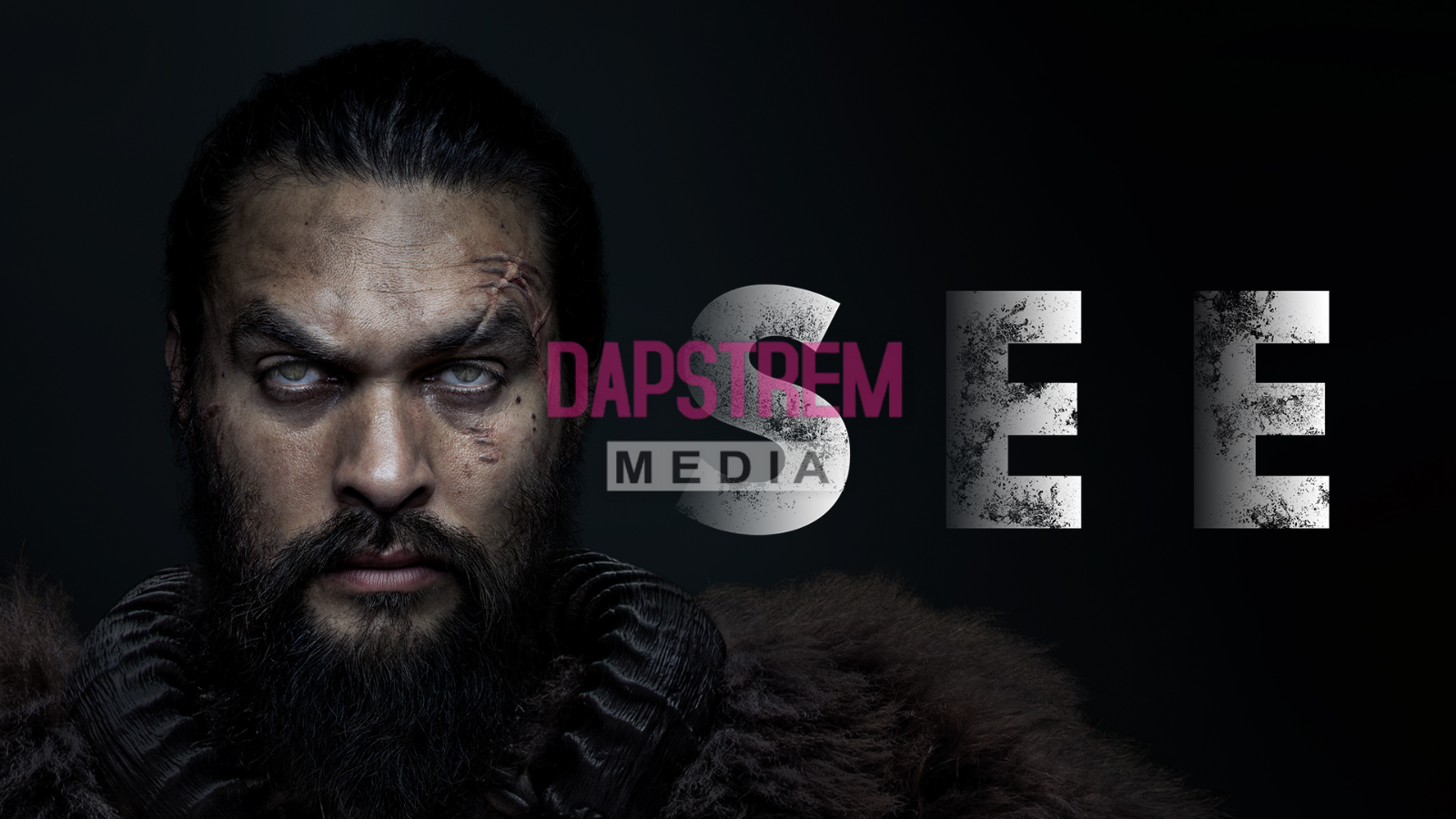
That is the extraordinary premise behind See, Apple TV+’s ambitious science-fiction drama starring Jason Momoa.
Created by Steven Knight, the writer behind Peaky Blinders, and directed in part by Francis Lawrence, See premiered in 2019 as one of Apple TV+’s flagship original productions. The series ran for three seasons and concluded in 2022.
At its heart, See is a story about survival, family, faith and power. But beneath its spectacular battles and post-apocalyptic landscapes lies a fascinating question: What would humanity become if sight itself disappeared?
A world without sight
The story takes place centuries after a virus has devastated humanity and left the surviving population blind.
Over generations, blindness has become completely normal. Society has adapted to it.
People hunt, build homes, travel, fight and communicate without relying on vision. They use sound, touch, smell and other senses to navigate their environment.
But the arrival of twins who are born with the ability to see threatens everything this society believes.
The children, Kofun and Haniwa, are considered extraordinary but dangerous because the ability to see has become associated with a forbidden past. Their existence attracts the attention of Queen Sibeth Kane, who wants them found and destroyed.
Their adoptive father, Baba Voss, becomes their greatest protector.
Apple’s official description captures the central conflict: Baba must protect his tribe and the twins from a powerful queen who considers their ability to see a threat.
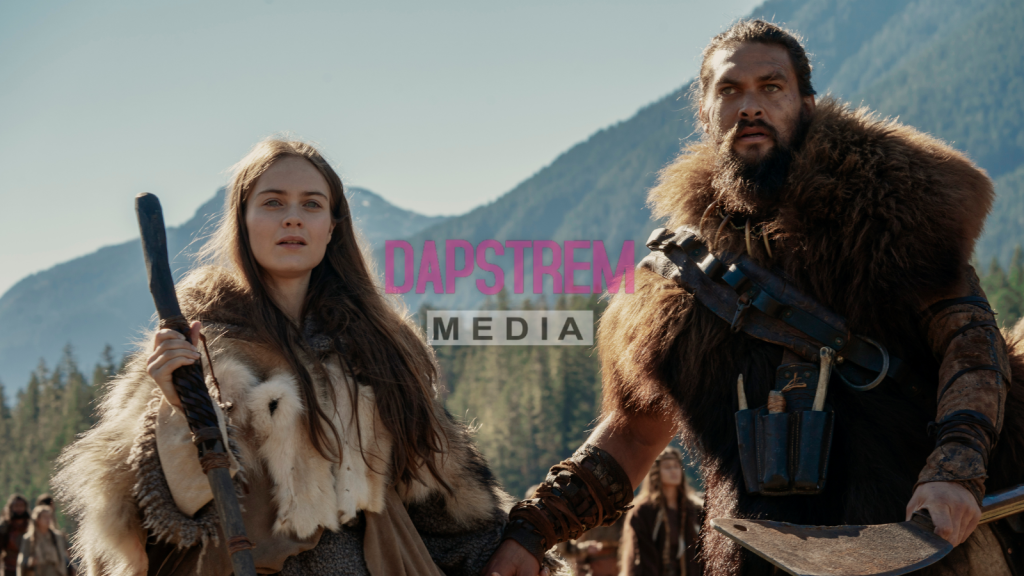
Jason Momoa as Baba Voss
At the centre of See is Jason Momoa’s Baba Voss.
Known internationally for roles such as Aquaman and Khal Drogo, Momoa takes a different approach here. Baba is physically imposing, but his character is not simply a warrior who solves every problem through strength.
He is a father.
His greatest motivation is protecting his family.
That makes the violence surrounding him more meaningful. Baba does not fight because he enjoys conflict. He fights because the people he loves are constantly threatened.
Momoa’s physical presence is particularly effective in the show’s combat sequences. Baba fights with an unusual combination of brutality and awareness, relying heavily on sound and instinct.
The character also develops considerably over the three seasons, moving from a man primarily concerned with protecting his family to someone forced to confront larger questions about politics, war and the future of humanity.
A remarkable supporting cast
Momoa is surrounded by a strong ensemble.
Hera Hilmar plays Maghra, Baba’s partner and the mother of the twins.
Alfre Woodard plays Paris, a spiritual and maternal figure whose wisdom becomes crucial to the family.
Sylvia Hoeks portrays Queen Kane, one of the series’ most unpredictable characters.
Christian Camargo plays Tamacti Jun, while Archie Madekwe and Nesta Cooper portray Kofun and Haniwa.
Later seasons introduce Dave Bautista as Edo Voss, Baba’s brother, adding another layer of family conflict to the story.
Queen Kane: one of the show’s most complicated characters
Sylvia Hoeks’ Queen Kane is particularly fascinating.
She is not written as a conventional villain who simply wants power.
She is religious, politically ambitious, intelligent, emotionally unstable and deeply convinced of her own importance.
Her relationship with sight is complicated. She fears its consequences while simultaneously being fascinated by what it represents.
That contradiction makes her one of the series’ most unpredictable figures.
Her decisions repeatedly place entire communities at risk, but See gives audiences enough insight into her motivations to make her more than a one-dimensional antagonist.
The importance of family
Although See is marketed as science fiction and action, family is its emotional centre.
Baba and Maghra are willing to risk almost everything to protect their children.
Kofun and Haniwa, meanwhile, must learn how to live with a secret that could make them powerful but could also get everyone around them killed.
Their relationship with their parents becomes increasingly complicated as they grow older and begin questioning the world they have inherited.
The series repeatedly returns to the same conflict:
Should the children hide what they can do to protect their family, or should they use their abilities to change the world?
That question drives much of the story.
What makes the world-building special?
The most impressive thing about See is its attempt to build a civilisation without sight.
This isn’t a world where everyone is conveniently blind but behaves as if they can see.
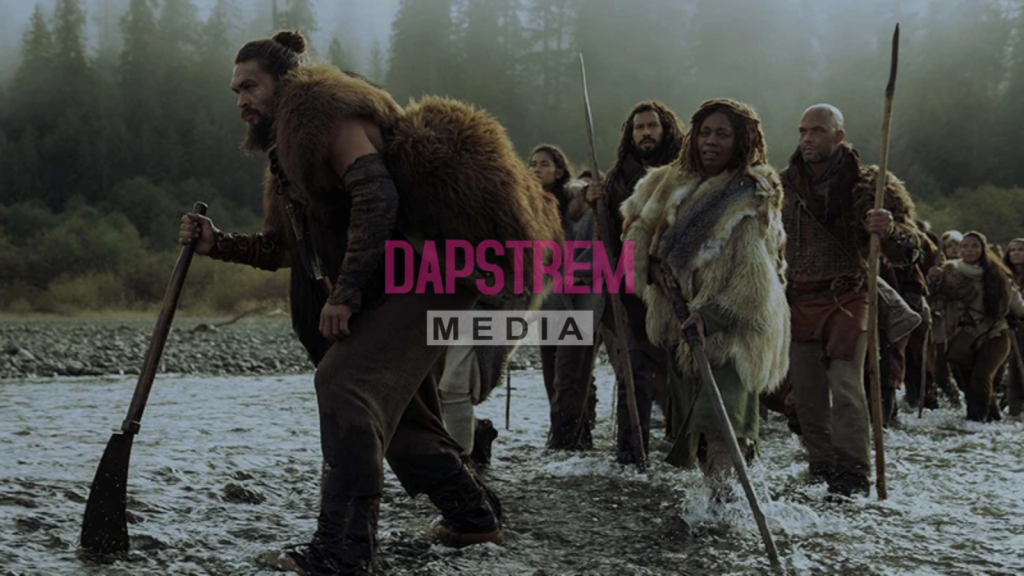
People communicate through sounds and physical signals. Warriors use echoes and environmental clues. Communities develop systems for navigating unfamiliar spaces.
Ropes, bells, sound and touch become essential.
Even combat is different.
Fighters have to listen carefully to their opponents, recognise movement through sound and use the environment to compensate for the absence of vision.
The result is a world that feels fundamentally different from ordinary post-apocalyptic television.
The series does not simply remove sight from humanity.
It asks what humanity might build in its absence.
The visual irony of See
There is also something fascinating about the show’s title.
See is an intensely visual television series about people who cannot see.
Its landscapes are enormous and cinematic. Forests, mountains, rivers, snow-covered terrain and ruined structures are photographed with extraordinary detail.
That creates an interesting relationship between the audience and the characters.
Viewers can see everything.
The characters cannot.
The camera therefore becomes a window into a world that its inhabitants experience entirely differently.
This contrast gives the series a distinctive visual identity.
The action
If there is one element that immediately stands out, it is the violence.
See is not a gentle science-fiction drama.
Its battles are brutal, physical and often graphic. Characters are injured, killed and forced into extremely violent confrontations.
The choreography is designed around the show’s central concept. Fighters cannot depend on sight, so hearing, timing and physical awareness become essential.
The result is action that often feels more intimate than conventional fantasy battles.
There is very little distance between the characters.
Weapons, bodies and terrain become part of the fight.
This was one of the elements praised by early critics, although some reviews also criticised the show’s reliance on violence and occasionally complicated storytelling.
The world beyond the family
As the series develops, the story becomes much larger.
The conflict expands beyond Baba’s family and begins involving rival kingdoms, political alliances, religious beliefs and military technology.
The question of sight becomes increasingly political.
Those who can see are no longer simply individuals with a secret ability. Their existence could potentially transform civilisation.
This creates one of the show’s most interesting themes:
Who gets to control knowledge?
If an entire civilisation believes sight is impossible, the person who can see possesses an extraordinary form of power.
Information itself becomes a weapon.
Religion and power
Religion plays a major role in the world of See.
Sight has become surrounded by mythology and fear. Religious authorities view it as something dangerous, while rulers use belief to strengthen political control.
The show therefore explores the relationship between religion and government in a society where historical knowledge has largely disappeared.
That makes the story more complicated than a simple battle between good and evil.
Different characters believe they are protecting humanity.
They simply disagree about what humanity should become.
Season two raises the stakes
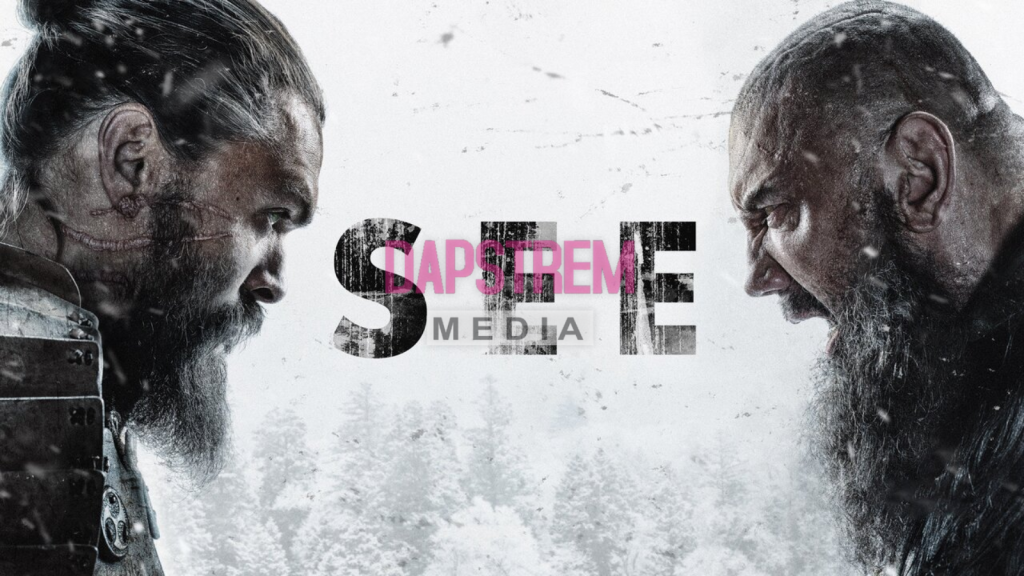
The second season introduces Dave Bautista as Edo Voss, Baba’s brother.
Edo is not simply another enemy.
He has a personal history with Baba, and their conflict is rooted in family resentment, betrayal and competing ideas of strength.
His arrival gives the series a more intimate antagonist.
The war between the brothers becomes one of the season’s defining storylines.
It also allows Momoa to explore another side of Baba: a man forced to confront his own past.
The final season
The third season brought the series to its conclusion.
By this point, the story had moved far beyond the original premise of a father protecting two sighted children.
A new threat emerges when scientist Tormada develops devastating weapons that could fundamentally alter warfare.
Baba is once again forced back into conflict to protect his family and the wider society.
The final season consists of eight episodes, beginning with “Heavy Hangs the Head” and ending with “I See You.”
Importantly, the third season was designed as the conclusion rather than simply another chapter in an ongoing story.
Critics responded more positively to the final season than to the first. Rotten Tomatoes records an 83% critics’ score for season three, compared with 44% for the first season.
From a difficult beginning to a stronger ending
The first season received mixed critical reactions.
Rotten Tomatoes currently records a 44% critics’ score for season one, with criticism focused partly on its complicated narrative and heavy reliance on violence. However, its audience score is substantially higher at 83%.
The overall series now stands at 63% from critics and 84% from audiences on Rotten Tomatoes.
That gap is revealing.
See was the kind of show that could frustrate critics while developing a devoted audience.
Viewers were drawn to its unusual premise, spectacular action, Jason Momoa’s performance and increasingly detailed world.
The third season’s stronger reception suggests that the show improved as it found its identity.
The representation of blindness
One of the most interesting and complicated aspects of See is its portrayal of a civilisation composed almost entirely of blind people.
The production worked with blind and visually impaired consultants and performers, and the show’s creators attempted to think seriously about how societies might function without sight.
However, the series has also faced criticism over aspects of its representation.
The central premise requires enormous imagination, and some aspects of the world are necessarily speculative.
That is not necessarily a weakness, but it is important for viewers to distinguish between the show’s fictional world and the realities of blindness.
See is ultimately speculative science fiction, not a documentary about blindness.
Why See stands out
There are countless post-apocalyptic dramas.
There are stories about viruses.
There are stories about kingdoms fighting for power.
There are stories about parents protecting their children.
What makes See unusual is that it combines all three with one extraordinary premise.
The loss of sight changes everything.
It changes warfare.
It changes religion.
It changes communication.
It changes architecture.
It changes family relationships.
It even changes what knowledge means.
That level of world-building is difficult to achieve.
The series’ biggest strength
The greatest strength of See is its ambition.
The creators did not simply ask what would happen if people became blind.
They built an entire civilisation around the idea.
The show imagines how people would hunt, travel, fight, govern, worship and raise children in a world where sight no longer exists.
That is why, even when the storytelling becomes complicated, the series remains fascinating.
Its biggest weakness
The same ambition that makes See impressive can also make it frustrating.
The mythology becomes increasingly complicated, and the political storylines sometimes overwhelm the original emotional simplicity of Baba’s family.
There are also moments when the dialogue and plot feel less convincing than the production design and action.
Critics were particularly divided about the first season’s storytelling, with Rotten Tomatoes’ consensus describing its bold vision as being obscured by gore and a convoluted narrative.
By season three, the action is better integrated with the characters and the ending feels more deliberate.
Genre: Science fiction, action, drama, fantasy Created by: Steven Knight Starring: Jason Momoa, Sylvia Hoeks, Hera Hilmar, Alfre Woodard, Christian Camargo, Archie Madekwe, Nesta Cooper and Dave Bautista Original run: 2019–2022 Seasons: 3 Episodes: 24 Where to watch: Apple TV