Why Ethiopia’s Renewed Tigray Conflict Could Be Far Harder to Resolve as Regional Tensions Escalate and Former Enemies Reunite
Ethiopia is once again facing a dangerous security crisis in its northern Tigray region, just four years after a peace agreement brought an end to one of the country’s most devastating modern conflicts.
The renewed fighting has raised fears that the fragile peace established by the 2022 Pretoria Agreement could collapse completely, opening the way for another prolonged conflict with consequences far beyond Tigray.
What makes the latest crisis particularly worrying is that the political and military landscape has changed significantly since the previous war.
Several armed groups that were once bitter enemies have now formed an alliance against Prime Minister Abiy Ahmed’s federal government. At the same time, relations between Ethiopia and neighbouring Eritrea have deteriorated sharply, while other regional actors are being drawn into the increasingly complicated dispute.
The result is a conflict that could be considerably harder to resolve through diplomacy than the war that ended in 2022.
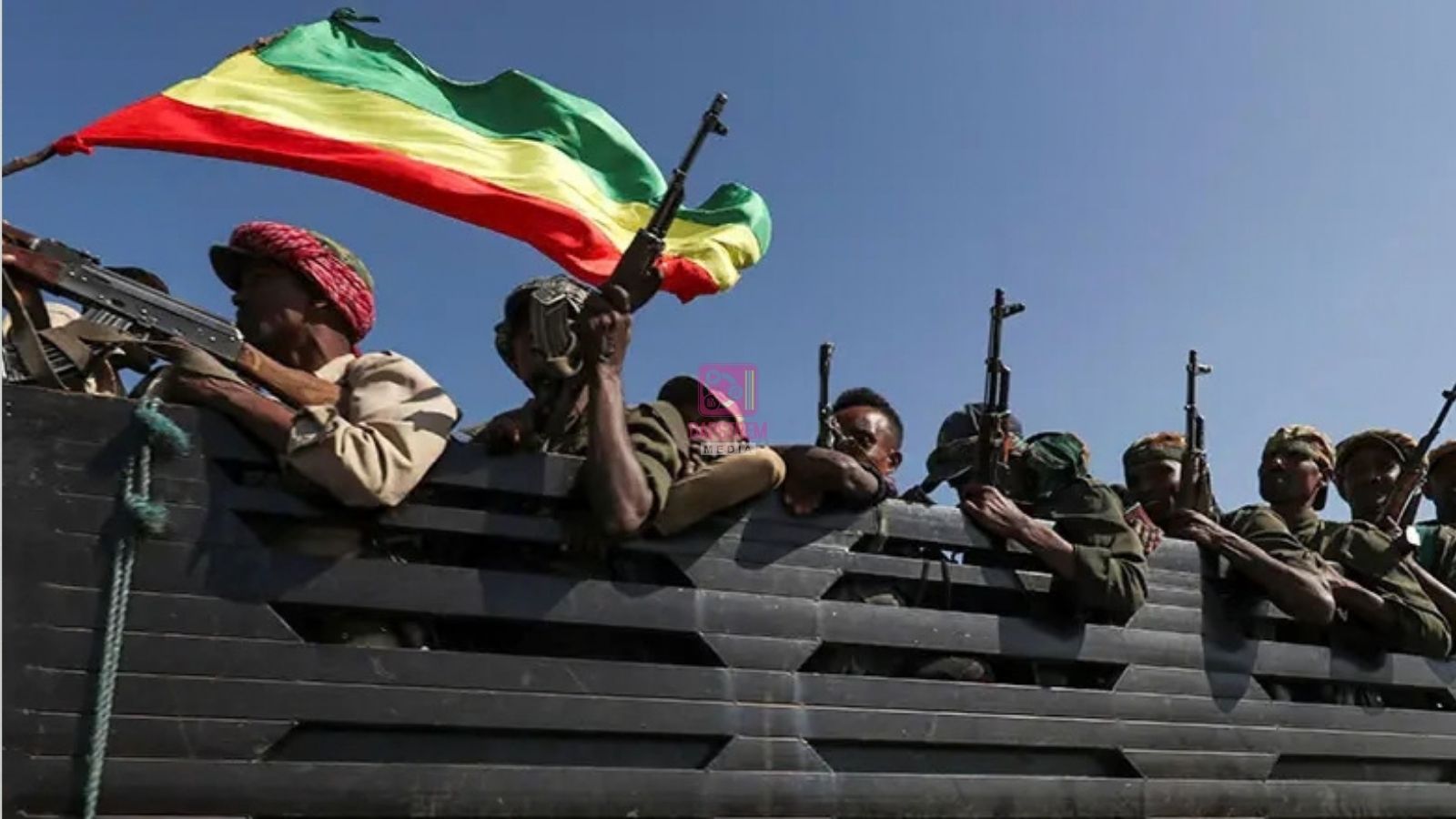
The renewed violence began escalating in late September, with fighting reported in parts of Tigray and surrounding areas. The Tigray People’s Liberation Front (TPLF) and Ethiopian federal forces have accused each other of triggering the latest hostilities.
The escalation has also involved strategic locations, including airports, roads and military positions.
The TPLF and allied forces have reportedly seized several locations, while federal forces and their allies have mounted counteroffensives. The fighting has also disrupted transport and communications in parts of northern Ethiopia.
The situation has already affected air travel. Ethiopian Airlines suspended flights to Tigray after Tigrayan forces seized Mekelle airport, while flights to other cities were also disrupted. Internet and telephone services have been affected in some areas.
For civilians who experienced the 2020–2022 war, the renewed violence has brought back memories of displacement, hunger, destroyed infrastructure and restricted access to essential services.
The previous conflict ended with the signing of the Pretoria Agreement in November 2022. The deal stopped the large-scale fighting between the Ethiopian federal government and the TPLF and created a framework for disarmament, humanitarian access and the restoration of regional administration.
However, the agreement did not resolve every political and territorial dispute that had fuelled the war.
That unfinished business is now proving increasingly important.
The Pretoria agreement left major questions unanswered
The 2022 peace agreement was a major diplomatic achievement, but it was never a comprehensive settlement of all the disagreements surrounding Tigray.
The agreement was primarily designed to stop the fighting and create a pathway towards peace. Yet several issues remained unresolved, including territorial disputes, the status of displaced populations, accountability for abuses and the political relationship between Tigray and the federal government.
Analysts cited by DW have also argued that important actors were not sufficiently included in the peace process.
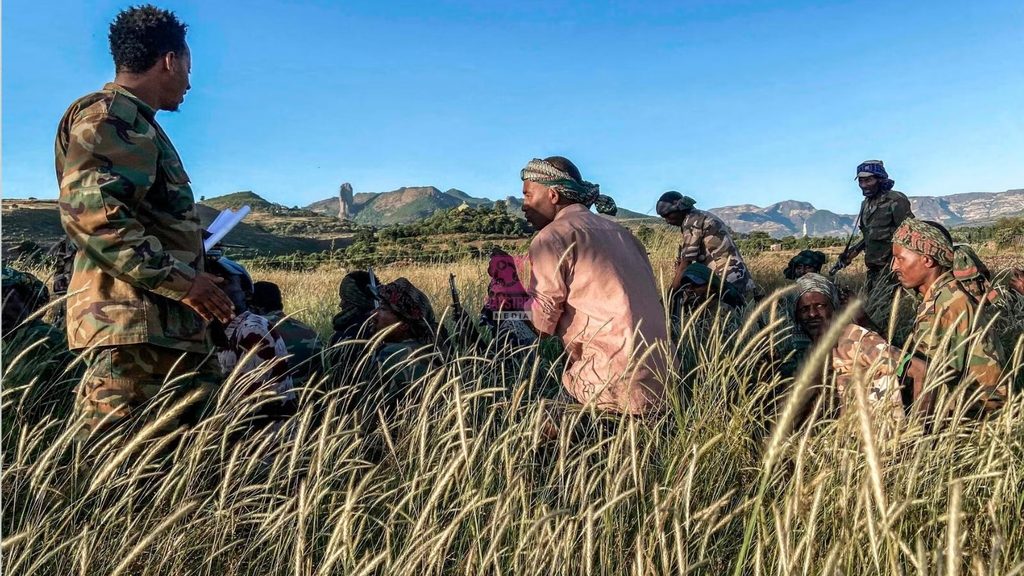
Eritrea, which had fought alongside Ethiopian federal forces during the previous Tigray war, was not a party to the Pretoria negotiations. Amhara militias, commonly known as Fano, were also largely outside the agreement despite their role in the conflict and their interests in disputed territories.
Within the TPLF itself, some hardliners viewed the agreement as an acknowledgement of military defeat rather than a durable political settlement.
That created a fundamental weakness.
A ceasefire can stop bullets, but it does not automatically resolve the political disagreements that caused the fighting in the first place.
According to analysts quoted by DW, the international community also failed to maintain sufficient attention on the implementation of the agreement after the immediate fighting stopped.
There were early signs of progress, including the surrender of heavy weapons by Tigrayan forces. But international attention eventually shifted towards other crises around the world.
That allowed unresolved tensions to continue beneath the surface.
Patricia Rodrigues of Control Risks told DW that the situation was complicated by the rearming and recruitment that occurred after the peace agreement. She argued that the Pretoria arrangement increasingly resembled a temporary ceasefire rather than a comprehensive political settlement.
The renewed fighting therefore cannot simply be understood as a sudden breakdown.
It is also the result of unresolved political questions that remained after the guns fell silent in 2022.
Former enemies are now fighting a common opponent
One of the most unusual aspects of the current crisis is the emergence of an alliance involving groups that previously fought one another.
The TPLF has joined forces with several opposition and armed groups in an effort to challenge the federal government.
The coalition reportedly includes the Amhara Fano National Movement, the Oromo Liberation Army and other opposition groups from different parts of Ethiopia.
Some of these groups have historically had serious disagreements with one another.
The TPLF and Amhara forces, for example, fought on opposite sides during the previous Tigray war. They have also been involved in long-running disputes over territory and political influence.
Their decision to cooperate against the federal government therefore represents a significant shift in Ethiopia’s political and military landscape.
The alliance does not necessarily mean that the groups have resolved their differences.
Instead, analysts have described it as a strategic arrangement built around a shared opposition to the government.
That creates both opportunities and weaknesses for the groups involved.
If they can coordinate effectively, the federal government could face pressure on several fronts simultaneously. Ethiopia is a vast country with difficult terrain, and fighting in different regions could stretch government forces and resources.
But maintaining a coalition made up of groups with different political goals, ethnic constituencies and territorial interests could prove difficult.
Control Risks analyst Patricia Rodrigues warned that the alliance’s durability remains uncertain because its members have different interests.
This is one reason why the current conflict is difficult to predict.
The parties are not simply divided into two clearly defined camps.
Instead, Ethiopia is dealing with a collection of political, ethnic, territorial and security disputes that overlap with one another.
That makes conventional peace negotiations more complicated.
Eritrea’s role has become increasingly important
Perhaps the most dangerous development surrounding the renewed Tigray conflict is the deterioration in relations between Ethiopia and Eritrea.
The two countries have a long and complicated history.
Eritrea fought a devastating war with Ethiopia before achieving independence. The two countries later entered another major conflict between 1998 and 2000.
In 2018, Abiy Ahmed and Eritrean President Isaias Afwerki signed a peace agreement that ended years of hostility and restored diplomatic relations.
That rapprochement helped earn Abiy the Nobel Peace Prize.
But the relationship has deteriorated significantly in recent years.
Eritrea participated alongside Ethiopian federal forces during the previous Tigray war. However, Addis Ababa and Asmara now accuse each other of destabilising activities.
Ethiopia has accused Eritrea of supporting armed opponents, including forces linked to the renewed conflict. Eritrea has denied those allegations.
The disagreement reached another level this week when Ethiopia announced the closure of its embassy in Asmara and ordered 10 Eritrean diplomats to leave the country.
Eritrea responded by announcing that it was severing diplomatic relations with Ethiopia.
The diplomatic rupture is significant because it removes another channel through which the two governments could potentially manage tensions.
It also creates fears that the Tigray conflict could become an internationalised conflict involving neighbouring countries.
That would make diplomacy considerably more difficult.
A conflict involving only Ethiopia’s federal government and Tigrayan forces would already be complicated.
A conflict involving Ethiopia, Eritrea, multiple Ethiopian armed groups and other regional interests would be much harder to mediate.
The Horn of Africa is already under enormous pressure
The timing of the renewed Tigray conflict is another reason for concern.
The Horn of Africa is already facing several major security and humanitarian challenges.
Sudan remains engulfed in a devastating war. The conflict there has displaced millions and created one of the world’s largest humanitarian emergencies.
Somalia continues to deal with insecurity and militant violence.
Ethiopia itself has experienced armed conflicts and political tensions in several regions.
Adding another major war to this environment could create consequences that extend across national borders.
Analysts at Chatham House have warned that the latest fighting could spill beyond Tigray into Eritrea and potentially Sudan. They argue that the weakness of the Pretoria Agreement and the absence of a broader political settlement have contributed to the renewed instability.
This is why the crisis is attracting attention beyond Ethiopia.
The Horn of Africa is deeply interconnected through trade, migration, security arrangements and political relationships.
Instability in one country can quickly affect neighbouring states.
A prolonged conflict in northern Ethiopia could therefore disrupt trade routes, increase displacement and place additional pressure on countries already struggling to respond to humanitarian crises.
Diplomacy faces a much harder task this time
The biggest question now is whether diplomacy can stop the fighting before it develops into another full-scale war.
The challenge is that the diplomatic environment has changed.
During the previous conflict, international and regional actors eventually played an important role in bringing the Ethiopian government and the TPLF to negotiations.
The African Union played a central role in the peace process that resulted in the Pretoria Agreement.
But the current situation involves more armed groups and more complicated regional relationships.
The TPLF is no longer the only opposition force challenging the government.
The federal government is also dealing with armed groups in different parts of the country.
Meanwhile, Eritrea has become increasingly hostile towards Addis Ababa.
Egypt has also been drawn into the diplomatic tensions surrounding Ethiopia, particularly amid the broader dispute over the Nile and the Grand Ethiopian Renaissance Dam.
On October 2, the African Union called on Ethiopia, Eritrea and Egypt to exercise restraint and resolve disputes through established diplomatic channels. The appeal came after the diplomatic relations between Ethiopia and Eritrea deteriorated sharply and Ethiopia also expelled an Egyptian diplomat.
These developments show how the conflict is becoming intertwined with wider regional disputes.
Diplomacy must therefore deal with more than the immediate fighting in Tigray.
It must also address relationships between governments, armed groups, ethnic communities and regional powers.
That is a much more complicated task.
Civilians remain the most vulnerable
Regardless of the political calculations of the parties involved, civilians are likely to bear the greatest burden if the conflict continues.
Tigray’s population has not fully recovered from the previous war.
The 2020–2022 conflict caused enormous loss of life and displacement. Researchers at Ghent University estimated that roughly 500,000 people died in the earlier conflict, with most deaths attributed to indirect causes such as famine and the collapse of the healthcare system rather than direct battlefield violence.
Many people were displaced during the war.
Some have not been able to return home because of insecurity, destroyed infrastructure or unresolved territorial disputes.
The renewed fighting therefore risks creating another wave of displacement before communities have recovered from the previous crisis.
Reports have already emerged of people leaving areas affected by the fighting.
Communication disruptions make the situation even more difficult.
When telephone and internet services are interrupted, families struggle to communicate with relatives, businesses cannot operate normally and humanitarian organisations face difficulties gathering information.
Electricity disruptions can also affect hospitals, water systems and other essential services.
The consequences can become severe very quickly.
A conflict does not need to destroy an entire city to create a humanitarian crisis.
Interrupting roads, telecommunications, electricity, banking services and fuel supplies can be enough to bring normal life to a standstill.
Reports from Tigray have already indicated disruptions to essential services and commercial activity.
Another war could deepen Ethiopia’s humanitarian crisis
Ethiopia is one of Africa’s most populous countries and has millions of people who depend on stable access to food, healthcare and livelihoods.
A prolonged conflict would therefore have consequences beyond the battlefield.
Farmers could struggle to access their land.
Markets could close.
Food prices could rise.
Medical supplies could become scarce.
Schools could be forced to close.
Families could once again be pushed into displacement camps.
Humanitarian organisations could also find it difficult to reach communities trapped in conflict zones.
This was one of the most damaging features of the previous Tigray war.
The combination of fighting, restrictions on humanitarian access and the destruction of infrastructure created conditions in which civilians suffered long after major battles had ended.
A repetition of that situation would be particularly damaging.
It would also place additional pressure on neighbouring regions and countries that could receive people fleeing the violence.
The question of whether the alliance can hold
Another important issue will be the future of the new opposition alliance.
On paper, bringing several armed groups together could create significant pressure on the federal government.
But alliances formed around a common enemy can be difficult to maintain once immediate objectives change.
The groups involved have different political agendas.
They represent different communities.
They have different territorial interests.
Some have fought one another in the past.
That history cannot simply be erased because they now share opposition to the federal government.
If the coalition begins to weaken, the government could regain room to manoeuvre.
However, if the alliance manages to coordinate its operations and maintain political unity, the security challenge facing Addis Ababa could become considerably more complicated.
For diplomats, this presents another problem.
Negotiating with one opposition group is already difficult.
Negotiating with several armed organisations with different demands requires an entirely different diplomatic structure.
Some groups may demand political reforms.
Others may focus on territorial disputes.
Others may seek greater regional autonomy.
Some may want changes in the federal political system.
A single peace agreement may therefore not be sufficient to address all their concerns.
Ethiopia’s internal crisis could become a regional crisis
The most serious concern is that the renewed fighting may not remain confined to Ethiopia.
The breakdown in Ethiopia-Eritrea relations is already a major warning sign.
On October 1, Eritrea announced that it was cutting diplomatic ties with Ethiopia after Addis Ababa closed its embassy in Asmara and expelled Eritrean diplomats. Ethiopia had accused Eritrea of hostile activities and support for armed opponents, while Eritrea rejected the accusations.
If the diplomatic crisis continues to deteriorate, the possibility of direct confrontation between the two countries becomes a growing concern.
Such a development would transform the nature of the crisis.
Instead of an internal Ethiopian conflict, the region could face a broader security confrontation.
That could affect trade routes, border communities and humanitarian operations.
It could also create new pressures on Sudan, which is already experiencing a devastating war.
For the African Union and other regional organisations, preventing such an outcome will be critical.
What could bring the parties back to negotiations?
A lasting solution will require more than another ceasefire.
The experience of the Pretoria Agreement demonstrates that stopping the shooting is only one part of the peace process.
The underlying political disputes must also be addressed.
Questions surrounding disputed territories, displaced communities, regional autonomy, accountability, security arrangements and political representation will have to be confronted.
The different armed groups also need a political pathway.
Simply demanding that armed organisations surrender without addressing the grievances that produced them may not be enough.
At the same time, continued fighting makes negotiations increasingly difficult.
Each military victory can strengthen the belief among combatants that they can achieve more through force than through compromise.
That creates a dangerous cycle.
The longer the fighting continues, the more difficult it may become for political leaders to make concessions without appearing weak to their supporters.
This is why international and regional diplomatic efforts are likely to be most valuable before the conflict becomes even more entrenched.
The African Union has already urged restraint and dialogue. The United Nations has also called for de-escalation and a return to negotiations.
But mediation will face significant obstacles.
Analysts quoted by DW have expressed doubts that international or regional mediation alone can quickly end the fighting.
They argue that the parties themselves must eventually recognise that military force cannot deliver all of their political objectives.
That may ultimately be the most important condition for negotiations.
A fragile moment for Ethiopia and the Horn of Africa
The renewed Tigray conflict is a reminder that peace agreements cannot survive on paper alone.
They require implementation, political compromise and sustained attention.
Four years after the Pretoria Agreement stopped the major fighting, unresolved disputes have returned to the centre of Ethiopia’s politics.
The difference now is that the conflict is unfolding in a more complicated environment.
Former enemies have formed new alliances.
The federal government is facing opposition from multiple armed groups.
Relations with Eritrea have collapsed.
Tensions involving Egypt are also rising.
And millions of civilians remain vulnerable to another humanitarian disaster.
The African Union and other international actors now face the difficult task of preventing the crisis from developing into something much larger.
The immediate priority is stopping the escalation and protecting civilians.
But any lasting settlement will require the deeper political questions to be addressed.
The Pretoria Agreement demonstrated that negotiations can end large-scale fighting. The current crisis, however, shows the limitations of an agreement that does not resolve the underlying disputes or include all relevant actors.
Whether Ethiopia can avoid another prolonged war may therefore depend on whether its political leaders and armed groups are willing to move beyond short-term military calculations and return to a broader political process.
For the people of Tigray, the stakes are especially high.
They have already endured years of war, displacement and humanitarian hardship.
Another prolonged conflict could erase much of the fragile recovery achieved since 2022.
For the wider Horn of Africa, the stakes are equally significant.
A conflict that begins in Tigray could affect Ethiopia’s neighbours, regional diplomacy, humanitarian operations and security across one of Africa’s most strategically important regions.
The renewed fighting has therefore become more than a question of whether Ethiopia can restore calm in one region.
It is increasingly a test of whether diplomacy can prevent another internal conflict from becoming a wider regional crisis.