WHO Race Intensifies as Six Candidates Seek to Succeed Tedros Adhanom Ghebreyesus as Director-General
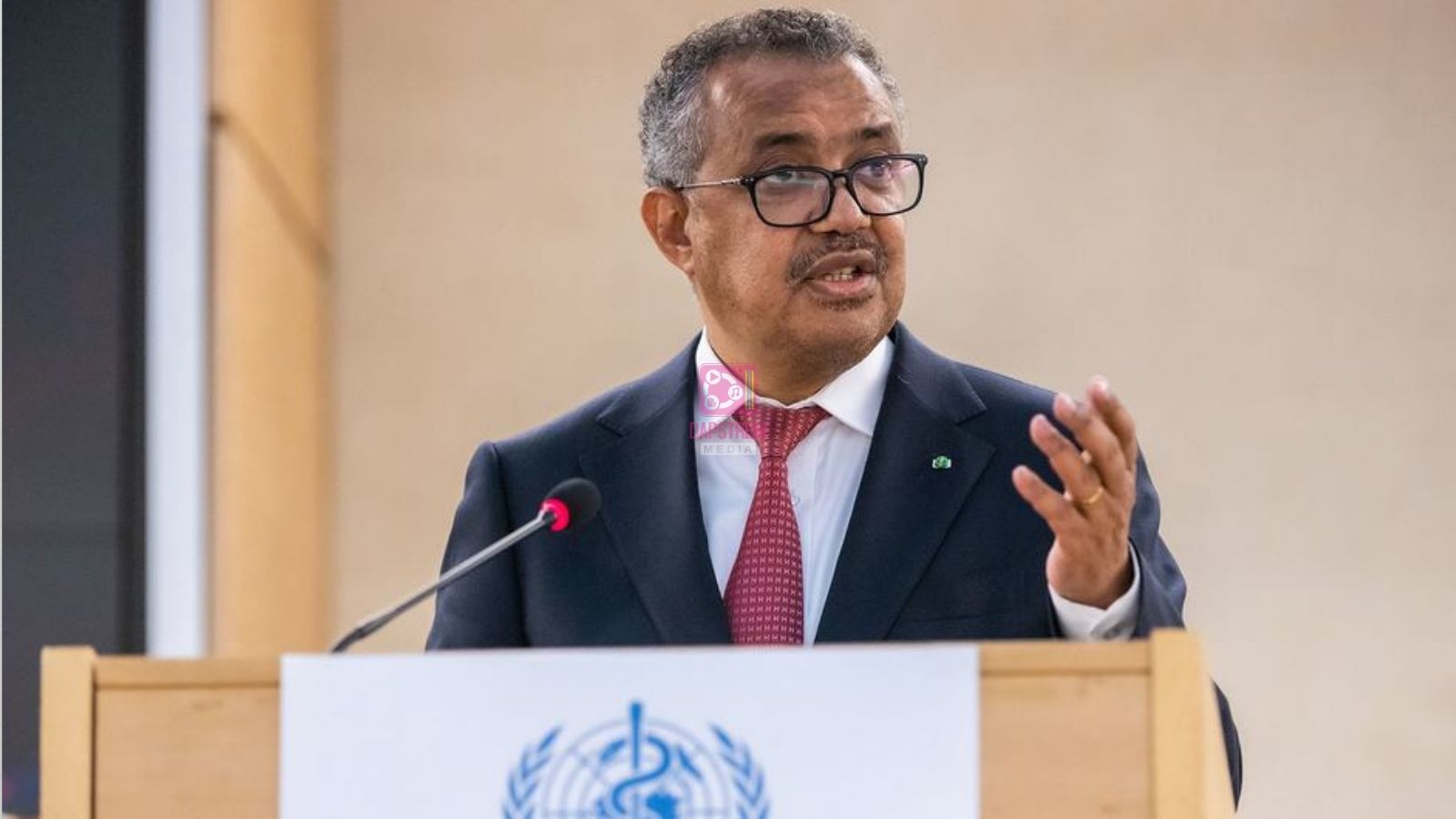
The race to succeed World Health Organization (WHO) Director-General Tedros Adhanom Ghebreyesus is gathering momentum, with six candidates now publicly known to be seeking the leadership of the global health agency.
The contest comes at a critical moment for the WHO, which is facing questions about its finances, institutional priorities, global health preparedness and its role in responding to future pandemics.
Tedros, who has led the organisation since 2017, began his second five-year term in August 2022. Under WHO rules, a director-general can serve a maximum of two terms, meaning he cannot seek another term after his current mandate ends on August 15, 2027.
The next director-general will therefore inherit an organisation operating in a rapidly changing global health environment.
The six publicly known candidates come from Belgium, Saudi Arabia, Qatar, Indonesia, Spain and Botswana. Their professional backgrounds are also diverse, ranging from senior WHO officials and public health specialists to a sitting health minister and a paediatric oncologist.
The candidates are Hans Henri P. Kluge of Belgium, Hanan H. Balkhy of Saudi Arabia, Hanan Mohamed Al-Kuwari of Qatar, Budi Gunadi Sadikin of Indonesia, María Neira of Spain and Gevorg Tamamyan, who was nominated by Botswana.
However, the six names currently in the public domain may not represent the final list.
WHO’s rules allow member states to keep nominations confidential during part of the process. The organisation has said the names and proposals will be officially published after the final Regional Committee session, expected around the end of October or beginning of November 2026.
This means the contest could still attract additional attention as governments make their positions clearer and candidates begin presenting their visions for the organisation.
For now, however, the six publicly identified candidates are already beginning to shape the debate over what the WHO should look like after Tedros.
Six candidates, different backgrounds
Hans Henri P. Kluge became the first publicly listed candidate when Belgium nominated him in August.
Kluge has been WHO Regional Director for Europe since 2020. Before joining senior WHO leadership, he worked in public health and humanitarian medicine, including with Médecins Sans Frontières.
His campaign has focused heavily on institutional reform, primary healthcare and bringing WHO decision-making closer to countries and communities.
Kluge has argued that WHO needs to become more focused and responsive while maintaining its scientific authority and global convening role.
His experience inside the organisation could give him familiarity with its structures and challenges. At the same time, his campaign comes at a period when member states are debating how much the agency should change and how it should manage its resources.
Saudi Arabia’s Hanan Balkhy became the second publicly known candidate.
Balkhy is a paediatric infectious disease specialist and currently serves as WHO Regional Director for the Eastern Mediterranean. She previously served as WHO Assistant Director-General for Antimicrobial Resistance.
Her campaign has highlighted regional self-reliance, local vaccine manufacturing, One Health and strengthening the role of WHO’s regional and country offices.
Balkhy has also emphasised the need for WHO to demonstrate value to its member states at a time when global health financing is under pressure.
Qatar’s Hanan Mohamed Al-Kuwari is another senior health-sector figure in the race.
Al-Kuwari previously served as Qatar’s Minister of Public Health and spent many years as managing director of Hamad Medical Corporation.
She has also been involved in international health diplomacy, including work connected to negotiations around the WHO Pandemic Agreement.
Her campaign has placed emphasis on a WHO that countries can trust, sustainable financing and turning global health knowledge into practical improvements for communities.
Indonesia’s Health Minister Budi Gunadi Sadikin brings a different background to the contest.
Sadikin is not a traditional clinical-medicine candidate. He trained as a nuclear physicist and previously worked in banking before entering government.
His candidacy has placed particular emphasis on WHO’s finances, Global South priorities, vaccine production and the organisation’s core mandate.
In recent months, Sadikin has also been consulting health ministers around the world about their expectations for the next phase of WHO leadership. He has said discussions with ministers from regions including Southeast Asia, Africa and Latin America revealed concerns about the organisation trying to do too much and about the need to strengthen country ownership of health priorities.
If successful, Sadikin would become the first WHO director-general from Southeast Asia.
Spain’s María Neira entered the contest on the final day of the nomination period.
Neira spent about two decades leading WHO’s work on environment, climate change and health. Her professional background also includes emergency medical work and public health leadership.
Her campaign has placed considerable attention on prevention and the relationship between environmental conditions and human health.
Her entry into the race added another dimension to an already diverse field because climate change, air pollution and environmental health are becoming increasingly important parts of global health policy.
The sixth publicly known candidate is Gevorg Tamamyan, an Armenian paediatric oncologist nominated by Botswana.
Tamamyan’s background is strongly rooted in cancer care, paediatric oncology and medical research. His nomination also adds another geographical and professional dimension to the race.
The six candidates therefore represent different regions, institutions and areas of expertise.
That diversity is likely to become an important feature of the campaign as member states consider what they want from the organisation’s next leader.
A leadership contest at a difficult time for WHO
The next director-general will inherit an organisation facing significant financial and institutional pressures.
WHO’s 2026–2027 base budget is about $4.2 billion, and the organisation has been working to secure adequate financing amid changes in international development assistance.
The withdrawal of the United States from WHO has added further financial uncertainty. Health Policy Watch reported in April that WHO had been dealing with a major funding gap and workforce reductions following the US withdrawal and broader reductions in development assistance.
That means the next director-general will not simply be expected to lead the organisation’s health programmes.
The person will also have to manage a complex financial environment.
WHO relies on contributions from member states and other partners to finance its activities. How that money is raised, allocated and used has become an increasingly important issue.
There is also growing debate over the proportion of funding that comes with specific conditions attached.
Some health officials and governments have argued that WHO needs greater flexibility to determine where resources should be directed according to global health priorities.
Others want stronger accountability and financial discipline.
These competing expectations will form part of the leadership debate.
Pandemic preparedness remains a major issue
The next WHO director-general will also inherit the responsibility of preparing the international health system for future pandemics.
The COVID-19 pandemic exposed weaknesses in global health preparedness and revealed significant disagreements between countries over information sharing, vaccines, medical supplies and access to technology.
Countries subsequently began negotiating the WHO Pandemic Agreement as part of efforts to strengthen international preparedness.
The next director-general will therefore be expected to help implement whatever agreements member states ultimately adopt.
This will require balancing the interests of wealthy countries, developing countries, pharmaceutical companies and international health organisations.
Questions around vaccine manufacturing and access will be particularly important.
Countries in Africa and other parts of the Global South have repeatedly called for greater local and regional capacity to produce vaccines, medicines and other health technologies.
The COVID-19 experience showed how dependent many countries were on international supply chains during a global emergency.
The next WHO leadership will therefore inherit an international health system still trying to learn from that experience.
Global health financing is another major challenge
Money will be one of the biggest issues facing the incoming director-general.
WHO cannot implement ambitious programmes without reliable funding.
At the same time, many traditional donor countries are reviewing their international development budgets.
That creates uncertainty for programmes covering infectious diseases, maternal health, immunisation, nutrition, climate-related health threats and health-system strengthening.
Candidates have already begun discussing different approaches to the financing problem.
Sadikin, for example, has argued that WHO should make greater use of its ability to bring governments, development banks, philanthropies and other institutions together.
Other candidates have emphasised better use of existing resources, stronger country ownership and improved institutional efficiency.
The debate is not simply about finding more money.
It is also about determining how WHO should spend the money it already receives.
The next director-general will have to convince member states that the organisation can deliver measurable results while maintaining its independence and scientific credibility.
WHO’s relationship with member states will be closely watched
Another major question is how power should be distributed between WHO headquarters and individual countries.
The organisation is headquartered in Geneva, but its work is carried out through regional and country offices around the world.
Some candidates have argued that more decision-making should move closer to countries.
Kluge, for instance, has presented decentralisation and stronger country-level delivery as important parts of his vision.
Balkhy has similarly emphasised the importance of regional capacity and local production.
Sadikin has argued that countries should have a greater say in determining their own health priorities rather than having priorities driven primarily from Geneva.
This debate reflects a broader question about the role of a global health institution.
WHO must establish international standards and coordinate global responses, but countries ultimately remain responsible for their own health systems.
The next director-general will therefore have to find a balance between global coordination and national ownership.
Climate change is becoming a central health issue
The leadership contest is also unfolding at a time when climate change is increasingly being treated as a major health issue.
Extreme heat, air pollution, changing disease patterns, food insecurity and climate-related disasters can all affect public health.
Neira’s candidacy has brought these issues more directly into the WHO leadership race.
Her experience leading the organisation’s environment, climate change and health department gives her a professional background focused on the connection between environmental conditions and health outcomes.
The debate over climate and health is likely to remain important regardless of who eventually takes the position.
Countries are already dealing with health challenges associated with extreme weather and environmental degradation.
The next WHO director-general will therefore inherit an organisation expected to play a role in helping governments prepare for these emerging risks.
The Global South is seeking a stronger voice
The geographical spread of the candidates is another notable feature of the contest.
The field includes candidates from Europe, the Middle East, Asia and Africa-linked representation through Botswana’s nomination of Tamamyan.
Sadikin’s candidacy is particularly significant because Southeast Asia has never produced a WHO director-general.
The Indonesian minister has argued that developing countries should have a stronger voice in decisions affecting global health financing, technology and policy.
This reflects longstanding concerns among developing countries that global health priorities can sometimes be shaped disproportionately by wealthier nations and donors.
The debate became particularly visible during the COVID-19 pandemic, when vaccine access differed dramatically between high-income and lower-income countries.
For many countries, the next WHO leadership will therefore be judged not only by its ability to manage emergencies but also by how effectively it addresses inequality in global health.
The election process is now entering a crucial stage
Although six candidates are publicly known, the actual election is still months away.
WHO’s process is structured in several stages.
Member states had until September 24, 2026, to submit nominations.
The Executive Board will then review the candidates and nominate up to three people for consideration by the World Health Assembly.
The final appointment will be made by the World Health Assembly in May 2027.
The current timeline provides for the first candidates’ forum beginning on November 18, 2026, while the Executive Board is expected to shortlist and nominate up to three candidates at its January 2027 session.
The final decision will therefore be made by WHO member states rather than through a direct public election.
That makes diplomacy and international support an important part of the process.
Candidates will have to present their programmes to governments and demonstrate that they can work across different political and economic interests.
The Executive Board’s decision will be especially important because only up to three candidates will proceed to the final stage.
The World Health Assembly will then choose the next director-general from those nominees.
Tedros leaves behind a changing WHO
Tedros has led WHO through some of the most difficult global health crises in recent history.
His tenure has included the COVID-19 pandemic, Ebola outbreaks, the global response to antimicrobial resistance and continuing efforts to strengthen international preparedness.
His leadership has also coincided with intense debates about WHO’s authority and the responsibilities of member states during health emergencies.
The organisation’s next leader will therefore inherit both achievements and unresolved challenges.
The transition will happen at a time when governments are questioning the structure and financing of multilateral institutions more broadly.
The next director-general will need to maintain WHO’s scientific credibility while responding to demands for greater efficiency and accountability.
The leadership contest is consequently not simply about choosing an individual.
It is also a debate about the future direction of the organisation.
Should WHO concentrate more narrowly on its traditional technical and normative responsibilities?
Should it expand its role in global health financing and emergency coordination?
How much authority should it exercise during international health emergencies?
How should it work with governments, pharmaceutical companies, development banks and civil society?
And how can it ensure that poorer countries have meaningful influence over decisions that affect them?
These questions will follow every candidate into the campaign.
More names could still emerge
For now, the six publicly known candidates provide the clearest picture of the race.
But WHO has warned that the public list is not necessarily complete.
Member states can request that their nominations be publicly acknowledged as prospective candidacies. Other nominations can remain confidential until the formal publication of the candidate list.
The organisation expects the complete names and proposals to be published after the final Regional Committee session later this year.
That means the political and diplomatic landscape could still change before the formal shortlist is produced.
Governments may also decide to rally behind particular candidates as the process advances.
The first candidates’ forum in November will provide an important opportunity for the contenders to present their visions and answer questions from member states.
The January 2027 Executive Board meeting will then narrow the field.
By the time the World Health Assembly meets in May, the contest will have entered its decisive stage.
A consequential transition for global health
The race to succeed Tedros comes at a defining moment for the WHO.
The organisation remains the world’s leading global public health body, but the environment in which it operates has changed dramatically.
Countries are dealing with pandemics, antimicrobial resistance, climate-related health threats, conflicts, declining development assistance and persistent inequalities in access to healthcare.
At the same time, WHO is under pressure to demonstrate that it can deliver results with limited resources.
The six publicly known candidates bring different professional experiences and different ideas about how the organisation should respond.
Their campaigns will increasingly focus attention on the future of global health governance.
For member states, the choice will ultimately involve questions about leadership, institutional reform, financing, scientific authority, regional representation and the relationship between global coordination and national priorities.
For the wider public, the leadership change matters because decisions made inside WHO can influence how countries prepare for pandemics, respond to health emergencies and cooperate on international health standards.
The next director-general will take office in August 2027, inheriting an organisation that has spent years navigating unprecedented challenges.
The months ahead will reveal which candidates can build sufficient support among member states and which ideas will shape the next chapter of the World Health Organization.
For now, the race has entered its most visible phase, with six publicly known contenders preparing to make their case for leading the institution after Tedros.