Bruno Fernandes: The Remarkable Season That Made Him the Players’ Player
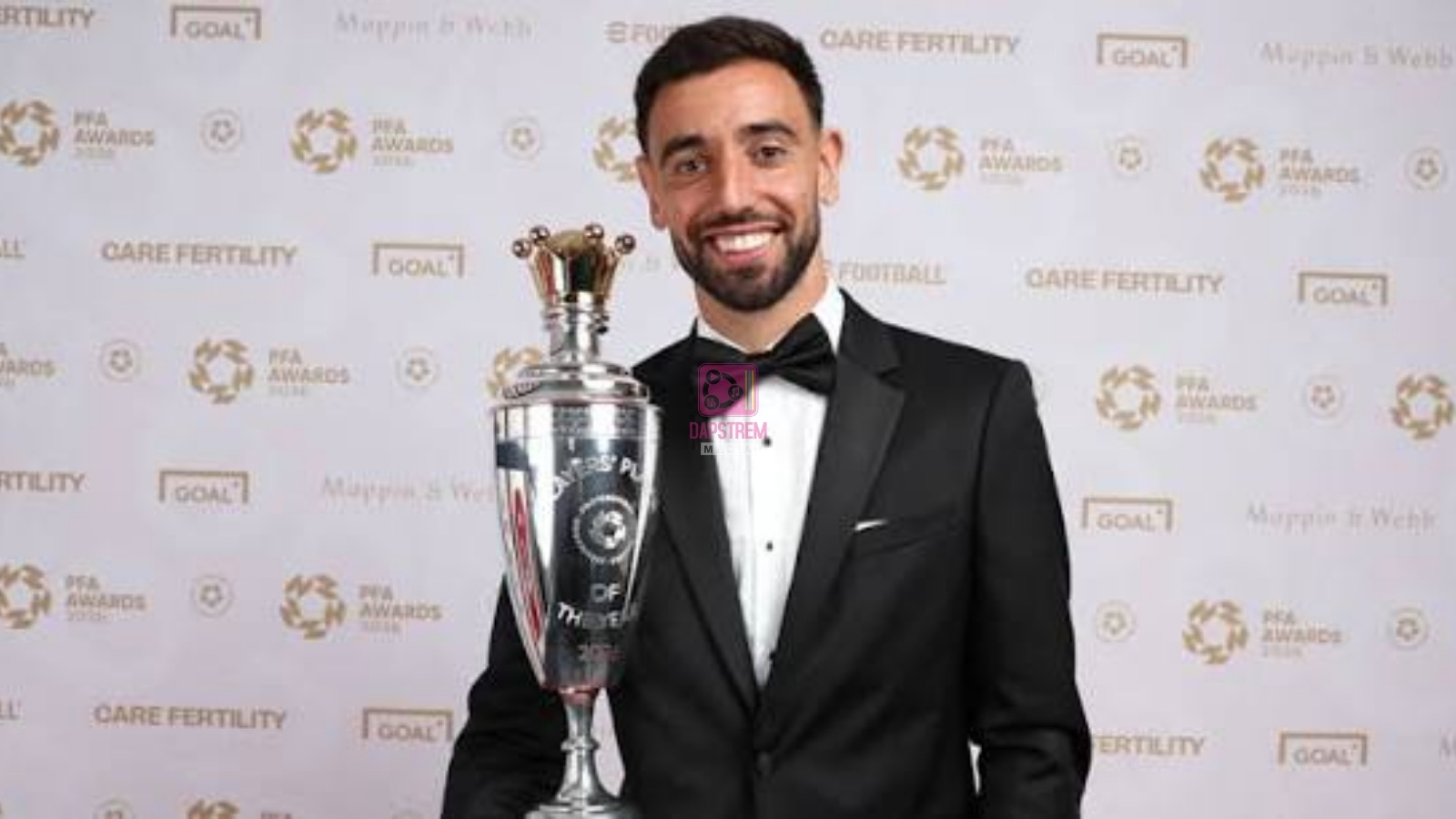
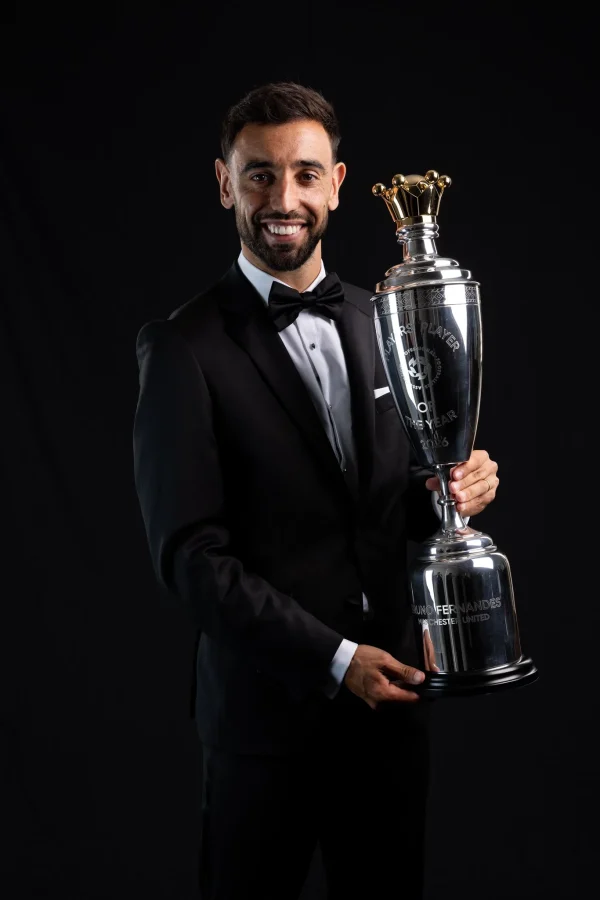
Bruno Fernandes has spent much of his Manchester United career carrying expectations that often seemed heavier than the captain’s armband around his left arm. On Tuesday, August 25, 2026, that burden was rewarded with one of English football’s most prestigious individual honours: the Manchester United captain was named the PFA Players’ Player of the Year for 2025–26, voted for by his fellow professionals.
For Fernandes, the significance went beyond another trophy on an increasingly crowded mantelpiece. The PFA award is decided by footballers themselves. These are the players who faced him week after week, prepared specifically to stop him and experienced first-hand the influence he could exert on a match. Fernandes himself highlighted that distinction, describing the award as especially meaningful because it came from players who compete against him.
His victory completed a remarkable individual season and reinforced his position as the central figure in Manchester United’s revival.
A season built on numbers
Fernandes’ statistics tell much of the story.
The Portuguese midfielder produced 21 Premier League assists, breaking the competition’s single-season record. The previous benchmark had been jointly held by Thierry Henry and Kevin De Bruyne, making Fernandes’ achievement one of the most significant creative seasons in Premier League history. He also scored nine league goals.
Those numbers were particularly important because Manchester United needed Fernandes not simply to contribute but to drive their attack.
United endured a difficult beginning to the campaign before recovering under manager Michael Carrick. The team ultimately finished third in the Premier League, securing qualification for the Champions League. Fernandes was at the heart of that turnaround, providing the creativity, goals and leadership that helped transform the club’s season.
His role was not limited to creating chances. As captain, he became the player expected to take responsibility when matches became difficult. His willingness to demand the ball, attempt difficult passes and influence the rhythm of games made him one of the defining figures of United’s campaign.
Recognition from the people who understand the game
The PFA Players’ Player of the Year is different from awards decided by journalists, supporters or statistical formulas.
It is voted for by professional footballers.
That makes Fernandes’ triumph a particularly powerful endorsement. His competitors on the shortlist included some of the Premier League’s most influential players: Manchester City’s Erling Haaland and Rayan Cherki, along with Arsenal’s David Raya, Gabriel and Declan Rice.
Fernandes emerged from that field because his influence was difficult to ignore.
The award also places him in distinguished Manchester United company. He became the first United player since Wayne Rooney in 2010 to receive the men’s PFA Players’ Player of the Year award. It was the club’s 12th victory in the category, giving United more wins than any other club in England and Wales.
For a player who has occasionally faced questions about his temperament and style, the recognition from his peers carries particular weight.
The creative force behind United’s revival
Fernandes’ importance to United has long been obvious, but the 2025–26 campaign provided perhaps the clearest statistical evidence yet.
He was given greater freedom within Carrick’s attacking structure, allowing him to influence games from different positions rather than being restricted to a single creative role. The tactical freedom helped Fernandes thrive as United’s attacking players were given more license to interchange and control the final third.
The result was a player who combined invention with extraordinary consistency.
His 21 assists meant that chances were not merely being created they were being converted. His nine goals also ensured opponents could not focus solely on stopping his passing.
That dual threat became central to United’s success.
More than one award
The PFA trophy did not arrive in isolation.
Fernandes had already been named the Football Writers’ Association Footballer of the Year in May. Winning the PFA award therefore gave him a remarkable individual double, with recognition from both journalists and his fellow professionals.
He also won Manchester United’s Sir Matt Busby Player of the Year award for a record fifth time.
Taken together, those honours demonstrate how consistently Fernandes was regarded as one of the outstanding players of the season.
Yet the PFA award may carry the greatest emotional significance.
A journalist can admire a player from the press box. A supporter can celebrate him from the stands. But an opposing midfielder has to face him.
Fernandes was voted the best by those who knew exactly how difficult he was to play against.
A milestone in Manchester United history
Fernandes’ arrival at Manchester United in January 2020 changed the trajectory of his career and, for periods, the trajectory of the club itself.
Six years later, his PFA triumph places him alongside some of the greatest names to have represented United.
The club’s previous winners include Mark Hughes, Gary Pallister, Eric Cantona, Roy Keane, Teddy Sheringham, Ruud van Nistelrooy, Ryan Giggs and Rooney. Cristiano Ronaldo won the award twice. Fernandes is now the 12th United player to claim the honour.
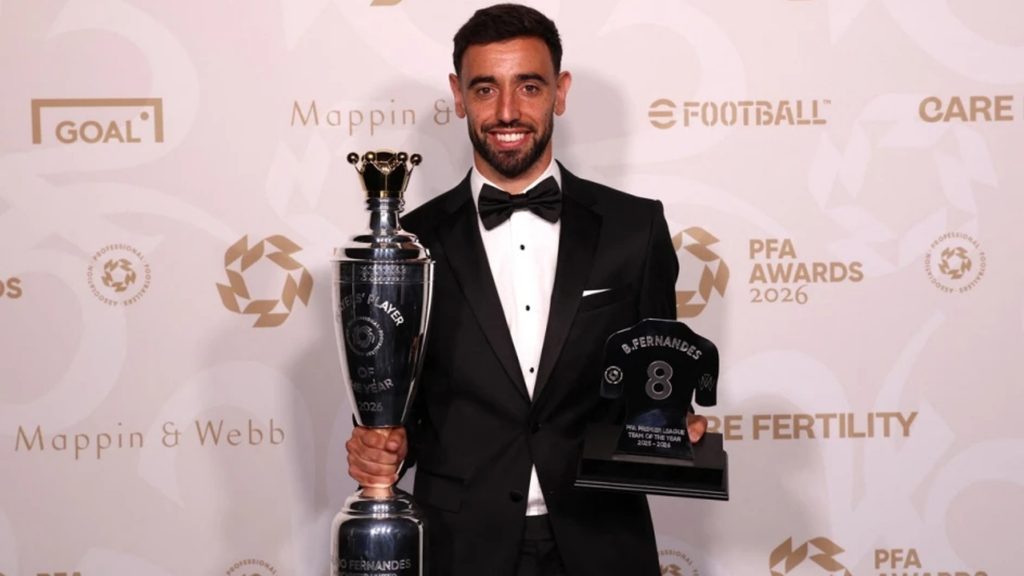
He is also only the second Portuguese player to win the award, following Ronaldo’s back-to-back victories in 2007 and 2008.
That comparison is unavoidable, although Fernandes has built a career very different from Ronaldo’s.
Ronaldo’s Manchester United legacy was defined by explosive scoring, athletic brilliance and individual dominance. Fernandes’ has been shaped more by creativity, leadership and his willingness to take responsibility for constructing attacks.
Both, however, became central figures for United during periods of transition.
The meaning of the captaincy
Fernandes’ journey to this award also reflects the evolution of his leadership.
He has sometimes been criticized for his emotional reactions on the pitch, his arguments with officials and his visible frustration when things go wrong. Those characteristics have made him a polarizing figure.
But they are also part of what makes him effective.
Fernandes plays as though every match matters enormously. He points, demands, complains, encourages and attempts passes other players might avoid. That personality can produce moments of frustration, but it also produces moments of inspiration.
As United’s captain, he has increasingly become the face of the club’s competitive identity.
The 2025–26 season gave that identity a positive outcome. United recovered from a poor start, climbed to third place and returned to the Champions League. Fernandes’ contribution was central to that recovery.
Bruno Fernandes and the Record That Defines the Season
There may be a temptation to remember Fernandes’ PFA victory as the headline achievement.
But years from now, the number that may best define his 2025–26 campaign is 21.
Twenty-one assists.
It is a number that immediately communicates what Fernandes did differently from most midfielders. He was not merely participating in United’s attack. He was repeatedly creating the decisive moment.
Breaking a record previously associated with Henry and De Bruyne places his season in the context of Premier League history rather than merely Manchester United history.
And unlike a one-off spectacular performance, 21 assists require sustained excellence across an entire league campaign.
What comes next?
The PFA award represents a personal high point, but it also raises a bigger question about Fernandes’ Manchester United legacy.
Individual recognition is one thing. Club success is another.
Fernandes has now collected major personal honours, broken a Premier League record and established himself as one of the defining midfielders of his era. What remains is to help turn those individual achievements into major team trophies.
United’s third-place finish and Champions League qualification provide a platform. The challenge now is to build on it.
For Fernandes, the PFA award is therefore both a celebration and a reminder.
He has proved that his peers consider him the best player in the league.
The next step is helping Manchester United become the best team in England again.
A player’s award, a captain’s statement
When Fernandes lifted the PFA Players’ Player of the Year trophy, he was accepting more than an individual prize.
He was receiving recognition from the very players who had spent the season trying to silence him.
His 21 assists broke a Premier League record. His nine goals helped drive United’s attack. His leadership helped guide the club from a troubled beginning to a third-place finish and Champions League qualification. And his performances earned recognition from journalists, supporters and, finally, his fellow professionals.
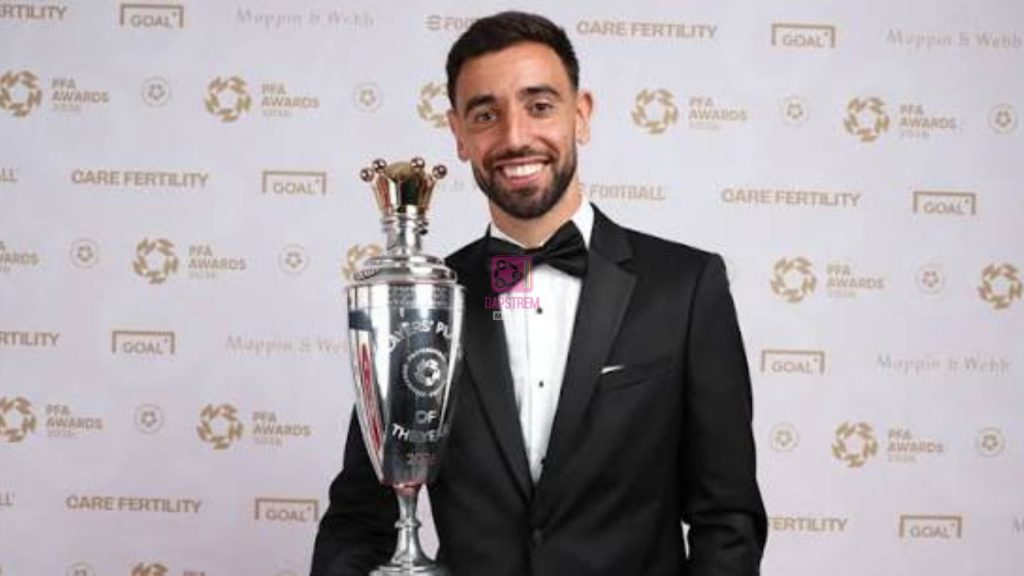
At 31, Fernandes has reached a stage of his career where statistics and trophies are beginning to tell the same story: he is no longer simply Manchester United’s creative midfielder.
He is one of the Premier League’s defining players.
And after years of carrying United’s hopes on his shoulders, Bruno Fernandes finally has the individual honour that says his peers believe he carried them better than anyone else in the league.