A section of Kenyan women lawmakers has demanded a public apology from former Deputy President and Democracy for Citizens Party (DCP) leader Rigathi Gachagua, accusing him of engaging in what they describe as a pattern of gender-based political attacks against women leaders and women associated with his political opponents.
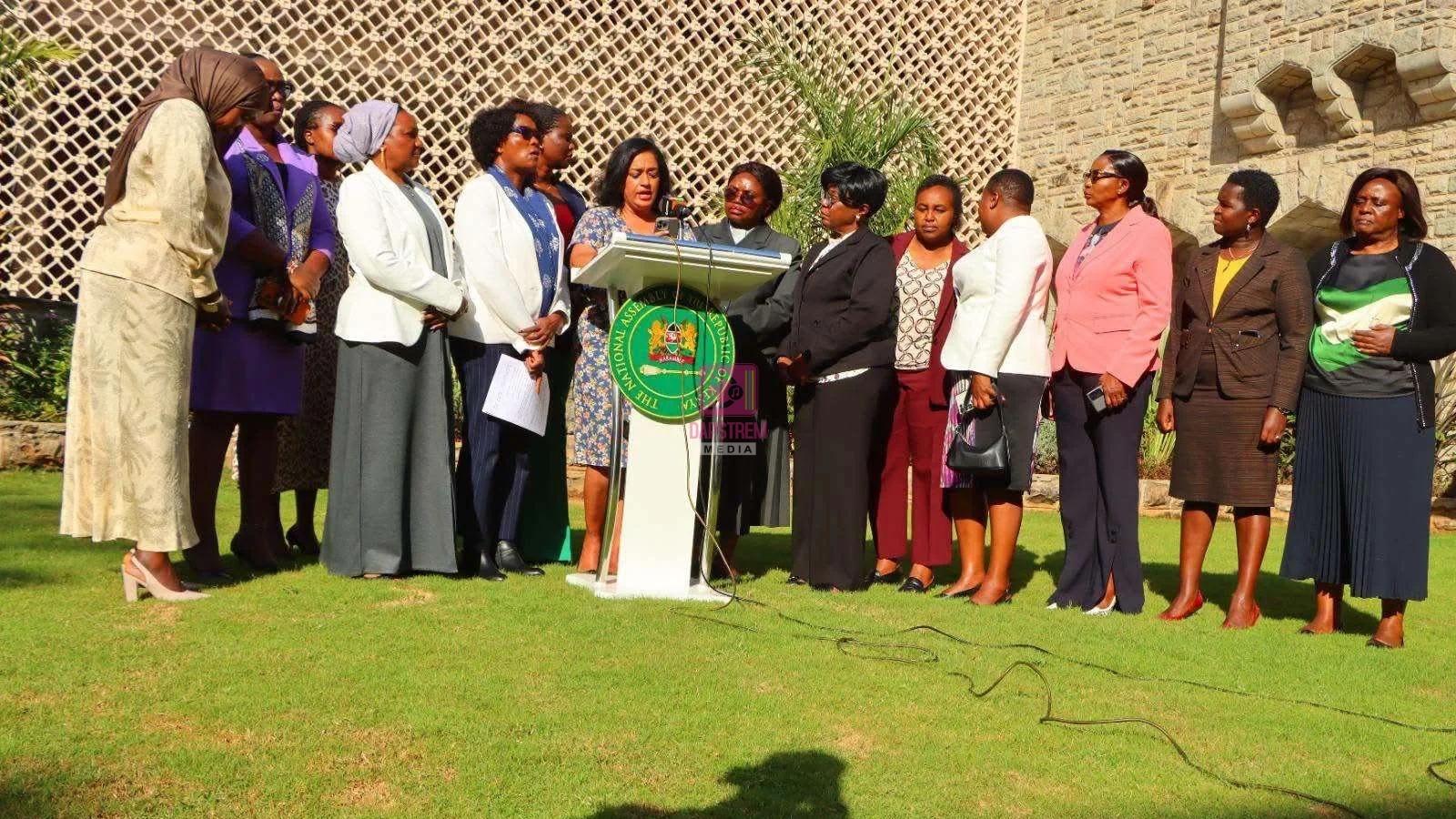
Led by Nairobi County Woman Representative Esther Passaris, the MPs made the demand during a press conference at Parliament Buildings on Tuesday, August 25, 2026. They said political competition should focus on policies, leadership records and accountability rather than a woman’s gender, marital status, family or personal circumstances.
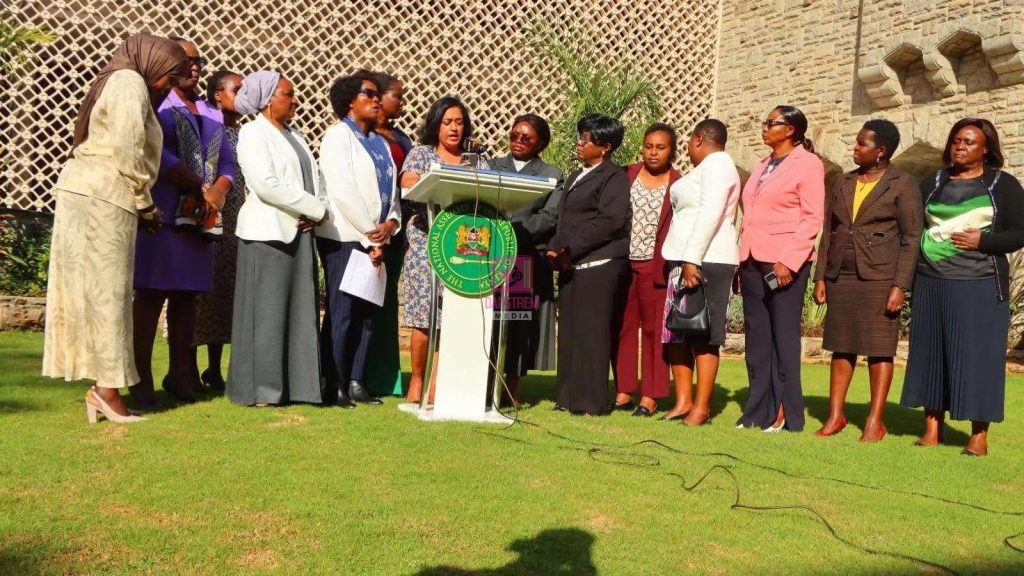
The legislators stressed that their position was not intended to shield women in public office from scrutiny. Instead, they argued that women leaders should face the same political accountability as their male counterparts, but without being subjected to personal humiliation or gendered insults.
“Criticize the policy, challenge the decision, question the performance, do not attack the woman’s dignity, gender, family or vulnerability,” the MPs said.
Claims of a wider pattern
The lawmakers cited several recent political confrontations as examples of what they consider a broader pattern.
Among the cases raised was that of Nyandarua Woman Representative Faith Gitau. The MPs said Gitau had accused Gachagua of using degrading and gendered language against her, including allegedly referring to her as a “witch” and “malaya.” They argued that such language goes beyond political criticism and amounts to personal and gender-based humiliation.
The MPs also referred to an April 17 incident involving Mwea MP Mary Maingi during a burial ceremony in Mwea. According to the lawmakers, Gachagua, while addressing mourners by telephone, described Maingi as a “traitor of the community” and criticised her for supporting the government.
The legislators said Maingi, like any elected representative, has a constitutional right to make her own political choices. They argued that disagreement over political allegiance should be addressed through debate rather than personal attacks.
Family members drawn into political battles
Another concern raised by the MPs was the involvement of politicians’ spouses and families in political disputes.
They referred to remarks by Interior Cabinet Secretary Kipchumba Murkomen on August 23, in which he complained that Gachagua had repeatedly brought his wife into political exchanges.
The women lawmakers questioned why the family members of political opponents should become targets in political arguments.
“A woman is not a political weapon simply because she is married to a politician,” the MPs said.
They called on politicians to keep spouses, children and other family members outside political confrontations, arguing that political disagreements should remain focused on public issues and the conduct of leaders.
The Johana Ng’eno family visit
The lawmakers also raised concerns about Gachagua’s August 21 visit to the family of the late former MP Johana Ng’eno in Mogondo.
While acknowledging that visiting and supporting a bereaved family is a commendable gesture, the MPs said political leaders must exercise particular sensitivity when engaging grieving families.
They argued that widows and bereaved relatives have a right to privacy, dignity, autonomy and consent, warning that grief should never become an extension of political competition.
“A widow’s grief is not weakness, her home is not political property and her consent must never be treated as optional,” the MPs said.
Governors also mentioned
The legislators further cited political exchanges involving Kirinyaga Governor Anne Waiguru, Embu Governor Cecily Mbarire and Nakuru Governor Susan Kihika.
They said remarks attributed to Gachagua concerning the three governors had been viewed as disrespectful and demeaning, particularly where political disagreements were framed around their loyalty or personal circumstances.
The MPs maintained that women elected to public office should be free to make independent political decisions without being branded disloyal or subjected to gender-based intimidation.
A call for a different political culture
At the centre of the MPs’ complaint is a broader argument about the treatment of women in Kenyan politics.
They warned that when women politicians are attacked through their gender, sexuality, families or marital status, the consequences extend beyond individual political disputes. Such attacks, they said, could discourage young women from seeking elective office if they believe political participation exposes them and their families to personal humiliation.
The lawmakers therefore called for a higher standard of political debate, saying political competition should be about ideas, policies, leadership performance and accountability.
“Women have a right to lead without being punished for being women,” they said.
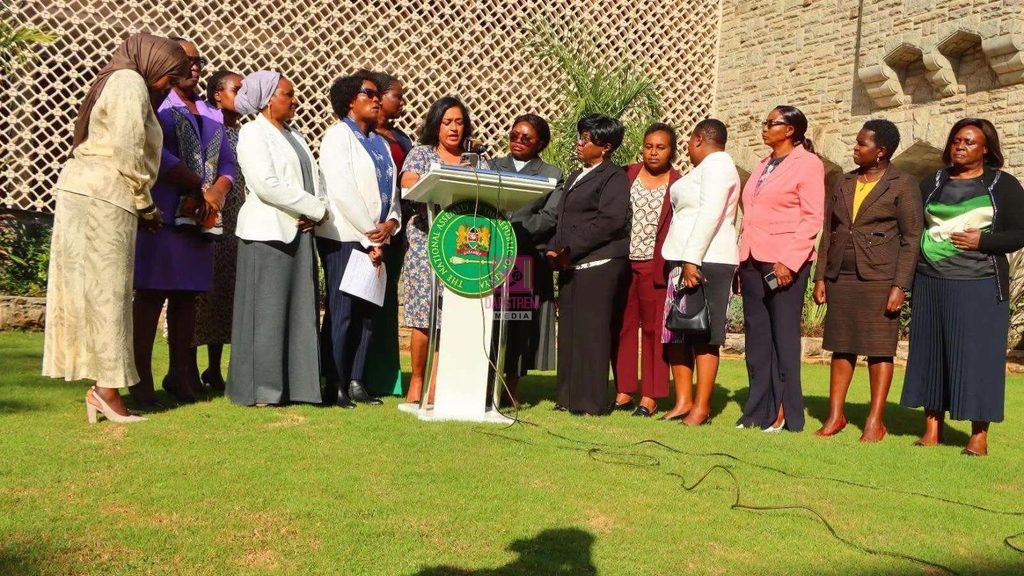
Their demands include a public acknowledgement and apology from Gachagua, an end to what they described as sexist and demeaning political language, and greater protection for spouses, children and other relatives from being dragged into political disputes.
They also called for bereaved women and families to be treated with privacy, dignity, autonomy and consent.
The controversy comes amid heightened political tensions
The dispute comes as Gachagua has remained an increasingly prominent opposition figure ahead of Kenya’s next political cycle.
His political activities and public addresses have repeatedly generated controversy. In July, for example, Gachagua alleged that 68 women had been raped by police officers during unrest surrounding the Ol Kalou parliamentary by-election. The National Police Service subsequently rejected the allegations, saying no rape incidents had been reported before, during or after the election.
The latest criticism from women MPs is therefore unfolding against a wider backdrop of increasingly heated political rhetoric.
For the lawmakers, however, the central issue is not whether Gachagua or any other politician should be allowed to criticise elected leaders. Their argument is that political criticism must stop short of attacks that target women because of their gender or personal lives.
Gachagua yet to publicly respond
At the time of the MPs’ press conference and reports on their demand, Gachagua had not publicly responded to the call for an apology or to the specific accusations raised by the lawmakers.
The dispute now places renewed attention on the boundaries of political speech in Kenya, particularly as women continue to seek greater representation in elective and appointed positions.
For the women MPs, the message is straightforward: political leaders should be challenged on what they do in public office, not attacked for who they are.
Their demand for an apology from Gachagua is therefore not only about the remarks they attribute to him. It is also a statement about the kind of political culture they want Kenya to build one in which fierce political disagreement can coexist with respect, dignity and equality.