The government has released Sh32 million to compensate 32 victims of human-wildlife conflict in Siaya and Kisumu counties, offering financial relief to families and individuals who have suffered deaths, injuries and property losses caused by wild animals.
The compensation cheques were presented in Usigu Sub-County, where State Department for Wildlife Conservation Secretary Dr John Chumo said 17 beneficiaries were from Siaya while 15 came from Kisumu.
The payments cover a range of losses, including families that lost relatives in wildlife attacks, people who sustained injuries and residents whose crops or livestock were destroyed.
The latest payout forms part of a wider government effort to address a longstanding backlog of compensation claims arising from human-wildlife conflict across the country.
Government targets compensation backlog
Chumo said the government inherited a national backlog of human-wildlife conflict claims worth more than Sh4 billion.
He said the State has been allocating Sh1 billion annually towards compensation since 2023, while Sh1.4 billion has been set aside for the current financial year.
The government has set an ambitious target of clearing the remaining backlog by the end of 2027.
The announcement is significant for communities that have waited for years for compensation after losing family members, suffering injuries or seeing their livelihoods destroyed by wildlife.
Chumo, however, urged claimants whose cases are still being reviewed to remain patient, explaining that payments would continue as funds become available.
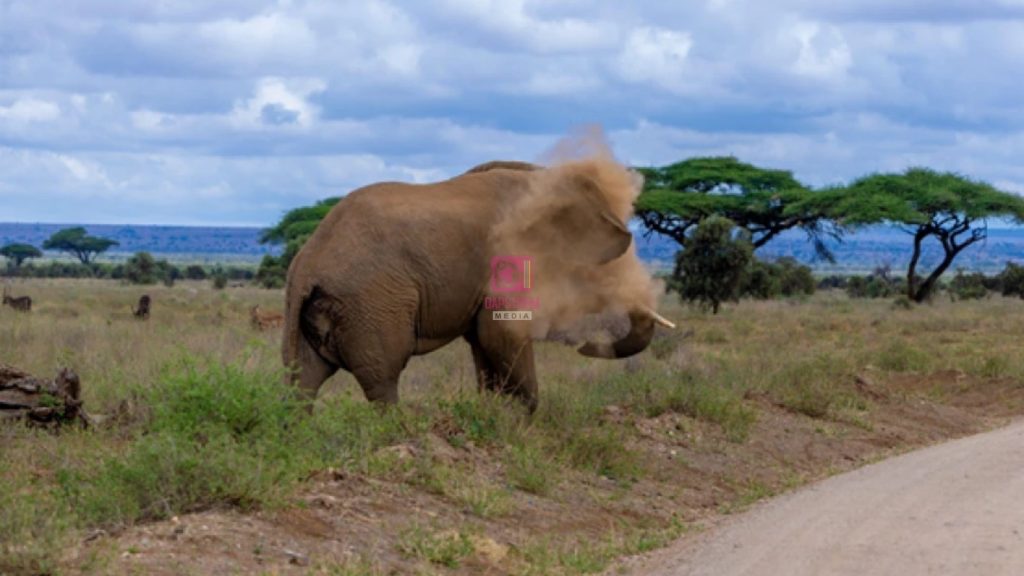
The government’s compensation programme is intended to provide some measure of relief to communities living alongside wildlife, where encounters between people and animals can have serious economic and sometimes fatal consequences.
Wildlife Challenges Persist in Siaya and Kisumu
The latest beneficiaries come from communities around the Lake Victoria basin, where human-wildlife conflict can involve animals such as crocodiles and hippos.
In Siaya, residents living near rivers and other water bodies face the risk of encounters with crocodiles, while hippos can move from water into farms and destroy crops.
The danger is particularly pronounced in areas where communities depend heavily on agriculture and fishing for their livelihoods.
Siaya County Warden Sheila Ochieng urged residents to avoid encroaching on riparian areas, warning that settlements and farming activities close to waterways can increase the likelihood of dangerous encounters with wildlife.
The advice reflects a broader challenge facing conservation authorities: finding ways for communities and wildlife to coexist as human populations expand and economic activity increasingly reaches wildlife habitats.
Compensation is only part of the solution
While the Sh32 million payout provides immediate financial relief, wildlife officials say compensation should not be viewed as the primary answer to human-wildlife conflict.
Kenya Wildlife Service Assistant Director for Kisumu Hussein Halake said the agency is conducting public awareness campaigns aimed at helping communities prevent dangerous encounters with wildlife.
According to Halake, compensation should be considered a last resort after preventive measures have failed.
That approach places greater emphasis on reducing conflict before people suffer losses.
Preventive measures can include public education, improved reporting of wildlife sightings, keeping people away from known animal corridors and water points, and encouraging communities to adopt practices that reduce encounters between people and wildlife.
For farming communities, early warnings can be particularly important because animals such as hippos can cause extensive damage to crops within a short period.
The human cost of wildlife conflict
Human-wildlife conflict is not simply a conservation issue. It can have profound economic and social consequences for affected households.
When a person is killed or injured, families may lose a breadwinner and incur medical and funeral expenses. When crops are destroyed, farmers can lose an entire season’s income and food supply. Livestock losses can similarly remove an important source of household wealth.
For communities that already have limited economic resources, such losses can be devastating.
Compensation therefore plays an important role in maintaining public support for wildlife conservation. When people who bear the costs of living alongside wildlife receive timely assistance, it can help reduce resentment and the temptation to retaliate against animals.
Research on Kenya’s compensation system has previously identified the scale and complexity of the problem, with thousands of claims involving deaths, injuries, crop destruction, livestock losses and property damage recorded over the years.
The research also highlights the importance of sustainable funding and effective administration if compensation programmes are to reduce conflict and encourage communities to support wildlife conservation.
A long-running national challenge
Human-wildlife conflict has remained one of the most difficult challenges facing Kenya’s conservation sector.
As settlements expand, agricultural land increases and natural habitats become fragmented, interactions between people and wildlife can become more frequent.
Climate and environmental changes can also affect the availability of water and food, potentially pushing wildlife closer to human settlements.
The problem is particularly sensitive in areas where communities live close to rivers, forests, parks and other wildlife habitats.
Kenya has therefore faced a difficult balancing act: protecting wildlife that contributes significantly to the country’s tourism economy while ensuring that communities living alongside animals do not bear an unfair share of the costs.
The compensation system is one mechanism through which the State attempts to address that imbalance.
Push for faster payments
The government’s promise to clear the backlog by the end of 2027 could provide relief to thousands of claimants whose cases remain unresolved.
However, the scale of the outstanding claims means that sustained funding will be essential.
The State Department for Wildlife’s decision to allocate Sh1.4 billion for compensation in the current financial year represents an increase from the annual Sh1 billion allocations that began in 2023.
If maintained, the increased funding could accelerate the settlement of pending claims and reduce the period families wait before receiving compensation.
But officials will also need to ensure that claims are assessed efficiently and that legitimate beneficiaries can navigate the process without unnecessary delays.
Preventing future losses
For conservation authorities, reducing the number of new claims will be just as important as clearing the existing backlog.
Halake’s emphasis on prevention reflects the reality that compensation alone cannot solve human-wildlife conflict.
Authorities must continue working with local communities to identify high-risk areas and improve awareness of animal behaviour.
Residents, meanwhile, are being encouraged to avoid activities that place them directly in the path of wildlife, particularly around riparian zones.
The challenge is to make these preventive measures practical for communities whose livelihoods depend on the same land and water resources used by wildlife.
Relief for 32 families, but a bigger task remains
The Sh32 million payout represents a significant intervention for the 32 beneficiaries in Siaya and Kisumu.
For families who lost loved ones, the money cannot undo the tragedy. For those injured or whose crops and livestock were destroyed, however, the compensation can provide much-needed financial support as they rebuild their lives.
The payment also sends a message that the government recognises the burden carried by communities living alongside wildlife.
But the broader challenge remains considerable.
With a national compensation backlog previously exceeding Sh4 billion, the government faces a long road before every legitimate claim is settled.
At the same time, conservation authorities must work to reduce the number of new incidents through prevention, public education and better coexistence strategies.
The latest payments are therefore both an end and a beginning: an end to a long wait for 32 beneficiaries, and another step in Kenya’s larger effort to balance wildlife conservation with the safety and livelihoods of communities.