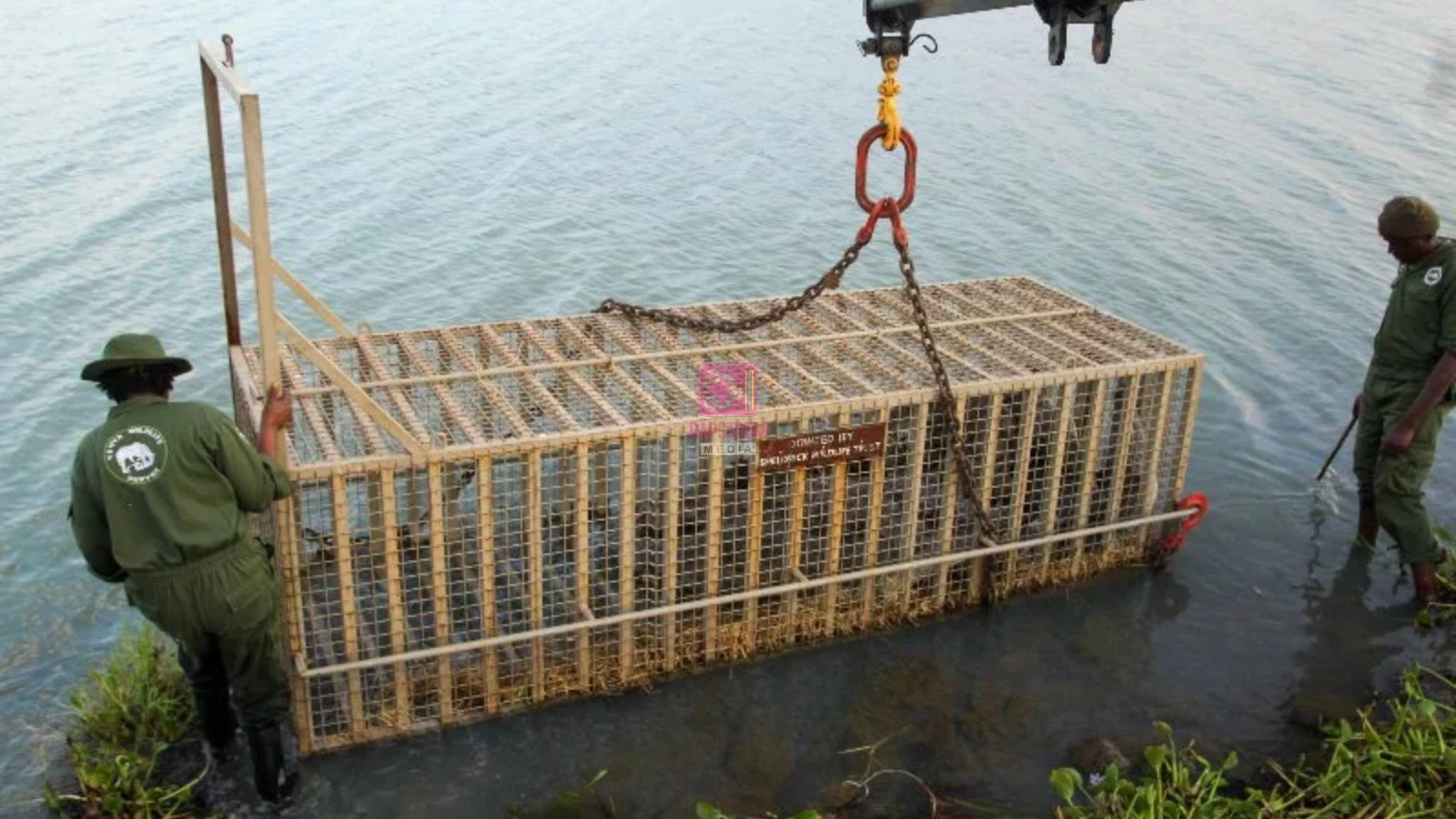
The Kenya Wildlife Service (KWS) has launched an operation to relocate crocodiles from Kampi ya Samaki on the western shores of Lake Baringo, as rising water levels push people and wildlife into increasingly smaller spaces.
The intervention by the KWS Veterinary and Capture Unit is aimed at reducing the growing risk of human-wildlife conflict while ensuring that the crocodiles are conserved in suitable habitats. The reptiles are being moved to KWS-managed parks and reserves where crocodile populations are low or absent, supporting their reintroduction and repopulation.
Rising waters reshape life at Kampi ya Samaki
For residents of Kampi ya Samaki, the problem has been building for more than a decade.
Lake Baringo’s rising waters have gradually encroached on homes, schools, roads and areas that previously supported livelihoods. As the shoreline has expanded, the space available to both communities and wildlife has diminished, increasing the likelihood of encounters between people and crocodiles.
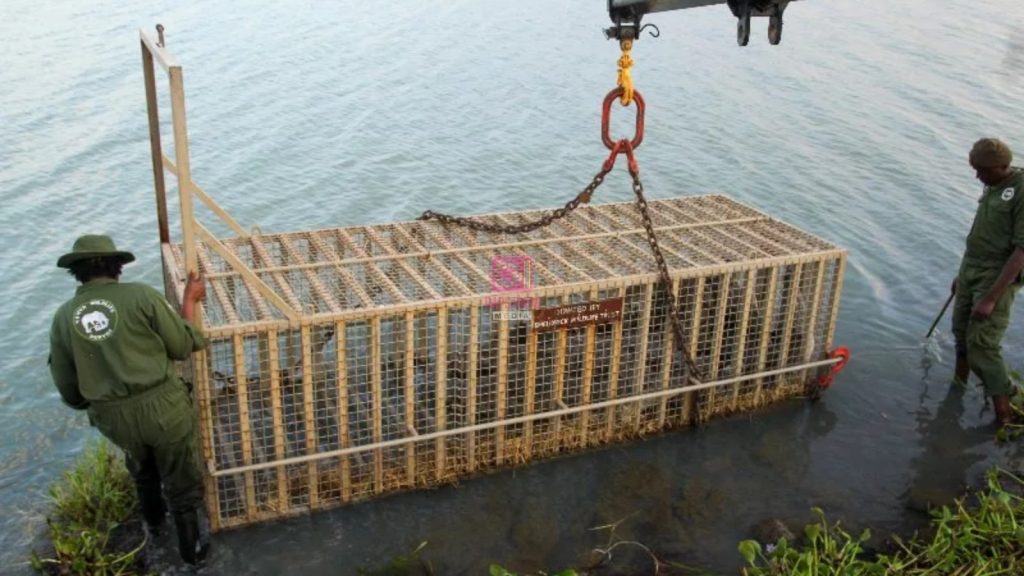
KWS says the changing environment has created a difficult situation in which people and wildlife are increasingly being forced to share the same shrinking habitat.
The crocodile relocation is therefore not simply a wildlife operation. It is also a response to a growing safety concern for communities living around the lake.
Protecting people while conserving wildlife
KWS describes the operation as a delicate balance between community safety and conservation.
Rather than killing or permanently removing the crocodiles from the ecosystem, the animals are being captured and transported to protected areas where they can contribute to the recovery and repopulation of crocodile populations.
The approach reflects KWS’s broader mandate of conserving Kenya’s wildlife while addressing human-wildlife conflict. The agency says crocodiles remain an important part of the lake ecosystem and should be protected even as potentially dangerous encounters with people are reduced.
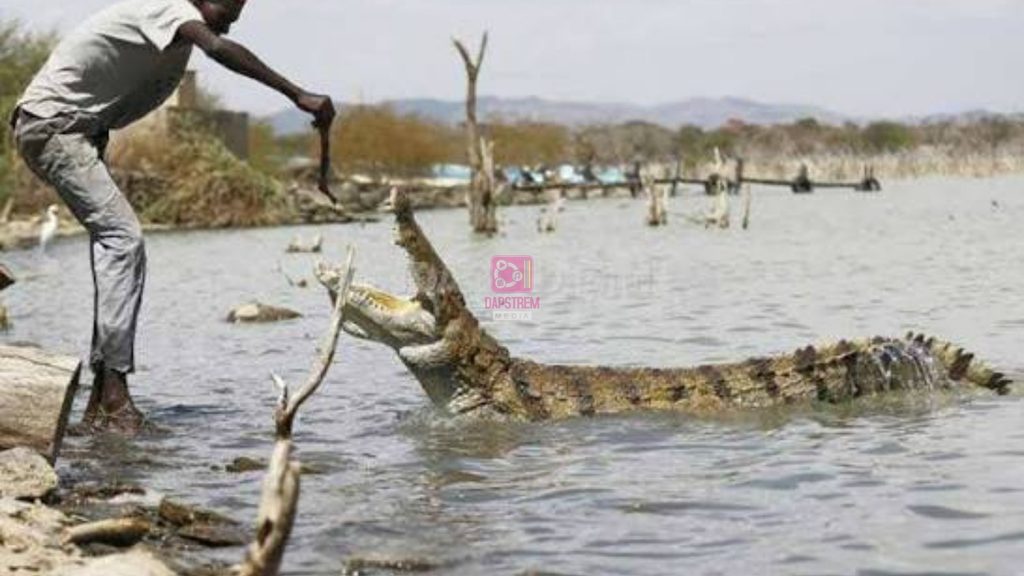
Images released during the operation show KWS officers capturing large crocodiles along the lake’s muddy shoreline before securing them for transportation to their new habitats.
A growing human-wildlife challenge
The situation at Lake Baringo illustrates how environmental changes can alter the relationship between communities and wildlife.
As water advances into inhabited areas, residents lose land and infrastructure while animals also lose or are displaced from their traditional habitats. The result is increased interaction between people and wildlife.
KWS says the current intervention is intended to give communities a safer environment while ensuring the crocodiles are relocated to areas where they can survive and reproduce.
The agency has also emphasised the importance of communities working with wildlife authorities to promote safer coexistence.
For Kampi ya Samaki residents, the crocodile relocation is only one part of a much larger environmental crisis.
The rising waters have already affected homes, schools, roads and livelihoods, meaning the community is dealing with both displacement and an increasingly complicated human-wildlife situation.
The crocodile operation provides an immediate response to the safety risks, but the wider challenge posed by the expanding lake remains.
For KWS, the task is to ensure that conservation does not come at the expense of human safety. For residents, it is about finding ways to live safely in an environment that has changed dramatically around them.
As the relocation continues, the operation offers a striking example of the increasingly difficult balancing act between wildlife conservation, environmental change and the safety of communities living alongside nature.