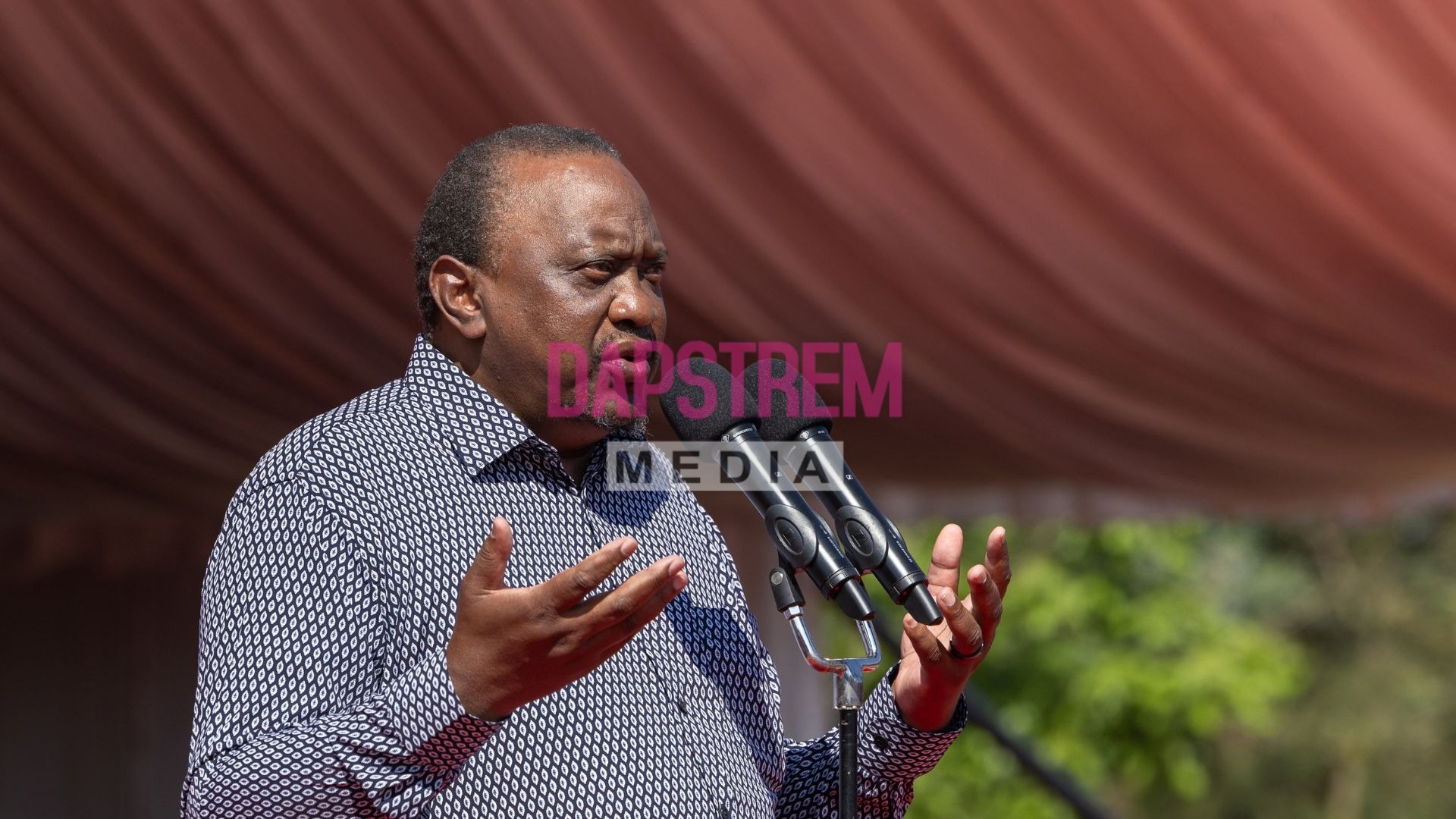
Former President Uhuru Kenyatta has resigned as Chairperson of the Azimio la Umoja One Kenya Coalition, bringing an end to his formal leadership role within the opposition alliance.
Kenyatta communicated his decision in a letter dated October 5, saying his resignation followed the official handover of leadership of the Jubilee Party to former Interior Cabinet Secretary Fred Matiang’i. His resignation took effect immediately.
The move comes at a significant moment for Kenya’s opposition, with the coalition undergoing a broader restructuring ahead of the 2027 General Election.
Uhuru Says He Is Not Leaving the Coalition
Despite stepping down from the leadership position, Kenyatta stressed that his decision should not be interpreted as an exit from the coalition or its political ideals.
The former President said the move was part of the wider process of renewing democratic institutions and making room for new leadership.
He also reaffirmed his commitment to the coalition, saying he would remain available to provide counsel while continuing to support its political journey from outside the formal leadership structure.
Kenyatta’s resignation follows his recent departure from the leadership of the Jubilee Party, which he previously chaired.
Azimio Has Rebranded as Ukombozi Alliance
The resignation comes as the opposition coalition undergoes another major change.
The political formation previously known as the Azimio la Umoja One Kenya Coalition has rebranded as the Ukombozi Alliance (TUA) as opposition parties seek to reorganise ahead of the 2027 elections.
Ukombozi Alliance leader Kalonzo Musyoka said Kenyatta’s resignation would not create a leadership vacuum within the coalition.
Kalonzo clarified that the position held by Kenyatta as council chairperson is separate from the position of party leader, which he continues to hold. He said the coalition’s leadership, direction and political programme remain unchanged.
Gachagua and Orengo Mentioned in Leadership Talks
With Kenyatta stepping aside, attention has now turned to who could assume a senior leadership role within the opposition coalition.
Reports have identified Democracy for Citizens Party leader Rigathi Gachagua and Siaya Governor James Orengo among the names being considered in the coalition’s leadership discussions.
The discussions come as opposition parties continue efforts to establish a broader political alliance capable of competing in the 2027 General Election.
No final successor had been formally announced at the time of publication.
Uhuru’s Political Role Enters a New Phase
Kenyatta’s latest decision marks another significant change in his political role since leaving State House in 2022.
After serving two terms as Kenya’s fourth President, he remained active in opposition politics and became a central figure in the leadership of Jubilee and the wider Azimio coalition.
His decision to relinquish both formal party and coalition leadership positions now leaves room for a new generation of political figures to take greater responsibility within the opposition movement.
Kenyatta, however, has made it clear that stepping down from the chairmanship does not mean withdrawing from Kenyan politics altogether.
Kalonzo Thanks Uhuru for His Leadership
Kalonzo Musyoka has welcomed Kenyatta’s decision while acknowledging his contribution to the coalition.
He said the former President remains a member of the political family and would continue to be available to provide guidance.
Kalonzo also said Ukombozi Alliance plans to invite Kenyatta for an official visit, during which a formal handover ceremony will be held.
The coalition is meanwhile completing compliance requirements surrounding its new Ukombozi Alliance identity after the Office of the Registrar of Political Parties reserved the name.
What Uhuru’s Exit Means Ahead of 2027
Kenyatta’s resignation adds another layer to the rapidly changing political landscape ahead of Kenya’s 2027 General Election.
With the opposition coalition operating under a new name, Jubilee under new leadership and several prominent politicians being linked to possible future roles, the coming months are likely to bring further negotiations and political realignments.
For now, Uhuru Kenyatta remains within the opposition coalition as a member and adviser, but without the formal chairmanship he previously held.
The political restructuring is expected to continue as opposition leaders prepare for the 2027 election.