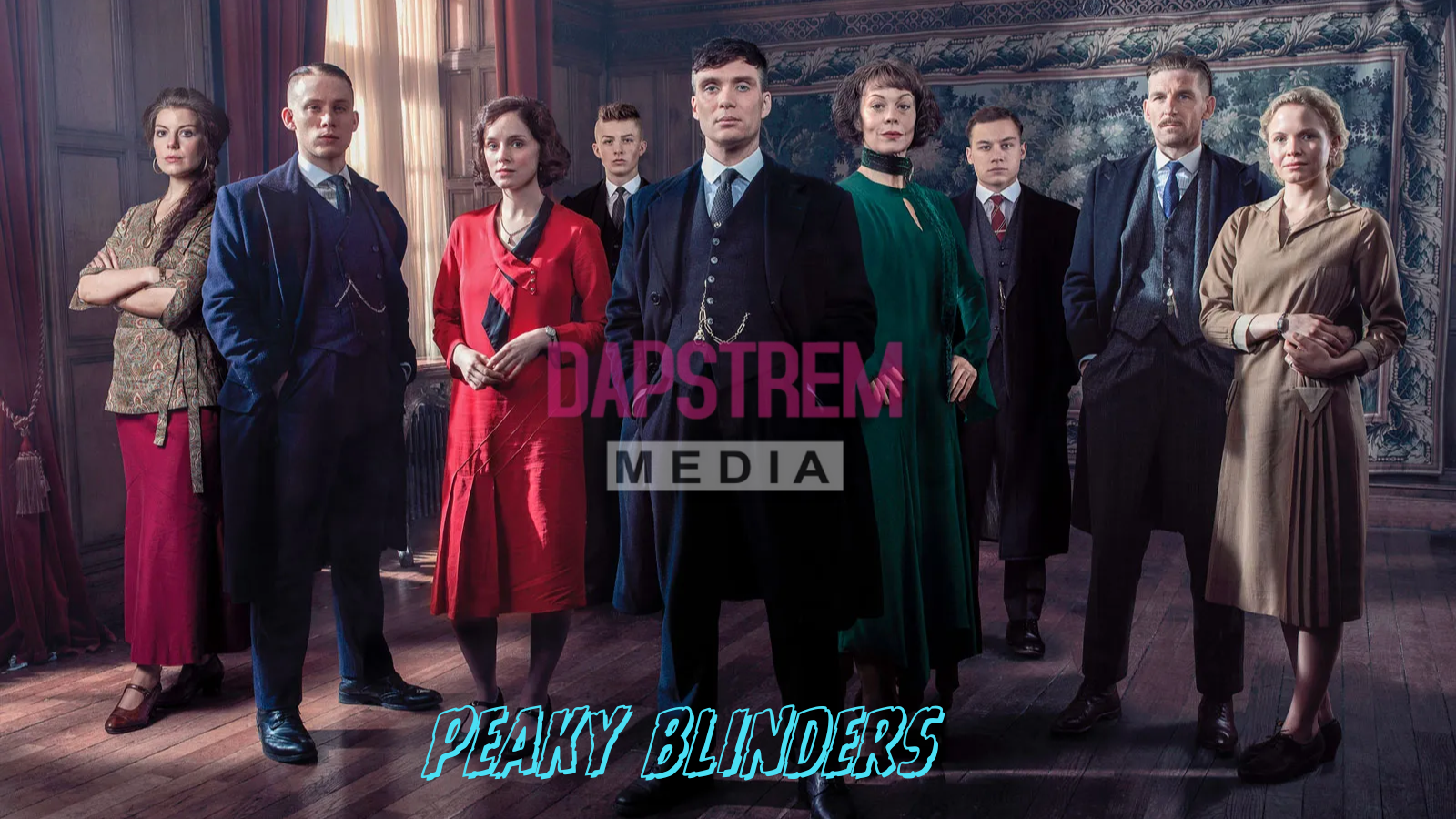
Few television dramas have managed to make a Birmingham gang, flat caps, razor blades, smoky pubs and post-war Britain into a worldwide cultural phenomenon quite like Peaky Blinders.
Created by Steven Knight, the British crime drama premiered on BBC Two in 2013 and ran for six seasons, concluding in 2022. At its centre was Thomas Shelby, played with extraordinary restraint and intensity by Cillian Murphy, a First World War veteran who transforms his family’s small Birmingham criminal operation into an increasingly powerful business empire.
But Peaky Blinders became much more than a gangster story. It was a drama about trauma, ambition, family, class, politics, addiction, masculinity and the price of power. Its distinctive visual style, unforgettable characters and carefully chosen soundtrack helped turn it from a British period crime drama into an international cultural brand.
From Birmingham to the world
The story begins in Birmingham in 1919, shortly after the end of the First World War.
Tommy Shelby returns from the trenches with his brothers Arthur and John and begins expanding the family’s criminal enterprise. What starts as illegal betting and local racketeering gradually develops into something far larger.
Across six seasons, Tommy moves through gambling, horse racing, industry and politics while encountering some of the most powerful and dangerous figures of the period.
The series eventually reaches 1930s Britain, incorporating real historical figures and events into its fictional world. Winston Churchill, Oswald Mosley, Billy Kimber and Jessie Eden are among the historical personalities woven into the story.
This mixture of fact and fiction is one of the show’s greatest strengths. Viewers are given enough historical reality to believe that the Shelby family’s extraordinary rise could have happened, while Knight has enough creative freedom to build a much more dramatic story.
Tommy Shelby: the character who made the show
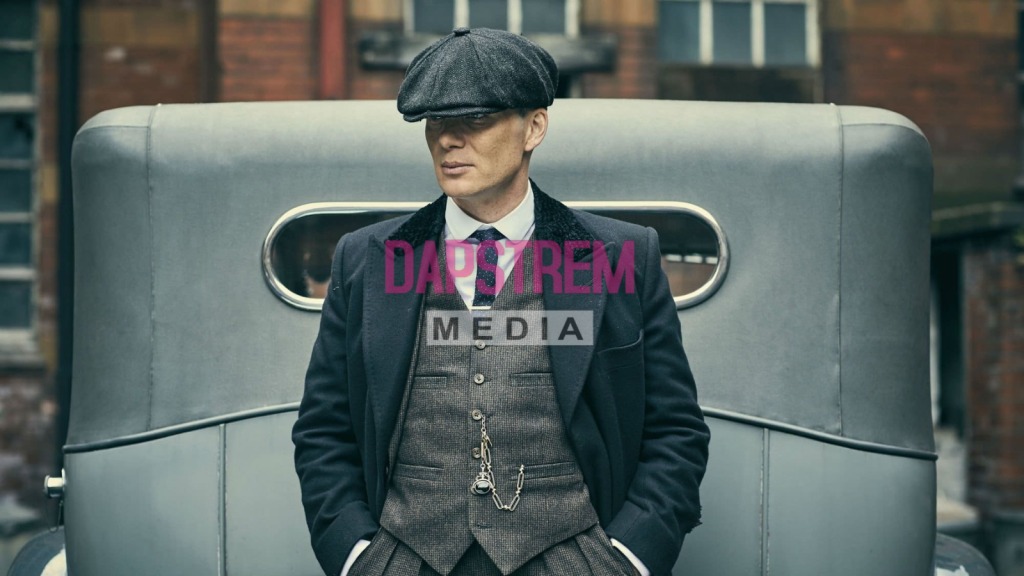
At the heart of everything is Tommy Shelby.
Murphy’s performance is remarkably controlled. Tommy rarely needs to shout to dominate a room. A stare, a pause or a quiet sentence can communicate more than a lengthy speech.
He is intelligent, calculating and fiercely ambitious, but he is also deeply damaged.
The war never really leaves him. His nightmares, emotional detachment and constant need for control suggest a man struggling to escape experiences that he cannot forget.
That contradiction makes Tommy fascinating.
He wants wealth because he grew up without it. He wants respect because society once looked down on his family. He wants political influence because money alone cannot give him the power he believes he deserves.
Yet every victory creates another problem.
The higher Tommy climbs, the more people he loses.
Murphy’s performance became so closely associated with the character that Tommy Shelby eventually became one of television’s most recognisable antiheroes. Murphy was also nominated for a BAFTA Television Award for Leading Actor for Peaky Blinders.
The Shelby family
If Tommy is the centre of the story, the Shelby family is its emotional engine.
Arthur Shelby is perhaps Tommy’s greatest contrast. Where Tommy is controlled, Arthur is volatile and impulsive. His violence, addiction and emotional instability make him one of the show’s most tragic characters.
Polly Gray, played by the late Helen McCrory, is arguably the family’s emotional and strategic backbone. Intelligent, intimidating and fiercely protective, Polly frequently challenges Tommy when others are afraid to do so.
John Shelby represents another side of the family: loyal, impulsive and deeply attached to the Shelby way of life.
Ada Shelby, meanwhile, gradually develops from an outsider within the family business into an increasingly important political and business figure.
The series works because these characters aren’t simply gangsters. They are brothers, sisters, mothers, lovers and survivors whose personal relationships continually collide with their criminal ambitions.
The women are not just supporting characters
One of the show’s most impressive qualities is the strength of its female characters.
Polly is not simply “the woman behind the men.” She is an active participant in the family’s decisions and frequently proves more perceptive than the men around her.
Ada develops dramatically throughout the series, becoming increasingly independent from her family’s criminal activities while still retaining influence over the Shelby empire.
Grace Burgess, May Carleton, Lizzie Stark and Esme Shelby each bring different perspectives to Tommy’s world.
The women of Peaky Blinders are often surrounded by violence and male power, but they are rarely passive observers.
That complexity helped prevent the series from becoming another conventional gangster drama.
The real Peaky Blinders
One of the most interesting facts about the series is that the Peaky Blinders actually existed.
The real gang operated in Birmingham around the late 19th and early 20th centuries. They were involved in violence, robbery, gambling and other criminal activity.
However, the real gang was very different from the Shelby organisation portrayed on television.
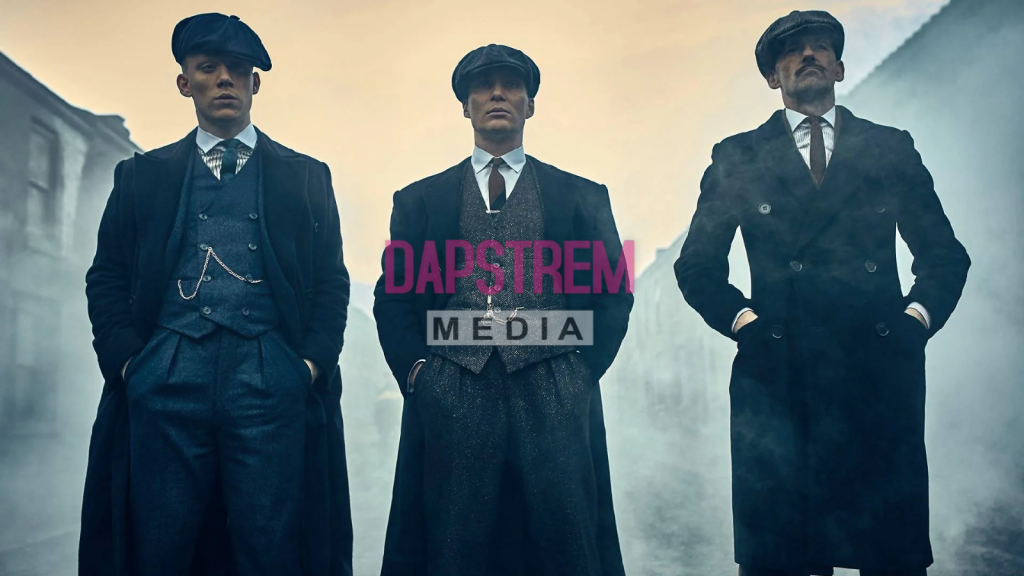
The real Peaky Blinders were already declining by the period in which the television series begins. By the 1920s, the Birmingham Boys had become the dominant gang in the city.
Thomas Shelby himself was completely fictional.
The Shelby family was created by Knight, who drew inspiration partly from stories he heard from his parents about Birmingham gangsters.
Even the famous razor blades in the characters’ flat caps are more complicated than the show suggests. The idea that the original gang routinely used razor blades sewn into their caps to slash people’s eyes is generally regarded as part of the mythology surrounding them rather than established historical fact.
So Peaky Blinders should not be watched as a documentary. It is historical fiction and very deliberately so.
Why the historical setting works
The show’s setting is crucial.
Britain between the two World Wars was experiencing enormous social and political change. Soldiers were returning from the battlefield, industrial cities were struggling, working-class movements were growing and political extremism was becoming increasingly visible.
The series uses this turbulent period to give Tommy’s rise a larger meaning.
He isn’t simply fighting rival criminals. He is navigating a society changing around him.
The timeline begins in 1919 and eventually reaches the early 1930s, allowing the series to explore the interwar period and the rise of fascism in Britain.
This historical backdrop gives the show an unusual scale. A story that begins with illegal betting in Birmingham eventually becomes a story involving national politics and international power.
The music changed everything
One of the most recognisable elements of Peaky Blinders is its music.
Instead of attempting to create a traditional period soundtrack, the series frequently places modern rock and alternative music against its early-20th-century setting.
Songs by Nick Cave & The Bad Seeds, Arctic Monkeys, Radiohead, Black Sabbath, PJ Harvey and other artists helped establish the show’s distinctive atmosphere.
The result is deliberately anachronistic.
A man in a three-piece suit walking through 1920s Birmingham while modern rock plays in the background shouldn’t necessarily work.
Yet it does.
The music makes the characters feel contemporary despite the historical setting and helped introduce the series to audiences who might not normally watch period dramas.
The look of Peaky Blinders
The costumes became almost as famous as the characters.
Three-piece suits, waistcoats, long coats and flat caps transformed into symbols of the Shelby identity.
The show’s cinematography uses smoke, shadows, industrial landscapes and muted colours to create a world that feels simultaneously glamorous and bleak.
Birmingham is not presented as a romantic historical postcard.
It is dirty, industrial and dangerous.
The contrast between the poverty surrounding the Shelbys and the increasingly luxurious world they create for themselves is an important part of the visual storytelling.
As Tommy becomes richer, his surroundings change.
But psychologically, he remains trapped in the same war-torn world.
The villains were almost as memorable as the Shelbys
Another reason the show remained compelling was its succession of powerful opponents.
Tommy’s enemies included men such as Billy Kimber, Luca Changretta and Sir Oswald Mosley, as well as political and criminal forces far beyond Birmingham.
The casting repeatedly raised the stakes.
Actors such as Sam Neill, Tom Hardy, Adrien Brody and Anya Taylor-Joy brought distinctive personalities to Tommy’s increasingly dangerous world.
Tom Hardy’s Alfie Solomons, in particular, became a fan favourite.
Their unpredictable relationship somewhere between rivalry, mutual respect and potential betrayal provided some of the series’ most entertaining moments.
It was never really about crime
This may be the biggest reason the show became so successful.
Beneath the guns, gambling and violence, Peaky Blinders is fundamentally about people trying to escape their circumstances.
Tommy wants to escape poverty.
Arthur wants to escape his trauma.
Polly wants to protect her family.
Ada wants to build a life separate from the criminal world.
Even Tommy’s enemies are usually motivated by some combination of power, fear, ideology, money or revenge.
The crime is the vehicle.
The real subject is human ambition.
Its greatest weakness
For all its strengths, Peaky Blinders is not flawless.
As the series progresses, Tommy’s criminal empire becomes increasingly enormous. The story moves from Birmingham street gangs to international politics, making the later seasons considerably more ambitious than the first.
At times, the plotting can become excessively complicated.
Characters disappear and return, alliances change rapidly, and political conspiracies become increasingly elaborate.
The show also occasionally sacrifices historical accuracy for drama.
That is particularly obvious when comparing the fictional Shelby family’s timeline with the actual history of the Peaky Blinders. The real gang had largely lost its dominance long before the period in which Tommy Shelby supposedly ruled Birmingham.
But these inaccuracies are less damaging when the series is understood for what it is: a stylised historical drama rather than a factual reconstruction.
The legacy
Peaky Blinders received major critical recognition during its run, including the 2018 BAFTA Television Award for Drama Series.
Its influence also extended beyond television.
The flat cap became strongly associated with the show’s imagery. Birmingham experienced renewed interest from fans, while the series turned locations and historical references into attractions for viewers around the world.
And its popularity did not disappear when the television series ended.
The story continued with the 2026 film Peaky Blinders: The Immortal Man, bringing Cillian Murphy back as Tommy Shelby and extending the story into 1940. Netflix describes the franchise as spanning 21 years from the opening of the first season to the film.