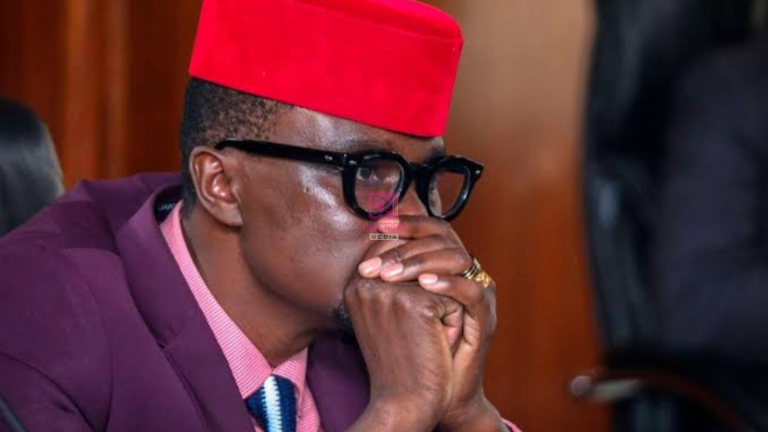
Former Interior Cabinet Secretary Fred Matiang’i has taken over the leadership of the Jubilee Party from retired President Uhuru Kenyatta, marking a significant change at the helm of one of Kenya’s major political parties ahead of the 2027 General Election.
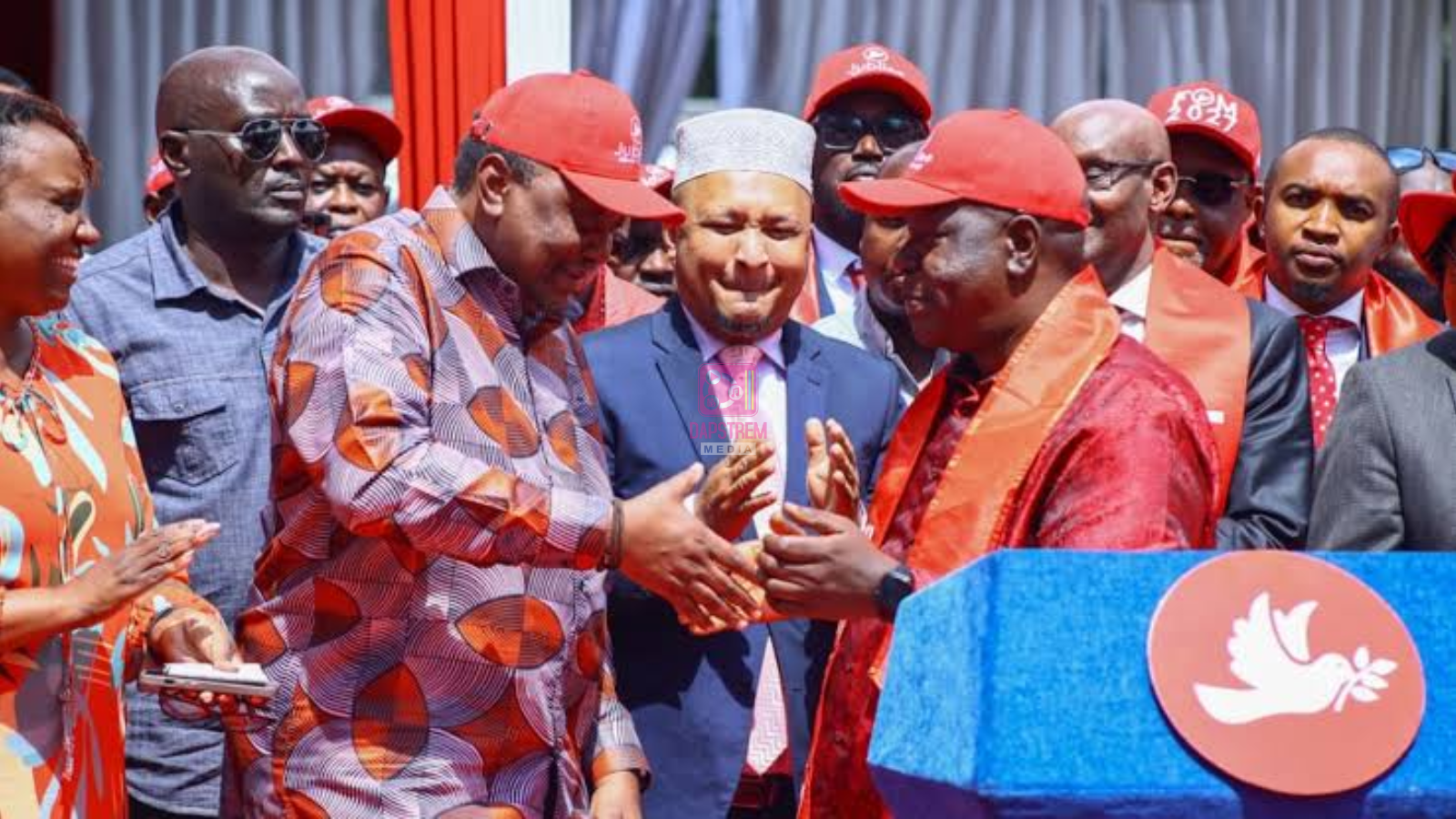
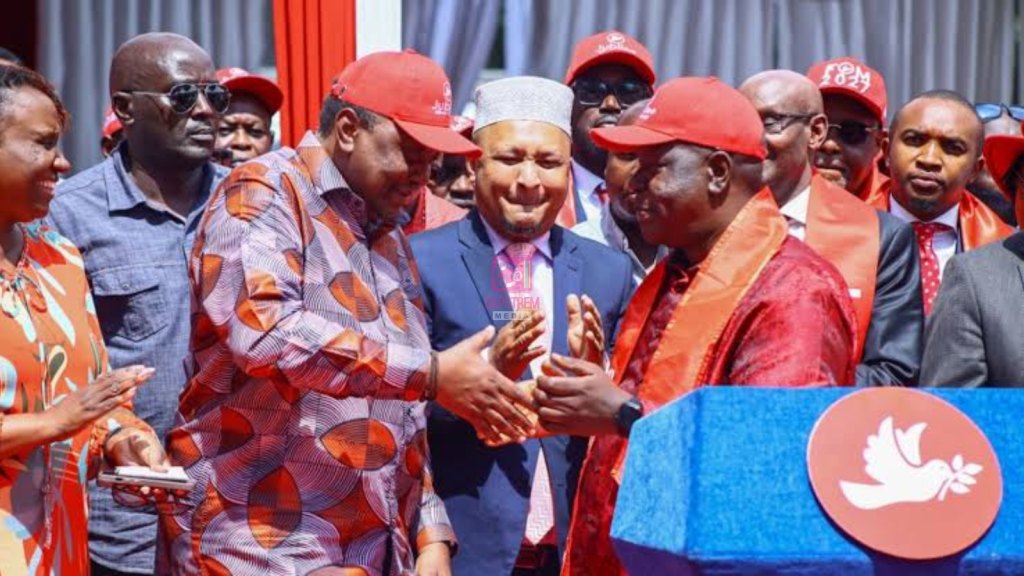
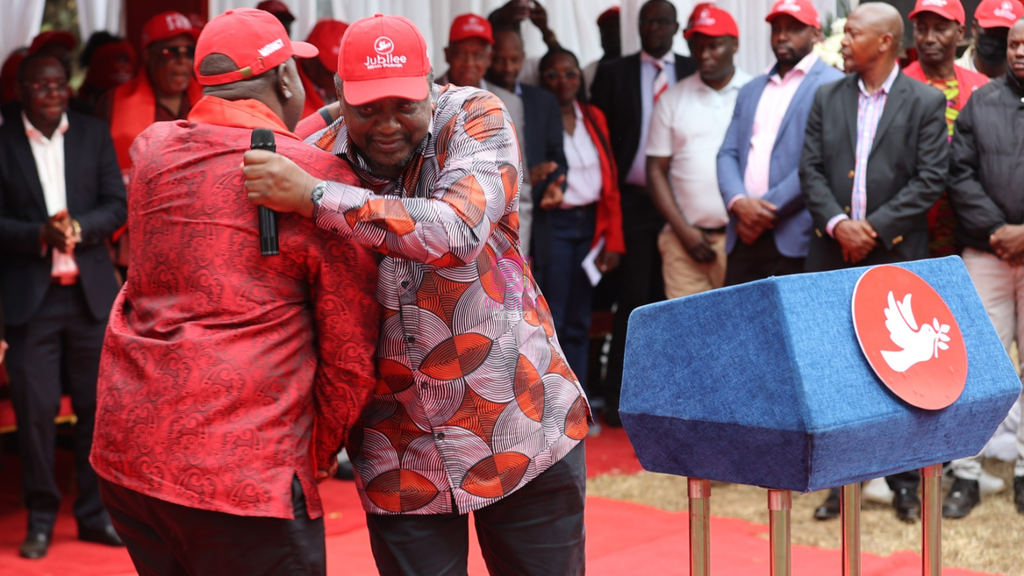
Kenyatta formally handed over the party leadership on Tuesday and asked Jubilee members to accept Matiang’i, who has been serving as deputy party leader, to oversee the organisation as it prepares for its National Delegates Convention (NDC).
Uhuru said he would remain a Jubilee member and take up a senior advisory role rather than leave the party altogether.
“While we wait for NDC, I have decided to let my deputy take over the party leadership,” Kenyatta said during the handover.
Matiang’i accepted the responsibility, thanking the former president for his leadership and guidance and promising to build on Jubilee’s founding commitment to inclusion.
The transition follows a High Court decision concerning the ability of retired presidents to hold formal positions in political parties.
Court ruling forces leadership change
The immediate trigger for Uhuru’s departure from the party office is a court ruling on the Presidential Retirement Benefits Act.
On September 14, Justice Lawrence Mugambi upheld Section 6 of the Act, which provides that a retired president cannot continue holding office in a political party beyond six months after leaving the presidency.
The judgment does not prevent a retired president from belonging to a political party or participating in political activities. The restriction concerns holding formal party office.
Kenyatta left State House in September 2022 after losing the presidential election to William Ruto. His continued leadership of Jubilee consequently came under renewed legal scrutiny as the six-month restriction became central to the court case.
Uhuru subsequently indicated that he would comply with the ruling.
His office said the judgment should not be interpreted as preventing him from participating in politics, noting that retirement from public office was not retirement from citizenship.
The legal picture has nevertheless been complicated by subsequent litigation. The Standard reported that another ruling by Justice Bahati Mwamuye on September 21 declared the restriction unconstitutional. Despite that development, Uhuru proceeded with the handover to Matiang’i on September 22.
Matiang’i gets the mantle
Matiang’i’s elevation represents a major change for Jubilee.
A former Cabinet secretary who served in the Education and Interior ministries under Kenyatta, he became one of the most prominent officials of the previous administration.
He joined Jubilee’s top leadership in October 2025, when the party’s National Executive Council appointed him deputy party leader and endorsed his bid to become Jubilee’s presidential candidate for the 2027 election.
His new role therefore brings together two positions that are central to Jubilee’s preparations for the next election: party leadership and the presidential candidacy already endorsed by the party.
Matiang’i described the handover as an emotional moment.
“I never thought in my life that this moment, this day, would come today,” he said, according to The Star, while accepting the responsibility from Kenyatta.
He pledged to work with party officials and members and called for internal disagreements to be resolved within Jubilee rather than through the courts.
The former Interior CS also indicated that he intends to engage Jubilee officials and grassroots members around the country as he works to strengthen the party’s structures.
A party with a turbulent recent history
Jubilee’s current transition comes after several years of internal disputes.
The party was established in 2016 through the merger of several political parties, including Kenyatta’s The National Alliance and Ruto’s United Republican Party, ahead of the 2017 General Election.
Kenyatta and Ruto subsequently won the 2017 presidential election under the Jubilee banner.
Their political partnership, however, broke down during their second term, with Ruto eventually leaving the Jubilee administration’s political camp and forming the political coalition that carried him to the presidency in 2022.
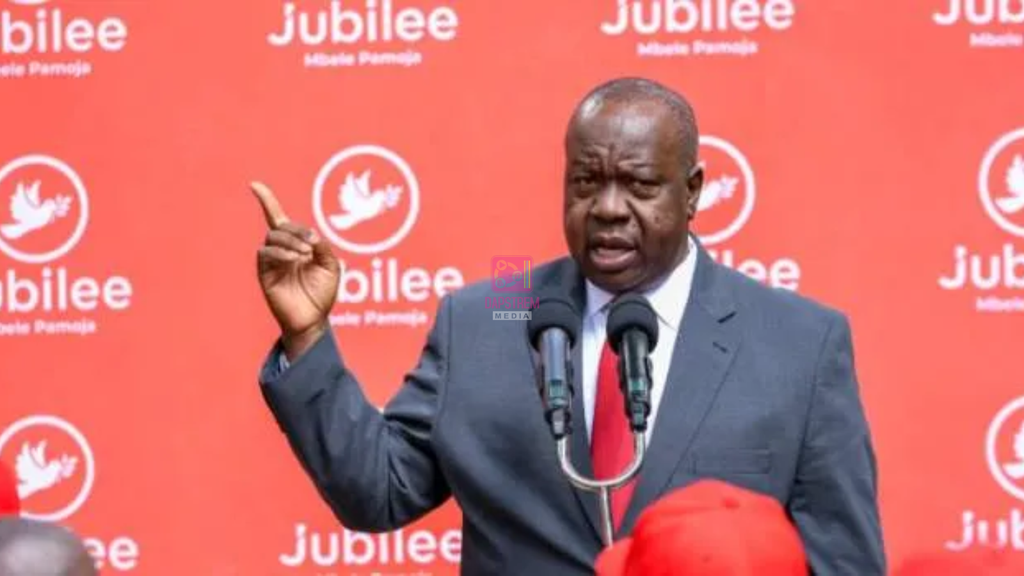
After the 2022 election, Jubilee itself became divided over its political direction.
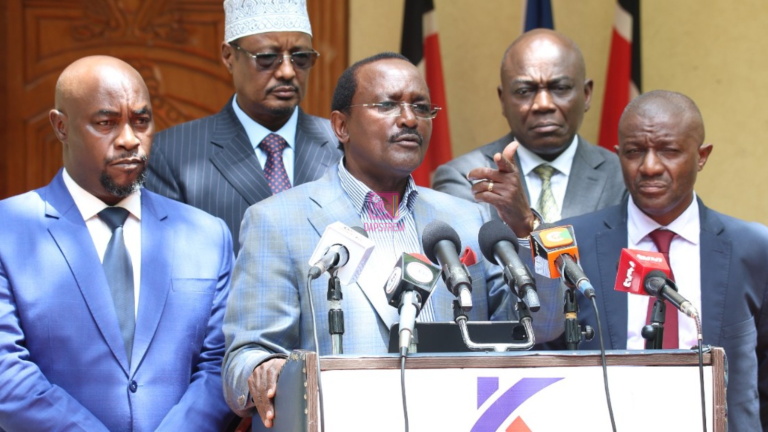
Competing factions emerged around officials including Secretary-General Jeremiah Kioni and Kanini Kega, with disagreements over party leadership and political alignment eventually reaching the Political Parties Disputes Tribunal and the courts.
The disputes were particularly significant because Jubilee remained associated with the Azimio coalition, while some of its members moved closer to Ruto’s Kenya Kwanza administration.
The party has since sought to reorganise its structures and rebuild its national political presence.
Kioni challenge highlights succession question
Matiang’i’s assumption of leadership follows an earlier contest over who should succeed Uhuru.
Jubilee Secretary-General Jeremiah Kioni had publicly offered himself for the party leadership after the court ruling requiring retired presidents to relinquish formal party office.
Kioni said the position should be filled through Jubilee’s established democratic procedures, with delegates ultimately deciding at the National Delegates Convention.
The latest arrangement appears to postpone that contest rather than permanently settle it.
Uhuru’s decision allows Matiang’i to oversee the party while it prepares for the NDC, where the party’s leadership structure is expected to be formalised.
That makes the coming delegates’ meeting an important test of Jubilee’s internal cohesion.
Uhuru remains influential , but outside the formal office
Although Kenyatta has relinquished the party leadership, Tuesday’s handover does not amount to a complete departure from Jubilee.
He said he would remain a senior party member and adviser.
That distinction is politically significant. While he can no longer occupy the formal party office covered by the court ruling, he retains the right to participate in political activities and offer political guidance within the limits of the law.
During the handover, Kenyatta urged Jubilee members to support Matiang’i and concentrate on selling the party’s policies rather than responding to political attacks with insults.
His remarks suggest that, at least for now, his relationship with Jubilee will shift from direct management to an advisory role.
Matiang’i’s 2027 challenge
Matiang’i’s elevation comes at a time when Kenya’s opposition landscape is undergoing significant realignment ahead of the 2027 election.
Jubilee has already endorsed him as its presidential candidate, meaning his new role gives him greater control over the party machinery with which he will campaign.
The party’s October 2025 resolutions tasked him with spearheading nationwide outreach, while Jubilee announced plans for mass membership registration and grassroots mobilisation.
The challenge now is to translate that organisational restructuring into a functioning national political network.
Jubilee will also have to manage its internal factions and relationships with other opposition parties while determining the extent to which it participates in broader opposition cooperation.
Matiang’i has previously rejected claims that Uhuru is sponsoring opposition politics, saying political change should be understood as a demand coming from Kenyans rather than from an individual political sponsor.
A new chapter for Jubilee
The handover marks the end of Uhuru Kenyatta’s formal leadership of the party he helped establish and lead to victory in the 2017 presidential election.
It simultaneously places Matiang’i at the centre of Jubilee’s political machinery as the party prepares for the 2027 contest.
But the transition is not yet the final word on Jubilee’s leadership. The National Delegates Convention remains the formal arena in which the party’s next leadership structure is expected to be settled.
For Matiang’i, the immediate task is therefore twofold: maintain party cohesion during the transition and rebuild Jubilee’s structures ahead of the next election.
For Uhuru, the change means moving from the formal leadership of the party to a senior advisory position.
And for Jubilee, the transition represents a broader test of whether the party can move beyond years of internal disputes and establish a coherent political identity for the 2027 electoral cycle.