Kenya’s opposition has opened a new chapter ahead of the 2027 General Election after the Azimio la Umoja One Kenya Coalition formally adopted a new identity the Ukombozi Alliance in a restructuring that brings together several opposition figures and political formations.
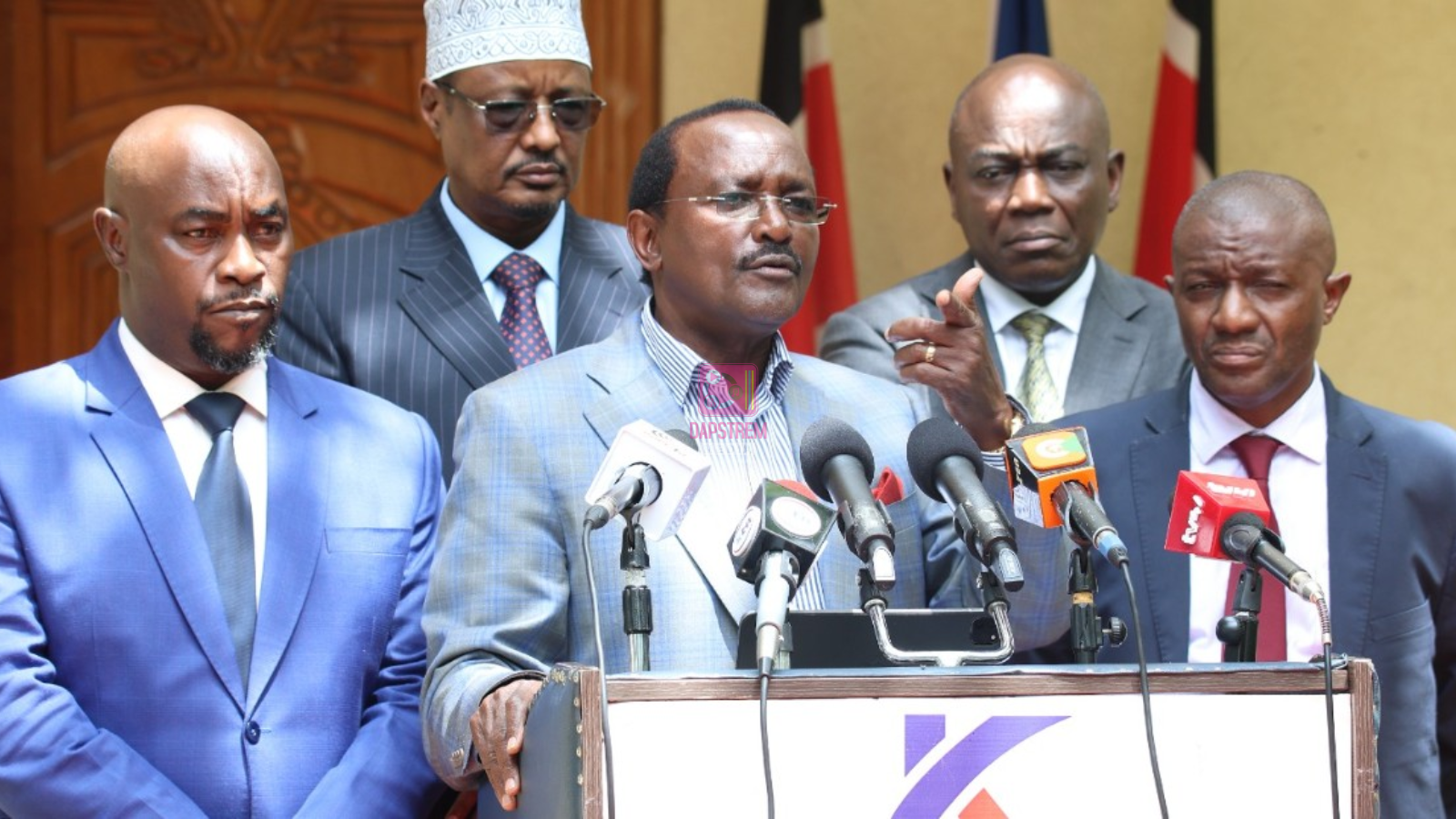
Wiper leader Kalonzo Musyoka announced the rebranding on Monday, saying the decision had been reached unanimously by the coalition’s leadership.
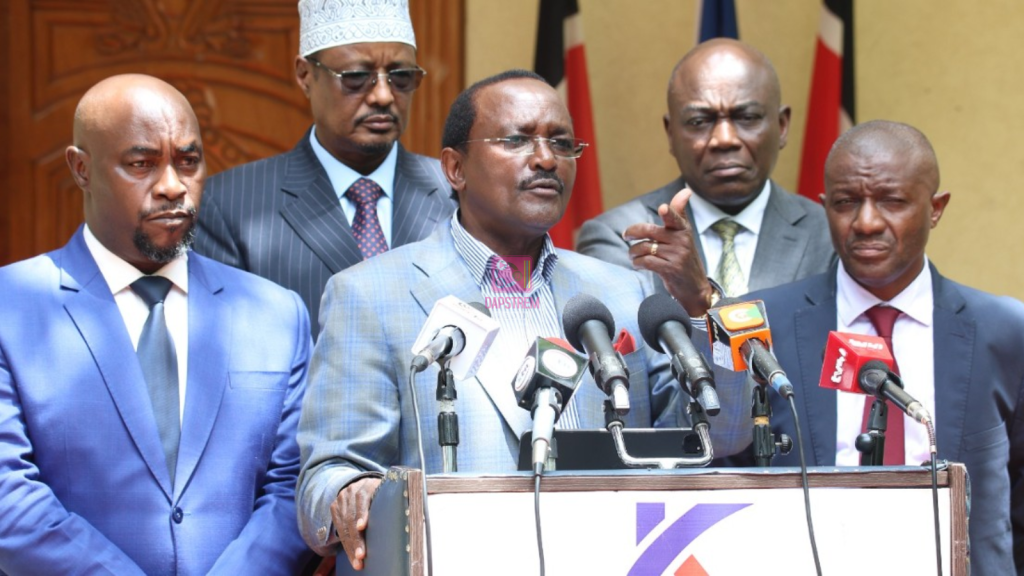
“After today, even this podium will change because the Azimio la Umoja One Kenya Coalition has this day, September 21, 2026, unanimously agreed to rebrand and change the name to Ukombozi Alliance,” Musyoka said during a press briefing in Nairobi.
The new political vehicle will operate under the philosophy “One Term, One Team, One Coalition”, with blue and white identified as its colours. The changes are part of a wider effort by the opposition to reorganise its structures, broaden its membership and establish a common political platform ahead of the next General Election.
Uhuru’s role changes within hours
The question of who would lead the new alliance quickly became one of the most significant developments surrounding the rebranding.
At the initial announcement, Musyoka said former President Uhuru Kenyatta, who had chaired the Azimio Council, would continue as chairman of the rebranded alliance. He said Kenyatta would convene a Jubilee Party meeting on Tuesday to make decisions relating to the transition, after which the necessary leadership changes would be communicated to the new formation.
However, a subsequent report by The Star on Monday afternoon said Siaya Governor James Orengo had replaced Kenyatta as chairman of the Ukombozi Alliance Coalition Council, with sources saying Kenyatta had already handed over the position to Orengo.
The rapid change is significant because it comes against the backdrop of a fresh legal debate over the political roles available to retired presidents.
Earlier in September, the High Court, in a judgment by Justice Lawrence Mugambi, upheld restrictions under the Presidential Retirement Benefits Act on retired presidents holding formal leadership positions in political parties beyond six months after leaving office. The ruling did not prevent former presidents from belonging to political parties or participating in political activities.
Kenyatta subsequently indicated that he would relinquish his position as Jubilee Party leader and comply with the court’s decision.
A separate ruling reported on September 21 by The Star, however, described a later judgment by Justice Bahati Mwamuye as declaring Section 6 of the Presidential Retirement Benefits Act unconstitutional and void, on the grounds that retirement from the presidency does not extinguish a former president’s constitutional political rights. The differing judgments create an important legal backdrop to the changes in Kenyatta’s formal political roles.
Despite the changes in formal office, opposition leaders have continued to maintain that Kenyatta can participate in political activities.
Kalonzo at the centre of the new formation
Musyoka remains a central figure in the new arrangement. Earlier this year, Azimio reorganised its leadership, with Musyoka taking the position of party leader as the coalition sought to sharpen its political strategy ahead of the 2027 elections.
The Wiper leader has also been involved in consultations with other opposition actors as parties seek to build a broader political coalition.
At Monday’s briefing, he was joined by a number of opposition figures, including Orengo, Democratic Action Party of Kenya leader Eugene Wamalwa and former Attorney General Justin Muturi. The presence of leaders from different political formations underscored the coalition’s stated intention to expand beyond its previous configuration.
Orengo, whose Linda Mwananchi formation has been involved in the opposition consultations, welcomed the new arrangement and said the coalition would proceed under the “one term, one team and one coalition” message.
The new alliance is also expected to attract additional political parties. Musyoka said the Umoja na Maendeleo Party, associated with former Meru Governor Kawira Mwangaza, was among the formations expected to join. The United Green Movement linked to former Chief Justice David Maraga has also featured in discussions about the expanding opposition arrangement.
A new name for a changing opposition
The rebranding marks another major transformation for a coalition that was formed around the 2022 General Election.
Azimio became the principal opposition coalition after the 2022 presidential contest, in which Raila Odinga ran against William Ruto. The coalition subsequently entered a period of internal reorganisation following changes in the opposition landscape and the death of Odinga in 2025.
By early 2026, its leaders were already discussing an overhaul of the coalition’s structures, policy platform and public engagement. In February, Azimio announced changes to its top leadership, with Musyoka taking a more prominent formal role while Kenyatta remained chairman of the Council.
The adoption of the Ukombozi name therefore represents more than a change of branding. It is an attempt to create a political structure capable of accommodating established parties as well as newer opposition movements as preparations for 2027 accelerate.
The choice of the word Ukombozi, meaning liberation, also gives the alliance a different political identity from the “Azimio” brand that dominated the opposition’s 2022 campaign.
The 2027 question
The reorganisation does not, however, settle the biggest question facing the opposition: who will ultimately carry its presidential ticket in 2027.
Musyoka has remained among the politicians positioning themselves for the next presidential contest, while other opposition figures have also been involved in consultations over a possible broad-based alliance.
The opposition has yet to publicly settle on a single presidential candidate, and Monday’s reorganisation appears focused first on establishing a common political structure before resolving the question of individual candidacies.
The formation also comes as President William Ruto’s administration faces an increasingly organised opposition ahead of the 2027 polls. Political differences between Ruto and former President Kenyatta have also become more visible, with the President recently criticising Kenyatta’s continued involvement in opposition politics. Musyoka has rejected attempts to frame Kenyatta as the principal political opponent to Ruto, saying the opposition’s contest would be centred on its broader political programme rather than on the former president.
For the Ukombozi Alliance, the immediate challenge will be translating the new political structure into an effective coalition capable of accommodating competing presidential ambitions, party interests and regional political bases.
The coming weeks are therefore likely to focus on the alliance’s formal registration and leadership structures, the role of its constituent parties and the mechanisms through which it will select candidates for the 2027 election.
For now, what began on Monday as a straightforward rebranding has already produced a significant leadership development: Uhuru Kenyatta was initially named chairman of the new Ukombozi Alliance, but James Orengo was later reported to have assumed the coalition council chairmanship.