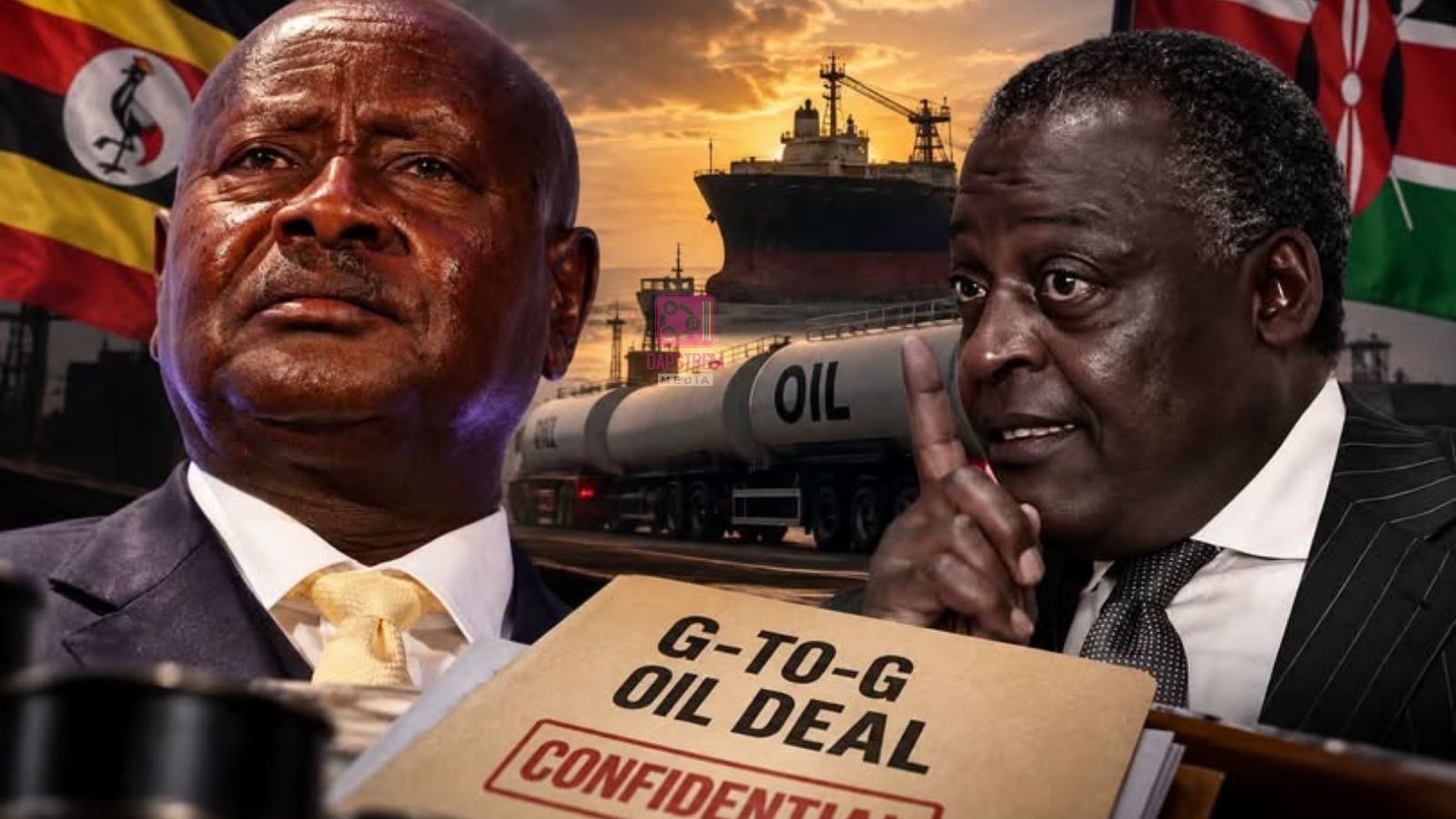
Ugandan President Yoweri Museveni has clarified his recent remarks about government-to-government (G-to-G) petroleum arrangements, saying the late Kenyan politician Cyrus Jirongo was the person who first informed him that Uganda was purchasing petroleum products through middlemen in Kenya.
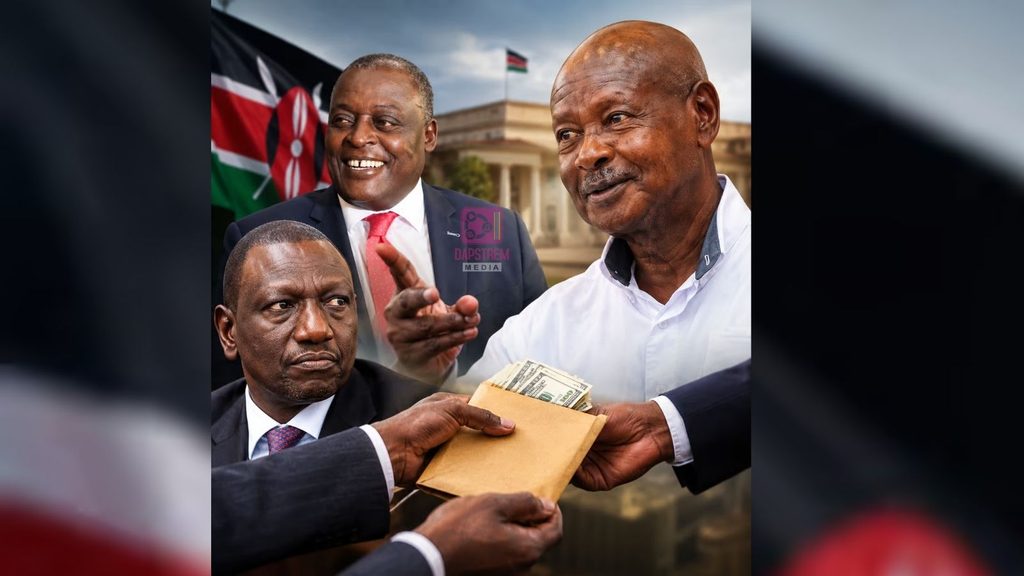
Museveni made the clarification in a statement published on September 20, 2026, after earlier comments about Uganda’s fuel procurement system triggered debate in Kenya over the country’s own G-to-G petroleum arrangement.
Museveni Names Cyrus Jirongo
Museveni said he was not initially aware that Uganda was purchasing petroleum products through intermediaries in Kenya.
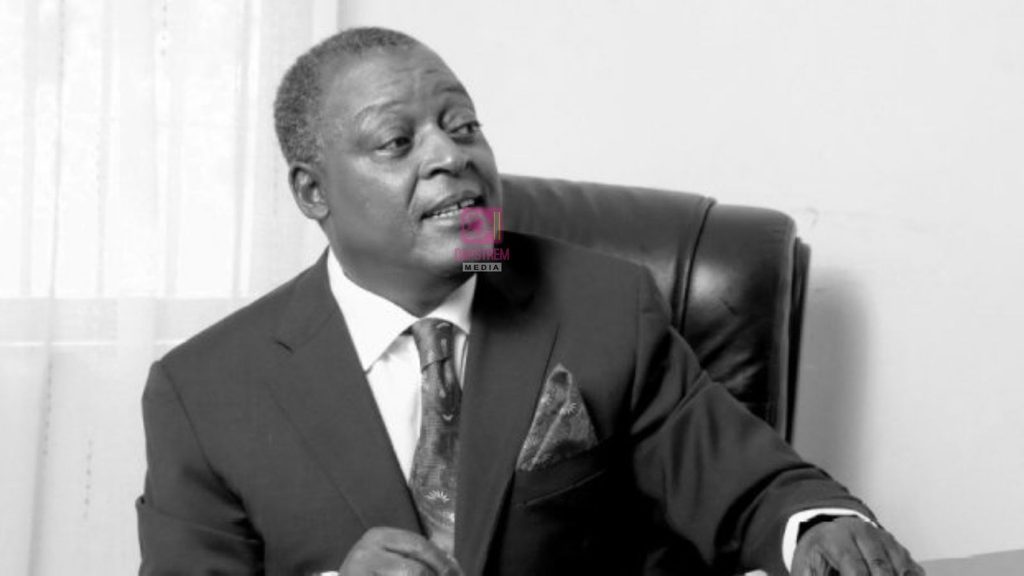
According to the Ugandan president, Jirongo brought the matter to his attention around 2019. Museveni said he subsequently instructed Uganda’s then Energy Minister, Irene Muloni, to address the issue.
He said the intervention did not immediately result in a change to the procurement system.
Museveni’s clarification was intended to explain his earlier comments in which he said a Kenyan senator had alerted him to Uganda’s use of middlemen. Kenyan media subsequently identified the politician as Jirongo.
Jirongo, a former Lugari MP and Cabinet minister, died in a road accident in December 2025.
Uganda Later Changed Its Fuel Procurement Model
Museveni said Uganda eventually changed its petroleum procurement arrangements in 2023 after entering into an agreement with Vitol, a global petroleum company and bulk supplier.
According to figures provided by Museveni, the arrangement resulted in lower prices for several petroleum products.
He said the price of diesel fell from US$118 to US$83 per metric tonne, while petrol fell from US$97.50 to US$61.50 per metric tonne.
The president also said the price of aviation fuel declined from US$114.25 to US$79.25 per metric tonne.
Museveni attributed the changes to Uganda’s ability to source petroleum products more directly and in bulk.
Museveni Thanks Ruto Over Fuel Arrangement
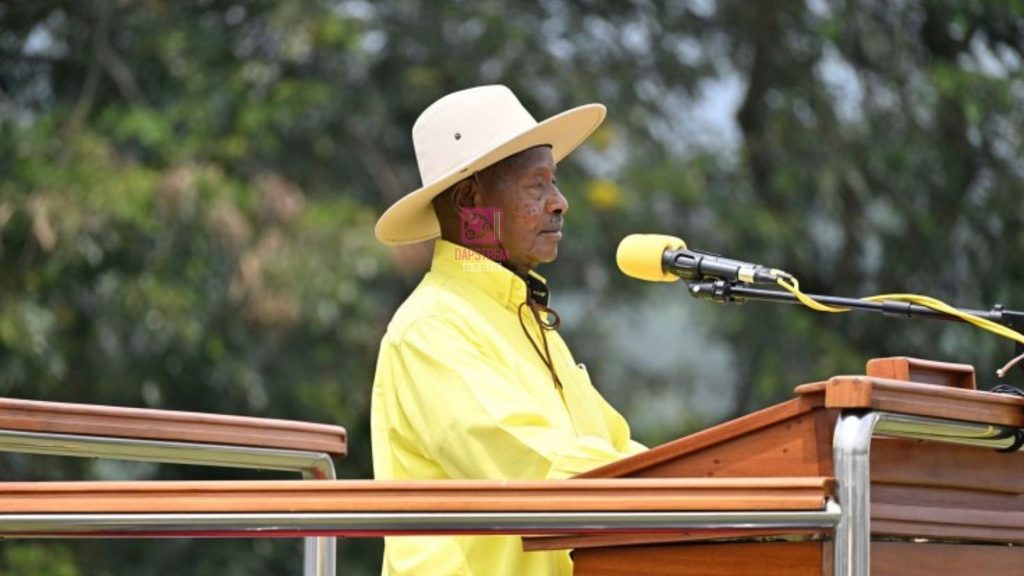
Museveni also praised Kenyan President William Ruto for supporting Uganda’s subsequent petroleum supply arrangements.
He said Ruto helped overcome resistance from some actors in Kenya and that the Kenyan government subsequently allowed Uganda to transport its petroleum products through the Kenya oil pipeline.
Museveni further said Uganda was allowed to acquire a 20.15 per cent shareholding in the pipeline.
The Ugandan president described the cooperation between the two governments positively, saying his government was satisfied with the arrangement.
The comments come as Uganda continues to strengthen its petroleum infrastructure, including the development of a new 320-million-litre storage terminal in Mpigi District.
Kenya Responds to the G-to-G Debate
Museveni’s remarks have also drawn attention to Kenya’s own government-to-government petroleum importation arrangement.
Kenya introduced its G-to-G fuel import system in 2023, with the government saying the arrangement was designed to address foreign-exchange and liquidity challenges affecting petroleum imports.
Kenya’s Energy and Petroleum Cabinet Secretary Opiyo Wandayi has rejected allegations of irregularities surrounding the arrangement.
According to the ministry, international oil companies were responsible for supplying refined petroleum products on extended credit terms, while licensed Kenyan companies were appointed to handle local logistics and supply activities.
The ministry has therefore distinguished between the international suppliers involved in the arrangement and Kenyan companies that handle local distribution and logistics.
Why Middlemen Have Become a Major Issue
The discussion surrounding middlemen centres on how petroleum products are purchased, transported and distributed before reaching consumers.
Museveni’s account focused on Uganda’s previous procurement system, which he said involved intermediaries in Kenya.
His comments have nevertheless prompted renewed discussion in Kenya because the two countries share important petroleum infrastructure and Uganda has historically relied heavily on Kenya as a route for imported fuel.
Kenya’s government has maintained that its 2023 arrangement was established to address specific financial and foreign-exchange challenges rather than to create an avenue for improper procurement.
These different explanations mean that the details of the agreements and the roles of the various companies involved remain central to the ongoing public debate.
Museveni Says His Remarks Were Misrepresented
In his clarification, Museveni also accused sections of the Kenyan media of adding what he described as “pilipili” or red pepper to his original remarks.
He said his comments were about Uganda’s previous petroleum procurement system and his discovery that intermediaries were involved, rather than an accusation about the current Kenyan government.
That distinction is significant because his initial remarks were interpreted by some Kenyan commentators as criticism of Kenya’s current G-to-G fuel arrangement.
Museveni’s latest statement instead sought to explain the historical context behind his comments and identify Jirongo as the Kenyan politician who first raised the issue with him.
The renewed debate is likely to keep attention on petroleum procurement arrangements between Kenya and Uganda.
Museveni’s account provides his explanation of how Uganda’s earlier system operated and why the country later changed its procurement model.
Kenya’s government, meanwhile, continues to defend its own G-to-G arrangement and has provided an explanation for the participation of international suppliers and licensed local companies.
For now, the two governments maintain working relations over petroleum transportation and pipeline infrastructure, while the latest comments have opened another public discussion about transparency, procurement and the role of intermediaries in the regional fuel trade.