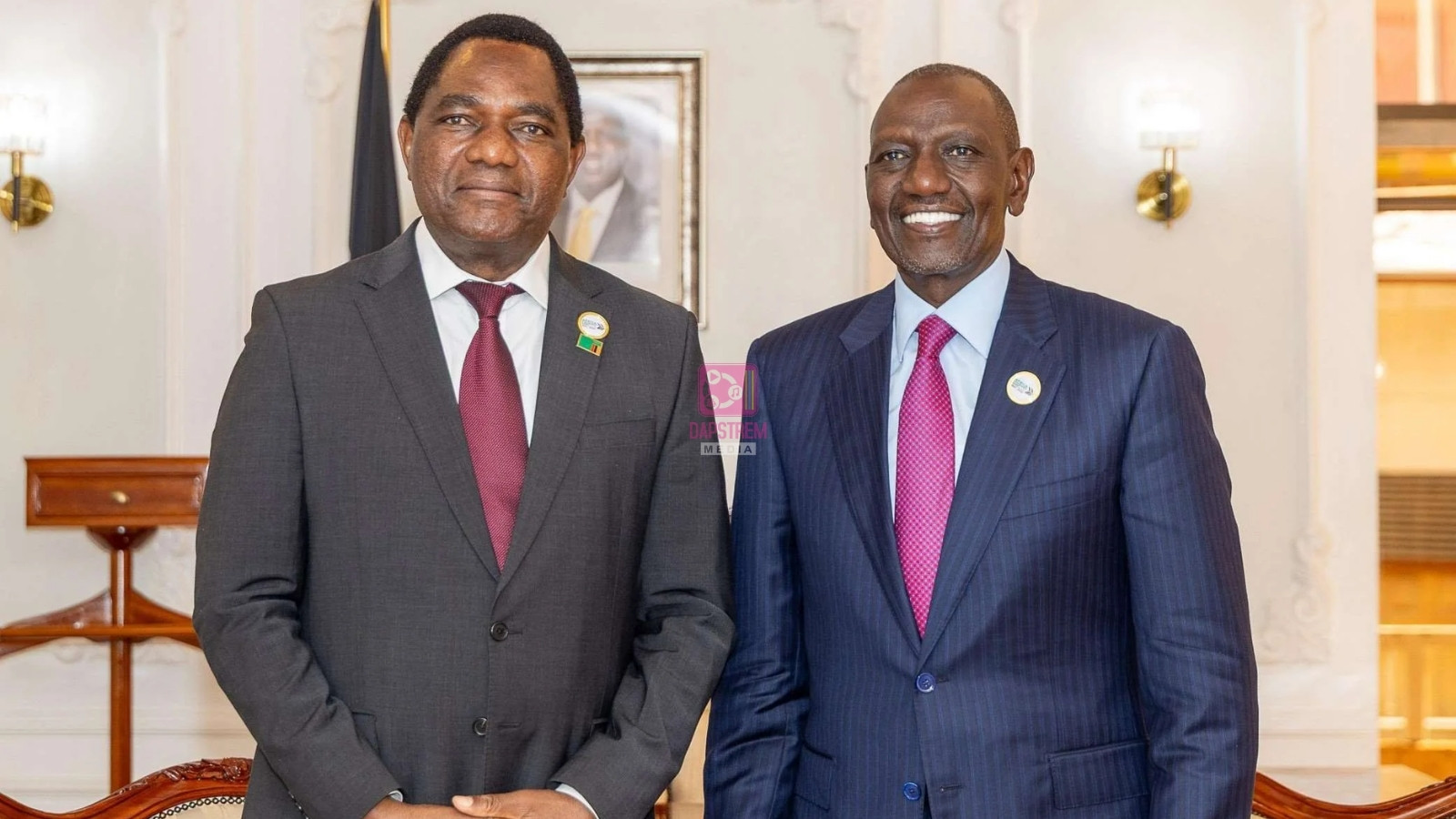
President William Ruto has departed Kenya for Zambia to attend the inauguration of President Hakainde Hichilema, following his re-election in the country’s August 13 presidential election. The ceremony is scheduled for Tuesday, September 1, at the National Heroes Stadium in Lusaka.
Ruto’s trip places Kenya among the regional countries represented at the ceremony as Hichilema begins his second five-year term. The Zambian president secured about 60 per cent of the vote, according to reports, defeating 13 challengers.
Ruto congratulates Hichilema
Ruto had earlier congratulated Hichilema on his victory, describing the result as a reflection of the confidence Zambians have placed in his leadership.
In his congratulatory message, Ruto said Kenya values its relationship with Zambia and expressed optimism that Hichilema’s second term would strengthen cooperation between the two countries. He also wished the Zambian leader success as he begins another term in office.
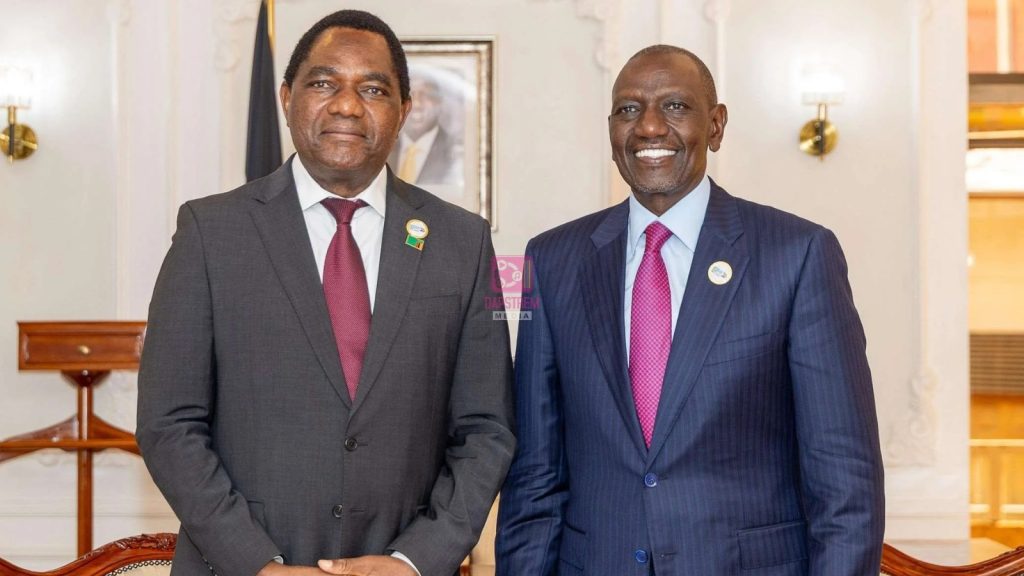
The two presidents have maintained close contact through regional and continental forums. Hichilema has previously hosted Ruto in Lusaka, including during the 22nd COMESA Summit in 2023, when the Kenyan president called for greater regional trade, value addition and industrialisation.
A relationship built around regional cooperation
Ruto’s visit comes against the backdrop of longstanding economic and diplomatic ties between Kenya and Zambia.
Both countries are members of the Common Market for Eastern and Southern Africa (COMESA), providing a platform for cooperation on trade, investment and regional integration. During the 2023 COMESA summit in Lusaka, Ruto argued that African countries should move beyond exporting raw materials and instead invest in value addition and manufacturing.
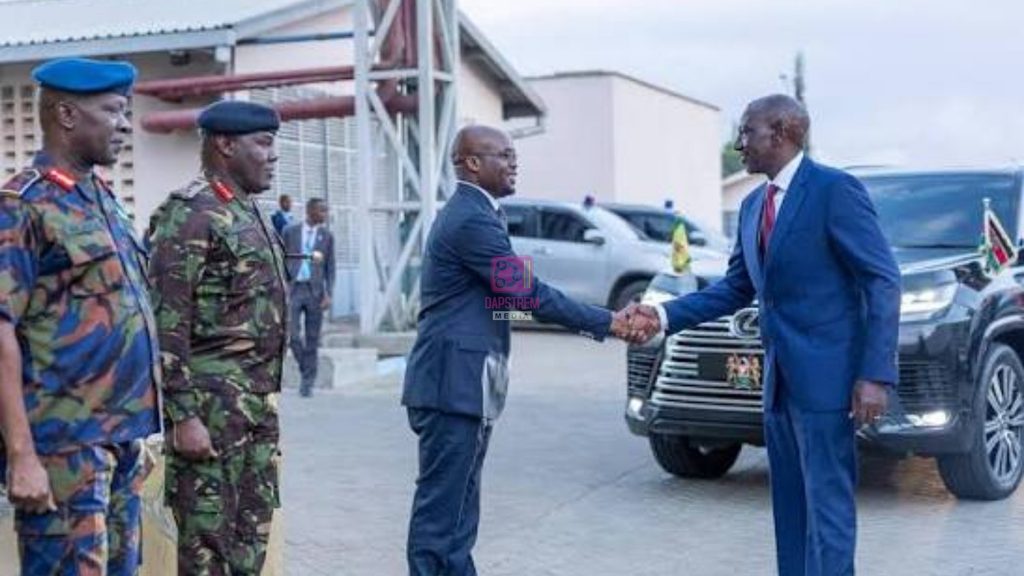
The two leaders have also been involved in wider regional discussions on peace and security. Hichilema participated in an EAC-SADC joint summit hosted in Tanzania in 2025 that focused on the conflict in eastern Democratic Republic of Congo. Ruto has repeatedly advocated dialogue and regional cooperation as part of efforts to resolve the crisis.
Hichilema begins another chapter
Hichilema’s inauguration marks the beginning of his second term after he defeated his challengers in the August election.
His first term was characterised by efforts to address Zambia’s economic challenges, including debt restructuring and negotiations with international creditors. His re-election gives his administration another five years to pursue its economic and development agenda.
However, the political environment remains sensitive following the election. Opposition figures challenged the outcome, while recent developments involving opposition leader Brian Mundubile have added to tensions surrounding the post-election period. Reuters reported that Mundubile and his running mate Makebi Zulu were questioned in connection with an alleged treason offence after rejecting the election result.
The inauguration therefore comes at a politically important moment for Zambia, with the government seeking to consolidate its second-term agenda while facing scrutiny over its handling of opposition voices.
What Ruto’s visit means for Kenya
For Kenya, Ruto’s presence in Lusaka is both a diplomatic gesture and an opportunity to reinforce bilateral relations.
Kenya and Zambia have interests in expanding trade, investment, infrastructure cooperation and regional integration. Ruto’s administration has consistently promoted stronger intra-African trade and closer economic partnerships, particularly through regional blocs such as COMESA.
His attendance also sends a message of solidarity between neighbouring African states and reflects the importance Nairobi places on maintaining strong relations across the continent.
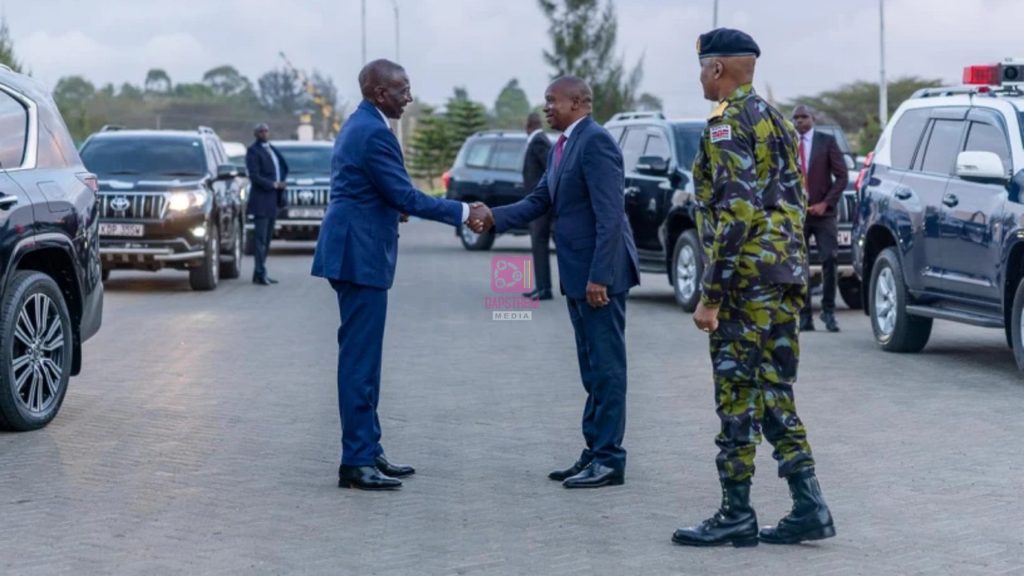
As Hichilema takes the oath of office for a second term, Ruto joins other regional leaders in Lusaka to witness the transition into the next phase of Zambia’s political journey.
For Kenya, the visit offers an opportunity to deepen a relationship that extends beyond political symbolism into trade, regional diplomacy and Africa’s broader push for economic integration.