Parliament Strengthens Kenya’s Fight Against Match-Fixing With New Sports Amendment Bill
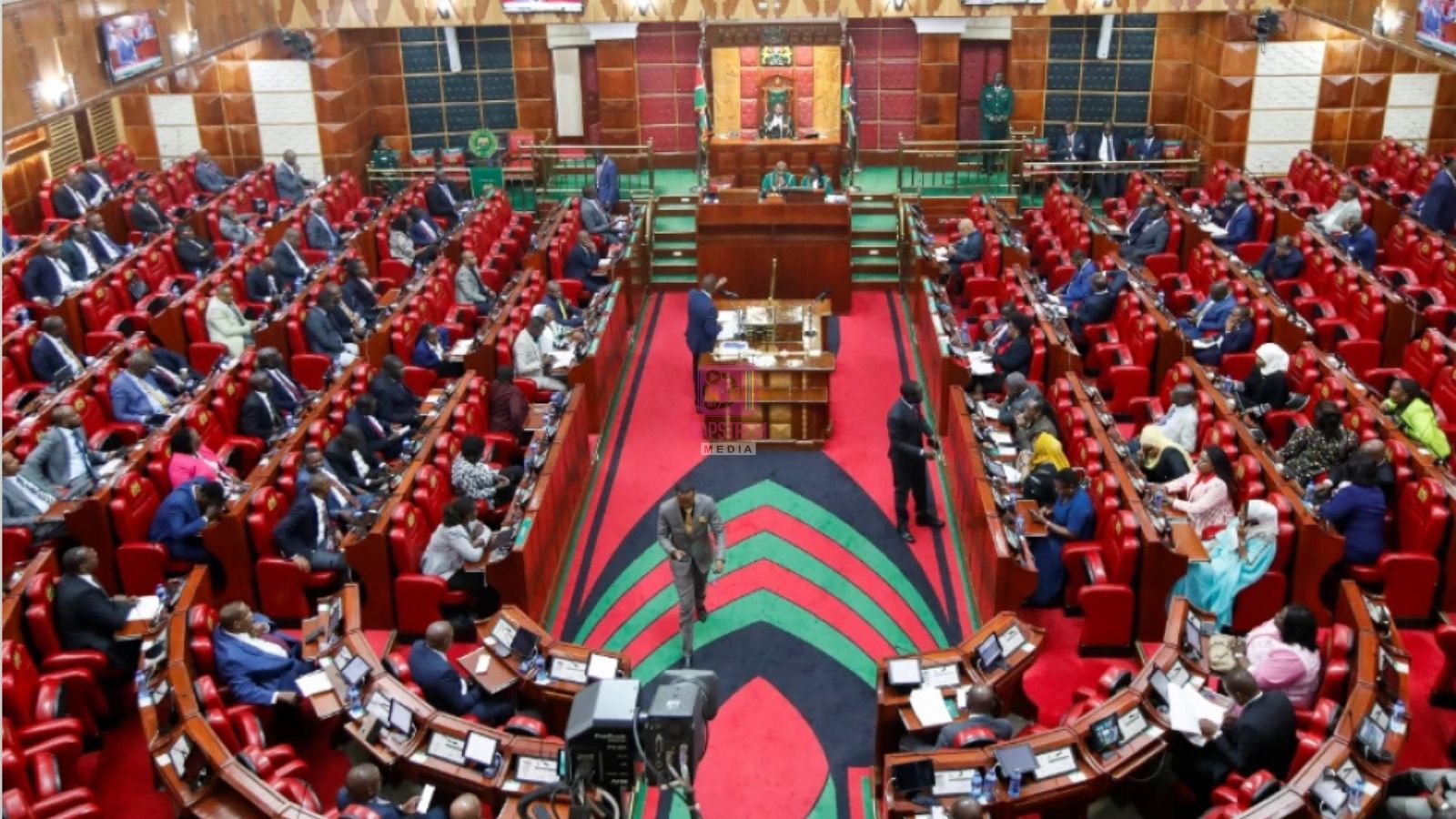
Parliament has approved the Sports (Amendment) Bill, 2026, in a major development that is expected to strengthen Kenya’s efforts to combat match-fixing, competition manipulation and other forms of corruption within the country’s sporting sector.
The passage of the legislation comes at a time when the integrity of sport has become an increasingly important issue both in Kenya and around the world. Match-fixing can undermine the credibility of competitions, damage the careers of athletes and officials, discourage fans from supporting sporting events and create an environment in which criminal networks can exploit vulnerable players.
The new legislation is therefore expected to give authorities stronger tools to prevent, detect and respond to attempts to manipulate sporting competitions.
For Kenya, the issue is particularly significant because sport is more than entertainment. It is a major part of the country’s identity and economy, providing employment and opportunities for thousands of athletes, coaches, officials, administrators and other professionals.
Kenya has also established itself as one of the world’s leading athletics nations, while football, rugby, volleyball, basketball and other sports command large and passionate followings.
The integrity of those competitions is consequently a matter of national importance.
When a sporting event is manipulated, fans lose confidence in the outcome. Athletes who compete honestly can also find themselves disadvantaged by individuals who are willing to break the rules for financial gain.
The Sports (Amendment) Bill, 2026 seeks to address that threat by strengthening the legal framework surrounding match-fixing and competition manipulation.
Match-fixing generally involves deliberately influencing the outcome or events within a sporting competition for an improper purpose, often to benefit individuals who have placed bets on a predetermined result.
Manipulation does not always involve fixing the final outcome of a match. It can also involve deliberately influencing specific events within a game, such as the number of goals, penalties, cards, corners or other occurrences that can be targeted by betting markets.
This makes the problem particularly difficult to detect.
A match can appear normal to spectators while certain individuals manipulate small aspects of the competition for financial gain.
The growth of online betting has made the issue even more complicated.
Sports betting has become increasingly accessible through mobile phones and digital platforms. While legal betting can form part of the wider entertainment industry, the huge amounts of money moving through betting markets can create incentives for criminal networks to target athletes, referees and other sports officials.
Young or financially vulnerable players can be particularly susceptible to manipulation.
A player who earns a modest salary may be offered money to deliberately make a mistake during a match. The amount offered may appear attractive compared with the player’s regular income.
Once such arrangements become established, however, they can spread.
A single corrupt player can potentially introduce other teammates or officials into the scheme.
This is why Parliament’s approval of stronger legislation is significant.
The law is expected to provide a clearer framework for dealing with individuals who attempt to manipulate sporting competitions and those who facilitate such activities.
It also sends a strong message that match-fixing is not simply a violation of sporting rules but a serious threat to the integrity of Kenya’s sports industry.
The consequences of manipulation can extend far beyond one match.
If fans begin believing that games are predetermined, they may stop attending matches, purchasing tickets, watching broadcasts or supporting teams.
Sponsors may also become reluctant to invest in competitions they believe lack credibility.
For professional athletes, this can result in fewer opportunities and reduced income.
The economic consequences could therefore be significant.
Kenya’s sports industry relies heavily on public confidence. Sponsors invest because they expect sporting competitions to attract audiences and generate positive publicity.
Broadcasters purchase rights because they expect fans to watch.
Fans buy tickets because they believe they are watching genuine competition.
If that trust disappears, the entire sporting ecosystem suffers.
The new legislation therefore has implications for everyone involved in Kenyan sport.
For athletes, it reinforces the importance of maintaining professional standards and refusing to participate in manipulation.
For coaches and team managers, it highlights the need for stronger internal controls and awareness programmes.
For referees and officials, it underscores the importance of impartiality and transparency.
For sports federations, it creates an additional responsibility to establish effective systems for reporting suspicious behaviour.
And for betting companies, it reinforces the need to cooperate with authorities and sporting organisations when suspicious betting patterns emerge.
Technology will likely play an important role in enforcement.
Modern betting platforms generate enormous amounts of data. Unusual betting patterns can sometimes provide clues that a sporting event has been manipulated.
For example, if large amounts of money suddenly appear on an unlikely outcome shortly before a match, it could trigger further investigation.
However, unusual betting activity alone does not necessarily prove wrongdoing.
Authorities need to combine betting data with other evidence, including communications, financial transactions, player behaviour and testimony.
This requires cooperation between government agencies, sporting bodies and betting operators.
The passage of the bill could therefore encourage greater information-sharing between these stakeholders.
One of the biggest challenges in fighting match-fixing is that manipulation can cross borders.
A betting syndicate operating in another country could target a Kenyan competition remotely, using digital platforms and financial systems to coordinate activities.
This means Kenya cannot address the problem entirely on its own.
International cooperation will remain important, particularly where investigations involve foreign betting companies, international sporting organisations or criminal networks operating across several countries.
Kenya’s sports authorities will also need to invest in education.
Many young athletes may not fully understand the consequences of accepting money to manipulate a match.
Some may view such an arrangement as a harmless opportunity to make extra money.
But match-fixing can destroy careers.
An athlete found guilty of deliberately manipulating competition may face suspension, expulsion from a team or federation, financial penalties and potentially criminal prosecution.
The reputational consequences can also last for years.
Education should therefore begin before athletes reach the highest levels of competition.
Schools, academies and local sports clubs can play an important role by teaching young athletes about integrity and the dangers of match manipulation.
Athletes should also have safe channels through which they can report suspicious approaches.
This is important because players may be afraid to report individuals who attempt to recruit them into fixing schemes.
A young athlete might fear losing their place on a team or facing retaliation from people involved in the scheme.
Effective whistleblower protections can encourage people to come forward without fear.
The success of the new legislation will therefore depend not only on punishment but also on prevention.
Strong laws are important, but they must be supported by effective institutions.
Authorities need adequate resources to investigate cases, sports federations need clear integrity policies and athletes need to know where they can seek help.
The Sports Amendment Bill could provide the legal foundation, but implementation will determine its real impact.
Parliament’s approval also highlights the growing recognition that sports governance requires stronger accountability.
For many years, discussions about corruption in sport focused primarily on financial mismanagement and governance disputes.
Match-fixing adds another dimension.
It directly threatens the competition itself.
A sporting event is meaningful because the result is uncertain and determined by the performance of the participants.
If the outcome or key events are secretly predetermined, the fundamental purpose of competition is destroyed.
This is why match manipulation is often described as an attack on the integrity of sport.
The problem can also affect Kenya’s international reputation.
Kenyan athletes participate in competitions around the world, and the country hosts international sporting events.
If Kenya becomes associated with match-fixing or weak sporting oversight, international organisers and sponsors could become more cautious about working with Kenyan institutions.
A strong legal framework can help demonstrate that the country is serious about protecting sporting integrity.
The legislation also comes at a time when Kenya is seeking to strengthen its position as a sports destination.
The country has hosted major athletics competitions and is involved in preparations for major regional and continental sporting events.
A credible sporting environment is essential if Kenya wants to attract more international competitions, investment and sponsorship.
The fight against match-fixing should therefore be seen as part of a broader effort to professionalise the sports industry.
This includes improving governance, strengthening financial accountability, protecting athletes and ensuring that competitions are conducted fairly.
The role of sporting federations will be especially important.
Federations must ensure that rules are clearly communicated and consistently enforced.
They should also establish mechanisms for identifying suspicious behaviour and cooperating with investigators.
If federations fail to act when credible allegations arise, the problem can become entrenched.
At the same time, enforcement must be fair.
An athlete should not be punished simply because they are accused of wrongdoing.
Investigations must be based on evidence, and those accused should have an opportunity to defend themselves.
The principle of fairness is particularly important because allegations of match-fixing can destroy an athlete’s reputation even before a case is concluded.
Authorities must therefore avoid trial by media.
The new law should be implemented in a manner that protects both the integrity of sport and the rights of individuals.
For fans, the passage of the bill should provide reassurance that the government and Parliament recognise the seriousness of manipulation.
Sports supporters want to believe that the players they cheer for are competing honestly.
They want to know that a dramatic goal, last-minute victory or unexpected upset is genuine.
That trust is what makes sport exciting.
Protecting it should be a shared responsibility.
The betting industry will also have an important role to play.
Licensed operators should have systems capable of detecting suspicious betting patterns and reporting potential manipulation to the relevant authorities.
They should also cooperate with investigations when requested to provide information.
At the same time, betting companies must ensure that their operations comply with Kenyan laws and responsible gambling requirements.
The fight against match-fixing cannot be separated entirely from the broader discussion about sports betting.
The more money that flows through betting markets, the greater the potential incentive for criminals to manipulate competitions.
This does not mean betting itself is responsible for match-fixing.
Rather, it means that the betting ecosystem must have strong safeguards to prevent criminal exploitation.
Parliament’s approval of the Sports (Amendment) Bill, 2026 therefore represents an important step, but it is only the beginning.
The effectiveness of the law will ultimately be measured by what happens after it comes into force.
Will authorities investigate allegations quickly?
Will sports federations report suspicious behaviour?
Will athletes feel safe reporting attempts to manipulate matches?
Will betting companies share relevant information?
Will those found guilty face meaningful consequences?
The answers to these questions will determine whether the new framework makes a real difference.
Kenya has an opportunity to establish itself as a country that takes sporting integrity seriously.
That will require political commitment, institutional cooperation and investment in enforcement.
It will also require athletes and sports officials to understand that their decisions affect the credibility of the entire industry.
A single manipulated match can damage the reputation of an entire competition.
Repeated incidents can destroy public trust.
But effective prevention can have the opposite effect.
If athletes know that match-fixing is taken seriously, if corrupt approaches are reported quickly and if offenders are held accountable, the risks for criminal networks become much greater.
The long-term goal should be to create a sporting culture where integrity is treated as seriously as performance.
Winning should matter, but how a team or athlete wins should matter just as much.
For Kenya, that principle is particularly important because sport remains one of the country’s strongest sources of international recognition.
Kenyan athletes have built a reputation for excellence through years of discipline, training and sacrifice.
Protecting that reputation requires ensuring that sporting competitions remain fair.
The Sports (Amendment) Bill, 2026 could provide an important foundation for that effort.
Its passage by Parliament demonstrates that the threat of match-fixing is being taken more seriously at the national level.
The next challenge is implementation.
Authorities will need to ensure that the new measures do not remain on paper but become part of everyday sports administration.
Sports federations must strengthen their integrity systems, athletes must be educated about the risks, officials must remain accountable and investigative agencies must have the resources needed to pursue sophisticated manipulation schemes.
If these measures are implemented effectively, Kenya could significantly strengthen the credibility of its sporting industry.
The benefits would extend beyond football and other major sports.
Every athlete, team, coach, referee, sponsor and fan stands to benefit from competitions that are transparent and trustworthy.
Ultimately, the fight against match-fixing is a fight to protect the meaning of sport itself.
Fans deserve genuine competition. Athletes deserve to know that their hard work will not be undermined by corruption. Sponsors deserve confidence that their investments are supporting credible competitions. And Kenya deserves a sporting industry that can continue to inspire generations while contributing to the country’s economy and international reputation.
Parliament’s approval of the Sports (Amendment) Bill, 2026 is therefore an important milestone.
The real test, however, begins with enforcement.
If the new measures are backed by strong institutions, effective investigations, athlete education and cooperation across the sports and betting industries, Kenya could take a major step towards making match-fixing and competition manipulation far more difficult.
The message from Parliament is clear: sporting success must be achieved on the field, not decided behind closed doors.