
Several Lives Lost as Tourist Helicopter Crashes at Foot of Mt Ololokwe in Samburu
A tragic aviation accident has been reported in Samburu County after a helicopter carrying tourists crashed near the foot of Mount Ololokwe on Wednesday morning, August 19, 2026, triggering an emergency response in the remote northern Kenya region.
The crash occurred near Kirish, at the foothills of Mt Ololokwe, one of Samburu’s most recognisable natural landmarks. Initial reports indicated that several people were feared dead following the incident, with the wreckage reportedly catching fire after the helicopter went down. Emergency teams, security officers and local residents moved towards the scene as authorities began efforts to establish the full circumstances of the accident and account for everyone who had been on board.
As information continued to emerge during the day, reports from Kenyan media indicated that seven people had been aboard the aircraft, with later reports confirming that six tourists and the pilot had died. The Kenya Civil Aviation Authority confirmed that an aircraft accident had occurred in the area and launched an investigation into the circumstances surrounding the crash.
The accident has sent shockwaves through Kenya’s tourism and aviation sectors, particularly because the helicopter was reportedly being used in connection with a safari journey in one of the country’s most popular wildlife regions.
According to the Kenya Civil Aviation Authority, the aircraft was a Eurocopter EC130 B4, registration 5Y-GYM. It was conducting a flight from Loisaba towards the Ewaso Nyiro area when the accident occurred at approximately 9:13 a.m.
The route places the crash within a region that is well known for luxury tourism, wildlife conservancies and aerial safari experiences. Helicopters are frequently used in northern Kenya because of the region’s vast distances and rugged terrain, allowing tourists and safari operators to move between remote conservancies and lodges much faster than would be possible by road.
The crash therefore highlights both the appeal and the risks associated with operating aircraft in some of Kenya’s most remote tourist destinations.
Reports from the scene described a serious accident that left the helicopter badly damaged and engulfed in flames. The rugged nature of the terrain around Mt Ololokwe presented additional challenges for responders attempting to reach the crash site and carry out recovery operations.
Local residents were among the first people to raise the alarm after witnessing or learning of the crash, with emergency and security teams subsequently moving towards the area. The response involved multiple agencies as authorities worked to secure the scene, locate victims and begin the difficult process of recovering those who had died.
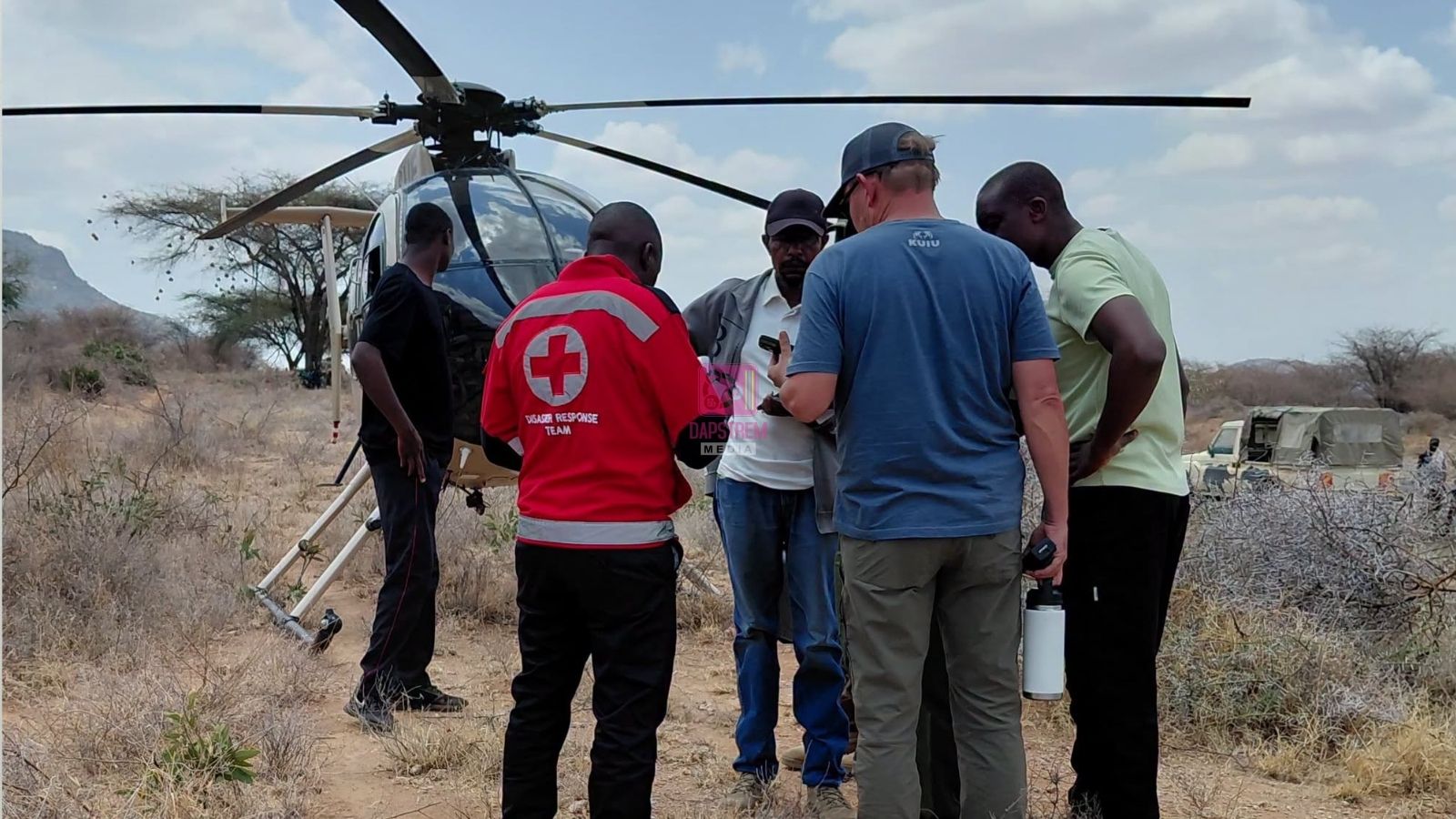
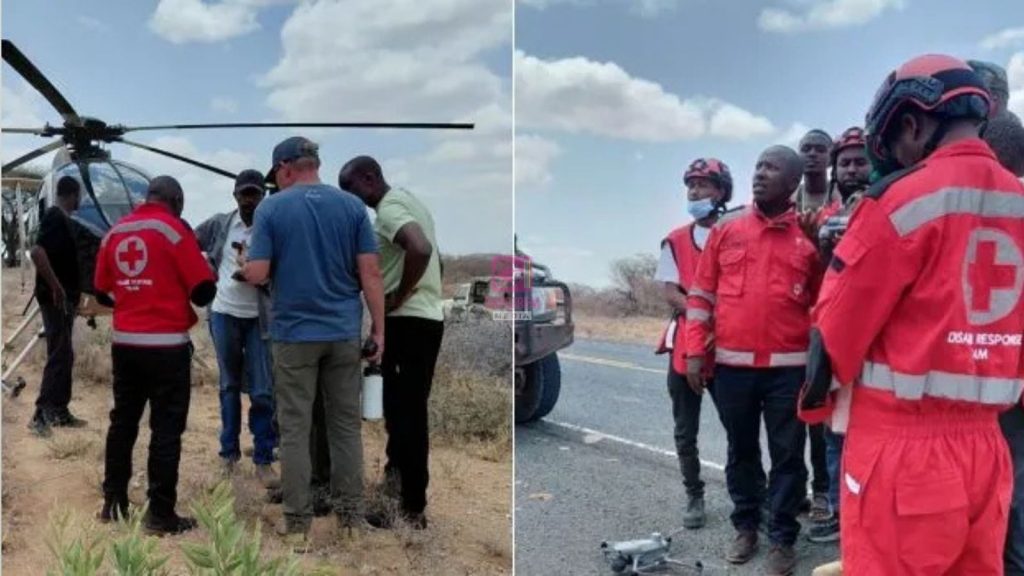
The Kenya Red Cross was also involved in the emergency response, with reports indicating that teams were dispatched to assist with the operation.
The remote location of the crash is an important factor in understanding the difficulties faced by rescue teams.
Northern Kenya has enormous distances between settlements and emergency facilities. Some areas are accessible only through rough roads or tracks, while mountainous terrain can make movement particularly difficult. In an aviation accident involving a helicopter, the first few minutes and hours are critical, but reaching a crash site in an isolated area can take time.
Mount Ololokwe itself is a dramatic geological feature rising above the surrounding landscape. The mountain is one of Samburu’s important natural attractions and forms part of a region characterised by rugged mountains, semi-arid grasslands and expansive wildlife areas. The Samburu County Government describes Ololokwe and the surrounding mountain ranges as part of the county’s distinctive natural landscape.
For tourists, the area offers some of the most spectacular scenery in northern Kenya.
Ololokwe has long attracted hikers, climbers and safari visitors. Its dramatic cliffs and panoramic views have made it a popular destination for travellers seeking experiences away from conventional tourist routes.
Helicopter flights have also become an increasingly popular part of high-end safari tourism in Kenya. They allow visitors to see landscapes from the air, access remote locations and move between conservancies in a fraction of the time required by road.
Tour operators have marketed aerial experiences as a way of seeing Kenya’s wilderness from a completely different perspective.
That makes the Samburu crash particularly painful for the tourism industry.
Kenya’s tourism sector depends heavily on the country’s reputation for spectacular wildlife, beautiful landscapes and safe travel experiences. International visitors often spend significant amounts of money on safari packages that include accommodation, road transfers and, in some cases, private aircraft or helicopter flights.
Any serious aviation accident involving tourists can therefore have consequences beyond the immediate tragedy.
However, the most important concern at this stage is not the potential impact on tourism but the lives lost and the families now waiting for answers.
Each person aboard the helicopter had a family, friends and people expecting them to return safely.
For the families of the victims, the morning’s journey will have ended in unimaginable tragedy.
The confirmation of deaths means authorities will now have the difficult responsibility of identifying the victims, notifying their families and conducting recovery and post-mortem procedures where necessary.
The identity of those killed and details about their nationalities are expected to become clearer as authorities complete the process of identification and formally release information.
The investigation into the crash will be equally important.
Aviation accidents are rarely investigated simply to assign blame. Investigators seek to reconstruct the sequence of events leading to an accident and identify the factors that contributed to it.
That can include mechanical problems, weather conditions, pilot decisions, aircraft performance, maintenance records, flight planning, terrain and communication systems.
The Kenya Civil Aviation Authority has confirmed that an investigation is underway, meaning investigators will now begin examining the aircraft, its maintenance history, the circumstances of the flight and other available evidence.
The wreckage itself will provide important clues.
Investigators will examine the helicopter’s engine, rotor systems, flight controls and other components to determine whether mechanical failure may have contributed to the crash.
They will also seek to establish whether the aircraft was operating normally before the accident.
Weather conditions around the mountain at the time of the crash will also be examined.
Mountains can create challenging flying conditions because of changing winds, turbulence, visibility and other atmospheric factors. Pilots operating in mountainous and remote environments require careful planning and strong knowledge of the terrain.
However, it would be premature to attribute the accident to any particular cause before the official investigation is completed.
Speculation can easily spread following aviation accidents, particularly when videos and photographs from crash scenes circulate rapidly on social media.
Authorities will therefore need to ensure that verified information is communicated clearly to the public.
The same caution applies to reports concerning the number and identity of people aboard the aircraft.
Initial reports during an emergency can be incomplete or contradictory, particularly when rescue teams are still reaching the scene.
In this case, early reports described several people as feared dead before later reporting confirmed that seven people had died. The developing information illustrates why official confirmation remains important during the early stages of a major accident.
The tragedy also raises broader questions about aviation safety in Kenya.
Helicopters are particularly useful in a country with vast remote areas, including wildlife conservancies, mountainous regions and locations where road infrastructure is limited.
They provide essential services to tourism operators, medical teams, conservation organisations, government agencies and private travellers.
But operating helicopters in remote areas presents unique challenges.
A helicopter can land in places where conventional aircraft cannot, but pilots must contend with terrain, weather, wildlife, limited infrastructure and long distances from emergency medical facilities.
Tourism operators therefore have a responsibility to maintain high safety standards and ensure that aircraft, pilots and support teams meet all regulatory requirements.
The authorities, meanwhile, have the responsibility of ensuring that operators comply with aviation regulations and that safety standards are properly enforced.
The crash will inevitably lead to questions about the aircraft involved, its operator, its maintenance history and the conditions under which it was flying.
Those questions should be answered by investigators rather than speculation.
One of the most important outcomes of an aviation investigation is the identification of lessons that can prevent similar accidents from happening in the future.
If investigators discover a mechanical problem, the findings could lead to inspections of similar aircraft.
If human factors contributed to the accident, aviation authorities could recommend additional training or operational changes.
If weather or terrain played a role, operators could be advised to strengthen flight planning and risk assessment procedures.
The ultimate objective should always be improved safety.
The crash is also a reminder of the importance of emergency preparedness in remote tourism destinations.
Aviation companies operating in areas such as Samburu must have effective emergency plans because an accident can occur far from major hospitals and urban emergency services.
Communication systems, trained rescue personnel and coordination between operators and local authorities can make a significant difference during emergencies.
The response to the Mt Ololokwe crash will therefore be examined not only in terms of what happened in the air but also how quickly and effectively emergency teams were able to respond once the accident occurred.
For the local community, the incident has also been deeply distressing.
Residents around Kirish were among those who responded to the emergency, and the sudden arrival of a major aviation accident in their community would have been shocking.
Local communities in northern Kenya are closely connected to the tourism industry. Many residents earn income directly or indirectly from tourism through guiding, transport, hospitality, conservation and other services.
The safety of visitors is therefore also important to local livelihoods.
Samburu County has built a strong reputation as a destination for wildlife and cultural tourism. Its landscapes, conservancies and proximity to major safari attractions draw visitors from Kenya and abroad.
The helicopter crash is unlikely to erase that reputation, but it serves as a reminder that tourism must always be accompanied by strong safety systems.
The aviation sector will now wait for investigators to establish exactly what happened.
The authorities will need to reconstruct the helicopter’s final moments, determine its flight path and examine what occurred before it descended near the mountain.
They will also need to establish whether there were any warning signs before the accident.
If the aircraft experienced a technical problem, investigators will want to know whether the problem could have been detected during routine maintenance.
If the accident involved a sudden change in weather or visibility, meteorological information will help establish the conditions at the time.
If there were operational factors, investigators will examine flight procedures and decisions.
Every detail matters.
Aviation investigations can take time because investigators must carefully examine physical evidence and technical records before reaching conclusions.
That process may be frustrating for families and the public, but rushing to conclusions can create misinformation and potentially compromise the investigation.
The best approach is therefore to allow the relevant authorities to conduct a professional and independent inquiry.
The tragedy also comes at a time when Kenya’s aviation sector continues to grow.
Helicopter operations have expanded alongside tourism, business travel, medical evacuations and other specialised services.
With increased activity comes the need for continuous attention to safety.
Every accident provides an opportunity to examine existing systems and identify areas that can be improved.
For the families of those who died, however, the investigation will never erase the loss.
No technical finding can bring back a loved one.
What it can do is provide answers and potentially prevent another family from experiencing the same tragedy.
The Mt Ololokwe helicopter crash has therefore become more than a breaking news story.
It is a human tragedy involving seven people whose journey through northern Kenya ended unexpectedly.
It is also a serious event for the aviation and tourism industries, which depend on maintaining high standards of safety and public confidence.
As recovery efforts continue and investigators examine the wreckage, attention will remain focused on the circumstances that led the helicopter to crash.
Authorities will also be expected to provide accurate updates as more information becomes available.
For now, the most important priority is to respect the victims and their families while allowing emergency teams and investigators to complete their work.
The confirmed deaths of six tourists and their pilot have left a dark cloud over what would ordinarily have been a journey through one of Kenya’s most spectacular landscapes.
Mount Ololokwe, known for its dramatic beauty and commanding presence over Samburu’s rugged terrain, has become the scene of a devastating aviation accident.
As Kenya mourns those who lost their lives, the country will also look to the aviation authorities for answers.
The investigation into the Eurocopter EC130 B4 and its final flight from Loisaba towards the Ewaso Nyiro area will be critical in establishing what went wrong.
Until those findings are released, speculation about the cause of the crash should be avoided.
What is known is that a helicopter went down near Mt Ololokwe on Wednesday morning, seven people died and emergency teams were called to a difficult and remote crash site.
What remains to be established is why the aircraft crashed.
That question will now form the centre of the investigation, as authorities work to turn the tragedy into answers and, ultimately, lessons that can help make Kenya’s skies safer for both residents and visitors.