
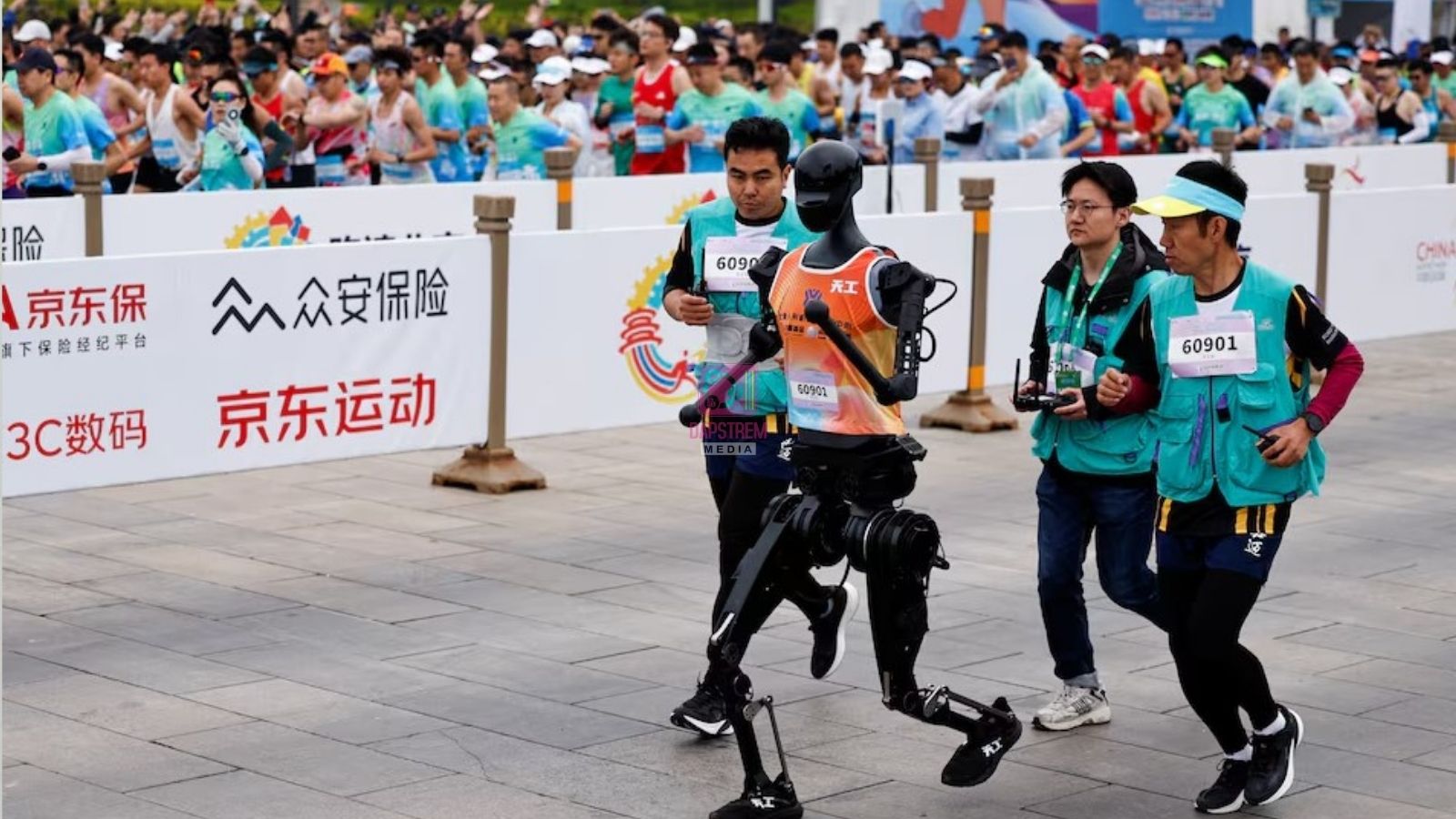
Beijing Hosts Historic Humanoid Robot Games as Over 2,000 Robots Showcase the Future of AI
Beijing has hosted what is being described as the world’s largest humanoid robot games, bringing together more than 2,000 robots in a remarkable display of artificial intelligence, robotics and emerging technology.
The event has attracted significant attention because it offers a glimpse into a future where humanoid robots could move beyond research laboratories and controlled demonstrations to participate in increasingly complex activities that resemble human sports, work and everyday tasks.
The competition brings together robots developed by different companies, universities and research institutions, creating an unusual environment where machines are tested not only for their ability to walk and move but also for coordination, balance, speed, responsiveness and the ability to perform tasks under competitive conditions.
For Beijing and China more broadly, the event also represents an opportunity to showcase the country’s rapidly expanding robotics industry and its ambitions to become a global leader in artificial intelligence and advanced manufacturing.
The sight of hundreds or thousands of humanoid robots competing in sporting activities may sound like something from a science-fiction movie, but the technology behind the event is increasingly becoming a reality.
Humanoid robots are designed to have body structures that resemble those of humans, typically featuring two legs, two arms and a torso. The design allows them to operate in environments built largely for people, including homes, factories, offices and public spaces.
The biggest challenge has always been making these machines capable of moving reliably and safely in the unpredictable environments that humans navigate every day.
Walking on two legs is considerably more complicated for a robot than it appears for a person. A human constantly makes tiny adjustments to maintain balance, respond to changes in the ground and coordinate movements between different parts of the body.
Robots must replicate many of these functions through sensors, motors, processors and increasingly sophisticated artificial intelligence systems.
The competition in Beijing provides developers with an opportunity to test how well their machines perform under pressure.
Rather than simply demonstrating a robot walking in a controlled laboratory environment, competitive events introduce variables that can reveal weaknesses in hardware and software.
A robot that performs perfectly during a demonstration may struggle when it has to change direction quickly, maintain balance after contact with another robot or respond to unexpected movements.
That makes sporting competitions particularly useful for robotics researchers.
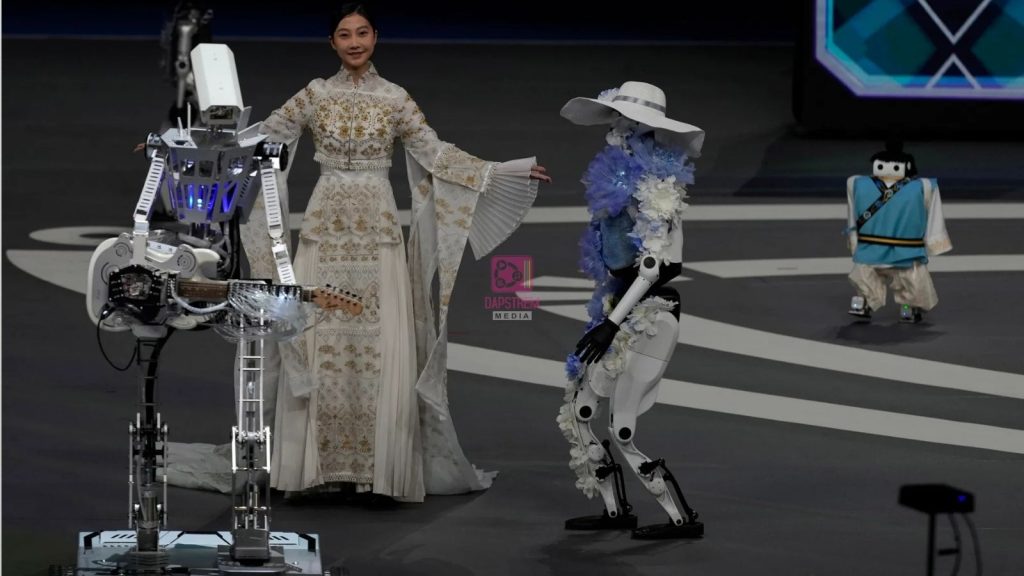
The event also demonstrates how artificial intelligence is increasingly becoming an important component of physical machines.
Traditional robots were often programmed to perform specific, repetitive actions. Modern humanoid robots are increasingly being designed to interpret their surroundings, process information and make decisions in real time.
Artificial intelligence can help a robot recognise objects, understand its environment and determine how to move its body to achieve a particular objective.
When combined with advanced sensors and powerful computing systems, these technologies could eventually allow robots to perform tasks that would have previously required human workers.
The Beijing games therefore go beyond entertainment.
They provide a testing ground for technologies that could eventually be used in manufacturing, logistics, healthcare, construction, disaster response and other industries.
A robot capable of running, balancing and manipulating objects in a sporting competition could potentially be adapted to perform useful tasks in a warehouse or factory.
The technology could also become useful in dangerous environments where sending humans would be risky.
Robots could potentially be deployed in areas affected by fires, chemical spills, collapsed buildings or other hazardous conditions.
The development of humanoid machines is therefore being closely followed by technology companies and governments around the world.
China has emerged as one of the most aggressive players in this field.
The country has invested heavily in artificial intelligence, robotics, semiconductors, electric vehicles and advanced manufacturing.
Its large manufacturing ecosystem also gives Chinese robotics companies access to supply chains and production capabilities that can help them develop and commercialise new machines at scale.
The Beijing competition provides a public demonstration of those capabilities.
By bringing together more than 2,000 robots, the event highlights the growing number of companies and research institutions working on humanoid robotics.
It also provides developers with an opportunity to compare different approaches.
Some robots may be designed primarily for speed, while others may prioritise strength, precision or flexibility.
Different machines may use different types of motors, batteries, sensors and artificial intelligence systems.
Competition can therefore accelerate innovation because developers have an incentive to improve their machines in order to perform better than their rivals.
The sporting environment also makes it easier for the public to understand robotics.
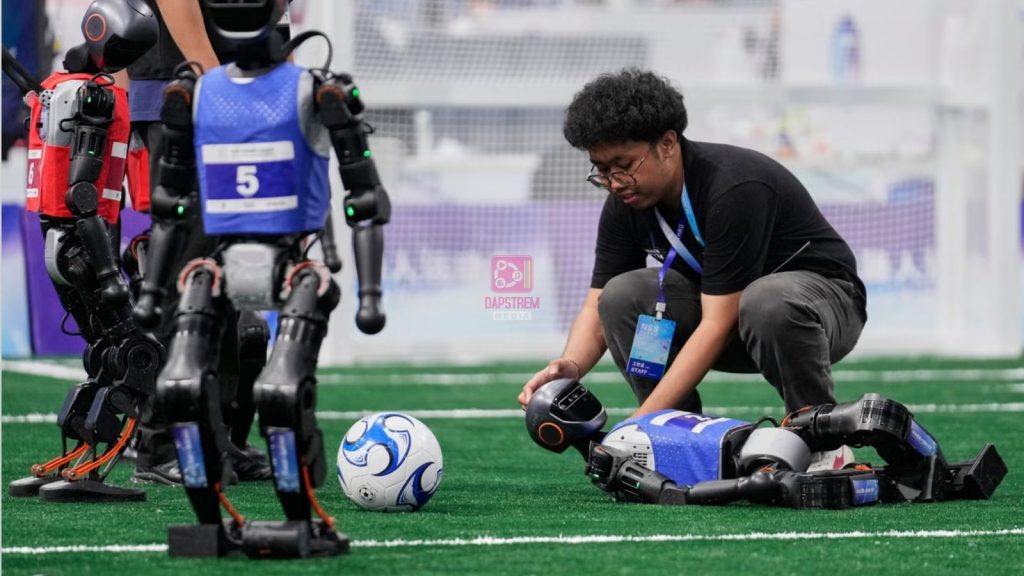
Artificial intelligence can be an abstract concept, particularly when discussed in terms of algorithms, computing power and machine learning.
Watching a robot run, kick a ball, compete in an athletic event or interact with another machine makes the technology much easier to visualise.
It transforms complicated engineering concepts into something people can see.
For younger generations in particular, events like this could inspire greater interest in science, technology, engineering and mathematics.
Students who watch humanoid robots competing may become interested in learning robotics, computer programming, mechanical engineering or artificial intelligence.
That could have long-term consequences for the global technology workforce.
The rapid development of humanoid robots is also raising questions about the future of employment.
If robots become capable of performing increasingly sophisticated physical tasks, some jobs currently performed by humans could eventually be automated.
Industries such as manufacturing, warehousing, delivery and basic maintenance are among those that could experience significant changes.
However, the transition is unlikely to happen overnight.
Humanoid robots remain expensive and technically complicated machines. They require substantial amounts of energy, maintenance and computing power, and many still struggle with basic tasks that humans perform effortlessly.
The ability to run around a sports field, for example, does not necessarily mean a robot is ready to work independently in a factory or home.
Real-world environments are much more complicated than controlled competitions.
A household contains countless objects, surfaces and obstacles. A factory may involve machinery, workers and changing conditions. A hospital requires machines to interact safely with vulnerable patients.
Robots must be able to handle these situations reliably before widespread adoption becomes possible.
Safety will therefore remain one of the most important considerations.
As robots become more powerful and autonomous, developers will need to ensure that they do not accidentally injure people or damage property.
A machine capable of moving quickly and carrying heavy objects must be equipped with systems that allow it to detect people and obstacles and respond appropriately.
Cybersecurity will also become increasingly important.
Connected robots could potentially become targets for hackers. If a malicious actor gains control of a machine operating in a factory, hospital or public environment, the consequences could be serious.
Developers will therefore have to treat security as an essential part of robot design.
The Beijing games also highlight the importance of batteries and energy efficiency.
Humanoid robots require significant amounts of energy to power motors, sensors and computers. Improving battery technology will be essential if these machines are eventually expected to operate for long periods without frequent charging.
A robot that can perform for only a short time before running out of power has limited practical value.
Researchers are therefore working on lighter batteries, more efficient motors and improved energy management systems.
Another major challenge is cost.
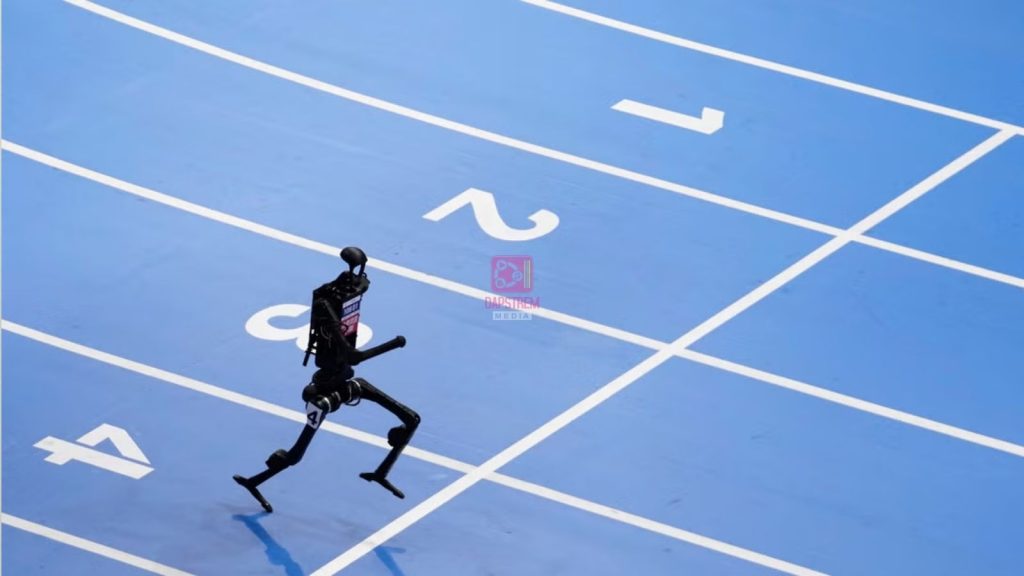
For humanoid robots to become common in workplaces and homes, their prices will need to fall substantially.
Mass production could eventually reduce costs, just as it has done with other technologies, but manufacturers will also need to improve reliability.
Businesses are unlikely to invest heavily in robots that frequently break down or require expensive repairs.
The competition in Beijing could help accelerate that process by encouraging manufacturers to identify weaknesses and develop better systems.
The event also reflects a broader shift in the relationship between sports and technology.
Sports competitions have historically been used to test human physical abilities, but robotics competitions are increasingly becoming laboratories for machines.
Just as athletes push the limits of speed, strength and endurance, engineers are pushing robots to achieve better movement, coordination and decision-making.
The result is a new form of competition in which victory depends not only on the machine itself but also on the software, engineering and artificial intelligence behind it.
This creates an interesting question about what constitutes athletic achievement when the competitors are machines.
Unlike human athletes, robots do not experience fatigue, emotion or physical pain in the same way. Their performance is determined by engineering decisions, programming and hardware capabilities.
Yet the competition still requires creativity and innovation from the teams that design them.
Every successful movement represents years of research and engineering.
The Beijing games therefore provide a stage not only for robots but also for the people behind them.
Engineers, programmers and researchers are effectively competing through the machines they create.
The event could also become an important benchmark for the development of humanoid robotics.
As more competitions are organised, developers will be able to track improvements over time.
Robots that struggle to complete simple tasks today could eventually become significantly faster, stronger and more reliable.
Competition also creates standardised challenges that allow different machines to be compared under similar conditions.
That can help researchers identify which technologies work best and where further improvements are needed.
For China, the event carries an additional strategic significance.
The country has made the development of high-tech industries a major economic priority. Robotics is considered an important component of the next generation of manufacturing and automation.
China already has a large industrial robot market and a substantial manufacturing base.
The development of humanoid robots could allow the country to extend its leadership in automation into more flexible and intelligent machines.
Instead of robots being limited to repetitive factory tasks, future machines could potentially perform a much broader range of activities.
This could transform manufacturing and other industries.
The implications extend beyond China.
Countries around the world are investing in humanoid robotics and artificial intelligence. Companies in the United States, Europe, Japan, South Korea and other parts of Asia are also developing increasingly advanced machines.
Competition between these countries and companies could accelerate technological progress.
It could also lead to a new global industry involving robot manufacturing, software development, artificial intelligence, batteries, sensors and specialised components.
The economic opportunities could be enormous.
At the same time, governments will have to consider how to regulate the technology.
Questions about responsibility, privacy, workplace safety and the use of autonomous machines will become increasingly important.
If a robot causes an accident, for example, determining responsibility could be complicated.
Would the manufacturer be responsible? Would the software developer be responsible? Would the owner or operator be responsible?
These questions may seem theoretical today, but they could become practical legal issues as robots become more widespread.
The public response to humanoid robots will also matter.
Some people see them as exciting tools that could make life easier and improve productivity. Others worry that increasingly capable machines could replace workers or create new security risks.
Public acceptance will likely depend on how the technology is introduced and whether people see tangible benefits.
If robots are used to assist elderly people, support workers, respond to disasters or perform dangerous jobs, they may be viewed positively.
If they are primarily associated with mass job losses or intrusive surveillance, public attitudes could be very different.
The Beijing games therefore represent more than a spectacular technological event.
They are part of a much larger global experiment in understanding what humanoid robots can actually do.
The more than 2,000 robots participating demonstrate how quickly the industry is developing and how much interest there is in creating machines capable of moving through the world in human-like ways.
The competition also offers a glimpse into a future in which robots may become increasingly visible outside factories and research laboratories.
They could eventually appear in warehouses, hospitals, construction sites, homes and public spaces.
But the road from a sporting arena to everyday life remains long.
Engineers still have to solve major challenges involving energy efficiency, reliability, cost, safety, artificial intelligence and human-robot interaction.
The Beijing games nevertheless demonstrate that progress is being made.
What was once largely confined to science fiction is becoming an increasingly serious technological industry.
As engineers continue improving movement, intelligence and physical capabilities, humanoid robots could become one of the defining technologies of the coming decades.
For now, the robots competing in Beijing are providing entertainment and a remarkable demonstration of technological progress.
But behind the races, matches and demonstrations lies something much more significant: a global effort to build machines that can operate in a world designed for humans.
The success of that effort could change the way people work, manufacture goods, respond to emergencies and interact with technology.
The world’s largest humanoid robot games may therefore be remembered not simply as a competition involving thousands of machines, but as another milestone in the rapid development of robotics and artificial intelligence.
The future of humanoid robots is still being written, but Beijing has provided a powerful demonstration of just how quickly that future is approaching.