Kenya Finishes Second Globally With 11 Medals at World Athletics U20 Championships
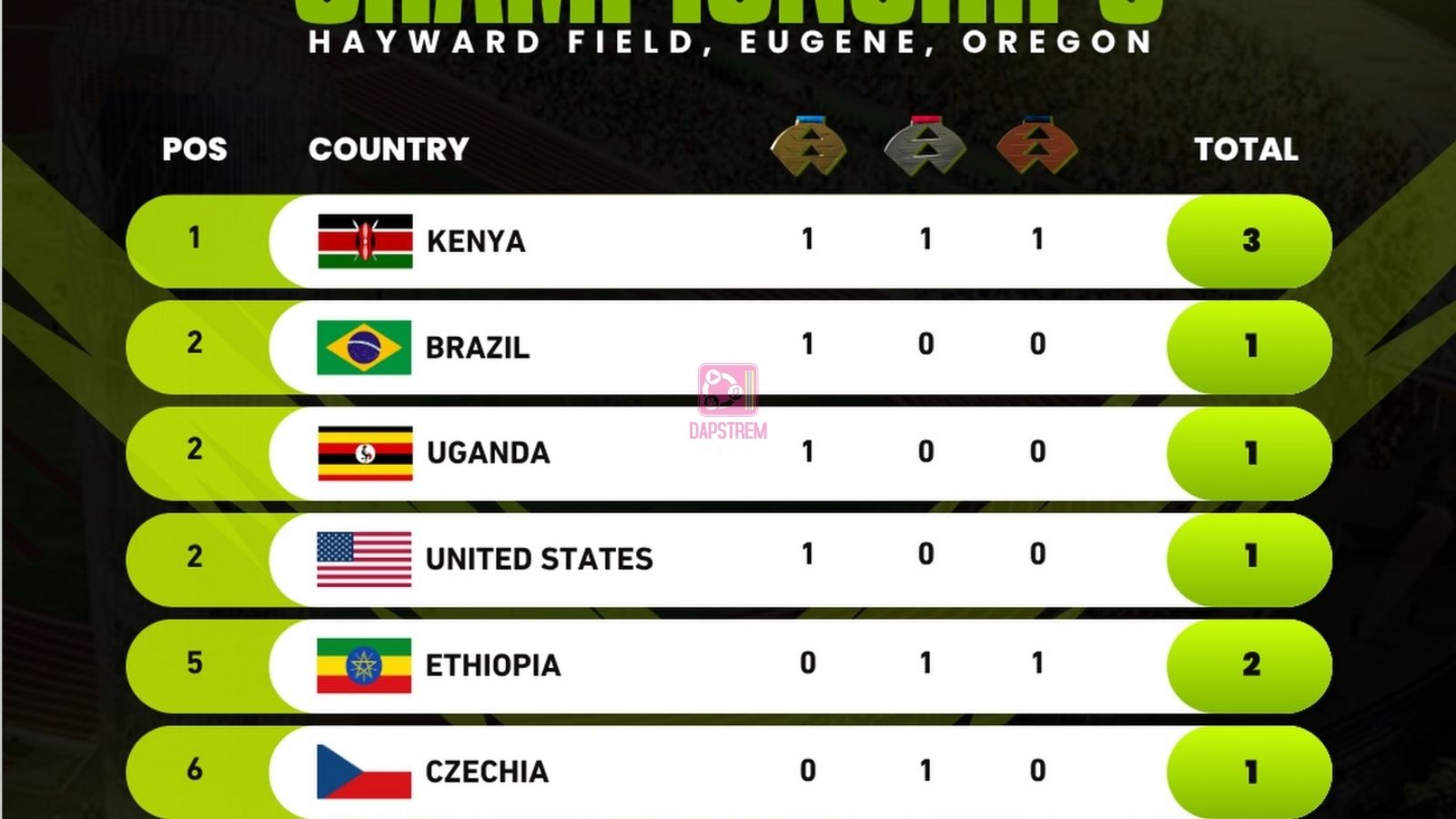
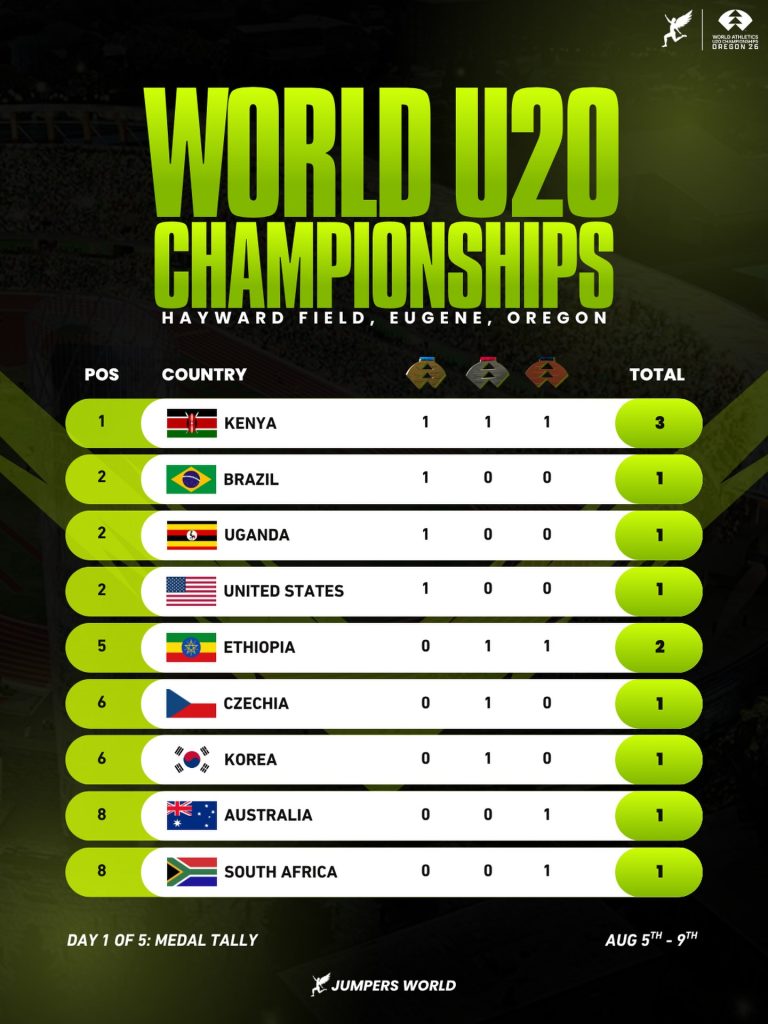
Kenya has once again demonstrated its enduring strength in athletics after finishing second globally at the 2026 World Athletics U20 Championships, collecting an impressive 11 medals comprising four gold, three silver and four bronze.
The performance placed Kenya behind the United States in the final medal standings and underlined the country’s remarkable ability to continue producing world-class talent from a young age. For a nation whose sporting identity has been closely associated with distance running, the achievement represents another important chapter in Kenya’s long tradition of excellence on the international athletics stage.
Kenya’s medal haul was particularly significant because the World Athletics U20 Championships provide an important platform for identifying the athletes who could become the stars of senior international competition in the years ahead. Many of the world’s most celebrated athletes first announced themselves at junior level before progressing to the Olympics, World Championships and other major global competitions.
The latest performance therefore offers Kenyan athletics supporters plenty of reason for optimism. Four gold medals demonstrated the country’s ability to produce champions capable of handling the pressure of a global championship, while the three silver and four bronze medals showed considerable depth across the team.
The United States topped the standings with 12 gold, seven silver and five bronze medals, according to the final tally, while Kenya’s 4-3-4 haul was enough to secure second place.
Finishing second behind such a powerful athletics nation is no small achievement. The United States has a vast pool of young athletes competing across sprinting, middle-distance running, long-distance events, hurdles, jumps and throws. Kenya’s ability to finish ahead of many other traditional athletics powers demonstrates the country’s continued competitiveness at the global level.
For Kenya, the success is also important because it reinforces the effectiveness of the country’s long-established talent-development system. From schools and athletics clubs to training camps and national competitions, young athletes have numerous opportunities to discover and develop their abilities.
The country’s school athletics system has historically played an important role in identifying promising runners. Many Kenyan champions have emerged from school competitions before progressing to national and international championships. The system provides young athletes with an opportunity to compete regularly, develop discipline and learn how to handle the pressures associated with competitive sport.
The latest U20 results suggest that this pipeline continues to produce athletes capable of competing against the best young talents from around the world.
Kenya’s success at the championships also carries significance beyond the medal table. For young athletes watching the competition from different parts of the country, the performances of their compatriots provide tangible evidence that international success is possible.
A young runner from a rural school, athletics club or training camp can look at the athletes competing at the U20 championships and see a potential pathway to the biggest stages in sport.
That inspirational element is one of the most important legacies of junior athletics.
The transition from junior to senior athletics, however, remains one of the biggest challenges facing emerging athletes. Winning a medal at the U20 level is an extraordinary achievement, but maintaining that level of performance as an athlete moves into senior competition requires careful management, professional support, financial stability and access to quality coaching.
Kenya will therefore be hoping that the athletes who have performed strongly at the championships receive the necessary support to develop their careers without being overwhelmed by expectations.
History has shown that some junior champions go on to become global superstars, while others struggle to make the transition to senior competition. Injuries, increased competition, changes in coaching, financial challenges and the physical demands of senior athletics can all affect an athlete’s progress.
For that reason, Kenya’s latest medal haul should not simply be celebrated as an achievement of the present. It should also be viewed as an opportunity to invest in the future.
The country has a proud history of producing legendary athletes, particularly in distance running. Kenya has won numerous Olympic and World Championship medals through athletes who have dominated events such as the 800m, 1500m, 3000m steeplechase, 5000m, 10,000m and marathon.
The likes of Eliud Kipchoge, David Rudisha, Faith Kipyegon, Ezekiel Kemboi, Vivian Cheruiyot and Catherine Ndereba have helped establish Kenya as one of the world’s leading athletics nations.
The emergence of another generation at the U20 level is therefore important in ensuring that this tradition continues.
At the same time, the country’s athletics future will depend on maintaining strength across a broader range of events. Kenya has traditionally enjoyed its greatest success in middle- and long-distance running, while countries such as the United States have a much broader spread of medal-winning events.
The latest championship is therefore an opportunity to examine where Kenya can continue improving. Developing talent in sprints, field events, hurdles and other disciplines would give the country an even stronger presence on the global athletics stage.
The 11-medal haul demonstrates that there is considerable talent within the Kenyan system. The challenge now is to nurture that talent carefully and create an environment where young athletes can progress sustainably.
Coaches will have a particularly important role in this process. Young athletes require technical development as well as physical preparation. They need to understand pacing, race strategy, recovery, nutrition, strength and conditioning, injury prevention and mental preparation.
The importance of experienced coaching becomes even greater as athletes move into senior competition, where the margins between victory and defeat can become extremely small.
Kenya’s athletics administrators will also need to ensure that promising athletes are protected from exploitation. Young athletes can attract attention from agents, sponsors and training camps after successful international performances. While such opportunities can help careers, athletes and their families need adequate guidance to ensure that decisions are made in their long-term interests.
The success at the U20 championships also provides an opportunity for sponsors and corporate organizations to invest more heavily in youth athletics.
Supporting young athletes can take many forms, including scholarships, equipment, training facilities, medical care, travel support and educational opportunities. Such investments can make a major difference, particularly for athletes from financially disadvantaged backgrounds.
Athletics has historically provided opportunities for young Kenyans to transform their lives, but talent alone is not always enough. Access to proper facilities, coaching, nutrition and competition remains essential.
The government, Athletics Kenya, schools, clubs, coaches, sponsors and local communities all have a role to play in ensuring that promising athletes receive the support required to reach their potential.
The latest medal performance should also encourage Kenya to continue hosting and participating in major international competitions. Exposure to global competition helps young athletes gain experience and understand the standards required at the highest level.
The success of Kenya’s U20 athletes is particularly encouraging at a time when the global athletics landscape is becoming increasingly competitive. Countries that were once less prominent in certain events are developing strong programmes and producing athletes capable of challenging established powers.
Kenya must therefore continue investing in innovation, sports science and athlete development if it wants to remain at the forefront of international athletics.
The country’s second-place finish also adds to a strong historical record at the World Athletics U20 Championships. Kenya topped the medal table at the 2021 championships held in Nairobi, winning eight gold, two silver and seven bronze medals according to World Athletics’ official medal table.
At the 2022 championships in Cali, Kenya finished fourth with three gold, three silver and four bronze medals, while at the 2024 championships in Lima the country finished fifth with three gold, three silver and one bronze.
The latest second-place finish therefore represents a strong return to the upper end of the global junior athletics rankings.
More importantly, it demonstrates that Kenya remains capable of competing with countries that possess significantly larger populations and broader sporting resources.
The performances of the young athletes will now be closely monitored as they begin the next stage of their careers. Some could eventually become household names in Kenya and international athletics, while others may develop into important contributors to the national team in future Olympic and World Championship competitions.
For Kenyan fans, the medal tally is a source of pride, but it is also a reminder that the country’s athletics story is far from over.
Every generation brings new athletes with different strengths, personalities and ambitions. The responsibility now lies with the country’s athletics community to ensure that the latest generation receives the support needed to build lasting careers.
The four gold medals are particularly significant because they represent championship victories at the highest level of junior athletics. The three silver and four bronze medals further demonstrate that Kenya’s success was not dependent on a handful of individual performances but reflected a wider depth within the team.
Finishing second behind the United States also sends a strong message to the rest of the athletics world: Kenya’s talent pipeline remains alive and highly competitive.
As the young athletes return home, attention will gradually shift from celebration to preparation for the future. Their next challenge will be making the difficult transition to senior athletics while maintaining the discipline and determination that brought them success at the U20 level.
If properly supported, this generation could form part of the next wave of Kenyan athletes competing for Olympic and World Championship honours.
For now, however, the country can celebrate an outstanding performance. Four gold medals, three silver medals and four bronze medals have placed Kenya second in the world at the 2026 World Athletics U20 Championships.
It is an achievement that reflects the depth of Kenyan athletics, the dedication of its young athletes and coaches, and the continuing strength of a sporting tradition that has inspired generations.
The medal table may record the numbers, but behind every medal is a story of training, sacrifice, discipline, family support, coaching and determination. Kenya’s latest success is therefore more than a collection of medals—it is a glimpse into the future of the country’s athletics and a powerful reminder that the next generation of champions is already emerging.