
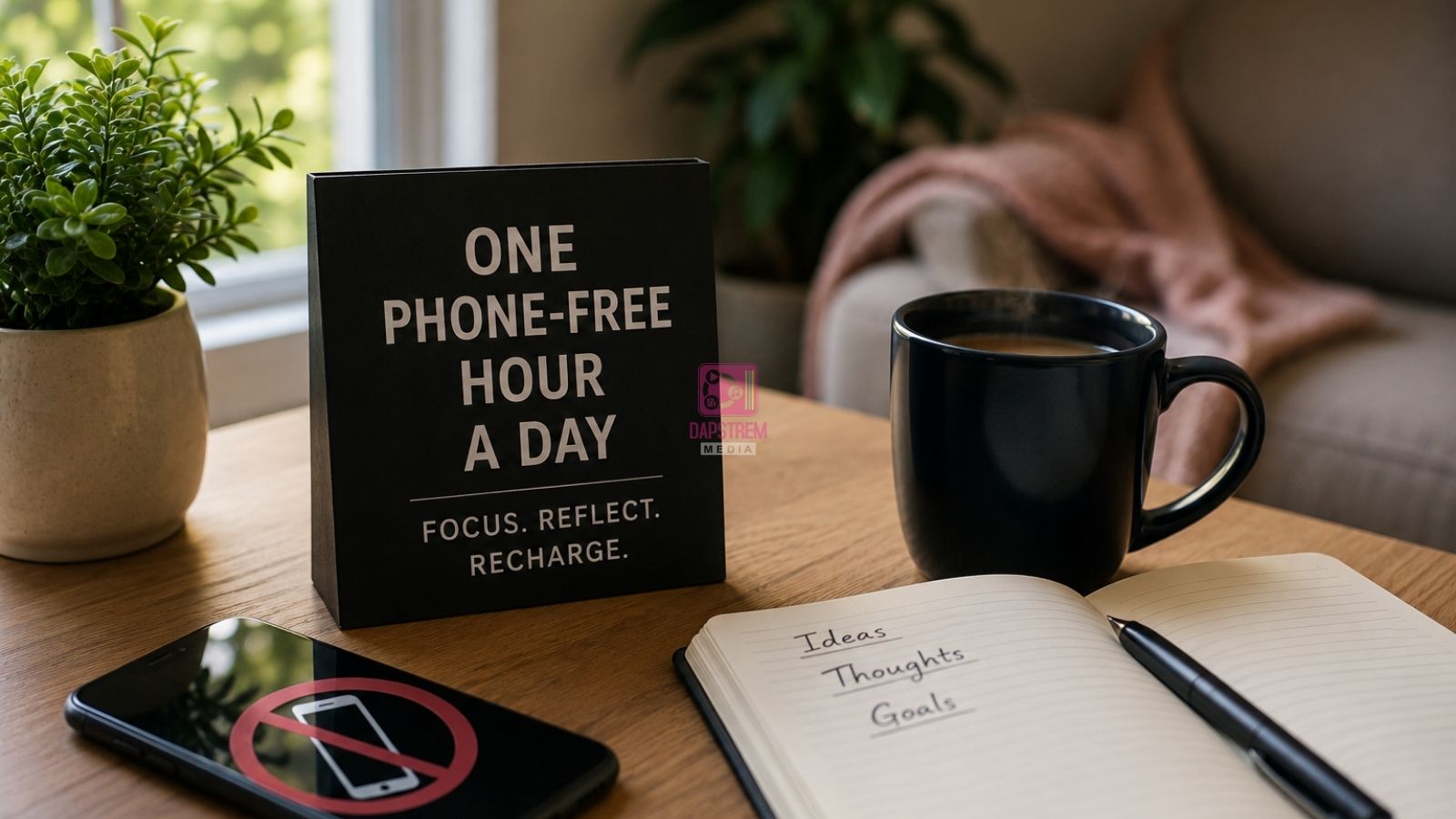
Why taking just one phone-free hour a day can transform your focus, reduce stress, and improve your overall well-being.
In a world where smartphones have become almost inseparable from daily life, the idea of spending even one hour without a phone can feel unusual, even uncomfortable. Notifications, social media feeds, messages, emails, breaking news alerts, and endless scrolling have created a constant digital presence that follows people from morning until night. Yet, despite how normal this connected lifestyle has become, more people are beginning to realize that stepping away from their phones for just one hour a day can have surprisingly powerful effects on mental clarity, productivity, relationships, and overall well-being.
The modern smartphone is not just a communication device; it is a full-time attention machine. It is designed to capture focus and hold it for as long as possible. Every app competes for attention using colors, sounds, and notifications that trigger the brain’s reward system. Over time, this creates a cycle where users feel the need to check their phones constantly, even without a real reason. This habit, often unconscious, fragments attention and reduces the ability to concentrate deeply on tasks, conversations, or even personal reflection.
Taking one phone-free hour a day interrupts this cycle. It creates a small but meaningful space where the mind is no longer reacting to external digital demands. Instead of responding to notifications, messages, or social media updates, the brain is allowed to rest and reset. This break from constant stimulation helps reduce mental fatigue, especially for people who spend most of their day online or working with screens.
One of the most immediate benefits of a phone-free hour is improved focus. Many people struggle with what is often called “attention residue,” a condition where the mind continues thinking about previous digital interactions even after switching tasks. For example, after checking social media or replying to messages, it can take several minutes for the brain to fully return to deep concentration. By intentionally disconnecting for an hour, the brain gradually learns to sustain attention for longer periods without distraction.
This practice also has a strong impact on stress and anxiety levels. Constant connectivity often creates pressure to respond quickly, stay updated, and not miss anything important. This state of alertness can quietly increase stress throughout the day. Notifications from work, family, and social media can blur boundaries between personal time and responsibilities. A phone-free hour helps restore those boundaries. It signals to the mind that not everything requires immediate attention, reducing the feeling of being constantly “on call.”
Another important benefit is improved sleep quality, especially when the phone-free hour is placed in the evening. Exposure to screens before bedtime has been shown to interfere with melatonin production, the hormone responsible for regulating sleep. In addition, engaging with stimulating content like news, arguments on social media, or work emails can keep the brain active long after the screen is turned off. Replacing this time with reading, quiet reflection, or conversation helps the mind transition more smoothly into rest.
Beyond mental health, a phone-free hour also improves real-life relationships. Many people underestimate how often phones interrupt conversations, meals, and family time. Even brief glances at a screen can signal disinterest to others, weakening the quality of communication. When a person chooses to set the phone aside, even for a short period, it creates space for deeper connection. Conversations become more present, listening becomes more active, and relationships often feel more meaningful.
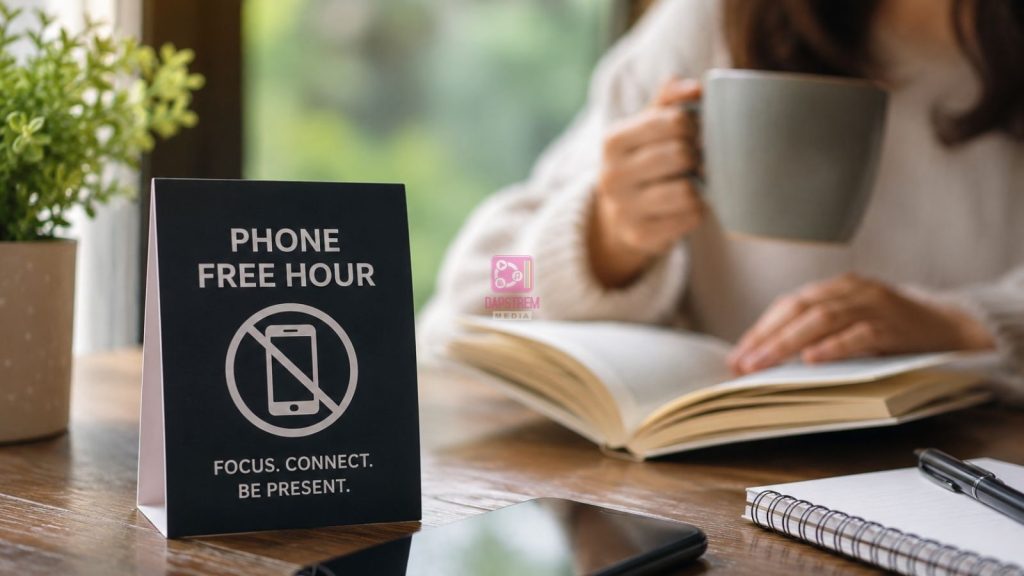
There is also a creative benefit that comes from digital silence. Boredom, which is often avoided by immediately reaching for a phone, is actually an important driver of creativity. When the brain is not constantly stimulated, it begins to wander, form new connections, and generate ideas. Many people find that their best thoughts come not while scrolling, but during quiet moments—walking, showering, or simply sitting without distraction. A phone-free hour encourages this natural mental process, giving creativity room to grow.
Productivity is another area that improves significantly. Many people believe that checking their phones frequently helps them stay productive, but in reality, it often does the opposite. Each interruption, even a brief one, breaks workflow and requires mental effort to regain focus. Over time, this reduces efficiency and increases the time needed to complete tasks. By setting aside a dedicated hour without a phone, individuals can complete work faster and with greater accuracy, especially when used during peak concentration periods of the day.
Interestingly, a phone-free hour also helps restore a sense of time awareness. Constant scrolling often distorts how time is experienced, with minutes turning into hours without notice. This can lead to feelings of time loss or unproductiveness at the end of the day. By contrast, intentional disconnection makes time feel more structured and meaningful. People often report feeling more in control of their day when they actively decide when to engage with digital devices and when to step away.
The challenge, of course, is consistency. Many people start with good intentions but struggle to maintain the habit due to the addictive nature of smartphones. The key is to treat the phone-free hour as a daily ritual rather than a restriction. It does not require completely disconnecting from technology or abandoning communication. Instead, it is about creating a predictable pause where the mind can breathe without digital interference.
Some people choose early morning hours, before the day becomes busy with messages and tasks. Others prefer evening hours, using the time to unwind before sleep. The effectiveness of the practice does not depend on timing alone, but on consistency and intention. Over time, the brain begins to associate this hour with calmness and clarity, making it easier to sustain.
Ultimately, the idea of a phone-free hour is not about rejecting technology, but about reclaiming balance. Smartphones are powerful tools that have improved communication, access to information, and convenience in countless ways. However, like any powerful tool, they require boundaries to ensure they do not overwhelm the very lives they are meant to improve.
In a fast-moving digital world, one hour of intentional silence can feel small. But that one hour has the potential to reshape attention, reduce stress, improve relationships, and restore mental clarity. It is a reminder that while the world may be constantly connected, the human mind still needs space to disconnect in order to function at its best.