FIFA Rules Block Argentina from Retiring Messi’s Iconic No. 10 Shirt as Football Enters a New Era
Lionel Messi has played his final match for Argentina, bringing an emotional end to one of the greatest international careers in football history.
The Argentine superstar signed off on Tuesday night at the Monumental Stadium in Buenos Aires as Argentina defeated Benin 3-0 in a farewell match. Messi scored from the penalty spot and provided two assists as thousands of supporters gathered to celebrate a player who has become inseparable from the identity of Argentine football.
After more than two decades with the national team, Messi leaves behind extraordinary numbers and an even greater legacy.
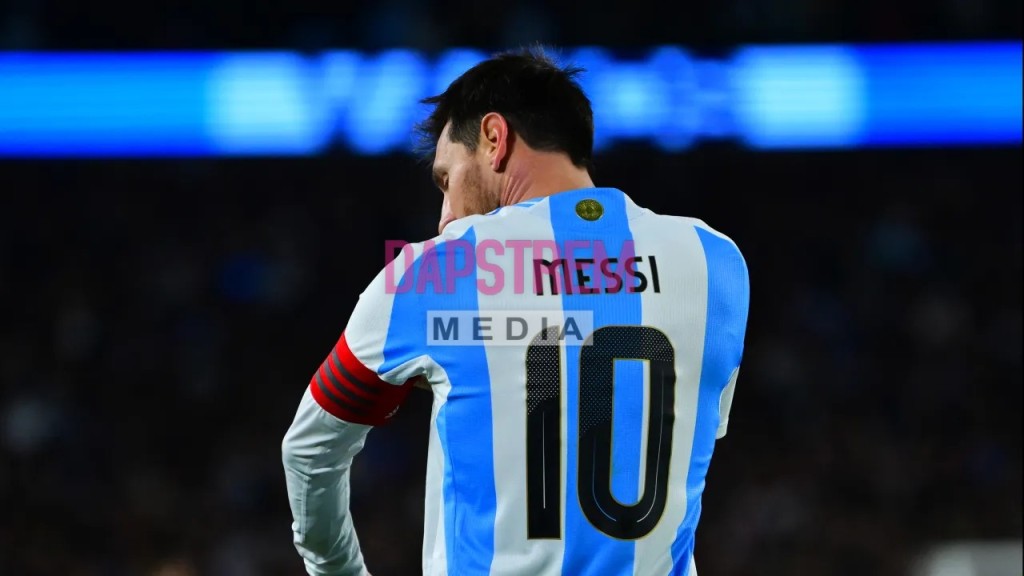
He finished his international career as Argentina’s record appearance maker and leading goalscorer. He also leaves as a World Cup winner and a two-time Copa América champion, having helped Argentina end years of disappointment by winning the Copa América in 2021 before lifting the World Cup in Qatar in 2022 and adding another Copa América title in 2024.
But as Argentina begins the process of moving beyond the Messi era, one question has generated considerable interest among football fans.
What happens to the famous No. 10 shirt?
For many supporters, the obvious answer would be simple: retire it forever.
After all, Messi has made the number one of the most recognisable shirts in world football.
However, Argentina cannot simply retire the No. 10 shirt from international competition because FIFA’s regulations require national teams participating in major tournaments to use a consecutive numbering system.
That means that even though Messi has left the international stage, the No. 10 will eventually have to be worn by another Argentine player in competitions governed by those rules.
The situation highlights an interesting difference between club football and international football.
At club level, teams have considerably more freedom to retire shirt numbers in honour of legendary players.
A club can decide that a particular number is so closely associated with a player that nobody should wear it again.
That has happened in different sports and football clubs around the world.
National teams, however, must operate within the regulations of the competitions in which they participate.
For FIFA tournaments, Argentina cannot simply submit a squad with numbers one through nine and then jump to 11, leaving No. 10 permanently vacant.
The regulations require the squad numbers to be allocated according to the competition’s prescribed system.
At the 2026 World Cup, for example, Argentina’s 26-player squad was assigned numbers from 1 to 26, with Messi wearing the No. 10 shirt.
That requirement means Argentina cannot officially retire the number for a World Cup or another competition with similar squad-number regulations.
The issue is not necessarily about FIFA refusing to recognise Messi’s importance.
Instead, it is about the regulations governing how national teams must organise their squads during official competitions.
For Argentina, this creates an unusual situation.
The country can treat the shirt as sacred from a cultural and symbolic perspective, but it cannot necessarily remove the number from official tournament circulation.
And Argentina has already faced a remarkably similar situation.
Before Messi, the No. 10 shirt belonged to another Argentine football giant whose name is almost permanently connected to the number — Diego Maradona.
When Maradona’s international career ended, Argentina wanted to honour him by retiring the shirt.
The Argentine Football Association sought permission to leave the number unused at the 2002 World Cup.
FIFA rejected the request.
Argentina therefore had to assign the No. 10 shirt to another player, with Ariel Ortega eventually wearing it at the tournament.
That precedent makes the current Messi situation much clearer.
Even if the Argentine Football Association wants to permanently associate the shirt with Messi, FIFA’s tournament regulations stand in the way.
Messi made the No. 10 his own
Messi’s relationship with the shirt is particularly powerful because the number became closely connected with the most successful period in Argentina’s modern football history.
Messi did not begin his international career wearing No. 10.
When he first broke into the senior national team, he wore other numbers, including 18 and 19.
It was after Juan Román Riquelme’s departure from international football that Messi inherited the famous No. 10 shirt.
From 2009 onwards, the number became increasingly associated with him.
Over the following years, fans watched Messi wear the shirt through some of the highest and lowest moments of his international career.
There were heartbreaking defeats.
There were lost finals.
There were moments when critics questioned whether Messi could reproduce his club success with the national team.
For years, the pressure was enormous.
Argentina had a generation filled with talented players, but international trophies remained difficult to secure.
Messi reached multiple major finals before finally breaking through.
The 2021 Copa América changed the story.
Argentina defeated Brazil at the Maracanã to win the tournament, giving Messi his first major senior international trophy with Argentina.
That victory was followed by the Finalissima against Italy and then the extraordinary 2022 World Cup triumph in Qatar.
Messi scored seven goals at the World Cup and played a central role throughout Argentina’s campaign.
The final against France became one of the most memorable matches in World Cup history.
Argentina eventually won on penalties after a 3-3 draw, with Messi lifting the trophy that had eluded him for much of his career.
Two years later, Argentina won another Copa América, further strengthening Messi’s status as one of the most successful players ever to represent the country.
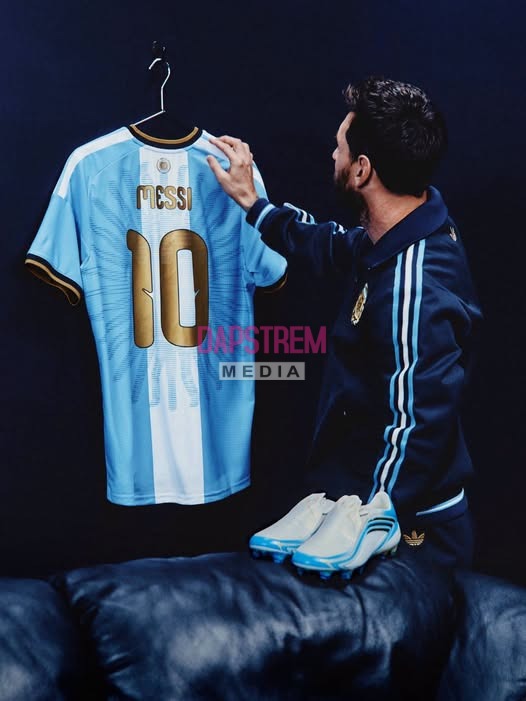
The No. 10 therefore became more than a squad number.
It became part of the story of Argentina’s return to the top of international football.
The Argentine Football Association itself has acknowledged how closely Messi and the number are connected.
In a tribute to Messi, the AFA said the No. 10 shirt would forever be associated with his name and with the generation that witnessed his greatest achievements.
Argentina can still protect the shirt’s legacy
Although FIFA regulations prevent Argentina from permanently retiring the number in major competitions, there is still some room for the AFA to honour Messi.
Friendly matches are not governed by exactly the same squad-number restrictions as major FIFA tournaments.
That gives Argentina greater flexibility.
The national team can therefore choose not to give the No. 10 shirt to a player during certain friendly matches.
This has already been seen during recent international fixtures.
Argentina left the shirt unused in friendly matches in the build-up to Messi’s farewell, allowing the number to remain associated with him rather than immediately handing it to another player.
This provides a possible compromise.
Argentina does not have to immediately place another player in Messi’s shirt every time the national team plays.
During certain non-competitive matches, the AFA can preserve the number as a tribute to its greatest modern star.
But when the World Cup or another tournament with mandatory squad-number rules arrives, Argentina will have little choice.
Someone will have to wear No. 10.
That is why the shirt can be retired symbolically without necessarily being retired administratively.
The number may belong to Messi forever in the hearts of Argentine supporters, even if another player eventually wears it on the pitch.
The difficult task of finding Messi’s successor
The question of who eventually inherits the No. 10 shirt is now one of the biggest issues facing Argentina’s next generation.
Replacing Messi is obviously impossible in a literal sense.
No player can simply step into his shoes and reproduce everything he achieved.
But somebody will eventually have to wear the number.
Several young Argentine players have already been mentioned as possible successors.
Nico Paz has emerged as one of the names attracting attention, while Franco Mastantuono is also regarded as one of the country’s exciting young talents.
Other established members of Argentina’s golden generation could also be considered depending on Lionel Scaloni’s plans.
However, the decision will carry enormous pressure.
Wearing Argentina’s No. 10 is already a responsibility because of the players who have worn it before.
The history stretches from Maradona to Messi, with other legendary figures such as Mario Kempes also having worn the shirt.
Whoever eventually receives it will therefore not simply be given a number.
They will inherit a symbol.
That player will inevitably be compared with Messi.
Every goal will be judged against Messi’s goals.
Every performance will be compared with Messi’s performances.
Every mistake may attract criticism because of the extraordinary standards established by the player who wore the shirt before them.
Argentina’s coaching staff will therefore have to consider more than just a player’s position or technical ability.
The psychological burden of wearing the No. 10 will also matter.
Messi’s numbers make the challenge even bigger
The difficulty of replacing Messi is also illustrated by his statistics.
He leaves Argentina as the national team’s leading scorer and appearance maker.
The final farewell against Benin brought his international career to 208 appearances and 126 goals according to reports following the match.
Those numbers are extraordinary.
They reflect not only his longevity but also his consistency at the highest level.
For more than 20 years, Messi remained available to represent Argentina through different generations of players and different coaching regimes.
He experienced victories and defeats.
He played through injuries.
He endured criticism.
He returned after international retirement speculation.
Most importantly, he stayed long enough to deliver the trophies that Argentine supporters had spent years waiting for.
His legacy is therefore much bigger than his goal tally.
He changed the emotional relationship between an entire generation of Argentines and their national team.
For many younger supporters, Argentina without Messi will feel unfamiliar.
They grew up watching him play.
They watched him wear No. 10.
They watched him lift the Copa América.
They watched him finally lift the World Cup.
They watched him become captain and eventually lead Argentina into one of the most successful periods in its history.
That is why the question surrounding the No. 10 shirt has become so emotional.
The number may continue, but the Messi era will not
There is an important distinction between retiring a shirt and retiring a legacy.
Argentina may not be able to officially remove No. 10 from FIFA competitions, but nobody can remove Messi’s place in the history of the national team.
The shirt may eventually appear on the back of another player.
The number may once again be listed on a World Cup squad sheet.
Another Argentine may eventually score while wearing it.
But that player will not erase what Messi accomplished.
In fact, the continued use of the number could eventually become another way of keeping Argentina’s football history alive.
Every future No. 10 will inevitably remind supporters of the players who came before.
From Maradona to Messi, the number has carried an enormous legacy.
The next player will have the difficult task of adding another chapter to that story.
For now, however, the shirt remains Messi’s in the eyes of millions of supporters.
Argentina’s farewell to him was therefore not simply the end of a player’s international career.
It was the closing of an era.
Messi leaves the national team as a world champion, Copa América winner, record goalscorer, record appearance holder and one of the greatest footballers the country has ever produced.
The rules may force Argentina to give No. 10 to someone else in future tournaments.
But no regulation can force supporters to forget who made the number legendary.
That is the unusual position Argentina now finds itself in.
It cannot necessarily retire Messi’s No. 10 on the official tournament team sheet.
But it does not need a formal retirement to preserve what the number represents.
For Argentine football, the No. 10 will remain Messi’s number in history, even when another player eventually wears it on the field.
And perhaps that is the strongest tribute of all.
The shirt can continue.
The number can continue.
But the era that made Argentina’s No. 10 synonymous with Lionel Messi is already part of football history.