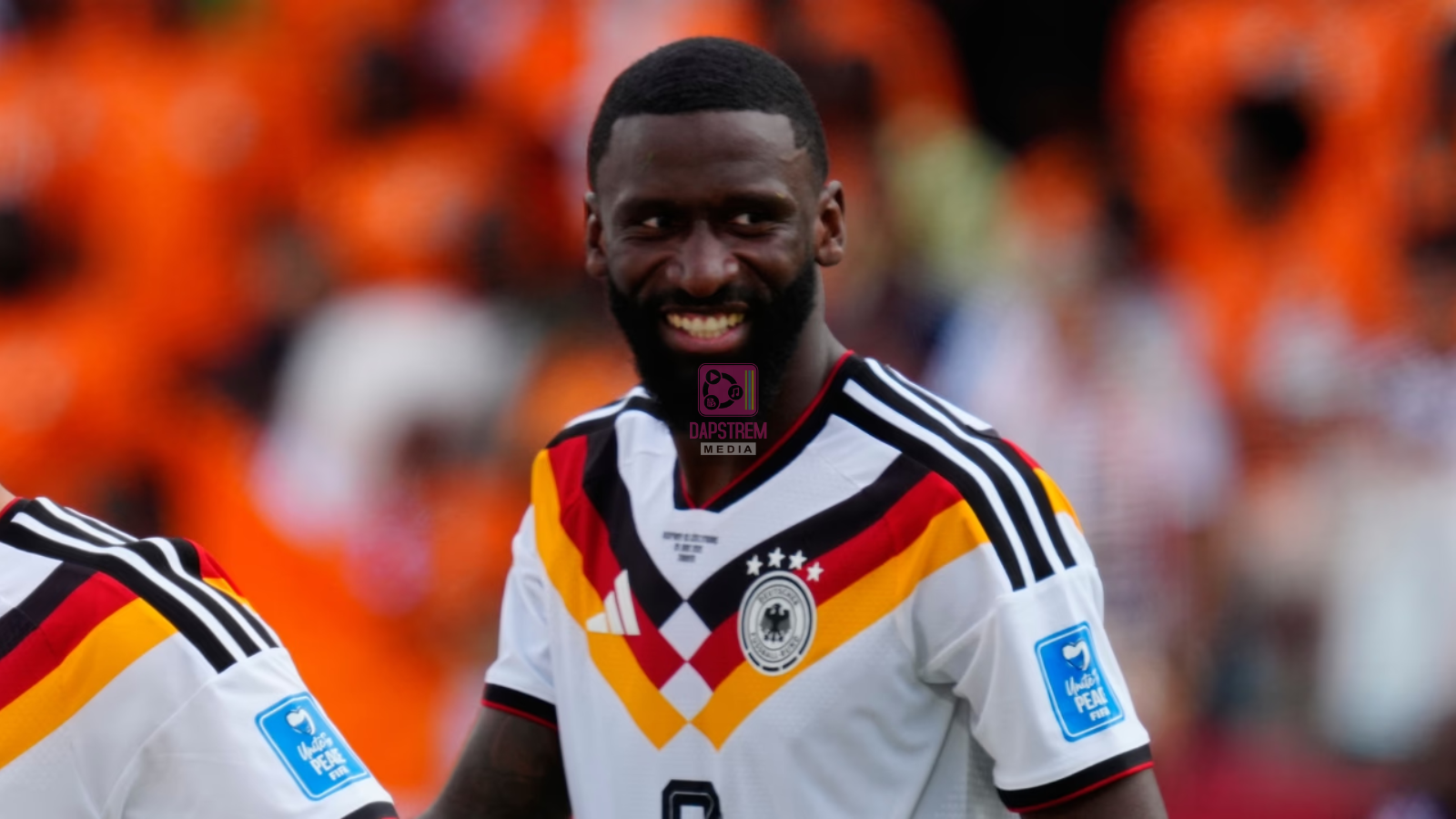
Antonio Rüdiger has decided that the time has come to close one of the most distinctive chapters of his football career.
The 33-year-old Real Madrid centre-back announced on September 1 that he was retiring from international football with Germany, bringing an end to a 12-year relationship with the national team. Rüdiger leaves Die Mannschaft after 86 senior appearances, three World Cups, two European Championships and a career that spanned some of Germany’s most difficult years in modern international football.
His decision was not framed as an angry departure or a reaction to one particular disappointment. Instead, Rüdiger presented it as a considered choice one designed both to protect the next stage of his club career and to give Germany’s emerging defenders an opportunity to take over.
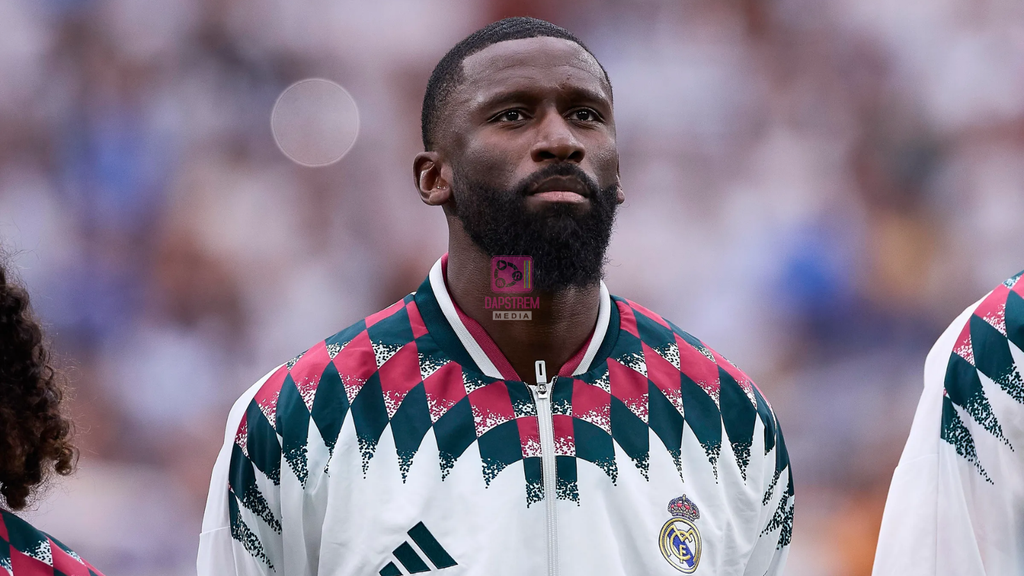
“After some time to reflect, the time has come for me to end my career with the national team and make way for the younger generation,” Rüdiger wrote in his farewell message.
He also acknowledged that Germany had endured painful defeats during his international career, but described his time in the national shirt as a chapter that would remain with him forever.
From Berlin to the heart of Germany’s defence
Rüdiger’s story with Germany began in May 2014, when he made his senior debut in a goalless draw against Poland.
The timing was significant. Germany were on their way to the World Cup in Brazil, a tournament they would eventually win. But Rüdiger was not part of Joachim Löw’s victorious squad. His international career would therefore develop in the shadow of that generation rather than alongside it.
By the time he became an established international, Germany’s golden cycle had begun to unravel.

Rüdiger was part of the squads for the 2018 and 2022 World Cups, tournaments in which Germany suffered the embarrassment of consecutive group-stage eliminations. He also represented his country at Euro 2024, staged on home soil, where Germany reached the quarter-finals before losing to eventual finalists Spain.
His final World Cup came in 2026. Germany’s campaign ended with a round-of-32 defeat by Paraguay, a result that ultimately became Rüdiger’s final appearance for his country. Two months later, he made his retirement official.
That sequence says much about the era in which Rüdiger played.
He was not a member of a Germany side that lifted the World Cup. Instead, he became one of the principal defenders of the team that followed it a generation repeatedly tasked with restoring a footballing giant that had lost its way.
The one major international trophy
Rüdiger did leave the national team with a senior international title.
In 2017, he was part of Germany’s Confederations Cup-winning squad in Russia. A largely experimental German team defeated Chile 1–0 in the final, giving Rüdiger the first and ultimately only major international trophy of his senior career with Germany.
The tournament was an important moment in his development. Germany were able to rotate heavily and introduce players who would become important figures in the years that followed. Rüdiger played four matches during the competition, including the final.
Yet the contrast between that success and what followed would define much of his international story.
The World Cup triumph of 2014 was followed by early exits in 2018 and 2022. Euro 2024 offered renewed optimism as Germany played in front of home supporters, but Spain ended the run in extra time in the quarter-finals.
Then came 2026.
For Rüdiger, there would be no late-career international redemption.
A defender built for modern football
Rüdiger’s importance to Germany was never simply about the number of caps.
At 1.90 metres, he combined physical strength with the mobility required to defend large spaces. His aggressive style, speed over distance and willingness to step forward from defence made him particularly valuable in teams that wanted their centre-backs to participate actively in possession. His personality was equally conspicuous: energetic, emotional and occasionally chaotic, but rarely anonymous.
Those qualities also helped him establish himself at club level.
After developing through the German system and making his senior breakthrough at VfB Stuttgart, Rüdiger moved to Roma in 2015 before joining Chelsea in 2017. At Stamford Bridge, he became an important member of Thomas Tuchel’s Champions League-winning side in 2021. He then moved to Real Madrid in 2022.
Madrid offered another stage on which Rüdiger’s career could flourish.
He won the Champions League with the Spanish giants in 2024, adding another European title to the one he had collected with Chelsea. His club honours ultimately became considerably richer than his international medal collection. Real Madrid’s official profile lists two European Cups, three FIFA Club World Cups, three UEFA Super Cups, a Spanish league title and other major honours among his achievements.
That disparity is perhaps the defining paradox of his career.
Rüdiger became a champion repeatedly at club level while his Germany career unfolded during a prolonged period of national-team uncertainty.
Rüdiger’s explanation was deliberately straightforward.
He wants to concentrate entirely on his club career, while opening the door for a younger generation of German defenders.
That decision also comes at the beginning of a new era for Germany. Jürgen Klopp has recently taken over as national-team coach, with Germany preparing for a new cycle following the 2026 World Cup. The national team is therefore facing the familiar challenge of rebuilding its squad and identity.
Rüdiger could conceivably have remained available for that transition. Instead, he has chosen to step aside.
The timing makes his decision particularly significant. At 33, he is not retiring from football altogether; he is simply removing the international demands from an already demanding club career.
And his departure leaves Germany without one of the most experienced defenders in its squad.
The end of an era without the fairytale ending
There is an understandable temptation to judge Rüdiger’s Germany career primarily through the results.
There was no World Cup medal. There was no European Championship triumph. Germany repeatedly fell short at the tournaments where expectations were highest.
But that would undersell what Rüdiger represented.
He became a regular during a period when Germany were attempting to recover from the end of their 2014 golden generation. He survived managerial changes, tactical changes and repeated tournament disappointments. He played through the rebuilding projects of coaches including Löw, Hansi Flick and Julian Nagelsmann, and eventually closed his international career just as another chapter under Klopp was beginning.
His 86 caps place a substantial number beside his name in the history of German football. The German Football Association records 44 wins, 21 draws and 21 defeats across those appearances.
More importantly, Rüdiger became one of the recognisable faces of Germany’s defence.
His international career began with a team preparing to become world champions. It ended with a team trying to find its way back to the top.
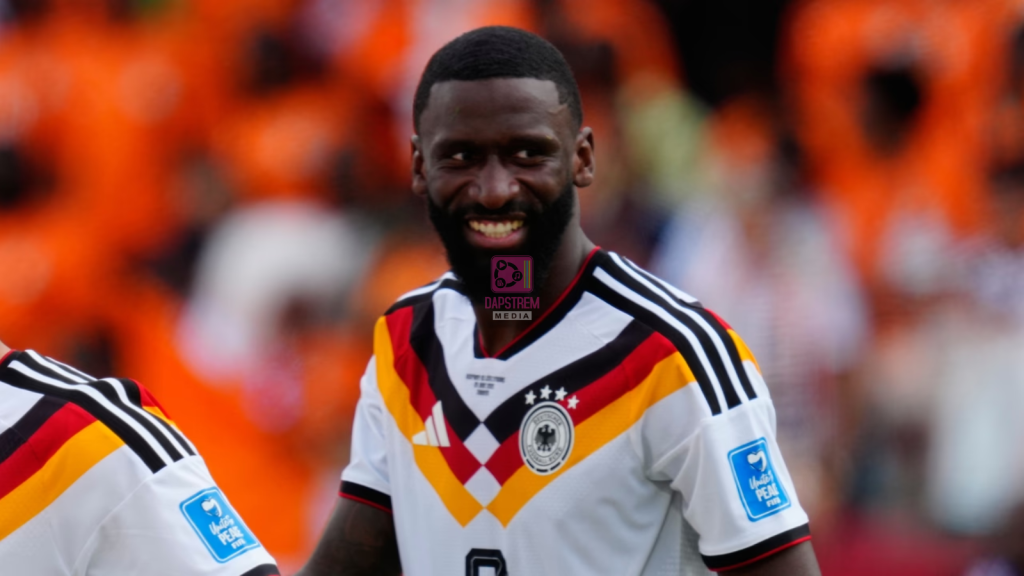
That is why his retirement feels less like the closing of a glorious era than the closing of a difficult one.
Rüdiger leaves Germany with a trophy, 86 caps and memories of five major international tournaments. He leaves without the ultimate prize, but with the knowledge that he remained a central figure through a period of transition.
Now the next generation gets its chance.
For Rüdiger, the next challenge is waiting in Madrid.
A new chapter, as he put it, is beginning one in which his focus will be entirely on club football.
And for Germany, one of its most imposing personalities has finally stepped away from the international stage.