Governor Lenku dismisses KWS cyanide claims over deaths of 20 Amboseli elephants, says murua grass killed them
Kajiado Governor Joseph Ole Lenku has rejected claims that cyanide poisoning was responsible for the deaths of elephants in the Amboseli ecosystem, challenging the Kenya Wildlife Service (KWS) account and offering a completely different explanation for one of the most troubling wildlife incidents to hit the region in recent months.
Lenku said the deaths were deeply concerning but described the cyanide explanation as false and misplaced. Instead, he pointed to what he said was information from researchers familiar with the Amboseli ecosystem, arguing that the elephants may have died after consuming a type of grass locally known as “murua” that grew excessively following unusually heavy rains.
The governor’s remarks have opened a fresh debate over what caused the deaths of the elephants and raised questions about the evidence being used to determine the cause of mortality in one of Kenya’s most important wildlife landscapes.
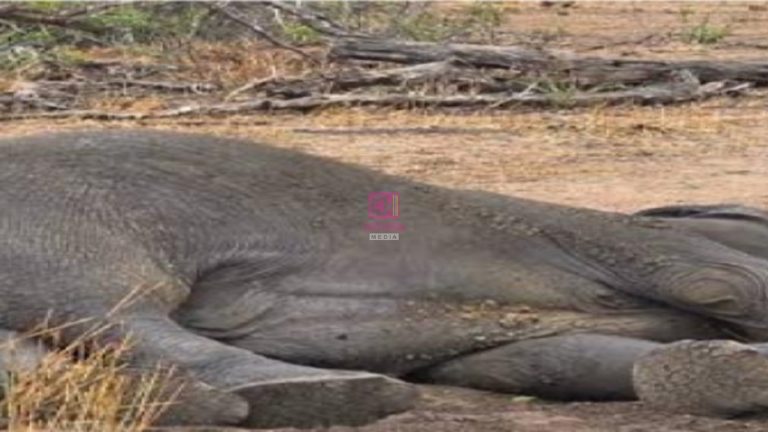
The disagreement comes after KWS had linked a series of elephant deaths in the Amboseli-Kimana ecosystem to suspected cyanide poisoning. Wildlife authorities had been investigating the deaths after several elephant carcasses were discovered in the area, with preliminary postmortem findings pointing to cyanide in some of the animals examined. Reports from the conservation sector indicated that KWS veterinary teams conducted autopsies and found traces of the chemical in samples taken from dead elephants.
The issue has therefore moved beyond the deaths themselves and into a dispute over scientific evidence, wildlife management and the relationship between KWS, the county government and communities living alongside the Amboseli ecosystem.

Speaking during an interview on Sunday, September 13, Lenku said Kajiado residents were saddened by the deaths but strongly rejected the suggestion that cyanide was responsible.
“We are very saddened that we have had to lose very many of them in the last few months,” Lenku said, adding that the cyanide explanation given by KWS was “completely misplaced” and “completely false.”
The governor further questioned how farmers could have obtained cyanide, arguing that information from the pest-control sector suggested that the chemical was not readily available in Kenya.
His comments are significant because the cyanide theory had raised concerns about deliberate poisoning, agricultural chemicals and the potential consequences of human activities around wildlife dispersal areas.
Lenku, however, insisted that farmers should not be blamed without stronger evidence.
He specifically defended tomato farmers in Kajiado, who had come under scrutiny because of the agricultural chemicals used in horticultural production. The governor argued that tomato farming has been practised in the county for many years and questioned why the practice should suddenly be linked to the deaths of elephants.
He also pointed to livestock that sometimes enter farms after harvesting, arguing that goats and other animals would presumably also be affected if the chemicals used by farmers were responsible for widespread poisoning.
The governor’s alternative explanation centres on vegetation and unusual weather conditions.
According to Lenku, researchers studying the Amboseli ecosystem had raised the possibility that the elephants consumed “murua” grass after it grew in unusually large quantities following heavy rains.
He referred to researchers including renowned conservationist Dr David Western, who has studied Amboseli since the 1960s, and Dr Cynthia Moss of the Amboseli Trust for Elephants, whose work in the ecosystem stretches back several decades.
Lenku said the researchers had concluded that cyanide was not responsible for the deaths and instead pointed to the vegetation consumed by the elephants. He compared the situation to cases involving livestock in which animals can sometimes die suddenly after consuming particular types of vegetation.
That explanation, however, remains a claim made by the governor and should not be treated as a settled scientific conclusion unless supported by formal veterinary and laboratory findings.
The disagreement is particularly important because identifying the cause of death is critical to determining whether the elephants died naturally, from environmental factors, from agricultural chemicals or as a result of deliberate poisoning.
If cyanide was responsible, the implications would be serious.

Cyanide is a highly toxic substance capable of causing rapid death in animals. Its suspected use in a wildlife ecosystem would raise concerns about illegal poisoning, human-wildlife conflict, pesticide access and potentially criminal activity.
That is why the initial reports of cyanide findings caused alarm among conservationists and wildlife authorities.
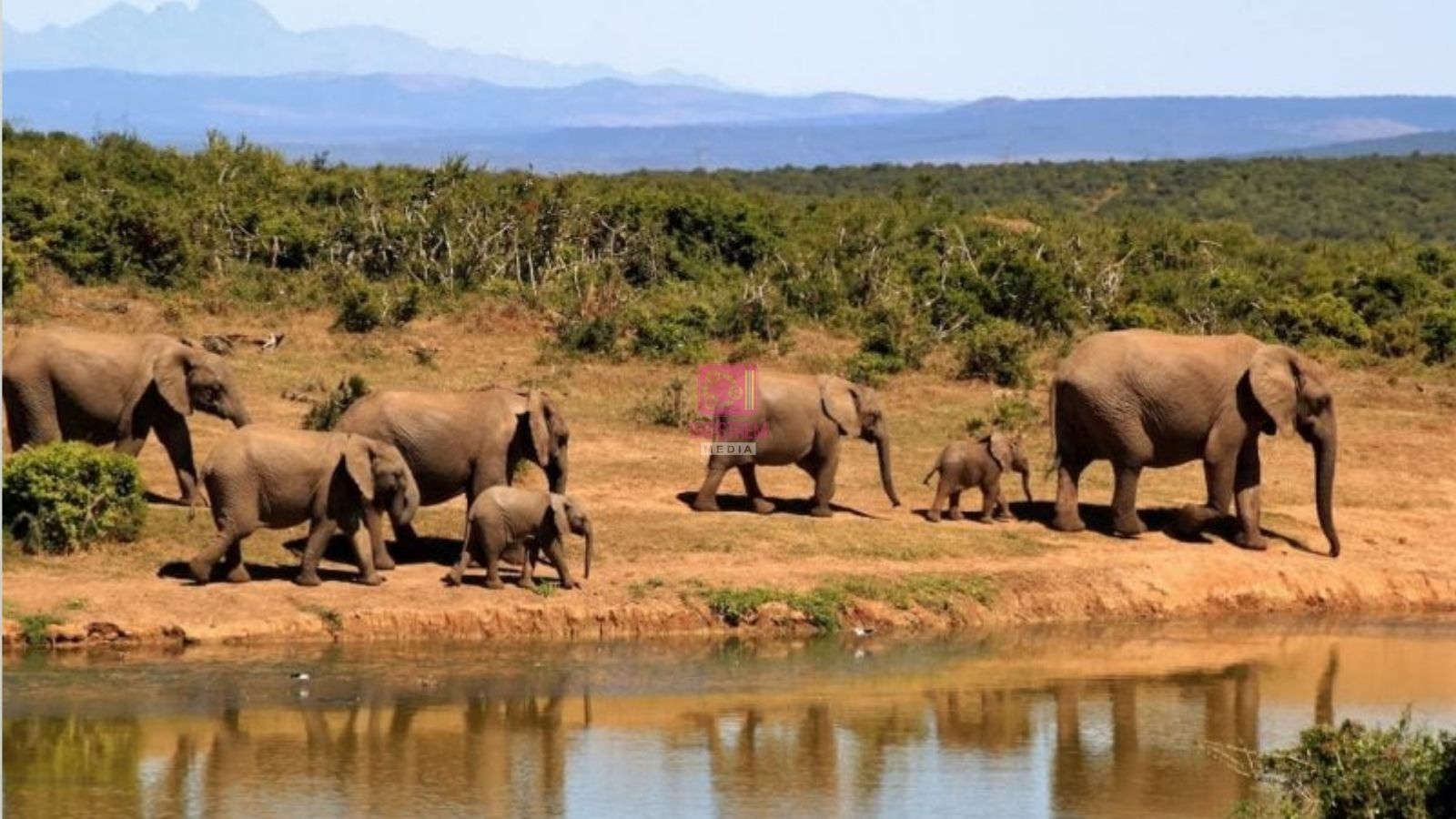
The Amboseli ecosystem is one of Kenya’s most famous wildlife landscapes. It is internationally recognised for its large elephant population and for the extensive research that has been conducted on its elephants over several decades.
The elephants move across a much wider area than the boundaries of Amboseli National Park itself.
This distinction has become central to Lenku’s argument.
The governor said KWS controls only a relatively small portion of the wider ecosystem and argued that the elephant deaths cannot be understood by focusing solely on the national park.
According to Lenku, KWS operates within roughly 10 to 15 per cent of the wider ecosystem, while the elephants depend on a much larger landscape extending into community and agricultural areas.
The wider Amboseli ecosystem includes important dispersal areas where wildlife move between different habitats in search of water, food and safe areas.
This means that conservation in Amboseli is not simply a matter of protecting animals inside a fenced or clearly defined park.
It requires cooperation between wildlife authorities, county governments, local communities, farmers, livestock keepers, conservation organisations and landowners.
That relationship has become increasingly important as land-use patterns around Amboseli change.
The growth of agriculture, settlements, livestock keeping and other human activities has increased pressure on land traditionally used by wildlife.
Elephants can travel long distances and frequently cross from protected areas into community land.
When they enter farms, they can destroy crops and threaten household livelihoods. For farmers, the arrival of elephants can therefore be a serious economic problem.
For conservationists, however, those same movement patterns are essential to the survival of the elephant population because wildlife cannot remain confined to a small portion of the ecosystem throughout the year.
Lenku highlighted the need for more land to facilitate wildlife movement. He said the community had recently allocated about one million acres for the creation of a wildlife dispersal area.
If properly managed, such areas could help reduce pressure on both wildlife and communities by providing elephants with additional space to move between feeding and watering areas.
But the latest controversy demonstrates how difficult wildlife management can become when different institutions present competing explanations for the same event.
For KWS, establishing the cause of death requires veterinary examination, laboratory analysis and investigation.
For the county government, however, the issue also involves the welfare of communities that live alongside wildlife and the potential economic consequences of accusations directed at farmers.
Lenku’s rejection of the cyanide explanation therefore has a political and community dimension as well.
He is not only questioning the findings attributed to the wildlife authority. He is also defending farmers in Kajiado from the possibility of being blamed for an incident they may not have caused.
The governor’s comments are likely to intensify calls for independent scientific verification.
Where wildlife deaths involve potentially toxic substances, laboratory testing becomes particularly important. Samples from carcasses, soil, vegetation and nearby water sources can help establish whether a particular poison was present and whether it was present at levels capable of causing death.
The circumstances surrounding the deaths can also provide important clues.
Investigators may examine the condition of carcasses, the location of the animals, signs of distress, feeding patterns, nearby agricultural activity and possible access to toxic substances.
The investigation can also determine whether multiple elephants died in the same area and within a similar period.
Those details can help distinguish between disease, environmental poisoning, deliberate poisoning and other causes.
The number of elephants affected has also made the controversy particularly serious.
Reports initially focused on 15 elephants, with subsequent accounts referring to a total of 20 deaths in the wider Amboseli ecosystem. Kajiado County has challenged aspects of KWS’s account, adding another layer to the disagreement.
Regardless of the precise final figure, the death of multiple elephants in a relatively short period is significant.
Elephants are slow-breeding animals, meaning that the loss of adult animals can have long-term consequences for populations.
Older female elephants can play an especially important role in elephant societies because they carry knowledge about water sources, feeding grounds and movement routes.
The death of several animals can therefore have effects that extend beyond the immediate loss of individual elephants.
The Amboseli elephants are also economically important.
Wildlife tourism contributes to Kenya’s economy and supports thousands of jobs directly and indirectly. Hotels, tour operators, guides, transport providers, conservation organisations and communities all benefit from visitors who come to see elephants and other wildlife.
The image of large elephant herds against the backdrop of Mount Kilimanjaro has become one of Kenya’s most recognisable tourism experiences.
Any prolonged decline in elephant numbers or perception that the ecosystem is unsafe for wildlife could therefore affect tourism.
At the same time, communities living around conservation areas also need to see tangible benefits from wildlife.
This is one of the central challenges in conservation.
It is difficult to persuade communities to protect wildlife if they experience crop destruction, livestock losses or threats to their livelihoods without adequate compensation or benefits.
That is why the debate surrounding the Amboseli elephant deaths should not be reduced to a simple disagreement between KWS and Governor Lenku.
At its heart is a much bigger question about how Kenya manages a wildlife ecosystem shared by animals, farmers, livestock keepers and tourism interests.
The dispute also highlights the importance of trust.
When wildlife authorities announce a cause of death, communities expect the evidence to be clear and independently verifiable.
When county leaders challenge that explanation, the public can become confused about which account to believe.
That confusion can be damaging, particularly where accusations could affect farmers or conservation workers.
For that reason, an independent and transparent scientific process would help settle the matter.
If cyanide was detected in the elephants, the public needs to understand where it was detected, what tests were conducted, whether the concentrations were consistent with poisoning and whether other possible causes were ruled out.
If murua grass or another form of vegetation is responsible, veterinary and ecological evidence should similarly establish the connection.
The issue should ultimately be settled by evidence rather than political statements or public speculation.
The deaths have already triggered concern among conservationists and members of the public, and the competing explanations make a credible investigation even more important.
There is also a wider lesson for Kenya’s wildlife management system.
Climate and weather conditions are changing ecosystems in ways that can affect both wildlife and livestock. Heavy rainfall can alter vegetation, water availability and animal movement patterns.
A sudden increase in vegetation may benefit some species while creating risks for others if particular plants become unusually abundant or develop harmful characteristics.
That makes ecological monitoring increasingly important.
Wildlife authorities and researchers need reliable systems for tracking animal health, vegetation, water quality and environmental changes across entire ecosystems rather than only inside protected areas.
For Amboseli, that means working with communities and researchers beyond the national park.
Lenku’s criticism that the ecosystem extends far beyond KWS’s direct operational area points to the need for a landscape-level approach to conservation.
Wildlife does not recognise administrative boundaries.
An elephant does not know whether it is inside a national park, community land or a farm.
Conservation policy must therefore account for the entire landscape through which animals move.
The current controversy could consequently become an opportunity to strengthen cooperation between KWS, Kajiado County, researchers and local communities.
Instead of allowing competing accounts to deepen mistrust, the institutions could jointly establish the evidence behind the elephant deaths and make the findings available to the public.
Such cooperation would benefit everyone.
If the deaths were caused by deliberate poisoning, those responsible must be identified and prosecuted.
If agricultural chemicals were involved accidentally, farmers and authorities would need to examine safer practices and stronger controls.
If a naturally occurring environmental factor such as toxic vegetation was responsible, researchers would need to determine why the vegetation became dangerous and whether similar deaths could happen again.
And if the deaths were caused by a combination of environmental and human factors, conservation managers would need to address each factor.
For now, Governor Lenku’s intervention has ensured that the debate over the deaths of the Amboseli elephants is far from over.
The governor maintains that cyanide was not responsible and says “murua” grass is a more likely explanation based on information he says he received from researchers.
KWS, meanwhile, has previously reported cyanide findings in investigations into the elephant deaths.
Those positions cannot simply be reconciled through political statements.
They require evidence.
For a country whose wildlife heritage is a major part of its identity, economy and tourism industry, determining exactly what killed the elephants is not a minor technical matter.
It is a question of conservation, accountability and public trust.
The people of Kajiado deserve a clear explanation. Conservationists deserve reliable scientific evidence. Farmers deserve protection from unsupported accusations. And Kenya’s elephants deserve a wildlife management system capable of identifying threats before more animals are lost.
Until the competing claims are independently and conclusively tested, the deaths of the Amboseli elephants will remain surrounded by unanswered questions.
What caused the deaths? Was cyanide present in lethal quantities? Could vegetation have played a role? Were agricultural chemicals involved? And, most importantly, is there a continuing threat to other elephants in the ecosystem?
Those are the questions that investigators, scientists and wildlife authorities will now need to answer.
For the families and communities living alongside Amboseli’s wildlife, the outcome matters just as much as it does for Kenya’s conservation sector.
The loss of 20 elephants is not only a conservation statistic. It represents the disappearance of individual animals from an ecosystem that has supported elephants for generations.
Whatever the final scientific conclusion may be, the latest controversy is a reminder that protecting Amboseli’s elephants requires more than protecting animals inside the national park.
It requires protecting the entire ecosystem, supporting the communities that share it with wildlife and ensuring that decisions about the future of the elephants are based on credible evidence.
The debate sparked by Governor Lenku’s remarks should therefore end not with another accusation, but with a transparent investigation that establishes the truth and helps prevent another wave of elephant deaths.