18 police recruits expelled from Kiganjo as pregnancy discovery sparks debate on discipline and training standards in Kenya’s police service
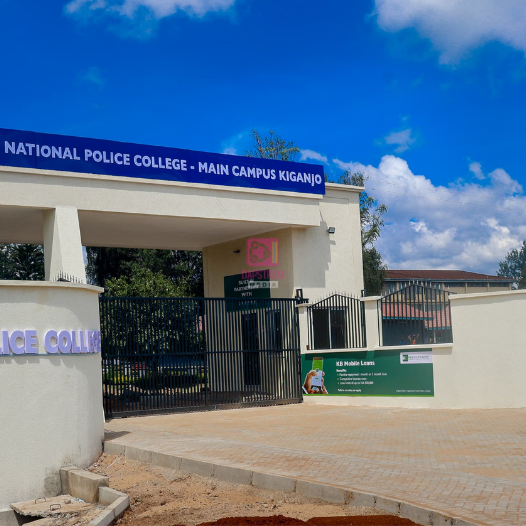
The National Police College Main Campus in Kiganjo Police Training College has once again found itself at the center of public attention after reports emerged that 18 female police recruits were expelled from the institution after they were allegedly found to be pregnant during training.
The development has sparked heated debate across the country, with many Kenyans questioning the strict rules governing police training colleges, while others argue that the physically demanding nature of the training leaves little room for recruits who cannot fully participate in drills and exercises.
According to reports circulating within police circles, the recruits were part of the latest intake that joined the National Police Service following the nationwide recruitment exercise conducted in late 2025. The recruits officially reported to various police colleges, including Kiganjo, in November before the formal launch of the Basic Recruit Training Course in December 2025.
The recruitment exercise itself had attracted thousands of young Kenyans hoping to secure one of the highly coveted police jobs. For many families, getting recruited into the police service is considered a life-changing opportunity because of the promise of stable employment, government benefits, housing allowances, medical cover, and pension.
During recruitment, candidates are usually subjected to a rigorous selection process. Applicants are required to be Kenyan citizens with valid national identification cards, possess a minimum KCSE mean grade of D+ for constables, be physically and mentally fit, and have no criminal record. They are also subjected to medical examinations and physical fitness tests including running, endurance assessments, and body coordination checks.
Successful candidates are then admitted into training colleges where life changes immediately.
At Kiganjo, recruits are introduced to a highly disciplined environment dominated by early morning drills, long-distance runs, parade training, combat lessons, firearm handling, law studies, physical endurance exercises, and strict codes of conduct. Phones are restricted in some cases, movement is controlled, and recruits are expected to maintain high levels of discipline throughout the training period.
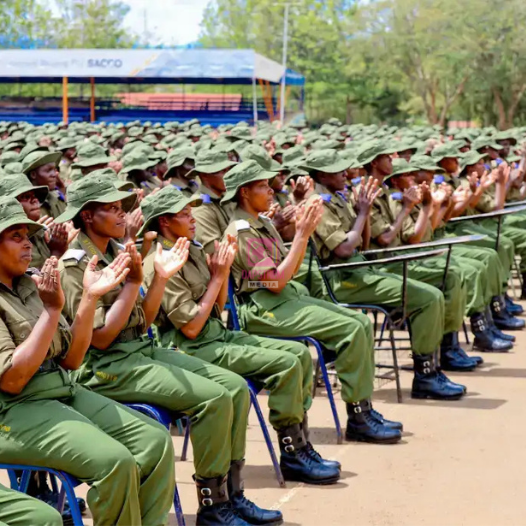
Former recruits often describe police training as one of the toughest experiences young Kenyans can undergo. Reveille bells ring before sunrise, punishments are common for mistakes, and instructors demand total obedience and physical readiness.
It is within this intense environment that the pregnancy scandal is said to have unfolded.
Sources familiar with the matter indicate that the pregnancies were discovered during routine medical assessments and inspections conducted at the college. The revelations reportedly shocked senior trainers and administrators, triggering disciplinary action against the affected recruits.
Although the National Police Service had not publicly issued a detailed statement by Friday, the incident quickly generated widespread reactions online, with many Kenyans debating whether expulsion over pregnancy is fair or discriminatory.
Some defended the institution, arguing that police training is physically extreme and may pose health risks to pregnant recruits. Others questioned whether similar disciplinary measures would be taken against male recruits linked to the pregnancies.
The incident has also reopened conversations about discipline and regulations within police training institutions.
Traditionally, police colleges in Kenya operate under strict paramilitary-style regulations. Recruits are expected to avoid conduct considered incompatible with training standards. Any actions viewed as interfering with performance, discipline, or institutional order may lead to suspension, termination of training, or expulsion.
Experts say pregnancy during the early stages of police training creates major operational challenges because recruits are required to participate in strenuous activities such as obstacle courses, crawling drills, firearm exercises, combat simulations, and extended runs. Medical professionals often caution against intense physical exertion during pregnancy because of possible risks to both mother and child.
The disciplinary actions facing recruits at police colleges can vary depending on the offense. Minor infractions may attract warnings, extra drills, fatigue duties, or temporary restrictions, while serious violations can lead to dismissal from the training program altogether. Other offenses that may attract expulsion include absenteeism, drug abuse, theft, insubordination, fighting, forgery of academic documents, desertion, or gross misconduct.
Over the years, Kiganjo has witnessed several disciplinary incidents involving recruits. In previous cases, recruits have been expelled or arrested after being found with forged academic certificates. Others have faced disciplinary action over drug possession, absenteeism, and misconduct during training.
The latest incident is now adding another layer to the already difficult realities faced by police trainees.
Behind the uniforms and parade drills are thousands of young Kenyans trying to survive pressure, homesickness, financial struggles, and the demanding expectations of training life. For many recruits, joining the police service represents the end of years of unemployment and uncertainty. Losing that opportunity midway through training can therefore be devastating both emotionally and financially.
Families that spent money transporting recruits to training colleges, buying bedding, uniforms, buckets, toiletries, and personal effects now face uncertainty over the fate of their children.
The controversy has also sparked wider discussions on whether police training institutions should review some of their policies to accommodate changing realities in society. Human rights activists and gender advocates have in the past argued that institutions should balance discipline with fairness and health considerations.
However, supporters of the strict rules insist that the police service remains a disciplined security institution where physical readiness is critical from the first day of training.
As debate continues online and within government circles, the incident has once again thrown a spotlight on the tough conditions inside Kenya’s police academies — institutions where discipline is everything, mistakes can cost careers, and the dream of wearing the police uniform can disappear overnight.