
Molo Community Reels From the Brutal Killing of Form Four Student Joy Wangui as Suspect Is Arrested After a Sustained Manhunt
The arrest of a 23-year-old man has provided a major breakthrough in the investigation into the brutal killing of 18-year-old Joy Wangui, a Form Four student whose death shocked residents of Kiambaa area in Molo, Nakuru County.
Wangui, a student at Molo Senior School, was found dead inside her family’s home in circumstances that immediately triggered a police investigation and a manhunt for the person believed to be responsible.
Detectives have now arrested Walter Kipkoech, who police have identified as the main suspect in the killing.
Kipkoech was traced to a hideout in Lagwenda village, Kuresoi North, following a sustained operation involving detectives from Molo and officers attached to the Crime Research and Intelligence Bureau (CRIB) at the Regional Criminal Investigations Headquarters in the Rift Valley.
His arrest brings to an end a period during which detectives had been searching for him after he allegedly fled following Wangui’s death.
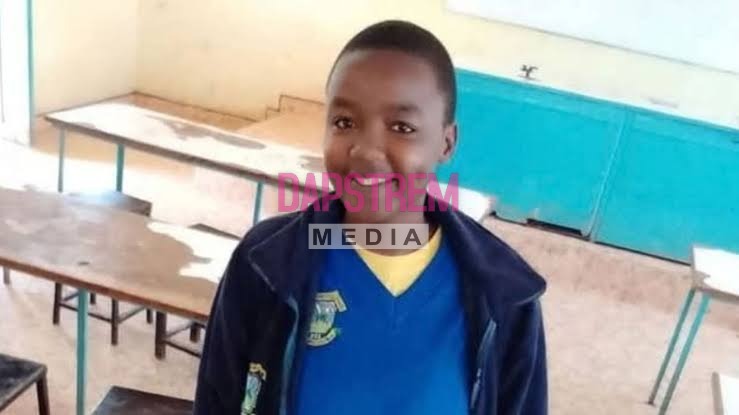
The case has attracted widespread attention because of the brutality of the killing and the circumstances under which the teenager was found.
According to investigators, Wangui’s body was discovered inside the kitchen of her family’s home after her younger brother returned from a nearby shop.
The brother had reportedly left her at home before briefly going to the family shop located a short distance away.
When he returned, he encountered the horrifying scene and alerted other family members and authorities.
Police officers and detectives who responded to the scene began processing the area as they sought to establish what had happened and identify the person responsible.
The investigation quickly focused on Kipkoech, who detectives said was known to Wangui and was her boyfriend.
Police are now pursuing a possible relationship dispute as the motive behind the killing, although investigations are continuing and the circumstances surrounding the incident will ultimately have to be established through the evidence collected and the judicial process.
The arrest has provided investigators with an opportunity to piece together what happened before, during and after the killing.
According to the Directorate of Criminal Investigations, detectives recovered an axe, a panga and two knives near Wangui’s body.
The weapons reportedly had bloodstains and have been taken as possible evidence in the investigation.
Wangui’s severed head was later discovered in a corridor inside the house.
Detectives also reported finding a message allegedly written on a wall using blood. The message referred to Wangui and appeared to link the killing to an alleged dispute in their relationship.
Investigators are expected to examine the message, the weapons and other material evidence as they reconstruct the events that led to the teenager’s death.
The discovery of the weapons will also be important to investigators as they establish whether they were used during the attack and whether they can be scientifically linked to the suspect.
Police will also rely on forensic evidence, witness statements and other investigative leads as they prepare the case.
The arrest after a sustained manhunt
Following the killing, detectives launched a manhunt for Kipkoech after identifying him as a key suspect.
The search eventually led investigators to Lagwenda village in Kuresoi North, where he was traced to a hideout.
The operation involved officers from Molo and the regional CRIB team, who worked together to locate the suspect.
According to police, the officers managed to arrest him at the hideout and escort him to Molo Police Station.
His arrest came after detectives had spent time piecing together information about his movements following Wangui’s death.
The circumstances surrounding his arrest have also attracted attention.
Police said Kipkoech was wearing a blood-stained boxer, a white T-shirt bearing the deceased’s name at the hem and black jeans with visible dry blood stains when he was arrested.
Investigators will now have to subject the clothing and other items recovered from him to forensic examination.
Such evidence can become important in establishing a connection between a suspect and a crime scene.
However, evidence recovered during an investigation must still be properly analysed and presented through the appropriate legal process.
The suspect remains an accused person at this stage and will be required to face the court, where the prosecution will have to prove the case beyond reasonable doubt.
Police pursue possible relationship dispute motive
Preliminary investigations have pointed detectives towards a possible relationship dispute.
Police have identified Kipkoech as Wangui’s boyfriend and are investigating whether disagreements in the relationship preceded the killing.
The Star reported that the suspect allegedly told police he acted in anger after Wangui resisted his advances and after he accused her of cheating. These details form part of the police account and will have to be tested through the formal investigative and judicial process.
The alleged relationship dispute has therefore become an important line of inquiry.
Detectives will need to establish what happened between the two before the killing.
They may examine communication between them, statements from relatives and friends, movements before the incident and any other evidence that could explain their interactions.
Investigators may also seek to establish whether there had been previous disagreements, threats or incidents involving the two.
However, establishing a possible motive is only one part of a murder investigation.
Police must also establish the sequence of events, identify the person responsible through admissible evidence and determine precisely how the killing occurred.
The case therefore remains under investigation even after the arrest.
A promising student whose life ended abruptly
For Wangui’s family, the case is not simply a police investigation.
It is the loss of a young woman who was still pursuing her education and preparing for her future.
At 18, she was in Form Four at Molo Senior School, placing her among thousands of Kenyan students approaching one of the most important stages of their secondary education.
Her death has therefore left relatives, friends, classmates and members of the local community grappling with the loss.
Instead of preparing for examinations and thinking about life after secondary school, Wangui’s family is now preparing to bury her.
Her classmates have also lost a friend at a particularly important moment in their lives.
The circumstances of her death have made the loss even more difficult for those who knew her.
The case has also revived wider concerns about violence involving young women and girls and the dangers that can emerge from unhealthy relationships.
While investigators are yet to establish the full circumstances surrounding Wangui’s death, the case has once again raised questions about how relationship disputes can escalate into serious violence.
The evidence recovered at the scene
The weapons recovered at the scene will form an important part of the investigation.
An axe, panga and two knives were reportedly found near the body, all bearing what police described as bloodstains.
Forensic investigators are expected to examine the weapons and determine whether they contain fingerprints, DNA or other evidence that could help establish what happened.
The crime scene itself will also be important.
Investigators need to determine where the attack began, how the victim moved within the house and where the suspect may have been before and after the incident.
Other potential evidence could include fingerprints, footprints, clothing, mobile phone data, messages and witness accounts.
The house and surrounding area may also provide information about whether anyone entered or left the compound around the time of the killing.
Modern criminal investigations increasingly rely on the combination of several forms of evidence rather than a single piece of information.
This could become particularly important in a case as serious as this one.
The role of the community in the investigation
The arrest also demonstrates the importance of information provided by members of the public.
Police often rely on residents to provide information about suspects’ movements, hideouts and activities.
In this case, detectives were able to trace Kipkoech to Kuresoi North after a manhunt that followed the killing.
The DCI has repeatedly urged members of the public to share information that can help investigators solve serious crimes.
Community cooperation can be particularly important when suspects attempt to move away from the areas where an offence occurred.
However, members of the public must also avoid taking the law into their own hands.
Once a suspect has been arrested, the appropriate process is for investigators to gather evidence and present the case before a court.
Any person accused of a crime remains entitled to due process and a fair hearing.
This is especially important in emotionally charged cases where members of the public may demand immediate punishment.
The case now moves to the next stage
With Kipkoech in custody, detectives are expected to continue investigating the circumstances surrounding Wangui’s death.
He has been taken to Molo Police Station and is undergoing processing pending arraignment, according to police reports.
Investigators will now have time to complete the evidence-gathering process and prepare the file for the prosecution.
The suspect is expected to face murder charges.
The exact charges and subsequent court proceedings will depend on the evidence gathered by investigators and the decisions made by the prosecution.
The postmortem examination will also be significant.
It is expected to help establish the cause and manner of Wangui’s death and provide forensic information that could assist the investigation.
Such findings can help investigators establish the injuries suffered by the victim and determine whether they are consistent with the weapons recovered at the scene.
Other forensic examinations could also help establish whether the clothing recovered from the suspect is connected to the crime.
A wider conversation about violence and relationships
The death of Wangui has also brought renewed attention to the dangers of violence arising from relationship disputes.
Across Kenya, police regularly investigate cases in which disagreements between partners escalate into physical violence.
Some cases involve threats and assault before eventually becoming fatal.
Others happen suddenly, leaving families and communities struggling to understand what happened.
The circumstances of Wangui’s death remain under investigation, but the case demonstrates how quickly an interpersonal dispute can become a matter of life and death.
It also raises questions about the support systems available to young people experiencing relationship difficulties.
Young people may sometimes hesitate to speak to parents, teachers or trusted adults about problems in their relationships.
That can leave them vulnerable when a relationship becomes controlling, threatening or abusive.
Schools, families and communities therefore have an important role in helping young people understand healthy relationships and recognise warning signs of abuse.
This does not mean assuming that every relationship disagreement will result in violence.
Rather, it means ensuring that people have safe avenues for seeking help when disagreements develop into threats, intimidation or violence.
Justice will now be closely watched
For Wangui’s family, the arrest is an important development, but it is only the beginning of the justice process.
They will want to know exactly what happened to their daughter and why.
They will also want the person responsible to face the consequences established by law.
The DCI has promised to continue investigating all circumstances surrounding the killing and ensure that whoever is found responsible faces the full force of the law.
The case will therefore remain under close public attention as investigators complete their work and the suspect appears in court.
For the prosecution, the challenge will be to build a strong case based on credible and admissible evidence.
For the defence, the suspect will have the right to challenge the allegations against him.
Ultimately, it will be the court that determines whether the evidence establishes criminal responsibility.
The principle of due process remains important even in cases involving particularly disturbing allegations.
A community left searching for answers
The killing has left the Kiambaa community with difficult questions.
Residents are struggling to understand how an 18-year-old student could lose her life in such violent circumstances inside what should have been a familiar and safe environment.
For her family, the home where she lived has now become the scene of a tragedy they will never forget.
For her classmates, her absence will be felt in school.
For investigators, the task is now to reconstruct the events that led to the killing and establish the truth through evidence.
The arrest of Kipkoech provides an important breakthrough, but the investigation is not over.
Detectives still have to examine forensic evidence, record statements, complete the postmortem process and prepare the case for court.
As those steps continue, Wangui’s family and the wider community will be hoping for answers and justice.
The case also serves as a painful reminder of the consequences that can arise when disputes turn violent.
It underscores the importance of addressing threats and abusive behaviour before they escalate and ensuring that victims have places where they can seek help.
For now, the focus remains on establishing exactly what happened to Joy Wangui, why her life was violently cut short and whether the evidence gathered by detectives will establish the responsibility of the person now in custody.
The arrest has brought hope that the case will move towards justice.
But for Wangui’s loved ones, no arrest can undo the loss.
They are left to mourn a young student whose future was still unfolding and whose life ended in circumstances that have shocked an entire community.
The coming days and weeks will determine what the investigation uncovers and how the case proceeds through the courts.
Until then, the focus remains on the pursuit of evidence, accountability and justice for Joy Wangui.