Three African Wild Dogs Travel More Than 4,000km in Search of Mates, Offering Hope for Endangered Species
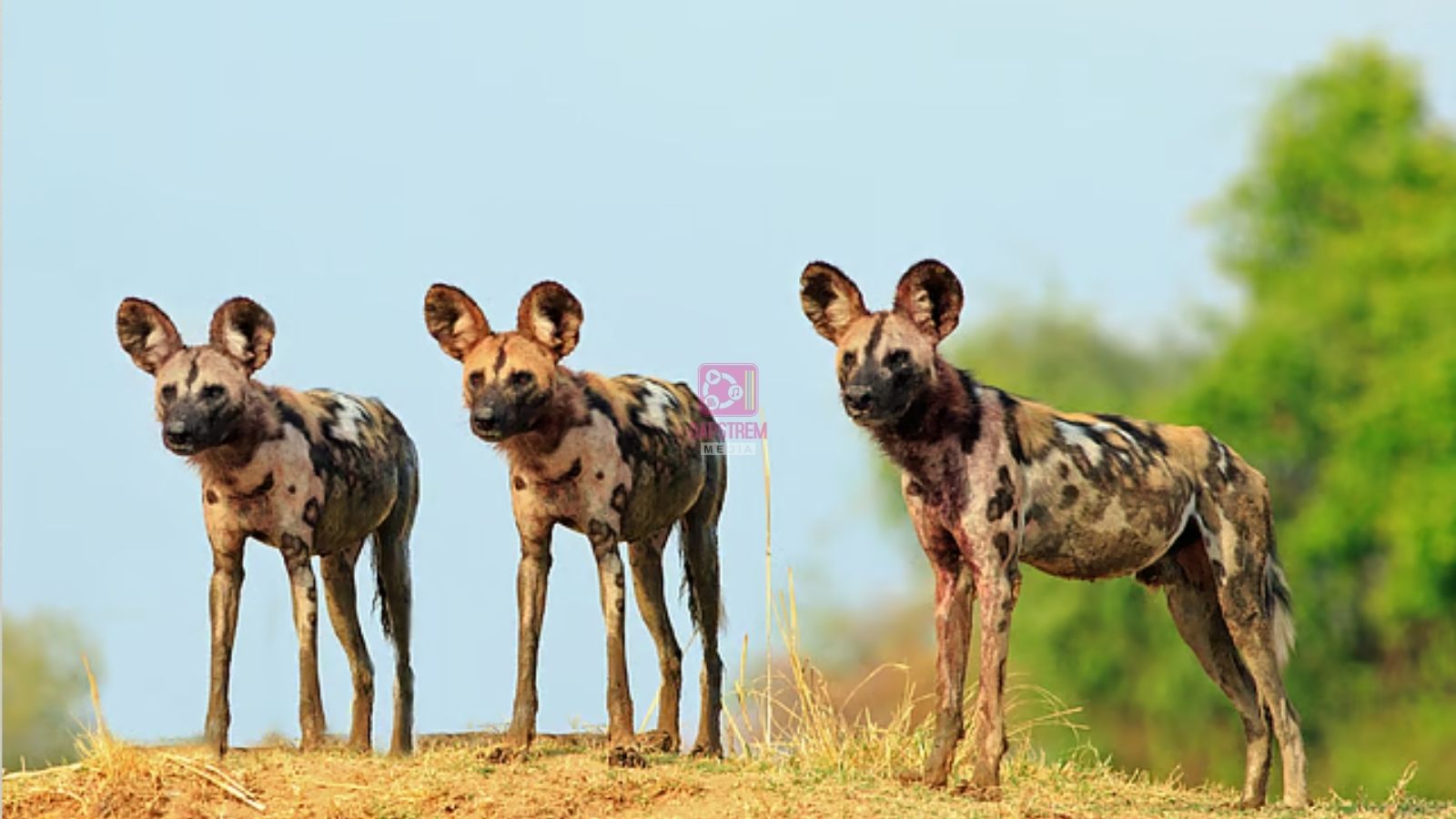
The extraordinary journey of three African wild dogs across more than 4,000 kilometres has offered conservationists an encouraging reminder of how far endangered animals can travel in search of suitable habitats, breeding opportunities and new members of their species.
The remarkable movements of the animals have attracted attention because African wild dogs are among the continent’s most threatened carnivores. Their survival depends not only on protecting individual animals but also on maintaining large, connected landscapes where populations can interact, reproduce and establish new territories.
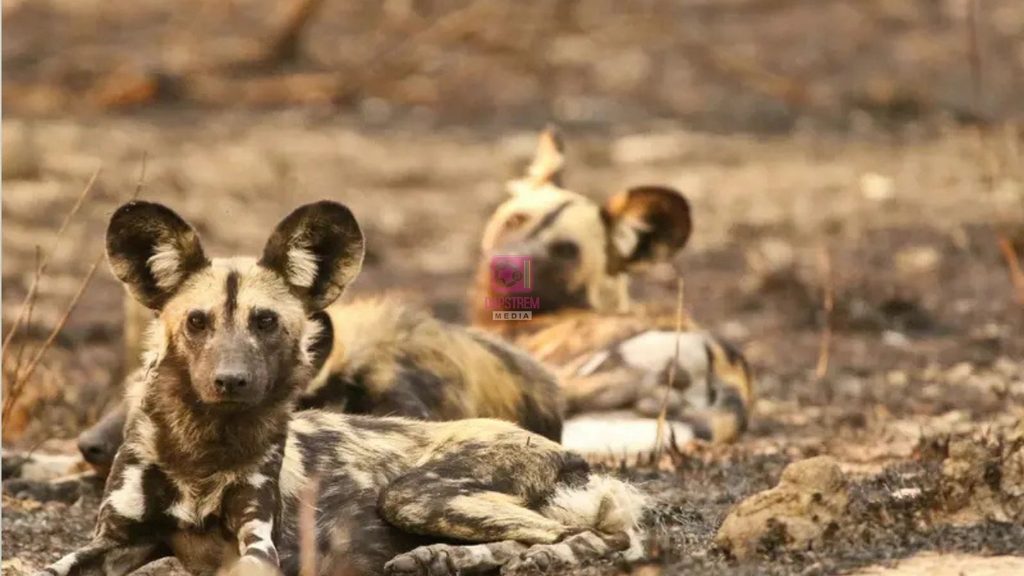
African wild dogs, scientifically known as Lycaon pictus, are highly social predators that live in packs. Unlike many solitary carnivores, they depend heavily on cooperation within their groups. They hunt together, raise pups collectively and maintain strong social bonds.
That social structure makes finding suitable mates particularly important.
When young animals leave their original packs, they can travel considerable distances while searching for unrelated animals with which they can form new breeding groups. This natural behaviour helps prevent populations from becoming isolated and genetically weakened.
The journeys of the three wild dogs therefore provide more than an unusual wildlife story. They demonstrate the importance of maintaining wildlife corridors and protecting large landscapes that allow endangered species to move between populations.
For conservationists, long-distance movements can be both encouraging and challenging.
They are encouraging because they show that wild dogs can cross vast landscapes when suitable routes remain available. But they also demonstrate how exposed endangered animals can become when they move beyond protected areas.
A journey covering thousands of kilometres can take an animal through roads, farms, settlements, livestock areas and other places where it may encounter human activity.
This makes landscape connectivity one of the most important issues in modern wildlife conservation.
A protected national park may provide an important refuge, but wildlife cannot always remain within the boundaries of a single protected area.
Animals need food, water, territory and, in the case of social species such as African wild dogs, opportunities to encounter other populations.
When habitats become fragmented by roads, agriculture, settlements and other developments, animals can find it increasingly difficult to move between areas.
The result can be isolated populations that rarely interact with one another.
For African wild dogs, isolation can create serious long-term problems.
Their social system means that packs can contain several related individuals. If there are too few unrelated animals available for breeding, the genetic diversity of a population can decline.
Genetic diversity is important because it gives populations greater capacity to adapt to environmental changes and resist certain diseases.
The long-distance movements recorded in this case therefore provide evidence that natural dispersal can play an important role in connecting populations.
Instead of conservationists having to move animals artificially, wild dogs can sometimes find their own way across the landscape when suitable habitat and corridors remain available.
This is one of the reasons the journeys have generated optimism.
The animals were able to travel extraordinary distances because parts of the African landscape still provide routes through which wildlife can move.
Their movements demonstrate that conservation does not necessarily stop at the boundaries of national parks and wildlife reserves.
The spaces between protected areas can be just as important.
These areas are sometimes described as wildlife corridors.
A wildlife corridor is a landscape that allows animals to move between otherwise separated habitats.
Corridors can consist of natural vegetation, river systems, forests, grasslands or other suitable landscapes.
They can be particularly important for species that naturally travel long distances.
African wild dogs are among the animals that can cover enormous distances.
Their packs may travel widely while hunting, establishing territories or responding to environmental conditions.
The ability to move is therefore deeply connected to their natural behaviour.
When human development blocks these movements, wildlife can face increasing pressure.
A road can become a barrier.
A fence can prevent access to habitat.
A settlement can eliminate a traditional route.
Agricultural expansion can reduce the availability of suitable hunting grounds.
Even when protected areas remain intact, fragmentation around them can make it difficult for animals to move safely between populations.
The three wild dogs’ remarkable journey highlights precisely why conservationists are increasingly looking beyond individual parks and focusing on entire landscapes.
It also demonstrates the value of modern wildlife monitoring technology.
In recent years, conservationists have increasingly used GPS collars and other tracking technologies to monitor the movements of endangered animals.
These devices can provide information about where animals travel, how long they remain in particular areas and which routes they use.
Such information can help researchers identify important wildlife corridors and potential threats.
Without tracking technology, an animal travelling thousands of kilometres could easily disappear from the view of conservationists.
With GPS data, researchers can reconstruct its journey and understand how it interacts with the landscape.
That information can then influence conservation planning.
For example, if multiple animals repeatedly use the same route, conservationists may identify it as an important corridor that needs protection.
Authorities can potentially use such information when planning roads, settlements and other developments.
This is increasingly important across Africa, where human populations and infrastructure are expanding.
Africa has some of the world’s most important remaining wildlife populations, but many habitats are under pressure from development, agriculture, climate change and human-wildlife conflict.
Finding a balance between development and conservation is therefore becoming increasingly important.
The story of the three African wild dogs shows that wildlife conservation is not simply about preventing animals from disappearing.
It is also about giving them enough space to behave naturally.
For wild dogs, that means allowing them to form packs, hunt, disperse and find mates.
A population may appear stable within a protected area, but if young animals cannot leave their packs and encounter unrelated individuals elsewhere, its long-term prospects can still be uncertain.
Natural dispersal can help address that problem.
The three animals’ journey also highlights the importance of cooperation between different countries and conservation organisations.
Wildlife does not recognise political borders.
An animal may move through several administrative regions or even across national boundaries during its lifetime.
Conservation strategies therefore need to consider landscapes as connected ecological systems rather than isolated pieces of land.
This is especially relevant in southern and eastern Africa, where wildlife corridors can stretch across enormous areas.
African wild dogs once occupied much larger parts of the continent than they do today.
Their current distribution is fragmented, with populations concentrated in parts of southern, eastern and some areas of central Africa.
Habitat loss and fragmentation have contributed to their decline, alongside diseases, accidental killings, persecution and competition with human activities.
They are also vulnerable to outbreaks of diseases such as rabies and canine distemper, which can spread through contact with domestic dogs.
Because wild dogs live in closely bonded packs, an infectious disease can potentially affect several animals within a short period.
This makes conservation management particularly complicated.
Protecting their habitat is essential, but so is monitoring their health and reducing disease transmission where possible.
Human-wildlife conflict presents another major challenge.
As wild dogs move across landscapes, they can encounter livestock and communities.
Although wild dogs are specialised predators of wild prey, their presence near human settlements can create concern among residents.
If animals are perceived as a threat to livestock, communities may attempt to kill them.
This is why conservation programmes increasingly emphasise working with local communities.
Protecting wildlife without considering the needs of people living alongside conservation areas can create tension.
Local residents need practical reasons to support conservation.
That can include compensation schemes, livestock protection measures, community-based tourism, employment opportunities and other benefits associated with maintaining wildlife populations.
When communities participate in conservation, endangered species can have a greater chance of surviving outside strictly protected areas.
The remarkable journey of the three wild dogs therefore has implications beyond wildlife research.
It raises broader questions about how humans design landscapes.
As cities expand and new roads and infrastructure are constructed, planners have to consider how those developments affect animal movements.
Wildlife crossings, underpasses and other measures can sometimes help animals cross major roads safely.
Fencing can also be designed in ways that reduce the risk of animals becoming trapped or blocked from important routes.
These measures may appear small compared with the scale of a 4,000-kilometre journey, but they can make a significant difference.
One dangerous road crossing can end the journey of an endangered animal.
One blocked corridor can prevent populations from reconnecting.
One isolated population can gradually lose genetic diversity.
Conservation therefore often depends on a combination of large-scale planning and small interventions.
The story also offers a powerful reminder about the resilience of wildlife.
Despite the pressures facing their species, African wild dogs continue to demonstrate remarkable adaptability.
Their ability to travel vast distances in search of mates shows that they still possess the instincts and behavioural flexibility that have helped the species survive for thousands of years.
The challenge is ensuring that human activity does not make those journeys impossible.
For researchers, every long-distance movement provides an opportunity to learn.
Scientists can study why an animal chooses a particular route, how it responds to obstacles and what factors determine whether it eventually finds a suitable mate.
Such information can improve conservation strategies.
If conservationists understand where animals naturally disperse, they can prioritise those landscapes for protection.
If they identify dangerous areas, they can work with authorities and communities to reduce threats.
And if they discover that animals are successfully reconnecting populations, it can provide evidence that conservation measures are working.
The three wild dogs therefore represent something larger than their individual journeys.
They are examples of the importance of movement in maintaining healthy wildlife populations.
Their story also challenges the idea that conservation should focus only on increasing the number of animals.
Numbers matter, but where those animals live and how they interact can be equally important.
A large population trapped in isolated fragments may face different challenges from a smaller population that can move freely across a connected landscape.
Connectivity allows animals to find food, escape threats, establish territories and encounter potential mates.
For species such as African wild dogs, these opportunities can determine whether populations remain viable over generations.
The news is particularly significant because endangered species conservation can often seem dominated by negative stories.
Habitat destruction, poaching, climate change and declining wildlife populations can make the future appear uncertain.
But stories of animals successfully navigating enormous landscapes offer another perspective.
They show that nature still has remarkable capacity to recover when given sufficient space and protection.
The movements of these wild dogs demonstrate that conservation efforts can have consequences far beyond the boundaries of a single reserve.
Protecting one area can help preserve a source population.
Protecting the surrounding corridors can allow that population to interact with others.
Protecting communities and reducing conflict can make those movements safer.
Together, these measures can create a landscape where wildlife has a better chance of surviving.
There is also an important lesson for future generations.
Wildlife conservation is not simply about protecting animals that people find beautiful or impressive.
Every species plays a role in its ecosystem.
African wild dogs are highly efficient predators and are part of the ecological processes that regulate prey populations.
Their presence contributes to the health and balance of the ecosystems where they live.
Losing them would therefore have consequences beyond the disappearance of one species.
Their survival is connected to the health of the wider landscapes they inhabit.
The 4,000-kilometre journeys also demonstrate why international conservation partnerships are increasingly important.
An animal can cross a huge area without understanding where one protected zone ends and another begins.
Conservationists have to think in the same way.
Instead of asking only how to protect one park, they must ask how entire ecosystems can remain connected.
That requires cooperation among governments, conservation organisations, researchers, local communities, landowners and development planners.
It also requires long-term commitment.
Wildlife corridors cannot be created overnight.
They require research, land-use planning, funding and cooperation.
In some areas, conservationists may need to restore degraded habitats.
In others, they may need to negotiate with communities and landowners.
In heavily developed areas, infrastructure such as wildlife crossings may be necessary.
Each landscape presents different challenges.
The three African wild dogs have nevertheless provided an extraordinary example of what can happen when animals are able to move.
Their journey is a reminder that the instinct to find a mate, establish a new pack and continue the species remains powerful.
It is also a reminder that humans have a responsibility to ensure that the landscape does not become so fragmented that such natural behaviour is no longer possible.
For an endangered species, every successful breeding opportunity matters.
Every new pack can contribute to the survival of the wider population.
Every safe corridor can create a connection between groups that might otherwise remain isolated.
And every animal that successfully reaches a new territory can potentially contribute to greater genetic diversity.
The three wild dogs may eventually settle in different areas, form new social groups and contribute to future generations.
If that happens, their extraordinary journey will have achieved something far more significant than simply covering a remarkable distance.
It will have demonstrated the value of allowing wildlife to move naturally.
Their story offers hope, but it also comes with a responsibility.
The journey shows what endangered animals can do when they have space.
The task for conservationists, governments and communities is to make sure that space remains available.
As Africa continues to develop, protecting wildlife will increasingly depend on finding ways for people and animals to share connected landscapes.
The story of these three African wild dogs provides a powerful example of why that balance matters.
Their 4,000-kilometre search for mates is an extraordinary feat of endurance, instinct and survival.
More importantly, it is evidence that endangered wildlife can still move across vast landscapes and reconnect with populations far from where it began.
For a species facing habitat fragmentation and numerous other threats, that is an important reason for hope.
The future of African wild dogs will depend on whether humans can preserve the landscapes that allow such journeys to continue.
If those corridors remain open, more animals may be able to disperse, find mates and establish new packs.
And with every successful journey, the possibility of keeping one of Africa’s most remarkable predators alive for generations becomes stronger.