High Court Gives Parliament Six Months to Fix Public-Private Partnerships Act Oversight Gaps
Kenya’s High Court has declared parts of the Public-Private Partnerships Act unconstitutional, saying Parliament must have a clear oversight role when PPP projects create financial obligations for the government and taxpayers.
The High Court has given Parliament six months to amend key provisions of Kenya’s Public-Private Partnerships (PPP) Act after declaring sections of the law unconstitutional.
The ruling, delivered on Thursday, September 17, 2026, has opened a new chapter in how the government enters into major infrastructure agreements with private investors.
At the centre of the decision is a question that has attracted growing public attention in Kenya: Who should have the final oversight when a public-private partnership can create long-term financial obligations for the government?
The court has now made it clear that Parliament cannot be left out where a PPP arrangement creates obligations that may eventually have to be met using public funds.
The High Court declared Sections 59, 60 and 72 of the PPP Act unconstitutional to the extent that they fail to provide for parliamentary approval where PPP projects result in government expenditure, guarantees, public debt or other public liabilities.
However, the court did not immediately invalidate the affected provisions.
Instead, it suspended the effect of the declaration for six months to give Parliament an opportunity to amend the law and bring it into line with the Constitution.
The decision could have significant implications for Kenya’s ambitious infrastructure programme, particularly at a time when the government is increasingly looking to PPPs as a way of financing projects without relying entirely on traditional government borrowing.
Public-private partnerships have become an important part of Kenya’s infrastructure strategy.
Under a PPP arrangement, the government can work with a private company to finance, construct, operate or maintain a project, depending on the structure of the agreement.
The approach can be useful for projects that require substantial capital investment and long-term management.
However, PPPs can also create obligations that extend for many years.
A project may initially appear to be funded by private capital, but the government could later be required to make payments, provide guarantees, contribute resources or take on certain liabilities.
It is this possibility that formed a major part of the High Court’s reasoning.
The court’s position, as reported following the judgment, is that the government cannot use the PPP structure to avoid Parliament’s constitutional role in overseeing public finances.
How the case reached the High Court
The case was connected to privately initiated proposals involving Jomo Kenyatta International Airport and the Kenya Electricity Transmission Company.
Those proposals had already been cancelled by the time the matter came before the court.
The government and other respondents argued that the cancellation meant there was no longer an active dispute requiring the court’s intervention.
The High Court disagreed.
The court found that the cancellation of the individual projects did not remove the wider constitutional questions surrounding the PPP framework.
The case therefore became bigger than the two projects that initially triggered the dispute.
It raised questions about how Kenya approves PPP projects, how public money is protected and whether the existing legal framework provides sufficient accountability when government enters into long-term agreements with private entities.
This distinction is important.
The ruling is not simply about whether a particular airport or electricity transmission project should proceed.
It concerns the legal framework that could govern numerous PPP projects in Kenya in the years ahead.
The court’s decision therefore has implications beyond the specific projects that brought the matter before it.
Why parliamentary oversight matters
Parliament plays a central role in overseeing public finances.
Kenya’s Constitution gives Parliament responsibilities relating to public money, taxation, borrowing and government expenditure.
The High Court has now emphasised that these responsibilities cannot be bypassed simply because a project is structured as a partnership between the government and a private investor.
In practical terms, a PPP agreement could require the government to make payments to a private company over an extended period.
Another agreement could involve a government guarantee.
A different project could require government contributions or create contingent liabilities that only become payable when certain circumstances arise.
There could also be arrangements involving borrowing or other forms of public financial exposure.
According to the ruling, these are the circumstances in which parliamentary oversight becomes particularly important.
The court did not, however, say that Parliament must approve every PPP project individually.
That distinction is important.
The key issue is whether a particular arrangement creates a financial obligation for the national government.
Where such an obligation exists, parliamentary approval will be required under the framework that Parliament is now expected to develop through amendments to the law.
This means the six-month period is not simply a deadline for making technical changes.
Parliament will have to address how oversight should work in practice.
It will need to determine the procedures, thresholds and documentation required before a PPP involving public financial obligations can proceed.
What this means for taxpayers
For ordinary Kenyans, the ruling could have an important bearing on transparency and accountability in major government projects.
PPP contracts can run for many years.
Some may involve payments that extend far beyond the administration that initially approves them.
That means decisions made today can create financial commitments for future governments and future taxpayers.
The court’s ruling places greater emphasis on ensuring that such commitments receive parliamentary scrutiny where they amount to public financial obligations.
The issue is particularly significant because infrastructure projects often involve large amounts of money.
A road, airport, energy project, water facility or other major development can require billions of shillings in investment.
When a government agrees to make payments over several years, the financial impact may not always be immediately visible in the same way as a conventional budget expenditure.
The High Court’s decision therefore brings attention to the need to examine the long-term financial consequences of PPP agreements.
It also reinforces the importance of ensuring that taxpayers understand the obligations their government is assuming.
The PPP Directorate itself is responsible for providing process leadership, project preparation support, procurement guidance, contract negotiation and project oversight within Kenya’s PPP framework.
The Directorate also coordinates the selection and prioritisation of PPP projects within the public budget framework and provides technical support to contracting authorities.
The new court ruling means that the role of Parliament will need to be clearly incorporated into this broader institutional framework where projects create government financial obligations.
The ruling does not mean PPP projects have been stopped
One of the important points arising from the judgment is that Kenya’s PPP programme has not been brought to an immediate halt.
The court suspended the declaration of invalidity for six months.
This gives Parliament time to amend the affected provisions.
The suspension also provides an opportunity for government agencies and private investors to understand how the legal framework will operate during the transition.
Reports indicate that the judgment does not automatically stop ongoing PPP projects.
This is significant because the government already has several PPP projects at different stages of development and implementation.
Among projects associated with Kenya’s PPP programme are infrastructure developments such as the Rironi-Mau Summit highway expansion, Mau Summit-Malaba highway expansion, Kenya Defence Forces residential accommodation, Londiani Dam water project and Galana Kulalu Food Security Project.
The government has also been pursuing PPPs as an alternative mechanism for delivering infrastructure at a time when public resources face competing demands.
The six-month period therefore gives policymakers room to make the necessary legal adjustments without creating an immediate vacuum in the PPP framework.
Parliament now faces a major legislative task
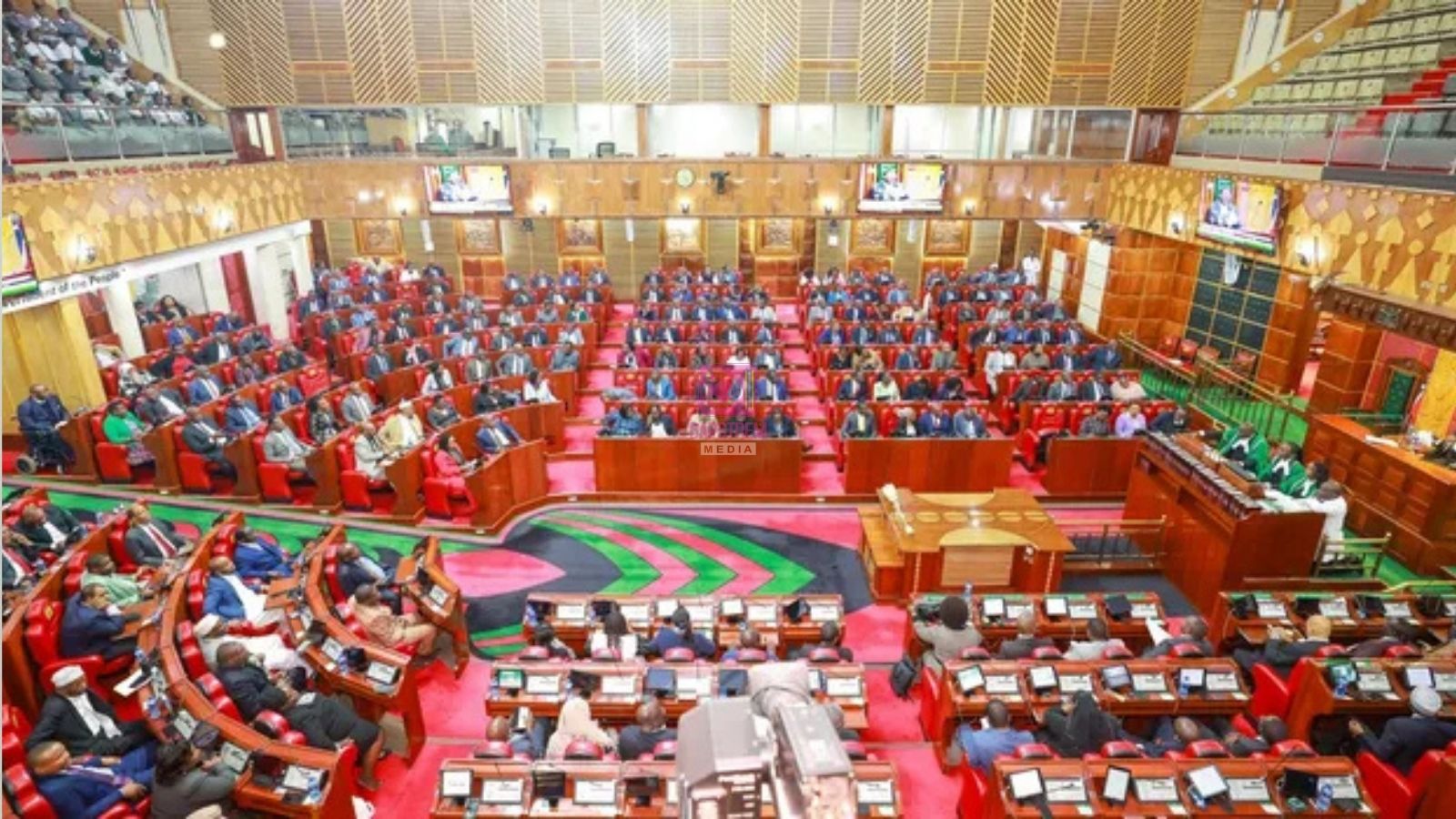
The responsibility now shifts to Parliament.
The legislature will have to consider how to amend Sections 59, 60 and 72 in a way that satisfies the Constitution and addresses the concerns identified by the court.
The changes will likely need to provide a clear mechanism for parliamentary approval where PPP projects create public financial obligations.
Parliament already has a committee structure that deals with public debt, public-private partnerships and the privatisation of public assets.
The National Assembly’s Public Debt and Privatization Committee is mandated to oversee matters relating to public debt, PPPs, privatisation of public assets, national government borrowing and the use and repayment of national loans.
The committee system could therefore become an important part of the legislative response to the judgment.
The exact form of the new oversight mechanism, however, will depend on the amendments Parliament eventually considers and passes.
The process will also need to balance two competing concerns.
On one hand, there is the constitutional need for accountability and parliamentary oversight over public finances.
On the other hand, PPP projects can involve complicated commercial negotiations that require clear procedures and timely decision-making.
A system that provides oversight without creating unnecessary uncertainty will therefore be important for investors, government agencies and taxpayers.
Kenya was already reviewing the PPP framework
The High Court decision comes at an interesting time because the government had already started reviewing Kenya’s PPP legal and regulatory framework.
In July 2026, the PPP Directorate conducted public participation forums on proposed amendments to the PPP Act as well as draft PPP regulations.
The proposed reforms included the Public Private Partnerships (Amendment) Bill, 2026, the draft Public Private Partnerships (General) Regulations, 2026, and the draft Public Private Partnerships (Project Management) Regulations, 2026.
The government said the review was intended to address operational and editorial gaps, improve clarity and strengthen implementation of the PPP framework.
Public participation was conducted in different parts of the country, giving stakeholders an opportunity to submit views on the proposed changes.
The court ruling now adds another important legal consideration to that reform process.
Parliament will have to ensure that any amendments respond not only to administrative and operational concerns but also to the constitutional requirement identified by the High Court.
The timing could therefore result in a broader review of the legal framework than originally anticipated.
Privately initiated proposals also came under scrutiny
Another important issue in the case involved privately initiated proposals.
These are proposals brought forward by private entities rather than projects originating entirely from government.
The petitioners had challenged provisions relating to such projects, arguing that they could potentially allow government agencies to avoid open competition when selecting private partners.
The High Court did not accept that part of the challenge in the same way.
The court recognised that the law can provide for different procurement approaches where there is proper justification.
However, it stressed that government agencies must still comply with constitutional principles, including transparency, competition and value for money.
This means the judgment does not eliminate privately initiated PPP proposals.
Instead, it reinforces the requirement that such arrangements must operate within the constitutional and legal principles governing public procurement and public resources.
That distinction could be important for companies that approach the government with proposals for major infrastructure projects.
Private investors may still have an opportunity to present innovative projects to the government.
But the existence of a privately initiated proposal does not automatically mean that a particular company should receive the contract.
The government must still demonstrate that the process is lawful and that the resulting arrangement serves the public interest within the applicable legal framework.
A wider debate about public debt and liabilities
The ruling also comes against the backdrop of wider debates about Kenya’s public finances.
PPP arrangements are sometimes presented as a way of mobilising private capital for projects without relying entirely on direct government borrowing.
However, the court’s reasoning highlights an important point: private financing does not necessarily mean that the public sector has no financial exposure.
Government guarantees, long-term payment commitments and contingent liabilities can create financial risks even where the initial construction or investment is undertaken by a private company.
This is why transparency around PPP contracts is particularly important.
The PPP framework already provides for reporting on matters including the number, types and value of PPPs being implemented, government support measures and the value of contingent liabilities approved for PPPs.
The High Court ruling adds another layer to that discussion by emphasising Parliament’s constitutional oversight role where public financial obligations arise.
For taxpayers, the question is not simply how much money a project costs to construct.
It is also how much the government could eventually be required to pay over the lifetime of the agreement.
What happens during the six months?
The next six months will be closely watched by stakeholders in government, Parliament, the private sector and civil society.
Parliament will need to work on the affected provisions before the suspended declaration takes effect.
The legislative process will determine how PPP projects involving government financial obligations are subjected to parliamentary oversight.
The process could also generate debate about the practical threshold for parliamentary approval.
For example, lawmakers may have to consider whether every financial obligation should automatically trigger the same procedure or whether different categories of PPP projects should follow different levels of scrutiny.
They may also have to consider how quickly Parliament should make decisions so that legitimate infrastructure projects are not unnecessarily delayed.
At the same time, lawmakers will have to ensure that efficiency does not come at the expense of accountability.
The court’s judgment has effectively placed these questions at the centre of the legislative conversation.
What the decision could mean for future infrastructure projects
Kenya has significant infrastructure needs.
Roads, energy facilities, water projects, housing, transport infrastructure and other public services require substantial investment.
The government has increasingly looked to partnerships with private investors as one way of meeting these needs.
The High Court ruling does not reject that model.
Instead, it establishes an important constitutional question about how PPPs should be approved when they expose the government to financial obligations.
The government and private investors will therefore have to pay close attention to the legal changes that emerge from Parliament.
For investors, clarity will be particularly important.
Long-term infrastructure investments require predictable rules.
For government agencies, the new framework will need to clearly identify which projects require parliamentary approval and what information must be submitted.
For Parliament, the challenge will be creating a system that provides meaningful scrutiny without unnecessarily slowing down legitimate projects.
For taxpayers, the changes could provide greater visibility into agreements that may affect public finances for many years.
Ultimately, the six-month window gives Kenya an opportunity to strengthen the legal foundation governing public-private partnerships.
The High Court has made it clear that calling an arrangement a PPP does not remove it from constitutional principles governing public money.
Where the government assumes financial obligations, Parliament’s oversight role must be recognised.
The judgment therefore marks an important development in Kenya’s ongoing debate over infrastructure financing, public debt, accountability and the use of private capital to deliver public projects.
As Parliament begins the process of amending the law, attention will now shift to the details of the proposed changes.
The central question will be how Kenya can continue attracting private investment for major infrastructure projects while ensuring that agreements capable of creating long-term obligations for taxpayers receive the level of constitutional scrutiny required by law.
The answer will ultimately be shaped through the legislative process that follows the High Court’s six-month deadline.