Sierra Leone Welcomes Former President Ernest Bai Koroma Home After Treason Charges Are Dropped
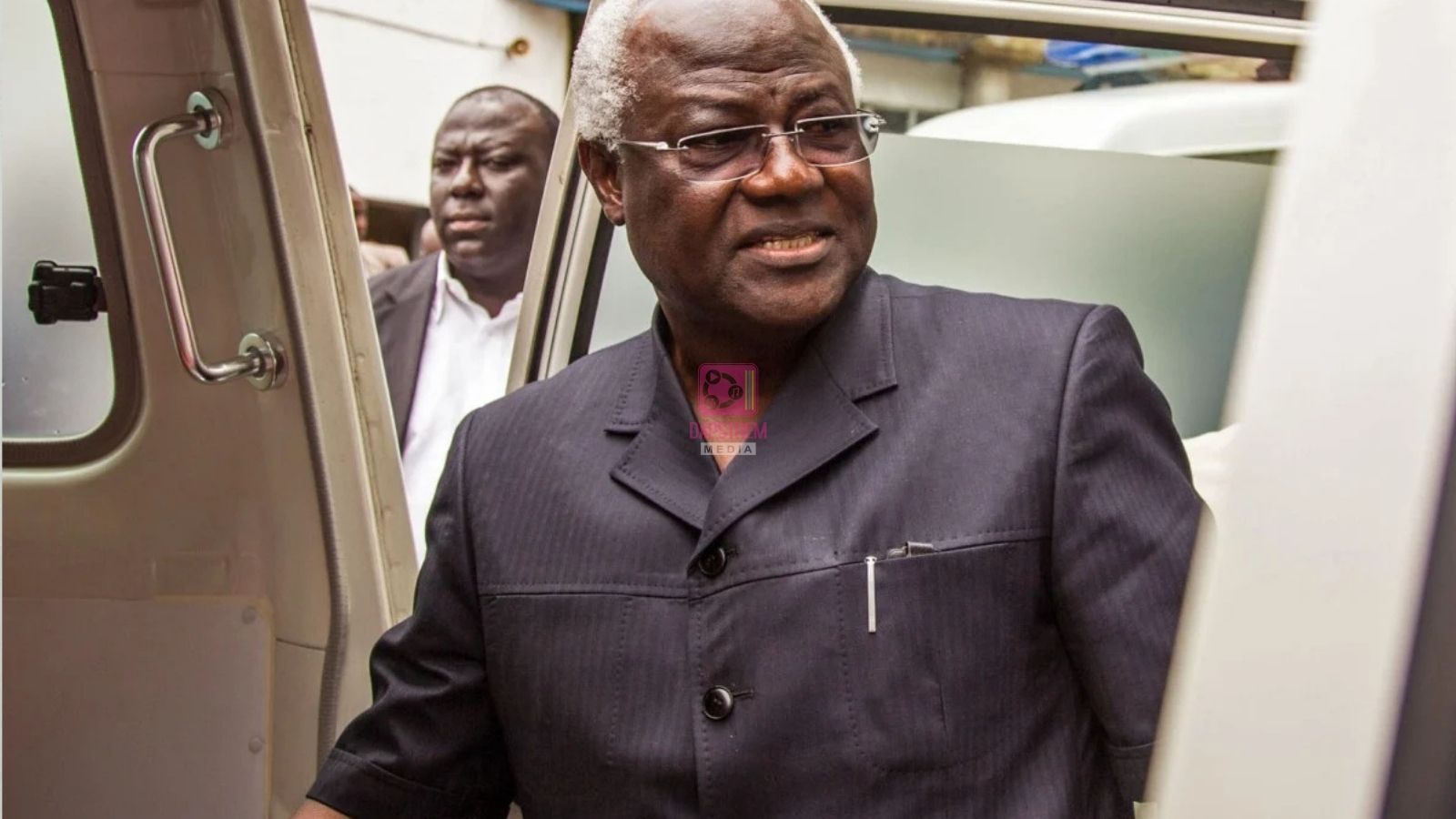
Former Sierra Leone President Ernest Bai Koroma has returned home after spending more than two years in Nigeria, following the withdrawal of treason charges that had kept the former leader outside the country since 2024.
Koroma returned to Sierra Leone on Sunday, September 6, 2026, marking the end of a lengthy period away from his country after he was charged with treason and other offences in connection with a deadly 2023 military uprising. His homecoming has been welcomed as an important moment in Sierra Leone’s ongoing efforts to promote peace, political stability and national reconciliation.
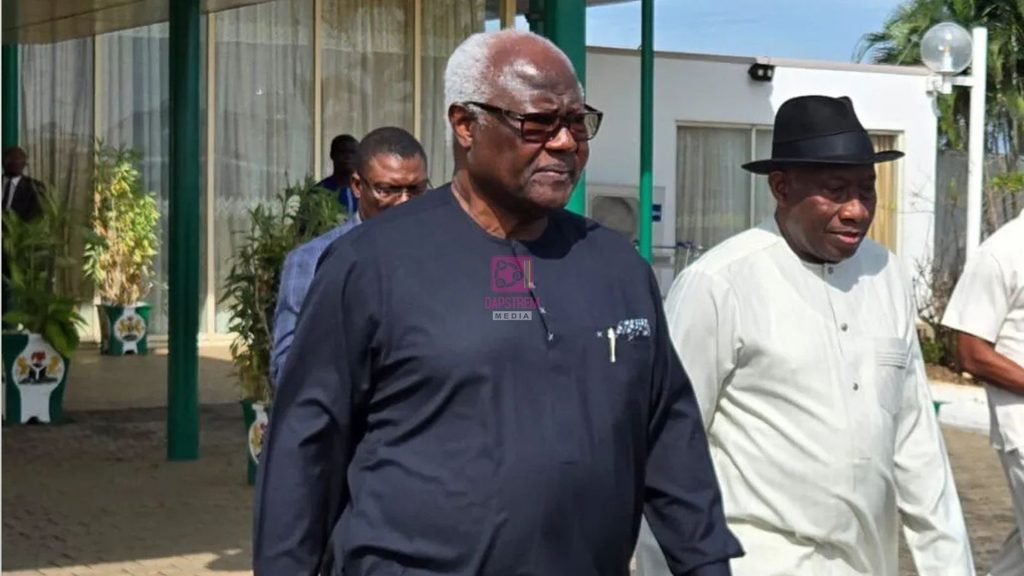
The former president arrived at Freetown International Airport accompanied by former Nigerian President Olusegun Obasanjo and Nigeria’s Foreign Minister Bianca Odumegwu-Ojukwu. He was received by Sierra Leone’s Foreign Minister Mohamed Rahman Swarray and officials from his opposition All People’s Congress, the political party he previously led.
Speaking to journalists after arriving in the country, Koroma expressed his happiness at being back home, bringing an emotional conclusion to a period that had seen him remain thousands of kilometres away from Sierra Leone while facing serious criminal allegations.
“Today I have come back home and I’m happy,” Koroma told journalists, according to reports from the scene.
His return follows a decision by Sierra Leonean authorities in July to discontinue the criminal proceedings against him. The Justice Ministry dropped the treason charges without publicly providing a detailed explanation for the decision, effectively removing the immediate legal obstacle that had prevented Koroma from returning home freely.
Koroma had left Sierra Leone for Nigeria in January 2024 after being granted permission to travel for medical treatment. The arrangement came amid regional diplomatic efforts to ease tensions following the November 2023 attempted coup, which had plunged the country into another period of political uncertainty.
What was initially expected to be a temporary stay in Nigeria lasting about three months eventually stretched into more than two years. During that period, Koroma remained in Nigeria while regional actors, including the Economic Community of West African States, worked to promote dialogue and political understanding between the former president and the Sierra Leonean government.
The former president had been charged after armed attackers launched coordinated attacks in Freetown in November 2023. The attackers targeted a military armoury, two barracks, two prisons and two police stations, leading to clashes with security forces.
At least 21 people were killed during the violence, while hundreds of prisoners escaped after the attackers opened several prisons. The government described the incident as an attempted coup against President Julius Maada Bio’s administration.
Koroma denied involvement in the alleged coup attempt.
The charges against him included treason and other offences linked to the uprising, placing the former head of state at the centre of one of Sierra Leone’s most politically sensitive criminal cases in recent years.
The former president’s case attracted significant attention because of his political history and his position as one of the country’s most influential opposition figures.
Koroma served as president of Sierra Leone from 2007 until 2018, when he handed over power after the election of Julius Maada Bio. His tenure was marked by efforts to rebuild a country that had emerged from a devastating civil war, as well as by major investments in infrastructure, energy and economic development.
After leaving office, Koroma remained an influential figure within the All People’s Congress, Sierra Leone’s main opposition party. His political influence meant that the treason case against him was closely watched by supporters, opposition figures and international observers concerned about the country’s political stability.
His departure for Nigeria in 2024 therefore created an unusual situation in which a former president remained outside his own country while facing criminal proceedings.
Nigeria subsequently became Koroma’s home away from home. Former Nigerian President Goodluck Jonathan played a role in supporting efforts aimed at facilitating Koroma’s eventual return.
Jonathan announced on Sunday that he had personally seen Koroma off as he began his journey back to Sierra Leone. He described the former Sierra Leonean leader as a close friend and said Nigeria had provided him with friendship, support and solidarity during his more than two years in the country.
Jonathan also said that quiet diplomatic efforts had encouraged dialogue with Sierra Leonean authorities to create conditions for Koroma’s safe and dignified return.
The Nigerian government similarly described Koroma’s return as the conclusion of a regional diplomatic and confidence-building process involving Nigeria, ECOWAS and other stakeholders.
Foreign Minister Bianca Odumegwu-Ojukwu said she travelled with Koroma to Sierra Leone on the instructions of Nigerian President Bola Tinubu. Former Nigerian President Olusegun Obasanjo also accompanied them during the journey.
The involvement of senior Nigerian figures in Koroma’s return highlights the regional significance of the case.
Sierra Leone’s political crisis had attracted attention beyond its borders because West Africa has experienced a series of military takeovers and attempted coups in recent years. The events in Sierra Leone came at a particularly sensitive time for the region, with governments and regional organisations under pressure to protect constitutional rule and prevent further military interventions.
ECOWAS has repeatedly emphasised the importance of constitutional governance and peaceful political transitions across West Africa. The organisation’s involvement in the discussions surrounding Koroma’s relocation and eventual return therefore reflected wider concerns about political stability in Sierra Leone.
For the government of President Julius Maada Bio, allowing Koroma to return represents an opportunity to move beyond a highly divisive legal and political dispute.
Vice President Mohamed Jalloh had earlier announced that Koroma would return to Sierra Leone in what he described as being in the spirit of peace and national cohesion.
Jalloh made the announcement during a gathering of local leaders and residents in Makeni, an area considered a political stronghold of Koroma and the APC.
The announcement was significant because Makeni has traditionally been an important centre of support for Koroma and the All People’s Congress.
Koroma’s return could therefore have political significance beyond the immediate conclusion of his legal troubles, particularly as Sierra Leone looks ahead to its 2028 presidential elections.
His homecoming comes at a time when political parties are likely to begin positioning themselves for the next electoral contest. Although Koroma is no longer president, his influence within the APC and among sections of the country’s opposition remains important.
However, it remains unclear what precise political role he intends to play following his return.
For now, Koroma has indicated that he is back home and open to consultations and advice, according to reports following his arrival. His immediate focus is likely to be on reconnecting with his family, supporters and political allies after more than two years away.
His return also does not erase the wider political tensions surrounding the November 2023 uprising.
While the charges against Koroma have been discontinued, other people accused of participating in the mutiny have continued to face serious consequences.
Two dozen soldiers and Koroma’s former bodyguard were sentenced by a military court to prison terms ranging from 50 to 100 years over their alleged roles in the uprising.
The different outcomes highlight the complicated nature of the case. Koroma’s prosecution has ended, but the legal consequences for others accused of involvement in the attacks have continued.
The decision to discontinue the proceedings against Koroma was made through a formal legal process. Reports indicate that Sierra Leone’s Attorney-General and Minister of Justice filed a notice discontinuing the criminal proceedings under the country’s Criminal Procedure Act.
The government did not publicly give a detailed explanation for why it decided to drop the case.
That lack of explanation could continue to generate discussion among political observers, particularly because the allegations against Koroma were extremely serious and had remained a major issue in Sierra Leone’s political debate.
Nevertheless, his return represents a major change from the circumstances under which he left the country.
When Koroma departed for Nigeria in January 2024, he was a former president facing treason allegations and was unable to freely return to Sierra Leone. More than two years later, he has arrived back in Freetown as a former head of state whose criminal proceedings have been discontinued.
His return was also not his first visit to Sierra Leone since the charges were dropped.
Koroma briefly returned to the country in July 2026 after the charges were withdrawn, when he attended an ECOWAS summit at the invitation of President Bio. That visit provided an early indication that the former president’s prolonged stay in Nigeria was coming to an end.
His latest return, however, is more significant because it marks the end of his extended relocation to Nigeria.
For Sierra Leone, the development could open a new chapter in relations between the government and the former president.
The country has experienced periods of political tension in recent years, particularly following disputed elections and growing disagreements between the governing Sierra Leone People’s Party and the opposition APC.
The return of a former president who remains influential within the opposition could create opportunities for political dialogue, although it could also bring renewed attention to unresolved disagreements between the country’s major political camps.
The government has presented the return primarily through the lens of peace and national cohesion.
That framing could be important as Sierra Leone seeks to strengthen democratic institutions and maintain stability ahead of the 2028 elections.
Koroma’s return also sends a broader message about the role of regional diplomacy in resolving political disputes in West Africa.
Nigeria’s involvement was particularly important. The country not only hosted Koroma for more than two years but also participated in the diplomatic efforts that eventually facilitated his return.
Former Nigerian leaders Goodluck Jonathan and Olusegun Obasanjo were both involved in the process at different stages, while the current Nigerian government provided official support for the final journey back to Freetown.
For Nigeria, the episode has provided another opportunity to demonstrate its traditional role as a major diplomatic and political actor in West Africa.
For Sierra Leone, it offers the possibility of moving beyond one of the most contentious legal cases involving a former president in its recent history.
And for Koroma himself, the return marks the beginning of a new chapter after more than two years away from home.
The former president now returns to a country that has changed politically since he left. He will have to navigate a political environment shaped by the 2023 uprising, continued debates over governance and democracy, and preparations for another presidential election.
Whether he chooses to remain primarily a private citizen, take a more active role within the APC or contribute to reconciliation efforts remains to be seen.
What is clear is that his return has already become an important political moment.
Koroma left Sierra Leone under the shadow of treason allegations connected to an attempted coup. He has now returned after those proceedings were discontinued, escorted by senior Nigerian officials and welcomed by representatives of the Sierra Leonean government and his own political party.
His arrival therefore carries significance far beyond the personal journey of one former president.
It represents the conclusion of a prolonged period of uncertainty, the outcome of regional diplomatic engagement and a potentially important step in Sierra Leone’s search for greater political reconciliation.
As Koroma settles back into life in Sierra Leone, attention will now turn to how his return affects the country’s political landscape and whether it can contribute to a more peaceful relationship between the government and opposition.
For a country that has experienced civil war, political instability and a recent attempted military takeover, the emphasis on dialogue and national cohesion will remain particularly important.
Koroma’s return does not by itself resolve all of Sierra Leone’s political differences, but it removes one of the most prominent sources of tension from the country’s recent political history.
After more than two years in Nigeria, the former president is once again home.
And as Sierra Leone looks toward its next political chapter, Ernest Bai Koroma’s return could become an important moment in the country’s continuing effort to turn political confrontation into dialogue, reconciliation and a more stable democratic future.