Emmanuel Wanyonyi Makes History as His 1000m World Record Is Officially Ratified
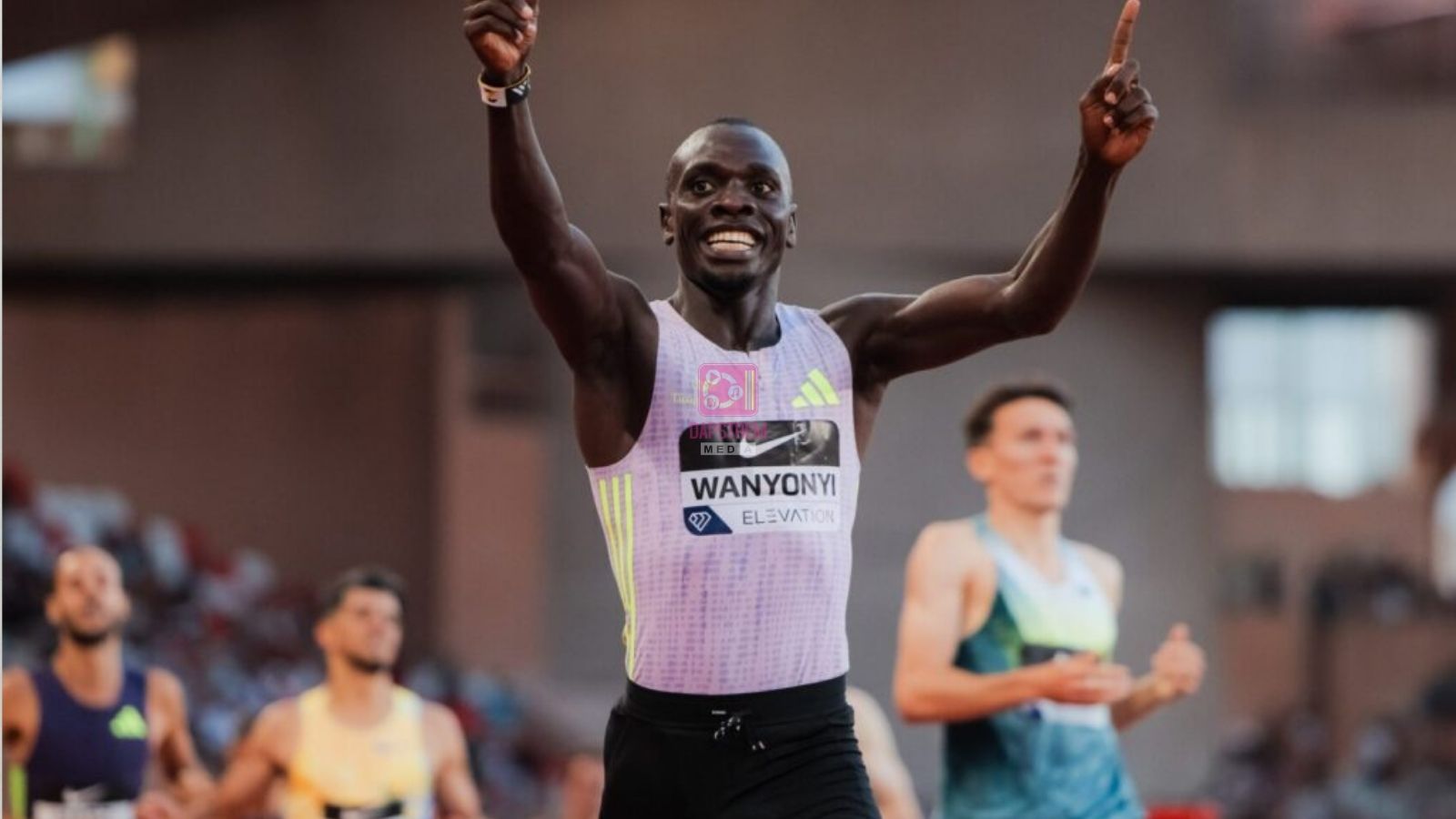
Kenyan middle-distance star Emmanuel Wanyonyi has received official confirmation of one of the most remarkable achievements of his rapidly developing career after World Athletics ratified his 2:11.83 performance in the men’s 1000m as a world record.
The record, set at the Wanda Diamond League meeting in Monaco on July 10, 2026, had already captured worldwide attention when Wanyonyi produced a stunning run in his first competitive appearance over the distance. The subsequent ratification by World Athletics now places the performance firmly in the official record books and gives another historic milestone to a Kenyan athlete who has quickly established himself among the leading middle-distance runners in the world.
Wanyonyi’s achievement is particularly significant because of the history behind the record. Before his Monaco performance, the men’s 1000m world record had stood at 2:11.96, set by fellow Kenyan Noah Ngeny in Rieti, Italy, on September 5, 1999. For more than two and a half decades, no athlete had managed to improve that mark. Wanyonyi finally broke the barrier, lowering the record by 0.13 seconds and bringing another prestigious middle-distance world record back to Kenya.
What makes the achievement even more remarkable is that Wanyonyi had never previously competed in a 1000m race at that level. The 22-year-old Olympic and world 800m champion stepped into unfamiliar territory in Monaco and produced a performance that immediately placed him in the history books.
The race was carefully paced from the opening stages. Wanyonyi followed the pacemakers through the early part of the race, reaching the 400m mark in 50.95 seconds before the second pacemaker took the field through 800m in 1:45.11. From there, Wanyonyi took responsibility for the race himself and launched the decisive final section.
Rather than simply holding on for victory, the Kenyan accelerated towards the finish with Britain’s Jake Wightman pushing him hard. Wanyonyi maintained his composure under pressure and crossed the line in 2:11.83, producing the fastest 1000m ever recorded under the rules governing the world record.
Wightman finished second in 2:12.77, while Algeria’s Djamel Sedjati was third in 2:13.94. The strength of the field was underlined by the fact that the top six athletes all finished inside 2:15, making the race one of the strongest 1000m contests in recent years.
For Wanyonyi, however, the most important number was 2:11.83.
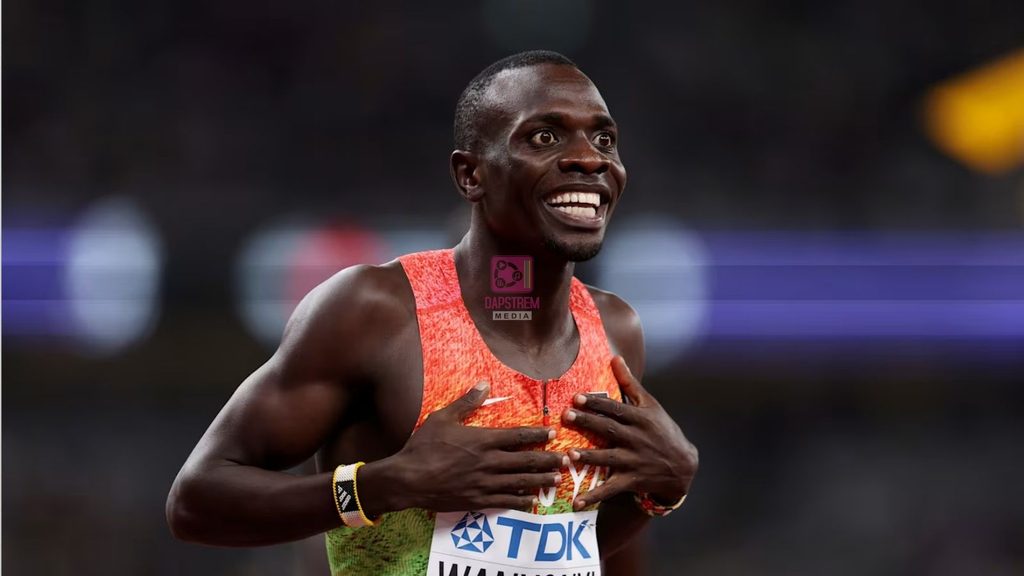
That figure represented more than just a victory. It represented the end of one of the longest-standing men’s middle-distance world records and the beginning of a new chapter in the event.
Wanyonyi’s run also added another fascinating chapter to Kenya’s extraordinary history in middle-distance athletics. Noah Ngeny’s 2:11.96 had remained untouched since 1999, surviving the careers of generations of elite runners. Ngeny had established the mark at the height of his career, and it became one of the most enduring records in Kenyan athletics.
For 26 years, it appeared almost untouchable.
Wanyonyi has now changed that.
The fact that one Kenyan has broken another Kenyan’s long-standing record adds a unique dimension to the achievement. It means Kenya continues to dominate the history of the men’s 1000m, with the country’s name attached to the world record across two different generations.
The achievement is also another demonstration of Wanyonyi’s extraordinary versatility.
The Kenyan has built his reputation primarily around the 800m, an event requiring a rare combination of speed, endurance, tactical intelligence and the ability to maintain an extremely fast pace over two laps. His success in the 1000m suggests that his capabilities extend well beyond his specialist distance.
The additional 200 metres may appear small on paper, but the difference between an 800m and 1000m race is significant at elite level.
An athlete must manage energy differently, tolerate fatigue for longer and maintain speed deep into the final stages of the race. Wanyonyi’s ability to step up to the longer distance and immediately break a world record demonstrates the depth of his conditioning.
His 1000m performance therefore offers another indication of just how much potential remains in his career.
Wanyonyi has already achieved what many athletes spend their entire careers chasing. He has won Olympic gold, captured a world title and established himself as one of the world’s premier 800m runners. Now he has added a world record at another distance.
World Athletics’ official ratification is particularly important because world records must go through a formal verification process before they become official. The governing body confirmed Wanyonyi’s mark alongside world records set by Uganda’s Jacob Kiplimo and American Ja’Kobe Tharp earlier in the year.
The ratification removes any remaining uncertainty surrounding the Monaco performance.
It means that 2:11.83 is now officially recognised as the men’s 1000m world record.
For Wanyonyi, the timing of the announcement also provides an additional boost as the athletics season reaches another important stage. The confirmation comes ahead of the Diamond League final in Brussels, giving the Kenyan another reason to approach the end of the season with confidence.
The record could also change how athletes and coaches view Wanyonyi’s future.
For several years, his development has centred heavily on the 800m. His ability to run an exceptional 1000m opens the possibility of competing more regularly over longer middle-distance events.
The 1500m is another event in which he has already demonstrated potential.
Wanyonyi has previously competed successfully over 1500m, showing that his speed can translate to longer distances. His ability to produce a world-record performance over 1000m could therefore become another stepping stone as he considers the direction of his career.
There is, of course, no immediate need for him to abandon the 800m.
The event remains the distance where he has achieved his greatest success, and his speed over two laps remains one of his biggest strengths.
But having the option to move between events gives him tactical and competitive flexibility.
It also adds another dimension to his rivalry with other leading middle-distance runners.
The 1000m world record performance demonstrated that Wanyonyi can survive a fast opening pace and still produce an explosive finish. His 1:45.11 passage through 800m during the Monaco race was already exceptionally quick, yet he was able to continue pushing over the final 200 metres.
That ability could prove valuable in major championship races, where athletes often face unpredictable pacing and tactical battles.
Wanyonyi’s journey to the top of athletics has also been remarkably rapid.
He emerged as one of Kenya’s most promising young middle-distance runners before making his breakthrough at the global level. His victory at the 2021 World Under-20 Championships signalled the arrival of a major talent, and he continued progressing through the senior ranks.
He later became a major contender in the 800m, finishing second at the 2023 World Championships before reaching the highest level of the sport.
His development has been characterised by an unusual combination of youth and maturity.
Despite his relatively young age, Wanyonyi has already competed against and defeated some of the strongest middle-distance athletes in the world.
His racing style has also become one of his trademarks.
Rather than relying solely on a fast finishing kick, he has demonstrated the ability to run aggressively from the front when circumstances require it. In Monaco, that approach was crucial.
Once the pacemakers stepped aside, Wanyonyi did not hesitate.
He took control and committed himself to the pace required to break Ngeny’s record.
That decision carried considerable risk.
The 1000m is long enough for an athlete to suffer badly from going too fast, particularly during the final stages. Wanyonyi nevertheless maintained his rhythm and held off Wightman’s challenge to achieve one of the biggest performances of the athletics season.
The victory also provided a reminder of Kenya’s enduring influence on middle-distance running.
For decades, Kenyan athletes have dominated events ranging from the 800m through the 1500m and beyond. Athletes such as Kipchoge Keino, David Rudisha, Noah Ngeny and numerous others have established a tradition of excellence that continues to inspire younger generations.
Wanyonyi is now becoming one of the leading figures of that new generation.
His world record is particularly symbolic because of its connection to Ngeny.
When Ngeny ran 2:11.96 in 1999, he set a mark that many observers expected to remain competitive for years. The record survived into a new era of athletics, through changes in training methods, competition schedules and generations of runners.
Now another Kenyan has taken it down.
Wanyonyi’s 2:11.83 may therefore be remembered not simply as a world record but as a bridge between two eras of Kenyan middle-distance running.
The record also demonstrates how competitive modern athletics has become.
Breaking a world record by just 0.13 seconds may sound like a small improvement, but at elite level it represents an enormous achievement. The difference between victory and defeat can be measured in hundredths of a second, particularly in middle-distance races where athletes are operating close to their physical limits.
Wanyonyi’s margin over Ngeny’s mark is therefore significant.
He had to maintain an extraordinary pace from start to finish and produce a powerful final section to achieve it.
His performance has also created renewed excitement among Kenyan athletics fans.
Kenya has traditionally celebrated major distance-running achievements, and Wanyonyi’s record gives supporters another reason to follow his career closely.
It also provides motivation for young athletes who see a Kenyan athlete competing successfully across different distances.
The record could have a wider impact on Kenya’s athletics development as well.
Young runners may be encouraged to develop both speed and endurance instead of specialising too early in their careers.
Wanyonyi’s example shows that an athlete who excels at 800m can potentially compete successfully at 1000m and 1500m if properly trained.
His success could therefore influence future generations of Kenyan middle-distance runners.
The official recognition from World Athletics also ensures that the achievement will be permanently recorded in the sport’s history.
World records are among the most prestigious achievements available to an athlete because they provide a benchmark against which future generations will be measured.
Every time another athlete competes in the men’s 1000m, Wanyonyi’s 2:11.83 will be the time they must chase.
And given the history of the event, it may not be easy to beat.
Ngeny’s record lasted nearly 27 years.
Wanyonyi’s challenge will now be to establish his own mark as another long-lasting standard.
Whether it remains in place for decades or is eventually surpassed, its significance is already secure.
For Wanyonyi, the Monaco performance was a powerful statement of his current abilities.
He entered an unfamiliar event, faced an elite field and produced a world record on his debut.
Now that World Athletics has officially ratified the mark, there can be no doubt about its place in the record books.
The achievement also strengthens Wanyonyi’s reputation as one of the most versatile and exciting middle-distance athletes of his generation.
From the 800m to the 1000m and potentially beyond, the Kenyan continues to demonstrate that his limits may be considerably higher than previously imagined.
As he prepares for the next challenges of the season, the pressure will naturally increase.
Opponents will study his races more closely, while fans will expect more historic performances.
But Wanyonyi’s latest achievement suggests that he is comfortable with that pressure.
His world-record run in Monaco showed confidence, courage and exceptional physical preparation.
Most importantly, it showed an athlete willing to step outside his comfort zone and take on a challenge few expected him to conquer so quickly.
The official ratification now gives that performance the recognition it deserves.
Emmanuel Wanyonyi is officially the men’s 1000m world-record holder, with his 2:11.83 standing as a new benchmark for one of athletics’ most demanding middle-distance events. His achievement ends Noah Ngeny’s remarkable 1999 record reign and adds another world-record chapter to Kenya’s proud athletics history.
For Kenyan athletics, it is another moment of pride.
For Wanyonyi, it could be the beginning of an even bigger chapter.