
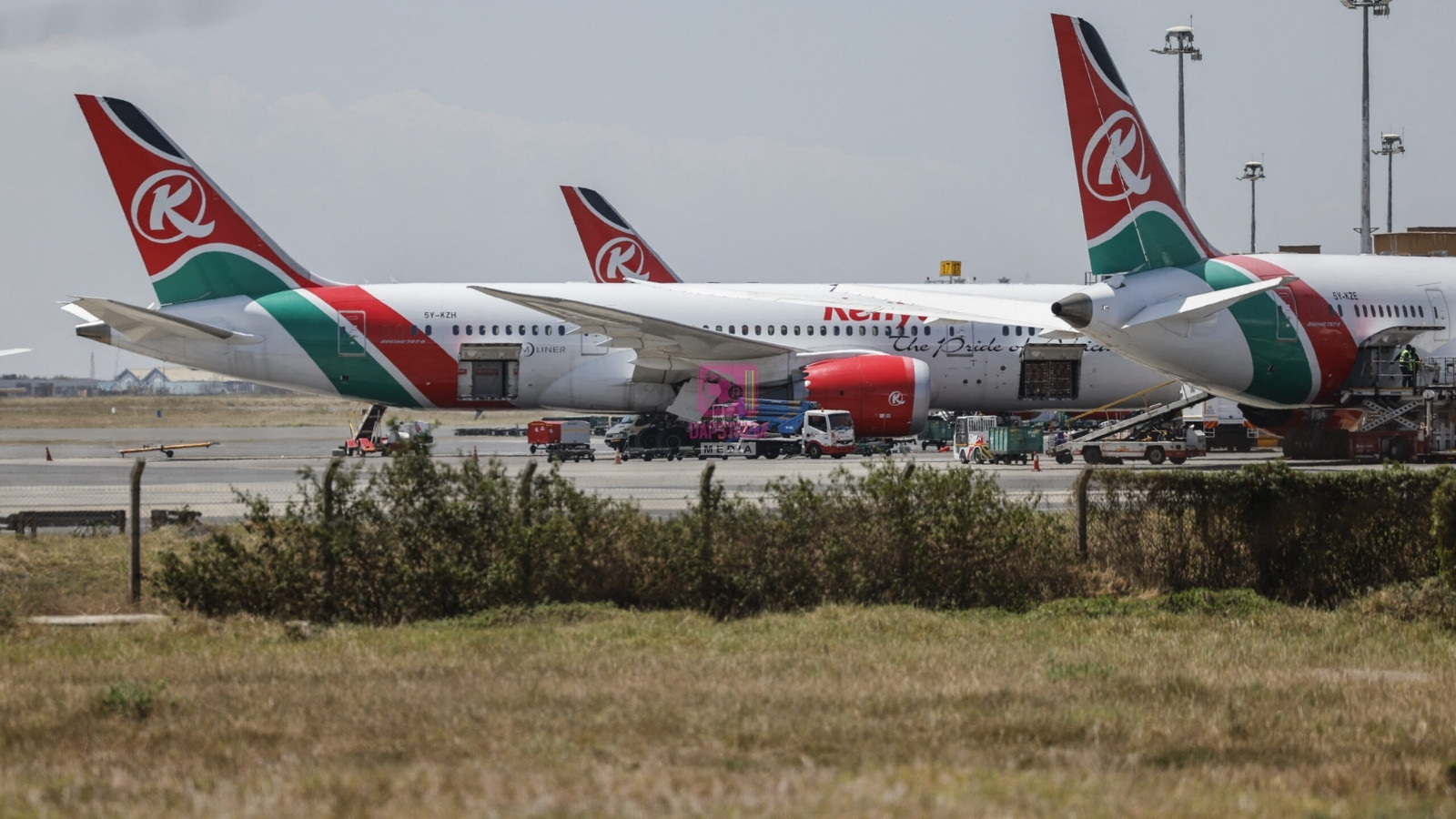
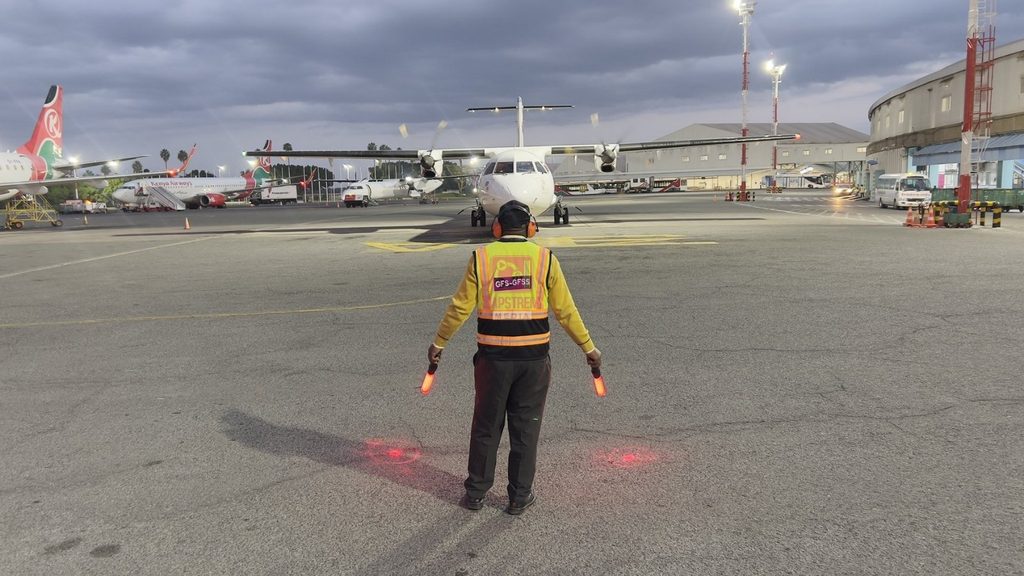
Kenya’s aviation sector remained under pressure on Monday as a go-slow by aviation workers entered its second day, leaving hundreds of passengers stranded, flights delayed and some services diverted at the country’s major airports.
The industrial action, led by the Kenya Aviation Workers Union (KAWU), began on Sunday, August 30, after efforts to resolve long-running labour disputes failed to produce a lasting agreement. The disruption has been most visible at Jomo Kenyatta International Airport (JKIA) in Nairobi, Kenya’s principal international aviation hub, with passengers reporting hours of uncertainty over departures and cancellations.
Talks fail to break the deadlock
Negotiations between the workers and government representatives continued as the strike entered its second day, but no breakthrough had been announced.
KAWU Secretary-General Moss Ndiema said discussions held with government officials on Sunday had failed to resolve the dispute. The union and government were expected to resume talks on Monday, but the industrial action remained in force while negotiations continued.
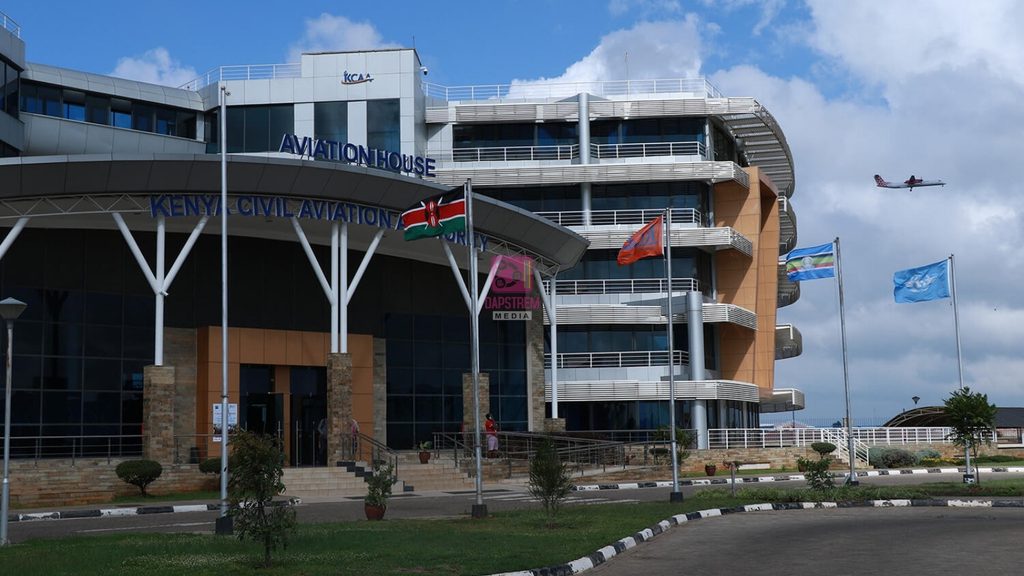
The dispute centres on several grievances, including the failure to conclude a collective bargaining agreement with the Kenya Civil Aviation Authority (KCAA), concerns over cooperation from the Kenya Airports Authority (KAA), and issues involving Jambojet, a subsidiary of Kenya Airways.
The workers are also demanding that commitments made during earlier negotiations be implemented, including outstanding employment benefits and improvements in working conditions.
The latest strike follows a framework agreement reached in July that temporarily suspended an earlier strike threat. According to reports, the July 27 agreement provided a 30-day period for the parties to negotiate their respective disputes, but KAWU says the commitments did not adequately resolve the workers’ concerns.
Passengers bear the brunt
For travellers, the dispute has quickly become a test of patience.
Passengers at JKIA spent hours waiting for information about their flights, with some spending the night inside airport terminals after services were delayed or cancelled. The Standard reported that airlines had begun arranging hotel accommodation for some affected travellers by Monday morning.
Reuters reported that some passengers had been waiting for more than 12 hours. One traveller said his flight was repeatedly postponed before eventually being cancelled, with the earliest replacement flight offered for the following night.
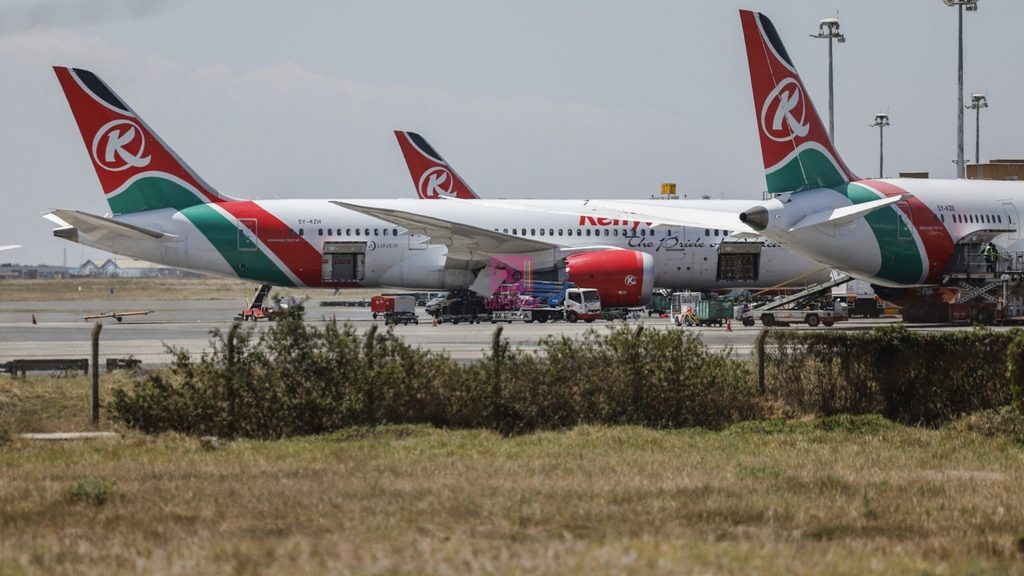
The disruption has also affected passengers outside Kenya. RwandAir said it had cancelled two flights because of what it described as air-traffic-control challenges at Nairobi airport.
The Kenya Civil Aviation Authority has confirmed that delays and diversions were occurring as the industrial action continued. A Monday NOTAM warned that traffic to and from the Nairobi Flight Information Region, including major airports, would be subject to delays because of the go-slow.
Airlines struggle with mounting backlog
The disruption is creating a growing backlog as airlines attempt to manage passengers whose flights have been delayed or cancelled.
Kenya Airways said the strike-related backlog was causing delays of more than six hours, adding to the uncertainty for travellers trying to connect through Nairobi.
The consequences extend beyond passengers. A prolonged disruption at JKIA threatens to affect cargo movements, tourism and businesses that depend on the country’s aviation network.
The airport is a critical regional hub, meaning delays in Nairobi can quickly affect connecting flights across East Africa and international destinations.
The wider dispute
At the heart of the confrontation is a breakdown in trust between aviation workers and the institutions responsible for employing and managing them.
KAWU says workers have outstanding grievances that have not been adequately addressed despite previous negotiations. The union has specifically pointed to the stalled collective bargaining agreement with KCAA and what it describes as a lack of cooperation from KAA and Jambojet.
The workers’ action therefore represents more than a dispute over individual flights. It is the latest escalation in a broader battle over employment conditions, benefits, labour relations and the implementation of agreements already reached.
The July framework agreement had offered hope of avoiding another shutdown. Its failure to produce a lasting settlement has instead brought the aviation sector back to the brink.
The government is now under growing pressure to broker an agreement before the disruption becomes more damaging.
While talks are continuing, KAWU has maintained that the strike will remain in place until the workers’ concerns are addressed. Monday’s negotiations were therefore being closely watched by passengers, airlines and businesses hoping for a rapid return to normal operations.
The Kenya Airports Authority acknowledged on Sunday that some flights were experiencing delays but did not publicly provide detailed reasons. Requests for comment from KAA, KCAA and Jambojet were not immediately answered, according to Reuters.
The timing of the disruption adds to the pressure on Kenya’s aviation industry, which is already facing significant financial challenges.
Kenya Airways, the country’s national carrier, reported a pre-tax loss of 15.92 billion shillings for the first half of 2026, with fuel costs rising sharply. The airline is also seeking new investors as it works through its restructuring and turnaround plans.
Against that backdrop, a prolonged airport disruption could further complicate an already difficult operating environment.
For passengers, however, the immediate concern remains much simpler: getting home, reaching their destinations and knowing when their flights will actually leave.
No clear end in sight
As Monday progressed, there was still no agreement to end the industrial action.
The talks offer the possibility of a resolution, but until the two sides reach an agreement, passengers are being warned to expect continued disruption.
The second day of the strike has therefore brought no clear breakthrough only more delays, stranded travellers and growing pressure on the government, airport authorities, airlines and the workers’ union to find common ground.
For thousands of passengers waiting at JKIA and other airports, the question is no longer simply whether their flight will be delayed. It is whether the negotiations will succeed before the disruption spreads further and turns a two-day industrial dispute into a much longer aviation crisis.
This version is written in a news-feature style, with the latest developments, background to the dispute and the impact on passengers and the wider economy.