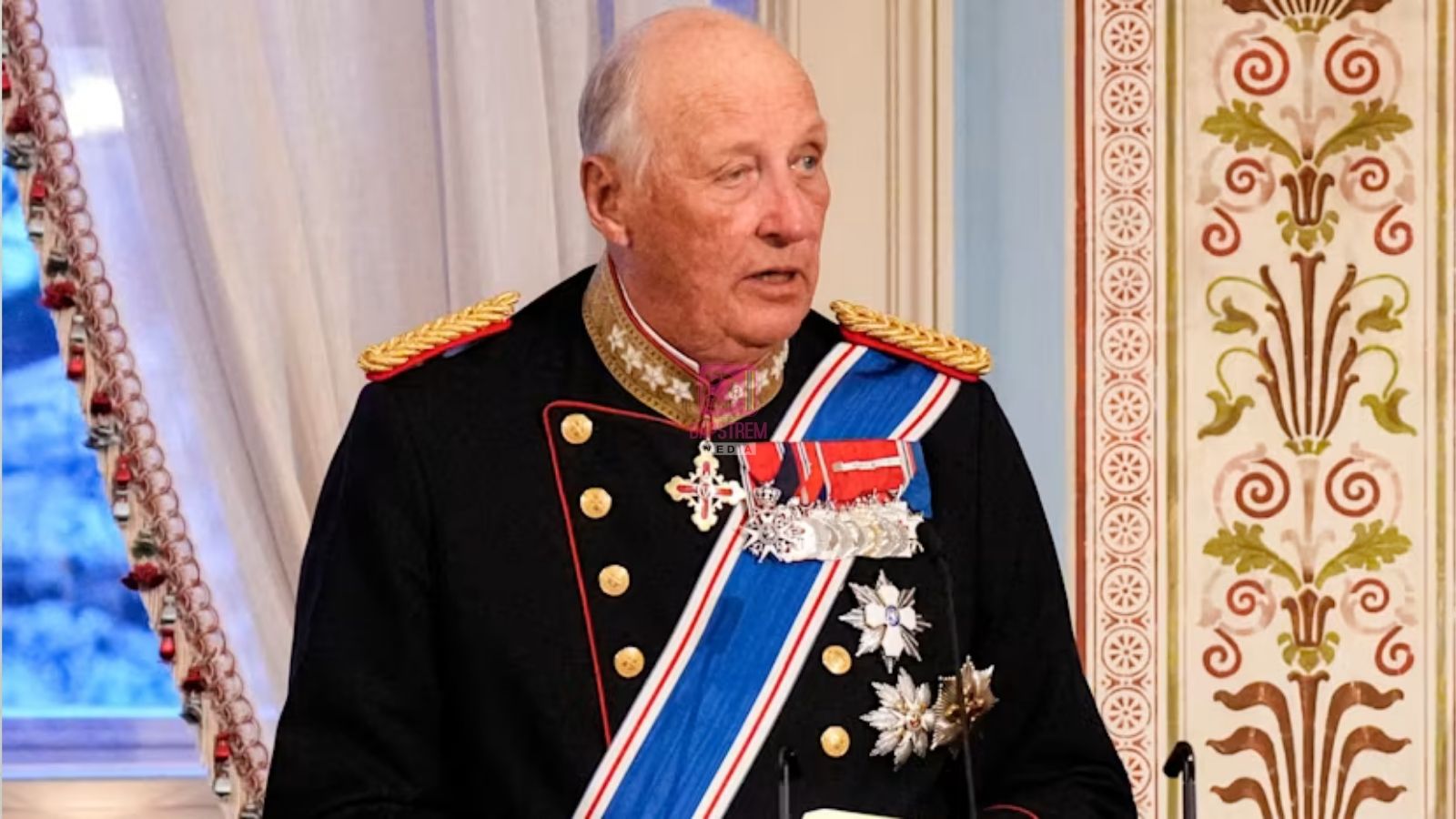
King Harald V Leaves Behind a 35-Year Legacy of Service, Unity and Modernising the Norwegian Monarchy
Norway is mourning the death of King Harald V, who passed away at the age of 89 after spending more than a week receiving treatment at the National Hospital in Oslo. His death on Friday, August 28, 2026, brings an end to a remarkable 35-year reign during which he became one of the country’s most respected and recognisable national figures. The Norwegian Royal House confirmed that the King died peacefully at Oslo University Hospital Rikshospitalet at 6:35 a.m. local time. (Royal Court)
King Harald had been admitted to hospital on August 17 following complications linked to treatment for haemolytic anaemia, a blood disorder. His condition later became more serious after he developed a bacterial infection in his bloodstream. Despite receiving treatment, his health deteriorated in his final days, prompting members of the royal family to gather at his bedside and the Crown Prince to take on the King’s constitutional duties while he remained hospitalised.
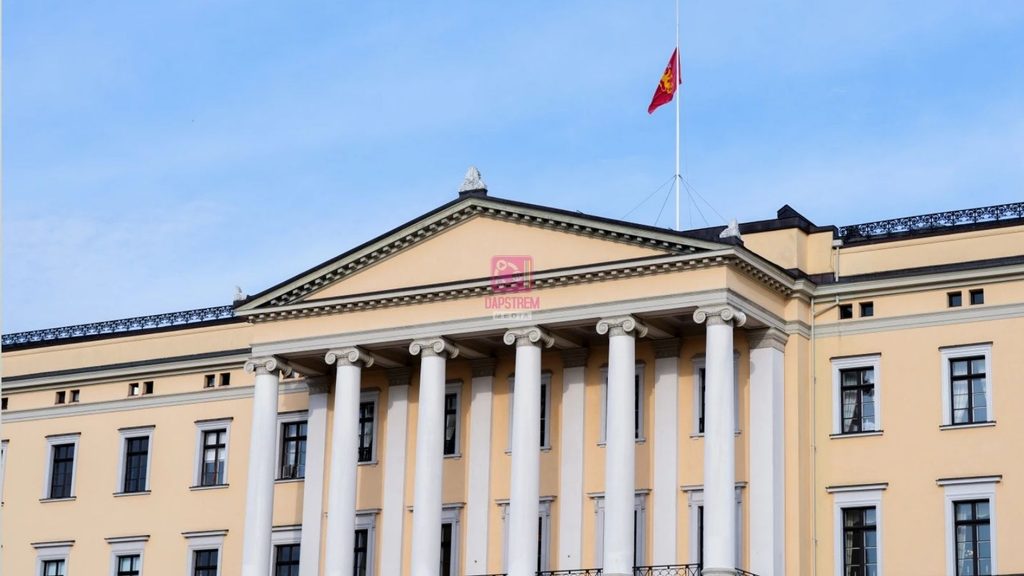
His death marks one of the most significant moments in modern Norwegian royal history. Harald had been on the throne since 1991, succeeding his father, King Olav V, and becoming the country’s ceremonial head of state for more than three decades. He was Europe’s oldest reigning monarch at the time of his death.
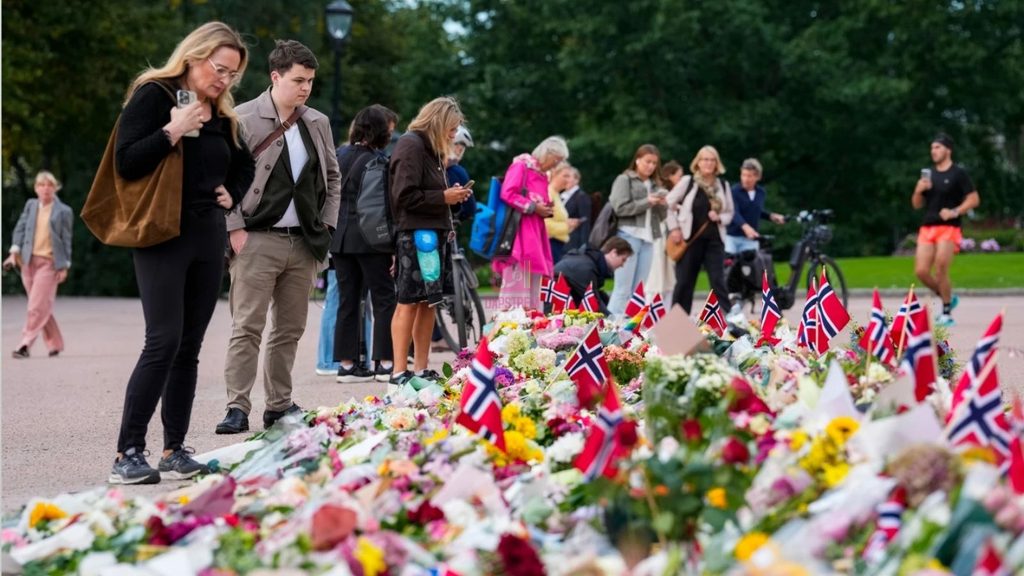
The announcement immediately triggered mourning across Norway, with the royal flag lowered to half-staff and tributes beginning to emerge from political leaders and members of the public. Prime Minister Jonas Gahr Støre described the moment as one of national mourning and expressed gratitude for the King’s long service to Norway.
Harald’s life was deeply connected to Norway’s modern history. Born on February 21, 1937, he was the first Norwegian-born prince in centuries and grew up during one of the most turbulent periods in European history. His childhood was dramatically shaped by the Second World War, when the Norwegian royal family went into exile following Nazi Germany’s invasion of Norway.
Harald and his family eventually spent part of the war in the United States, while his father and grandfather were based in Britain. The experience of growing up during wartime helped shape the future King’s understanding of national identity, public service and the responsibilities of the monarchy.
After returning to Norway, Harald continued his education and eventually prepared for the responsibilities that came with being heir to the throne. He studied subjects including social sciences, history and economics before undertaking military training and beginning a long period of preparation for public service.
One of the most memorable aspects of Harald’s personal life was his relationship with Sonja Haraldsen, a commoner whom he eventually married in 1968. Their relationship had faced opposition because royal tradition had historically discouraged heirs to the throne from marrying commoners.
Harald and Sonja had reportedly maintained a long relationship before receiving permission to marry, and their eventual wedding became an important moment in the modernisation of the Norwegian monarchy. The couple went on to have two children, Crown Prince Haakon and Princess Märtha Louise.
Their marriage also helped reinforce Harald’s reputation as a monarch willing to challenge some of the more rigid traditions associated with royal life.
When Harald became King following the death of King Olav V in January 1991, he inherited a monarchy that was already well established but faced the continuing challenge of remaining relevant in a modern democratic society.
Over the next 35 years, Harald became known for maintaining a relatively modest and approachable image. Rather than presenting himself as a distant figure above society, he often emphasised that the monarchy existed to serve the Norwegian people.
His speeches frequently focused on inclusion, tolerance and the idea that Norway belonged to people from different backgrounds. In a widely remembered speech marking his 25th anniversary on the throne, Harald spoke about Norwegians with immigrant backgrounds and different sexual orientations, reinforcing his reputation as a monarch who sought to embrace a changing Norwegian society.
His leadership became particularly visible during moments of national tragedy.
Following the devastating terrorist attacks of July 2011, when Norway experienced one of the country’s worst acts of violence in modern history, Harald became a symbol of national unity. His public response emphasised compassion and solidarity rather than division, helping reassure a traumatised nation.
That ability to provide a sense of continuity during difficult moments became one of the defining characteristics of his reign.
Harald also played a symbolic role during the coronavirus pandemic and other national crises, maintaining the traditional role of the monarchy as a source of stability while allowing Norway’s elected government to lead on political matters.
Although the Norwegian monarch does not govern the country in the manner of an executive president or prime minister, the position carries considerable symbolic importance. The King represents the Norwegian state, performs constitutional duties and serves as a unifying figure above party politics.
Harald embraced that role for more than three decades.
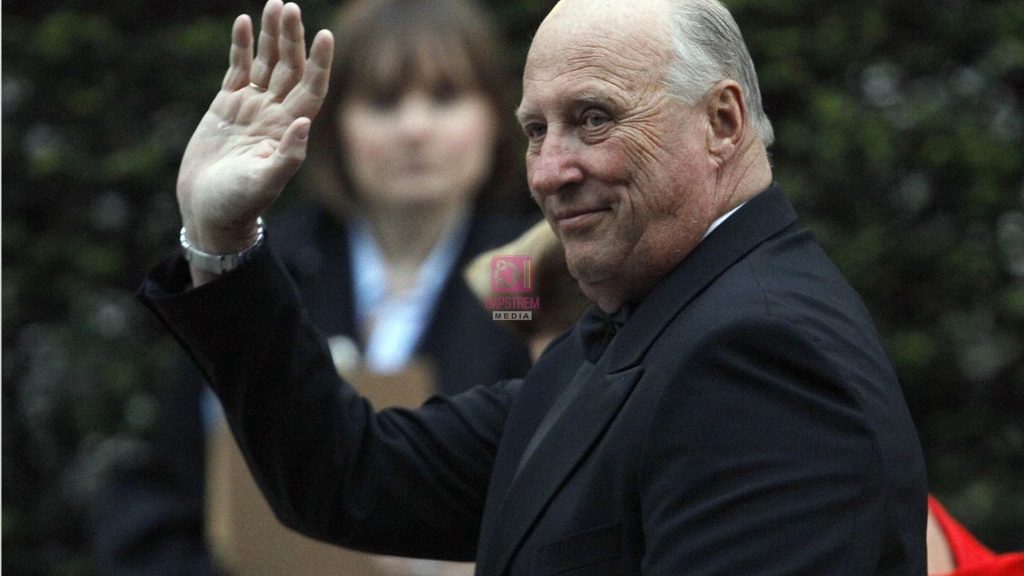
His popularity was also helped by his interests outside formal royal duties. He was a passionate sailor and represented Norway at three Olympic Games in sailing. His connection to the sport became an important part of his public identity, earning him a reputation as an athletic and competitive royal.
Even after becoming King, he continued to maintain an interest in sailing and remained associated with sporting activities.
Environmental issues were another area that interested Harald. He participated in environmental initiatives and visited parts of the world to highlight the importance of protecting nature. His interest in the environment reflected a broader change in the responsibilities of modern monarchs, who increasingly use their public platforms to draw attention to social and environmental issues.
His long reign was not without difficulties.
In his later years, Harald experienced a series of health problems that increasingly affected his ability to carry out royal duties. He underwent treatment for bladder cancer in 2003 and later required surgery for aortic stenosis. In 2020, he underwent heart-valve surgery. He was also hospitalised several times in subsequent years because of infections and other health complications.
His health became an increasingly important issue for the Norwegian royal family, particularly as he grew older.
In 2024, while on holiday in Malaysia, Harald was hospitalised after experiencing health problems and received a temporary pacemaker because of a low heart rate. He was subsequently flown back to Norway for further treatment.
Despite his health challenges, Harald repeatedly made it clear that he had no intention of voluntarily abandoning the throne.
He regarded his role as a lifelong responsibility.
That commitment became particularly visible during his final years, when he continued undertaking official duties whenever his health permitted. As his workload was reduced, Crown Prince Haakon increasingly represented him at official events and eventually acted as regent during periods when the King was unable to fulfil his responsibilities.
The latest health crisis began earlier this month when Harald was admitted to the National Hospital in Oslo. He had been receiving treatment related to haemolytic anaemia before developing a serious bacterial infection in his bloodstream. His condition initially appeared to stabilise following treatment but later deteriorated.
The worsening condition brought members of the royal family together.
Queen Sonja and Crown Prince Haakon cancelled planned engagements, while other members of the family visited the hospital. Crown Prince Haakon had already been serving as regent during his father’s illness.
The King’s death now brings a constitutional transition.
His son, Crown Prince Haakon, succeeds him as monarch and becomes King of Norway. The transition means that a new generation takes responsibility for the Norwegian crown after more than three decades of Harald’s leadership.
Haakon has spent decades preparing for the role and has frequently represented his father at official events. His experience as regent during Harald’s periods of illness has also provided him with an opportunity to become familiar with the responsibilities of the monarchy before his accession.
The transition will inevitably bring changes to the Norwegian royal family, but it is expected to preserve the constitutional nature of the monarchy.
For many Norwegians, however, the immediate moment is one of mourning rather than succession.
Harald was not simply a constitutional figure. To generations of Norwegians, he was the only King they had known throughout much of their adult lives. His 35-year reign covered a period of significant change in Norwegian society, from the early 1990s through a digital and social transformation that reshaped the country.
He witnessed major economic growth, technological change, demographic shifts and debates about the future of the monarchy.
Norway also became increasingly prominent internationally during his reign, benefiting from its energy resources while expanding its role in international diplomacy, humanitarian efforts and environmental discussions.
Through all these changes, Harald remained a constant presence.
His approach to monarchy was often described as modern and reform-minded. He maintained traditional ceremonies and constitutional responsibilities while also seeking to make the royal institution more relatable to ordinary citizens.
That balance may ultimately become one of the most important parts of his legacy.
His reign also demonstrated how constitutional monarchies have evolved. In Norway, the King does not exercise political power in the conventional sense. Instead, his influence comes largely through symbolism, tradition, public appearances and the ability to represent the nation during important occasions.
Harald understood that distinction.
He generally avoided political confrontation and instead used his position to emphasise values such as unity, tolerance and national solidarity.
His death therefore represents not only the passing of an individual monarch but the closing of a significant chapter in Norway’s contemporary history.
For Queen Sonja, the loss is also deeply personal. The couple had been married for nearly 58 years, having overcome the traditional barriers that initially stood between their relationship and the throne.
Their story became one of the defining personal narratives of Harald’s life and helped humanise the royal family in the eyes of many Norwegians.
Their children, Crown Prince Haakon and Princess Märtha Louise, now face the difficult task of mourning their father while continuing to support the monarchy through a period of transition.
The royal family’s recent years have not been entirely free of controversy, and the institution has faced scrutiny over several issues involving younger members. Those challenges have occasionally affected public discussions about the future of the monarchy.
Yet Harald himself remained a relatively stable figure throughout those debates.
His personal popularity and long record of public service helped maintain significant support for the institution even when individual members of the royal family attracted criticism.
As Norway prepares to bid farewell to its King, attention will now turn to the ceremonies surrounding his death, the formal accession of King Haakon VIII and the future direction of the Norwegian monarchy.
But beyond the ceremonies and constitutional procedures, Harald leaves behind a legacy built around decades of service.
He was a wartime child who became a national leader, an Olympic sailor who became one of Europe’s longest-serving monarchs, and a traditional royal who helped guide the Norwegian monarchy into a more modern era.
His life also demonstrated the changing nature of royal service.
For much of his reign, Harald repeatedly faced the challenge of balancing tradition with a society that was becoming more diverse and socially progressive. His response was largely to embrace the idea that the monarchy should reflect the people it represented.
That approach helped him maintain a strong connection with the public.
King Harald V’s death at 89 now closes a 35-year chapter in Norway’s history. His final days were spent in hospital receiving treatment for serious health complications, surrounded by a family that had supported him throughout a lifetime of public service.
For Norway, the mourning will continue as the country prepares to honour a monarch remembered for his humility, national unity, sporting passion and commitment to public service.
For the Norwegian royal family, the loss marks the end of an era and the beginning of another.
And for King Haakon VIII, the responsibility of carrying the Norwegian crown into its next chapter has now begun.