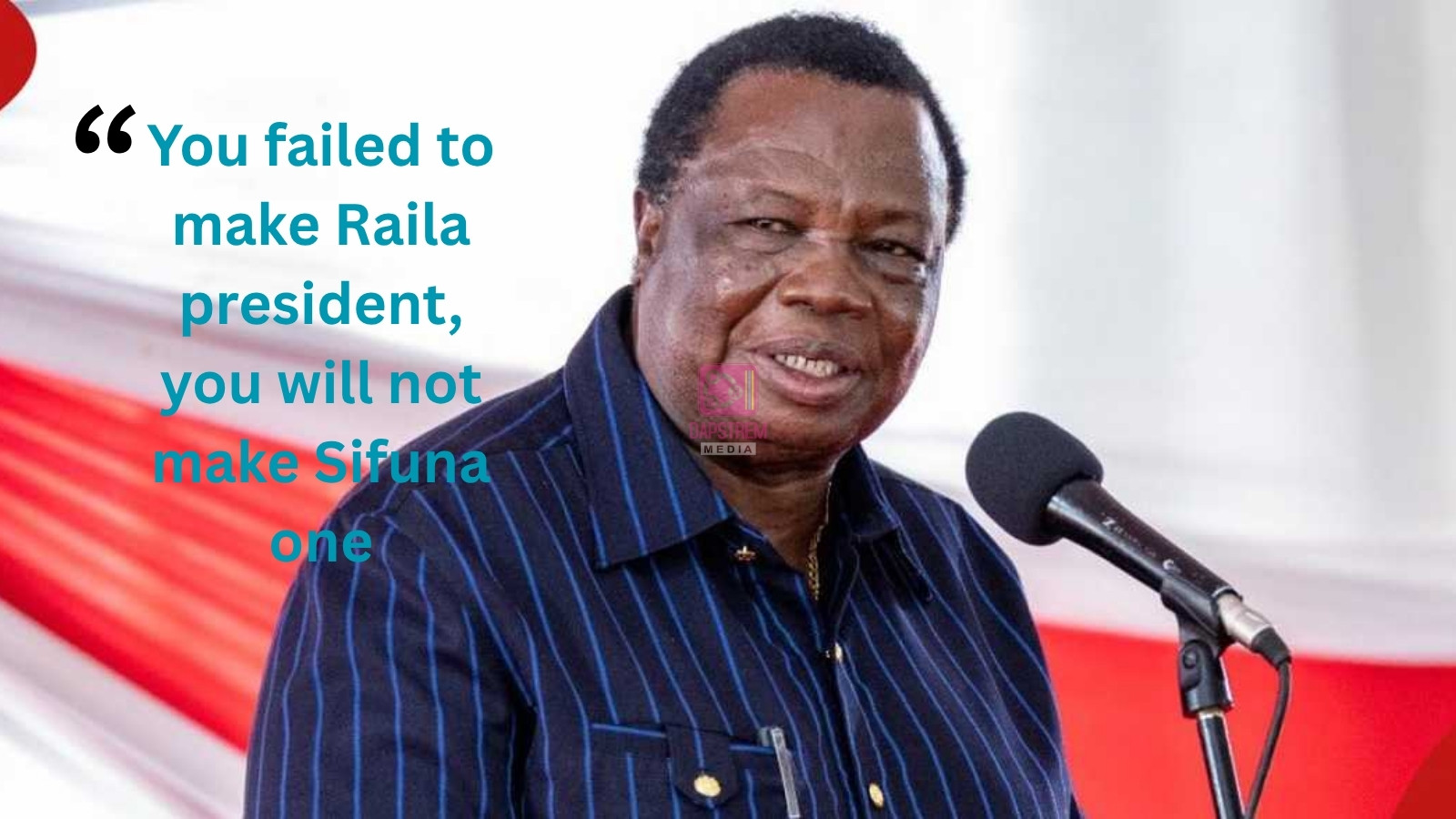
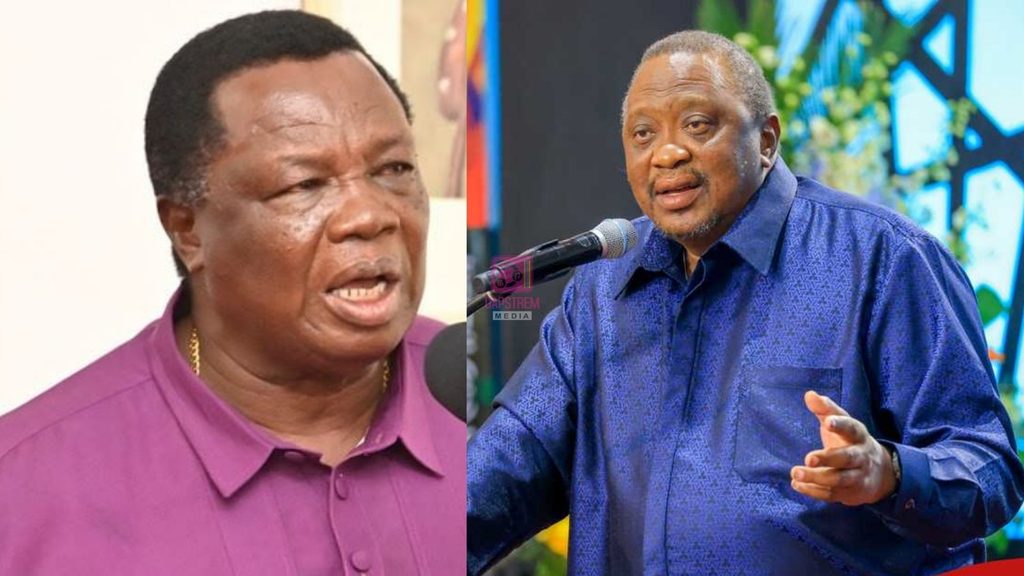
Central Organisation of Trade Unions (COTU) Secretary-General Francis Atwoli has reignited Kenya’s 2027 political contest after accusing retired President Uhuru Kenyatta of attempting to use Nairobi Senator Edwin Sifuna to divide the Western Kenya vote.
Speaking in Khwisero, Kakamega County, during an inspection tour of a Level Four hospital under construction, Atwoli questioned Uhuru’s alleged influence over Sifuna’s emerging presidential campaign and warned residents of what he described as an attempt to fragment the Mulembe political bloc.
Atwoli drew a direct comparison with the 2022 presidential election, arguing that Uhuru had previously failed to deliver victory for then-Azimio presidential candidate Raila Odinga and would therefore be unable to propel Sifuna to State House in 2027.
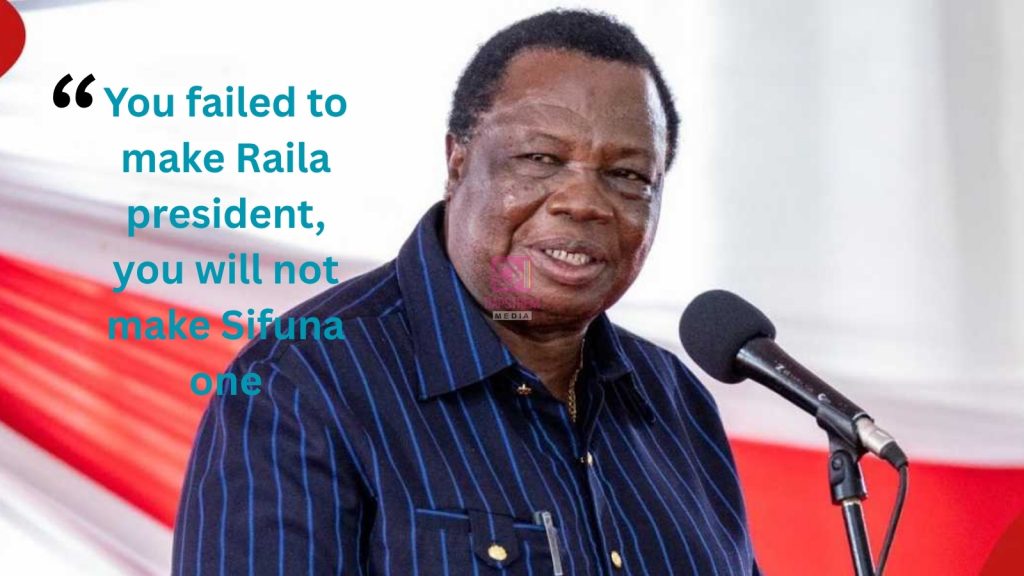
“He just wants to use him to divide you. I urge you to remain vigilant.”
Atwoli also alleged that Uhuru had promised to provide Sh400 million to finance Azimio’s election agents in 2022 but failed to honour the commitment.
The COTU boss said the experience should make Western Kenya voters wary of political alliances built around outside sponsorship rather than the interests of the region.
The 2022 election that still fuels the debate
Atwoli’s remarks revive a long-running debate over the role Uhuru played in the 2022 election.
Uhuru had endorsed Raila, his former political rival, after the two entered the 2018 “handshake” that brought an end to their bitter post-election confrontation. The former president subsequently backed Raila’s Azimio la Umoja campaign against William Ruto.
Raila nevertheless lost the election narrowly.
According to the Supreme Court’s record of the 2022 presidential results, Ruto was declared president-elect after securing 7,176,141 votes, representing 50.49 per cent, against Raila’s 6,942,930 votes, or 48.85 per cent. The Supreme Court subsequently dismissed the petitions challenging the result.
The margin was less than 234,000 votes, making the election one of the closest presidential contests in Kenya’s history.
Atwoli now argues that Uhuru’s failure to deliver a Raila presidency undermines any attempt to portray him as the political force capable of making Sifuna president.
His claims about the alleged Sh400 million commitment, however, are Atwoli’s assertions and were not independently established in the sources reviewed for this report.
Sifuna’s presidential ambitions
The controversy comes as Sifuna’s political profile has grown significantly ahead of the 2027 General Election.
The Nairobi senator has emerged as the leading figure behind the Linda Mwananchi movement, a political platform that has expanded beyond its origins in the fallout within the Orange Democratic Movement (ODM).
In July, Sifuna said he would not reject a presidential bid if Kenyans collectively decided that he should run. He stressed that the decision would ultimately be made through consultations with supporters rather than by him alone.
Earlier, he said the movement would first tour all 47 counties before determining whether it had sufficient national support to field a presidential candidate.
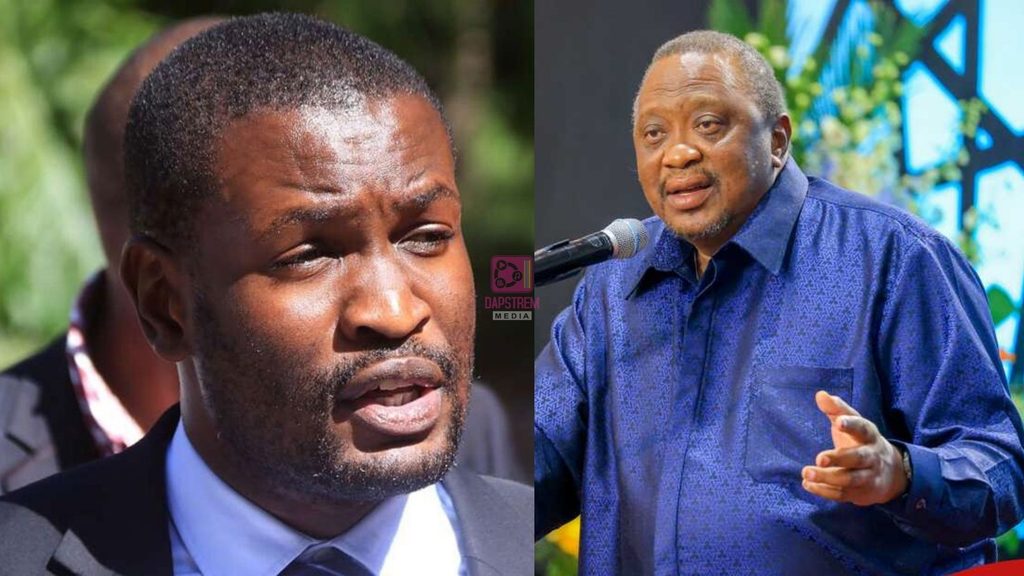
“We want to push our Linda Mwananchi movement until it becomes consequential,” Sifuna said, arguing that the movement must establish a national footprint before deciding on its presidential ticket.
His political allies in Western Kenya have already gone further.
In July, a group of Luhya leaders associated with Linda Mwananchi endorsed Sifuna as their preferred presidential flagbearer for the 2027 election. The leaders also appointed Trans Nzoia Governor George Natembeya as the movement’s spokesperson and tasked him with coordinating Sifuna’s political activities in Western Kenya.
The developments have positioned Sifuna as an increasingly important figure in discussions about the opposition’s 2027 strategy.
Uhuru rejects the sponsor narrative
Atwoli’s accusations come only days after Uhuru publicly rejected suggestions that he was positioning himself as a political sponsor.
Speaking at the annual memorial service for former Vice-President Michael Kijana Wamalwa in Kitale on Sunday, Uhuru said he was not seeking any political position.
He also said Kenyans should be allowed to choose their preferred candidates without politicians attempting to prevent rivals from holding rallies.
“If it is about asking for votes, let us do it in peace. Kenyans know who they want,” Uhuru said, listing several potential contenders, including Sifuna.
His comments amounted to a rejection of speculation that his recent political engagements were part of a plan to return to active politics or sponsor a particular presidential candidate.
Sifuna has also dismissed allegations that Uhuru is bankrolling the opposition.
A new battle for Western Kenya
Atwoli’s latest remarks nevertheless highlight the growing political contest over Western Kenya, a region with a substantial voting population that could play a decisive role in the 2027 presidential election.
The emergence of Sifuna’s Linda Mwananchi movement has complicated efforts by opposition figures to build a single coalition capable of challenging President William Ruto.
Other potential opposition contenders including former Deputy President Rigathi Gachagua, Wiper leader Kalonzo Musyoka and former Cabinet Secretary Fred Matiang’i are also positioning themselves ahead of the election.
Sifuna’s growing support adds another layer to those negotiations. Analysts have noted that the movement could either become an independent political vehicle or play a role in a broader opposition coalition.
For Atwoli, however, the issue is more immediate: whether Western Kenya should rally behind a candidate whose political rise he believes is being encouraged by forces outside the region.
His warning to voters reflects a familiar theme in Kenyan politics control of the regional vote and the influence of political kingmakers.
The battle is only beginning
Atwoli’s attack on Uhuru and Sifuna signals that the contest for Western Kenya is likely to become increasingly intense as the 2027 election approaches.
Sifuna has yet to formally settle the question of whether he will seek the presidency, although his nationwide mobilisation and the growing endorsements around him point towards a serious political ambition.
Uhuru, meanwhile, insists he is not seeking office and has rejected the “sponsor” label.
The sharp exchange leaves voters with competing narratives: Atwoli sees an attempt to divide Western Kenya through Sifuna, while Sifuna’s supporters present the Linda Mwananchi movement as a grassroots political force seeking to challenge the established order.
Ultimately, the ballot box not the influence of former presidents, trade unionists or political kingmakers will determine whether Sifuna can turn his growing movement into a credible national presidential campaign.
For now, Atwoli has made his position unmistakably clear: the political lessons of 2022, in his view, should not be forgotten as Kenya heads towards another fiercely contested election.