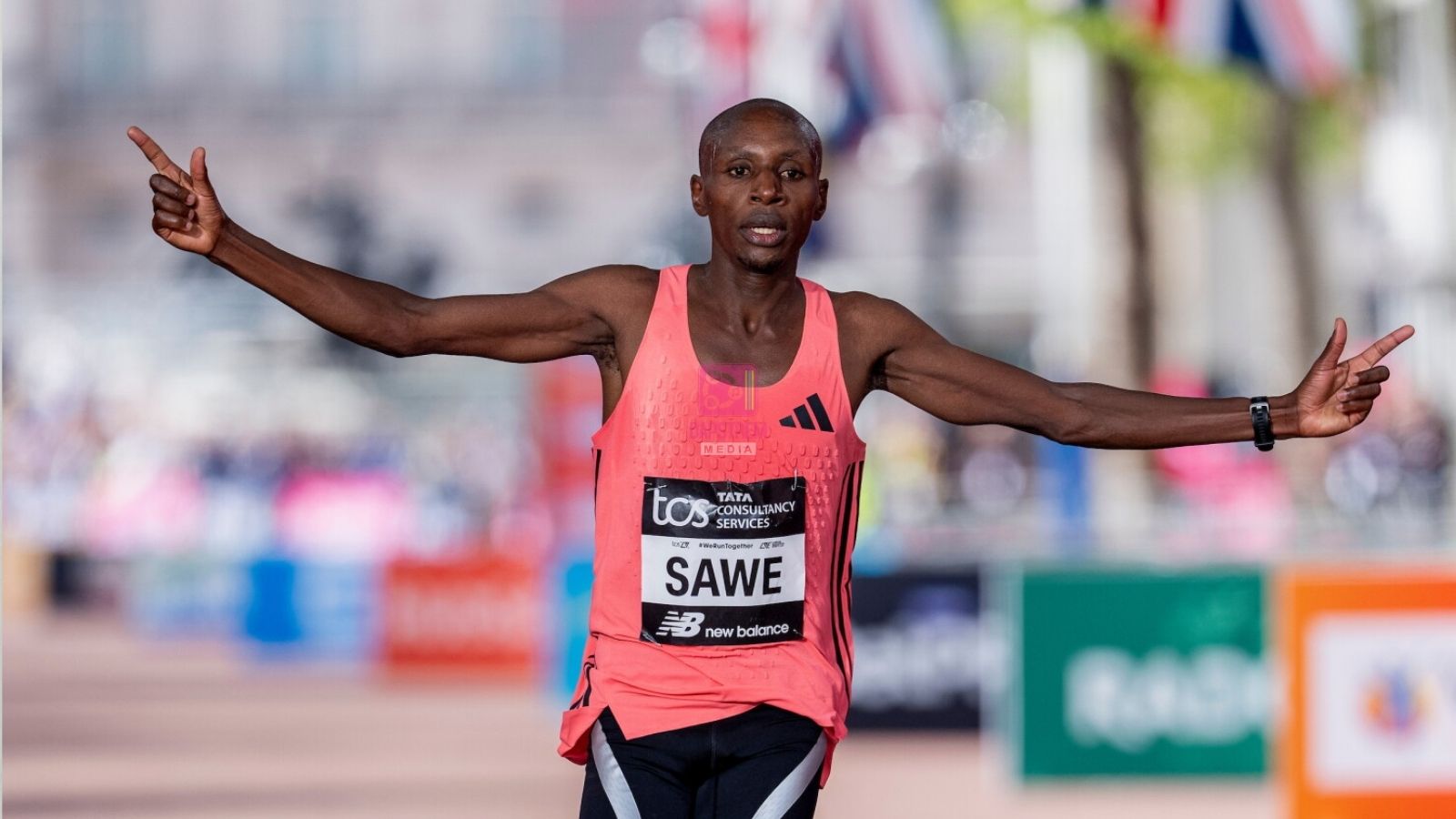
Sebastian Sawe Withdraws From Berlin Marathon as Injury Delays World Record Holder’s Return to Competition
Kenyan marathon star Sabastian Sawe will not defend his Berlin Marathon title this year after an injury forced him to withdraw from the 2026 edition of the prestigious race.
The 31-year-old world record holder confirmed his withdrawal on Thursday, August 27, bringing an unexpected setback to what was expected to be one of the most anticipated returns to competition of the year. The 2026 Berlin Marathon is scheduled for September 27, and Sawe had been expected to make his first competitive appearance since his extraordinary performance at the London Marathon in April.
Sawe announced the decision through a statement shared on social media, expressing his disappointment at being unable to compete on the streets of Berlin. He did not reveal the nature or severity of the injury, but his withdrawal means he will have to wait longer before returning to competitive action following the most remarkable race of his career.
The Kenyan had been looking forward to returning to Berlin, a city that already holds a special place in his rapidly developing marathon career. He won the 2025 Berlin Marathon in 2:02:16, establishing himself as one of the world’s leading marathoners and demonstrating his ability to perform on one of the fastest courses in the sport.
His planned return to Berlin was expected to generate enormous interest because of what happened in London earlier this year.
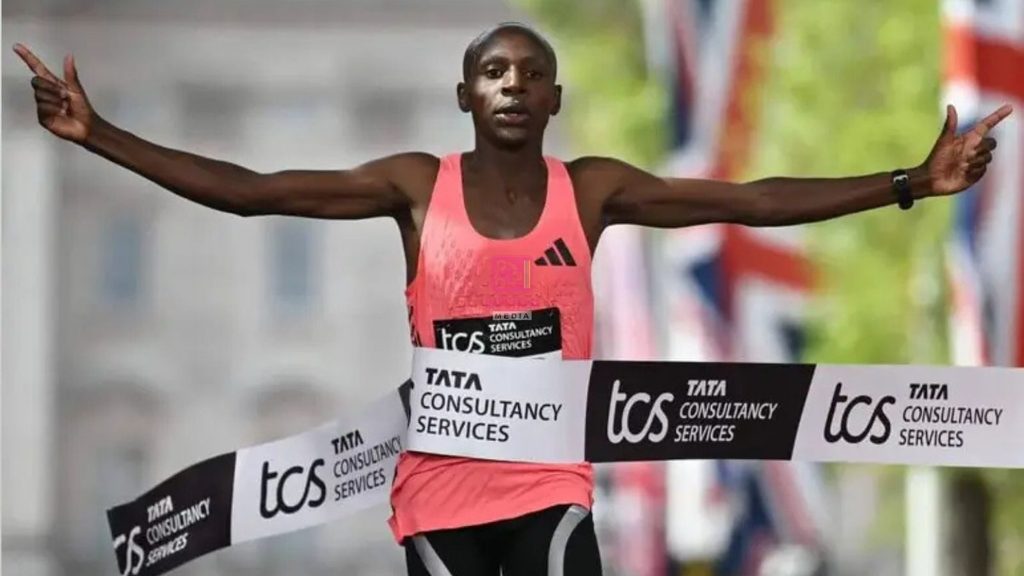
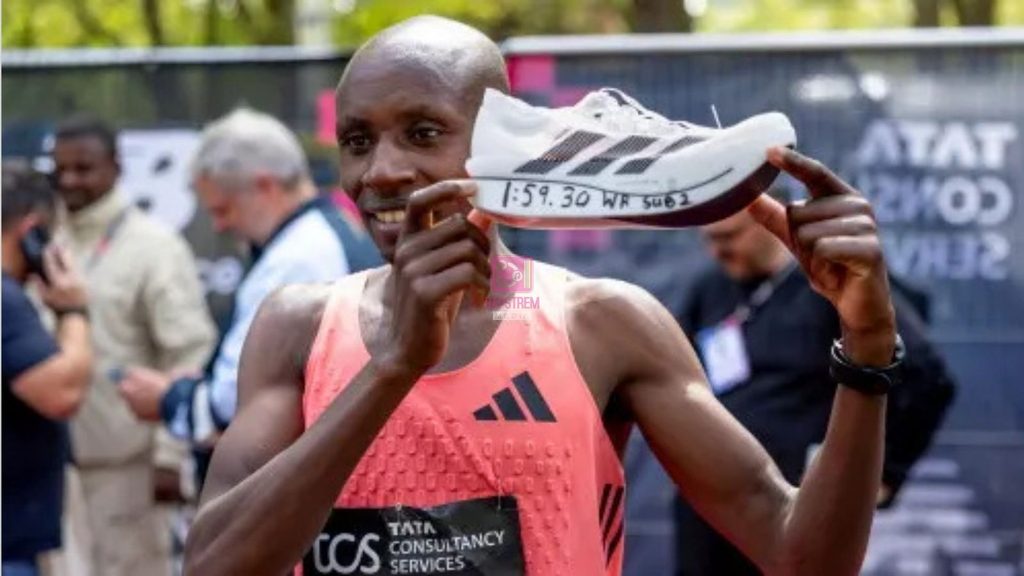
On April 26, Sawe produced a performance that changed marathon history forever. He crossed the finish line of the London Marathon in 1:59:30, becoming the first man to officially complete a marathon in under two hours in a record-eligible competitive race. The performance earned him the men’s world record and transformed him from one of Kenya’s rising marathon stars into one of the most recognisable names in global athletics.
Breaking the two-hour barrier in an official marathon had been regarded for decades as one of the ultimate challenges in distance running.
The significance of Sawe’s achievement goes beyond simply winning a race.
For years, the idea of running 42.195 kilometres in less than two hours had been treated as one of the sport’s great frontiers. Several elite athletes had come close, while controlled exhibition attempts had demonstrated that the barrier might eventually be broken under carefully designed conditions.
Sawe’s 1:59:30 in London was different because it came in an official competitive marathon.
That distinction made the achievement historic.
His performance also demonstrated the extraordinary pace required to sustain a sub-two-hour marathon. To finish in 1:59:30, a runner has to maintain an average pace of roughly 2 minutes and 50 seconds per kilometre for the entire 42.195-kilometre distance.
Maintaining that pace is difficult enough over a few kilometres. Sustaining it from the opening stages of a marathon to the finish requires extraordinary physical conditioning, mental strength, pacing discipline and resilience.
Sawe managed to maintain that level all the way to the finish.
The performance immediately placed him among the most significant marathoners in history and created enormous expectations for his next race.
Berlin was supposed to be that next chapter.
The German capital has long been associated with some of the greatest performances in marathon history because of its fast and relatively flat course. The race has witnessed numerous world records and has become a preferred destination for athletes targeting exceptional times.
For Sawe, Berlin had already proved to be a successful venue.
His victory there in 2025 established his credentials on the course. He ran 2:02:16 despite challenging heat and humidity and, according to reports, continued without a pacemaker from around the 24-kilometre mark.
Returning as the defending champion and world record holder would therefore have created enormous anticipation.
There was also a fascinating storyline surrounding his previous Berlin appearance.
Sawe had been chasing the possibility of becoming the first man to run a marathon under two hours, but he narrowly missed that target in Berlin in 2025.
His subsequent 1:59:30 in London meant that the unfinished business had finally been completed.
The 2026 Berlin Marathon could consequently have offered another opportunity to see just how far he could push the limits.
Instead, injury has interrupted those plans.
For Sawe, the decision to withdraw is likely to be particularly difficult because he had expressed a strong desire to return to Berlin and produce another memorable performance.
In his statement, he said he had been looking forward to achieving something special on the streets of Berlin and crossing the finish line at the Brandenburg Gate. He also acknowledged the support he had received from the race organisers and expressed his wish to give something back to the event.
His withdrawal therefore represents more than simply missing another race.
It means losing the opportunity to defend a title he won last year, compete in front of a major international audience and build on the momentum generated by his historic London performance.
It also means fans will have to wait longer to see the world’s fastest marathoner back on a starting line.
For Kenya, Sawe’s absence is another reminder of how unpredictable elite athletics can be.
Kenya has a long and distinguished history in distance running, producing some of the greatest marathoners the world has ever seen. Sawe’s rise has added another remarkable chapter to that tradition.
His emergence has been particularly impressive because of how quickly he has established himself at the highest level.
He won the Valencia Marathon in 2024 in 2:02:05 before securing major victories in London and Berlin in 2025. He then returned to London in 2026 and produced the performance that changed the sport’s history.
His progression demonstrates the level of consistency required to compete successfully at the world’s biggest marathons.
The injury, however, highlights one of the biggest challenges faced by elite marathoners: balancing training, competition and recovery.
A marathon places enormous demands on the human body.
Elite runners spend months preparing for a major race, completing high volumes of training while carefully managing their nutrition, recovery and workload.
After an extraordinary performance such as Sawe’s London run, the body also needs sufficient time to recover.
The decision to withdraw from Berlin could therefore be viewed as a necessary step to protect his long-term career.
Although fans may be disappointed, attempting to race while injured could potentially make the problem worse and result in a much longer period away from competition.
At 31, Sawe still has potentially several important years ahead of him at the highest level.
Protecting his health could therefore be more important than attempting to defend one marathon title.
The details of his injury have not been disclosed, meaning it would be premature to speculate about when he will return.
What is known is that both Sawe and the Berlin Marathon organisers are looking ahead to his eventual comeback.
The race organisers expressed their disappointment at losing the defending champion but wished him a speedy recovery and indicated that they hoped to welcome him back once he was fit.
His withdrawal will also change the dynamics of the men’s race.
Without the defending champion and current world record holder, other elite runners will have an opportunity to take centre stage.
Tanzania’s Gabriel Geay, whose personal best is 2:03:00, is among the leading names expected to feature prominently in the men’s field. Other contenders will now see the absence of Sawe as an opportunity to fight for one of the biggest prizes on the marathon calendar.
Kenya will still have representation in the race, meaning the country will continue to have athletes capable of competing for a strong result.
But Sawe’s absence will undoubtedly be felt.
Whenever a world record holder withdraws from a major race, attention naturally shifts from who will win to what might have happened if the record holder had been on the starting line.
That question will likely follow the Berlin Marathon throughout the build-up to September 27.
Could Sawe have challenged his own world record?
Could he have produced another historic performance?
Could Berlin have witnessed another major milestone?
Those questions will remain unanswered.
Instead, the marathon will proceed without the man who currently owns the fastest official marathon time in history.
The women’s race, however, is expected to provide its own major storyline.
Ethiopian star Tigst Assefa is expected to headline the women’s field and is targeting another major performance in Berlin. The organisers remain optimistic about the possibility of record-breaking performances despite Sawe’s withdrawal.
This means that while the men’s race has lost its biggest name, the event still has significant global interest.
For Sawe, the immediate priority will be recovery.
The world record he established in London has already secured his place in athletics history.
He does not need to prove that achievement again immediately.
His next challenge will be returning to full fitness and deciding when his body is ready for another marathon.
The pressure surrounding his comeback will undoubtedly be enormous.
Every race he enters from now on will attract attention because he is no longer simply another elite marathoner.
He is the man who broke the two-hour barrier in an official race.
Fans will want to know whether he can approach his 1:59:30 again, whether he can improve on it and how long the record will ultimately stand.
But those questions can wait.
For now, the priority is ensuring that the injury does not become a bigger problem.
Sawe’s withdrawal also highlights an important reality about elite sport: even the world’s best athletes are vulnerable to injury.
The public often sees only the final performance—the medals, records and celebrations—but behind those achievements are years of demanding training and enormous physical pressure.
Marathon running is particularly unforgiving.
An athlete can spend months preparing for a single race, only for an injury to end those plans before they even reach the starting line.
Sawe’s situation is a reminder that athletic careers must be managed carefully, particularly when athletes are competing at extraordinary levels.
His 1:59:30 London performance will remain one of the defining moments of the 2026 athletics season.
It demonstrated that the two-hour barrier, once considered almost unreachable in official marathon competition, could be broken.
But his Berlin withdrawal shows that even historic achievements come with challenges.
The physical demands of reaching that level are immense, and recovery cannot simply be ignored because of the excitement surrounding a major race.
For Kenyan athletics fans, there is every reason to remain optimistic about Sawe’s future.
He has already demonstrated remarkable consistency and resilience, and there is no indication that his career is coming to an end.
The withdrawal from Berlin is a setback, but it does not erase what he achieved in London or the accomplishments that came before it.
Instead, it could provide him with an opportunity to rest, recover and prepare properly for his next challenge.
When he eventually returns, the athletics world will be watching.
The anticipation surrounding his comeback could be almost as great as the excitement that surrounded his record-breaking London performance.
The Berlin Marathon will now move forward without him, leaving other athletes to compete for the title he won last year.
But Sawe’s influence on the event will remain.
His 2025 victory, his 2:02:16 performance and his subsequent world-record run in London have already made him an important figure in the history of the race.
The streets of Berlin will simply have to wait a little longer for his return.
For now, Kenya’s marathon world record holder will watch from the sidelines as competitors take on the course where he was expected to defend his title.
His absence is disappointing for fans and organisers, but the decision to withdraw could ultimately prove important for the longevity of his career.
The biggest victory may not always be the next race.
Sometimes, it is knowing when to step back, allow the body to heal and return when the time is right.
Sawe has already achieved what many believed might never happen in an official marathon.
He ran 1:59:30 in London, crossed the two-hour barrier and rewrote the record books.
Now, the next chapter of his career will depend on recovery, patience and preparation.
The 2026 Berlin Marathon will go ahead on September 27 without its defending champion and world record holder, but Sawe’s name will remain closely connected to the event.
And when he eventually returns to competitive marathon racing, the world will be waiting to see what the man who changed marathon history can do next.