Angela Mulwa Freed on Sh1 Million Bond as Court Orders Passport Surrender in Dr Victoria Mutiso Case
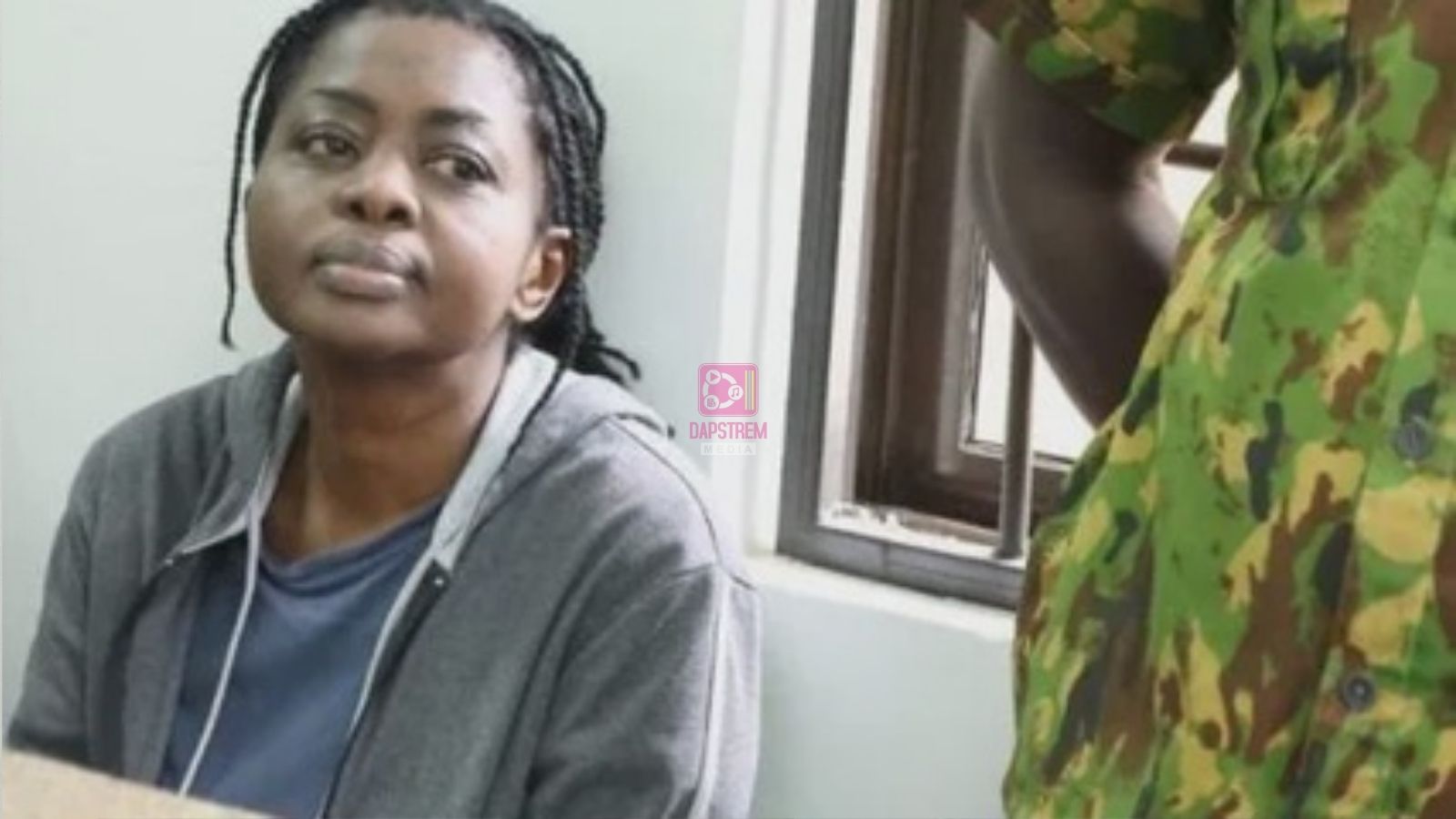
Advocate Angela Mulwa has been released on a Sh1 million bond as investigations continue into the alleged theft of a vehicle linked to the late Dr Victoria Nthunya Mutiso, whose killing has triggered a wide-ranging probe by detectives.
Mulwa’s release marks another significant development in a case that has increasingly drawn attention because of the complex web of alleged property disputes, vehicle theft, land-related claims and the circumstances surrounding Dr Mutiso’s death.
The Mavoko Law Courts have also directed Mulwa to surrender her passport, effectively restricting her ability to leave the country as investigators continue pursuing various leads. The matter will return to court for mention on August 26, 2026, when the progress of investigations is expected to come under scrutiny.
The latest court decision comes after Mulwa had previously been placed in custody to allow the Directorate of Criminal Investigations (DCI) more time to investigate allegations surrounding vehicles reported missing during an earlier dispute involving property associated with Dr Mutiso and her husband, Professor David Musyimi Ndetei.
The case has attracted heightened attention because investigators are not looking at the vehicle allegations in isolation. According to documents presented in court, detectives are examining whether the circumstances surrounding the alleged theft of the vehicles could provide important leads in the broader investigation into the killing of Dr Mutiso.
Mulwa’s release on bond does not amount to an acquittal or a declaration that the allegations against her have been dismissed. She remains a person under investigation, and the police are expected to continue gathering evidence as the case progresses.
The court’s decision to release her on bond while requiring her to surrender her passport reflects the balance between the rights of a suspect and the interests of an ongoing criminal investigation.
Dr Mutiso, a clinical psychologist and researcher, was fatally shot in Nairobi on July 31, 2026, while travelling in a taxi along Ralph Bunche Road in Upper Hill on her way to work. A post-mortem examination established that she died from gunshot wounds, adding urgency to the investigation into who planned and carried out the killing.
Her death shocked many Kenyans and quickly became the subject of an intensive investigation by detectives.
Investigators have been trying to establish the motive behind the killing and whether it was connected to other disputes involving Dr Mutiso and her family.
One of the key areas of interest has been a long-running property dispute involving Professor Ndetei, Dr Mutiso’s husband, and Rose Mbithe Mulwa, who is the mother of Angela Mulwa. Police have been investigating allegations surrounding the occupation and demolition of property in Mlolongo as well as the disappearance of several vehicles.
Court documents presented by the DCI indicate that Dr Mutiso had reported the disappearance of vehicles following an incident at the couple’s matrimonial home in Mlolongo on February 12, 2026. The matter was formally reported to police on May 4, 2026.
Among the vehicles being investigated is a black Range Rover Sport, registration number KDU 799Y, which investigators say was valued at approximately Sh15 million.
According to the prosecution, the vehicle was later recovered at premises associated with Mulwa and another suspect, Nelson Masiga Makaralu.
The DCI has also been investigating other vehicles allegedly taken during the same incident, including a Toyota Prado TX registration KBT 935T, a Toyota pickup registration KAK 225K and a Toyota Corolla registration KAN 506B. Two of the vehicles are said to belong to the Africa Institute of Mental and Brain Health, an institution co-founded by Professor Ndetei and Dr Mutiso, while the other two are associated with Professor Ndetei.
The recovery of one of the vehicles became an important lead for investigators and eventually resulted in Mulwa and Masiga being brought before the Mavoko court.

Police have maintained that they needed additional time to examine the vehicles, trace their movements and establish how they ended up where they were recovered.
Investigators have also indicated that they wanted to examine digital evidence, including CCTV footage and communication records, as they attempt to establish the relationships and movements of individuals connected to the case.
That aspect of the investigation could prove particularly important.
Modern criminal investigations increasingly rely on digital evidence. Mobile phone records, CCTV footage, vehicle tracking information and other electronic data can help investigators establish where people were, who they communicated with and what happened before or after a particular incident.
In a case as complex as the Dr Mutiso investigation, such evidence could potentially help detectives establish whether different events that initially appear unrelated are connected.
The court had previously granted investigators 14 days to continue their work involving Mulwa and Masiga. The magistrate directed the investigating officer to conduct the investigations expeditiously, diligently and without unnecessary delay. The court also made it clear that the detention order was not a finding of guilt and that the suspects retained their constitutional presumption of innocence.
The latest decision to release Mulwa on bond now changes the circumstances under which she will participate in the ongoing investigation.
Instead of remaining in custody, she will be able to stay out of detention while complying with the conditions imposed by the court.
The requirement that she deposit her passport is particularly significant because it ensures that investigators and the court can keep track of her availability as the matter progresses.
It also demonstrates that release on bond does not necessarily mean a suspect faces no restrictions.
Courts can impose conditions intended to ensure that an accused or suspect remains available whenever required and does not interfere with the administration of justice.
For Mulwa, the August 26 mention will therefore be an important date.
The court is expected to receive an update on the progress of the investigations and determine what happens next.
By that time, investigators could have gathered additional CCTV footage, analysed communication records, traced the movement of the vehicles and interviewed more witnesses.
They could also have established whether the vehicle allegations should remain a separate investigation or whether evidence links them more directly to the wider murder inquiry.
The relationship between the vehicle investigation and the murder case is one of the most closely watched aspects of the matter.
Police have previously told the courts that they are examining possible links between the property dispute and Dr Mutiso’s killing.
Investigators are also examining whether there could be a connection between the killing of Dr Mutiso and the September 2025 murder of lawyer Mathew Kyalo Mbobu, who had represented Professor Ndetei in a long-running matrimonial property dispute.
That possibility has added another layer of complexity to the case.
However, it is important to distinguish between an investigative lead and an established fact.
The existence of a possible connection does not mean that the killings are necessarily related, nor does it establish criminal responsibility on the part of any particular individual.
Those questions can only be answered through evidence and, where charges are eventually filed, through the judicial process.
The same principle applies to Angela Mulwa.
Although investigators have linked her to the alleged possession of one of the vehicles under investigation, that fact alone does not establish that she participated in its alleged theft or had any role in Dr Mutiso’s killing.
The court will ultimately require evidence before determining whether any criminal offence has been committed and who, if anyone, should be held responsible.
This distinction is particularly important because the case involves several individuals and a complicated history of property-related disputes.
Rose Mbithe Mulwa, who is Angela’s mother, and Chris Mulwa, her brother, have also been detained in connection with the broader investigation. Police have previously presented allegations concerning threats allegedly made against Dr Mutiso before her death.
Investigators have said that Dr Mutiso reported being followed and threatened shortly before she was killed. According to court information, she reported two incidents involving men on a motorcycle, and investigators allege that she identified Chris Mulwa as the passenger in one of the incidents.
Those allegations are now part of the wider investigation into the circumstances surrounding her death.
The fact that several members of one family have come under investigation has attracted considerable public attention, but it is equally important to allow investigators and the courts to establish individual responsibility rather than treating family relationships as evidence of guilt.
The law requires each suspect’s involvement to be established separately.
For Angela Mulwa, the immediate issue is the alleged vehicle offence and the evidence investigators say connects her to the recovered Range Rover.
The prosecution will have to demonstrate the basis for any eventual criminal charge, while Mulwa will have the opportunity to challenge the allegations and present her defence.
Her legal team has previously challenged aspects of the prosecution’s case, including questions surrounding the timing of the arrests and the circumstances in which the vehicle was recovered. Reports from earlier proceedings indicate that her defence argued that the matter had roots in a property dispute and questioned whether possession of a disputed vehicle was enough to establish criminal wrongdoing.
Those arguments are likely to remain relevant as the investigation progresses.
The case also highlights the challenges involved in investigating crimes that emerge from long-running property disputes.
Land and property disputes in Kenya can sometimes involve multiple parties, competing claims, court orders and contested ownership documents.
When such disputes become prolonged, tensions can escalate and produce additional legal and security complications.
In the Dr Mutiso case, detectives have been investigating allegations of forgery of land documents, fraudulent eviction, demolition and theft of vehicles.
The DCI has previously told the court that the property dispute involved land and structures valued at approximately Sh1.5 billion.
Such a high-value dispute inevitably attracts attention because of the financial interests involved.
But the investigation now has a far more serious dimension following Dr Mutiso’s death.
The central question is no longer simply who owns particular property or vehicles. Authorities must establish whether any property-related conflict contributed to the circumstances that ultimately led to the killing.
That is a question only a thorough investigation can answer.
The release of Mulwa on bond could also allow investigators to focus more closely on evidence rather than prolonged detention.
Courts have repeatedly emphasised that detention during investigations should serve a specific investigative purpose and should not become punishment before trial.
The earlier Mavoko ruling specifically stressed that the detention of Mulwa and Masiga was intended to facilitate investigations and did not amount to a finding of guilt.
The same principle applies now that Mulwa has been released.
She remains entitled to the presumption of innocence while investigators continue their work.
The August 26 mention will therefore be closely watched by both the public and the legal teams involved.
If investigators demonstrate substantial progress, the court could receive further details about the direction of the case.
If more time is required, the prosecution would need to explain why and what remains outstanding.
The court will ultimately have to ensure that the rights of the suspect are balanced against the need for a proper and complete investigation.
For Dr Mutiso’s family, however, the most important issue remains the search for justice.
Her killing has left relatives, friends and colleagues seeking answers about why she was targeted and who was behind the attack.
The circumstances of her death, coupled with the property and vehicle investigations, have created a case that is likely to remain under intense public scrutiny.
The investigators therefore face enormous pressure to establish the facts without rushing to conclusions.
Every piece of evidence will matter, from the alleged movement of vehicles to CCTV recordings, phone data, witness accounts and financial or property records.
A successful investigation will require detectives to connect those pieces into a clear and legally sustainable account of what happened.
The case also provides a reminder of why due process remains important even in investigations involving shocking crimes.
Public anger following a killing is understandable, but justice cannot be achieved simply through arrests.
Investigators must establish evidence, prosecutors must determine whether that evidence supports charges and courts must eventually decide whether the prosecution has proved its case beyond the required legal threshold.
Until then, every suspect remains entitled to the protections provided by law.
Angela Mulwa’s release on Sh1 million bond should therefore be viewed as a procedural development rather than the end of the investigation.
The DCI still has work to do, and the August 26 court mention could provide a clearer picture of how far that work has progressed.
The investigators must establish how the alleged stolen vehicle moved from the property in Mlolongo to premises associated with Mulwa, who was involved in its movement, what documentation was used and whether there is evidence connecting the vehicle’s disappearance to other offences.
They must also determine whether the vehicle investigation provides any meaningful link to the circumstances surrounding Dr Mutiso’s death.
At the same time, the court will continue to protect the legal rights of those under investigation.
As the case moves forward, Kenyans will be watching to see whether the authorities can unravel the complicated chain of events surrounding the property dispute, the alleged theft of vehicles and the eventual killing of Dr Mutiso.
The release of Angela Mulwa is therefore only one chapter in a much larger investigation.
With her passport deposited in court and the matter scheduled for mention on August 26, the focus now shifts back to the detectives and the evidence they are gathering.
What emerges from that investigation could determine whether the allegations against Mulwa lead to formal charges, whether additional suspects are brought before the courts and whether investigators eventually establish a connection between the property dispute and the killing.
For now, however, the law remains clear: allegations are not convictions.
Mulwa is out on bond as the investigation continues, while the DCI remains under pressure to establish the truth behind the alleged vehicle theft and its possible relevance to the wider Dr Victoria Mutiso murder investigation.
The August 26 court appearance could provide another important update in a case that has already raised serious questions about property disputes, criminal investigations, personal security and the protection of those caught in prolonged legal battles.