
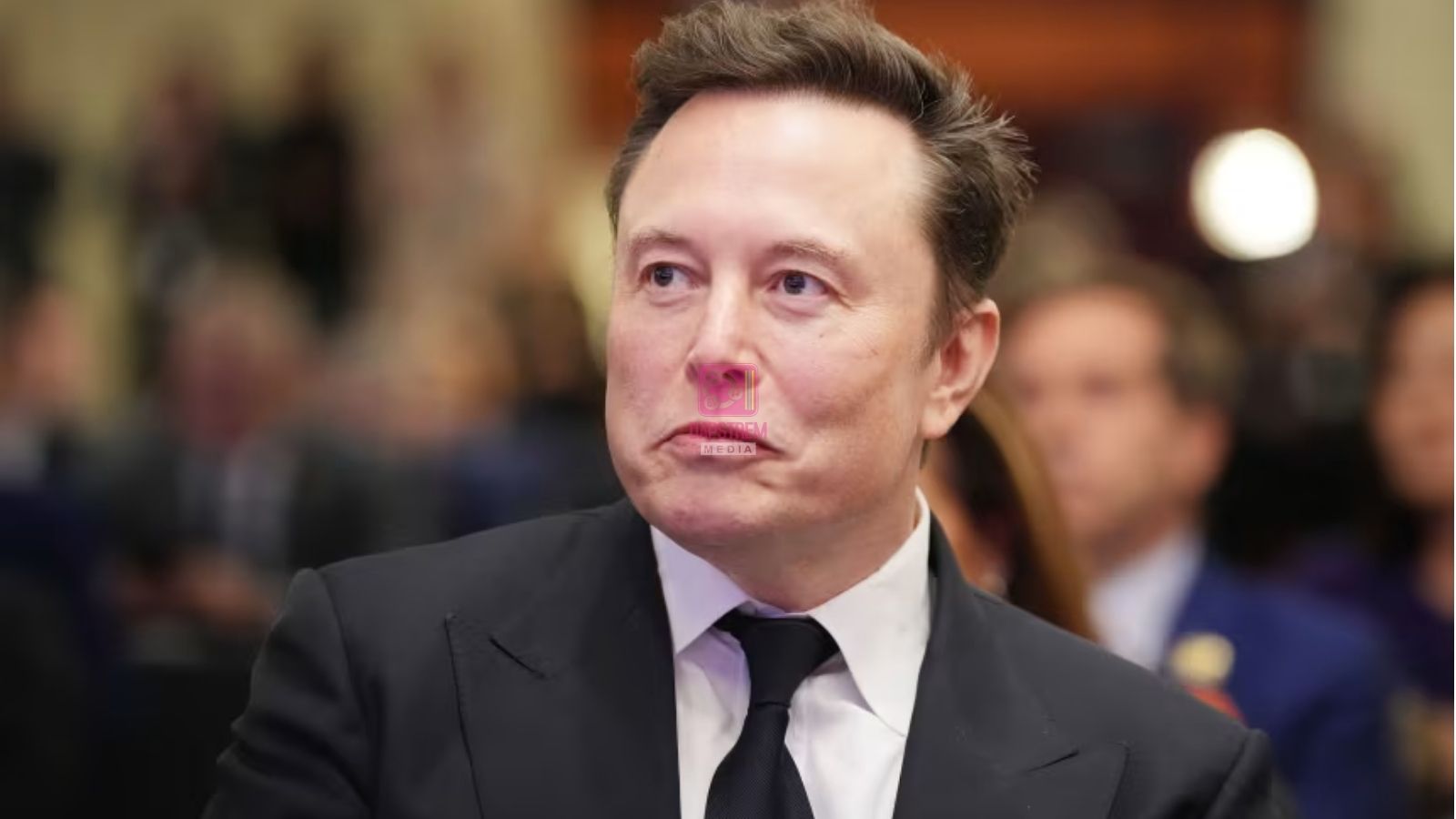
Elon Musk and the Trillion-Dollar Dream: The Extraordinary Rise of a Man Who Reshaped Entire Industries
Few modern entrepreneurs have inspired as much admiration, controversy, and debate as Elon Musk. To his supporters, he is a visionary who dared to tackle problems others considered impossible. To his critics, he is an unpredictable billionaire whose ambitions often outpace reality. Yet whether one loves him or loathes him, one fact is difficult to dispute: few individuals in history have influenced as many industries within a single lifetime.
A viral social media post recently declared that Musk had become the world’s first trillionaire, a milestone that, if achieved, would represent a level of personal wealth never before seen in human history. While that claim remains unconfirmed, the fascination surrounding it reflects a broader truth. Elon Musk’s journey from an ambitious immigrant entrepreneur to the wealthiest person on the planet is one of the most remarkable business stories of the modern era.
Born in Pretoria, South Africa, in 1971, Musk showed signs of exceptional curiosity and determination from an early age. By his own account, childhood was far from easy. He has spoken openly about being bullied at school and feeling like an outsider. Rather than discouraging him, those experiences seemed to push him further into books, computers, and science fiction, developing an obsession with technology and the future.
As a young adult, Musk left South Africa and moved to North America with little more than ambition and the belief that he could build something meaningful. After studying in Canada and later at the University of Pennsylvania in the United States, he decided to forgo a traditional career path and instead dive headfirst into the world of entrepreneurship during the early internet boom.
His first major venture was Zip2, a software company he co-founded with his brother, Kimbal Musk. The company provided online business directories and mapping services for newspapers at a time when the internet was still in its infancy. Building the business was anything but glamorous. Stories from those early days describe Elon and his brother sleeping in the office, showering at public facilities, and working around the clock to keep the startup alive.
The gamble paid off. In 1999, computer manufacturer Compaq acquired Zip2 for roughly $300 million, giving Musk his first significant fortune. Many entrepreneurs would have retired comfortably after such a windfall, but Musk viewed it merely as a stepping stone.
He reinvested much of his earnings into a new venture called X.com, an online financial services company that would eventually evolve into PayPal. At a time when many people were still hesitant to trust online transactions, PayPal pioneered a simpler and safer way to send money digitally. The platform would go on to revolutionize online payments and become one of the defining technology companies of the internet age.
When eBay acquired PayPal in 2002 for $1.5 billion in stock, Musk emerged with hundreds of millions of dollars. Once again, he could have walked away and enjoyed unimaginable wealth. Instead, he made a decision that many at the time considered reckless: he poured much of his fortune into two extremely risky ventures—Tesla and SpaceX.
In the early 2000s, the idea of electric vehicles replacing traditional gasoline-powered cars was widely dismissed. Major automakers had experimented with EVs before, only to abandon them because of high costs and limited consumer interest. Critics argued that no startup could survive in an industry dominated by automotive giants.
Tesla challenged that assumption. Rather than producing a cheap economy car, the company began with a premium electric sports car that proved EVs could be exciting, fast, and desirable. Over time, Tesla expanded into mass-market vehicles and helped shift the entire global automotive industry toward electrification. Today, virtually every major car manufacturer is investing billions of dollars in electric vehicle technology, a transformation many analysts credit in large part to Tesla’s success.
At the same time, Musk was chasing an even bigger dream: making humanity a multi-planetary species. Through SpaceX, he sought to reduce the cost of space travel and eventually establish a human presence on Mars. The company faced repeated rocket failures during its early years, each explosion drawing headlines and skepticism. Experts questioned whether a private company could ever compete with established aerospace contractors.
By 2008, the pressure had reached a breaking point. Tesla was struggling financially, SpaceX had suffered multiple failed launches, and Musk later admitted that both companies were on the brink of collapse. Had one more critical event gone wrong, the empire he had spent years building might have disappeared overnight.
Instead, the opposite happened. SpaceX successfully launched its Falcon 1 rocket into orbit, becoming the first privately funded company to achieve the feat. Soon after, NASA awarded SpaceX a major contract, giving the company the financial lifeline it desperately needed. Tesla, meanwhile, secured new funding and continued developing its vehicle lineup.
The years that followed transformed Musk from a niche Silicon Valley entrepreneur into a global icon. SpaceX pioneered reusable rocket technology, achieving what many experts had long considered impractical. By recovering and reusing rocket boosters, the company dramatically reduced launch costs and reshaped the economics of the space industry. Today, reusable launches have become a defining feature of modern commercial spaceflight.
The company’s ambitions did not stop there. SpaceX launched Starlink, a satellite-based internet network designed to provide high-speed connectivity to remote and underserved areas around the world. Millions of users now rely on the service, and it has played an important role in emergency communications and regions where traditional internet infrastructure is limited.
Tesla’s growth was equally extraordinary. What was once viewed as a risky startup evolved into one of the world’s most valuable automakers. Beyond selling cars, Tesla accelerated investment in battery technology, renewable energy storage, and the broader transition toward cleaner energy solutions.
Musk’s influence expanded again in 2022 when he acquired Twitter in a deal worth approximately $44 billion. The purchase was met with widespread skepticism. Advertisers pulled back spending, analysts questioned the platform’s future, and critics predicted the acquisition would become one of the costliest mistakes in technology history.
Musk responded by implementing sweeping changes, including significant workforce reductions, new subscription models, and eventually rebranding the platform as X. The vision, according to Musk, was to transform the social media platform into an “everything app” that could integrate communication, payments, entertainment, and artificial intelligence. While opinions remain deeply divided over the success of those changes, there is little doubt that X continues to be one of the world’s most influential digital platforms.
Artificial intelligence has become Musk’s latest frontier. Through his company xAI, he has entered the increasingly competitive race to develop advanced AI systems. His involvement has added another layer to a career already defined by ventures spanning internet software, financial technology, automotive manufacturing, renewable energy, aerospace engineering, satellite communications, social media, and artificial intelligence.
Perhaps the most striking aspect of Musk’s story is not the wealth he has accumulated but the scale of the risks he has repeatedly taken. Unlike many billionaires who inherited fortunes or built success within a single industry, Musk consistently reinvested enormous portions of his personal wealth into highly uncertain projects. On multiple occasions, those bets came close to wiping him out financially.
His supporters argue that this willingness to risk failure is precisely what sets him apart. They point to his relentless work ethic, stories of sleeping on factory floors, and his refusal to abandon projects after public setbacks. To them, Musk represents the idea that innovation often requires ignoring conventional wisdom and enduring years of criticism before achieving success.
His detractors, however, argue that his leadership style can be erratic and that his public statements and management decisions sometimes create unnecessary controversy. They question whether the mythology surrounding Musk overshadows the contributions of the thousands of engineers, designers, and employees who have helped build his companies.
Yet even critics generally acknowledge that his ventures have accelerated changes that were already underway. Electric vehicles have gone mainstream faster than many predicted. Private companies now play a central role in space exploration. Satellite internet has expanded into new markets, and the competition to build advanced AI systems has intensified.
The viral narrative of Musk becoming the world’s first trillionaire captures more than a fascination with money. It reflects society’s growing interest in individuals who can shape the future through technology and entrepreneurship. Whether or not he ultimately reaches that financial milestone, Elon Musk’s legacy will likely be measured less by the number of zeros attached to his fortune and more by the industries he transformed.
History often remembers those who challenge accepted limits. The internet revolution had its pioneers, the industrial revolution had its inventors, and the digital age has produced its own generation of builders. Elon Musk’s career, with all its triumphs and controversies, stands as one of the defining stories of that era.
Love him or hate him, few people have left fingerprints on as many sectors of the global economy. From digital payments and electric vehicles to reusable rockets, satellite internet, social media, and artificial intelligence, Musk has repeatedly attempted to turn ideas once considered impossible into reality. And perhaps that is why his story continues to captivate millions around the world: it is not simply a tale about wealth, but about ambition, resilience, and the relentless pursuit of a future that others could barely imagine.