DP Kindiki and CS Murkomen Launch Cherangany Hills Ecosystem Restoration in Elgeyo Marakwet
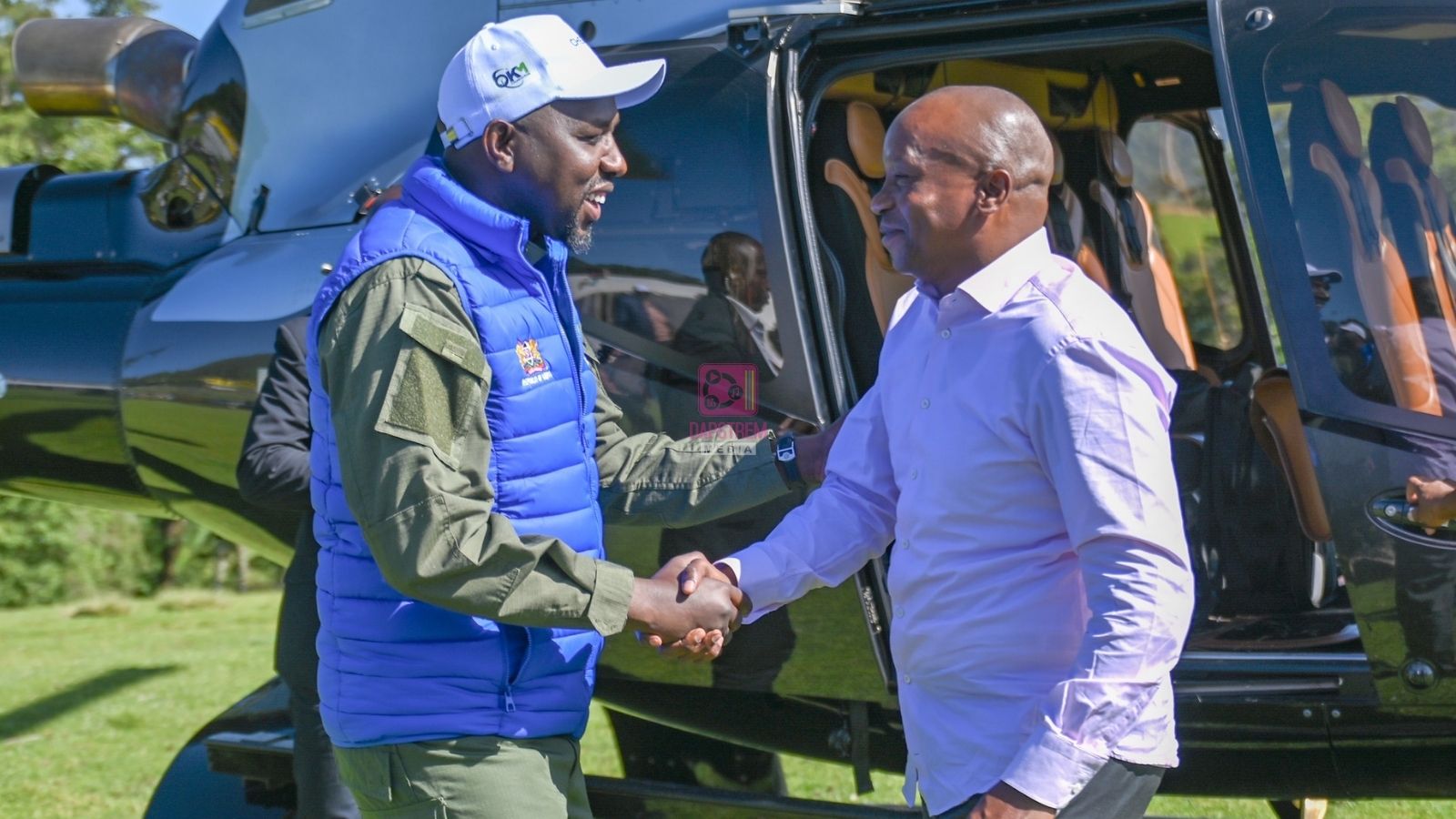
The Deputy President Prof. Kithure Kindiki joined Roads and Transport Cabinet Secretary Kipchumba Murkomen in Elgeyo Marakwet County for the official launch of the Cherangany Hills Ecosystem Restoration for Livelihood Improvement, Sustainability and Harmony programme, a flagship environmental and socio-economic initiative aimed at restoring one of Kenya’s most important but increasingly fragile water towers.
The event, which brought together national and county leaders, environmental stakeholders, community representatives, and conservation partners, marked a renewed push by the government to address long-standing ecological degradation in the Cherangany Hills ecosystem. The initiative is not only focused on environmental rehabilitation but also on improving livelihoods, strengthening community resilience, and reducing resource-based conflicts that have occasionally emerged in the region due to pressure on land, forests, and water resources.
Speaking during the launch, Deputy President Kithure Kindiki emphasized that the restoration of Kenya’s water towers is central to the country’s long-term economic stability. He noted that ecosystems such as Cherangany Hills play a critical role in sustaining agriculture, hydropower generation, domestic water supply, and biodiversity conservation. According to him, without deliberate and sustained restoration efforts, the country risks facing worsening water scarcity, reduced agricultural productivity, and increased environmental conflicts.
He reiterated that the government’s development agenda under the Bottom-Up Economic Transformation Framework is closely tied to environmental sustainability. The Deputy President stressed that restoring degraded landscapes is not a standalone environmental exercise but a national economic priority. He pointed out that communities living around the Cherangany Hills are both the custodians and the primary beneficiaries of the ecosystem, and therefore must be placed at the centre of restoration efforts.
On his part, Cabinet Secretary Kipchumba Murkomen highlighted the importance of integrating infrastructure development with environmental conservation. He noted that road networks and other development projects in the region must be implemented in a way that does not compromise the integrity of the ecosystem. Murkomen further stressed that sustainable development requires a balance between improving connectivity and preserving natural resources that support livelihoods.
The Cherangany Hills ecosystem, located in the larger Rift Valley region, is one of Kenya’s five major water towers alongside Mount Kenya, the Aberdare Range, Mau Forest Complex, and Mount Elgon. It is the source of several rivers that feed into key water basins supporting millions of people across the country. Over the years, however, the area has faced significant environmental pressure driven by deforestation, encroachment, unsustainable agricultural practices, and the effects of climate change. These challenges have contributed to reduced water flow in rivers, loss of biodiversity, and increased vulnerability of local communities.
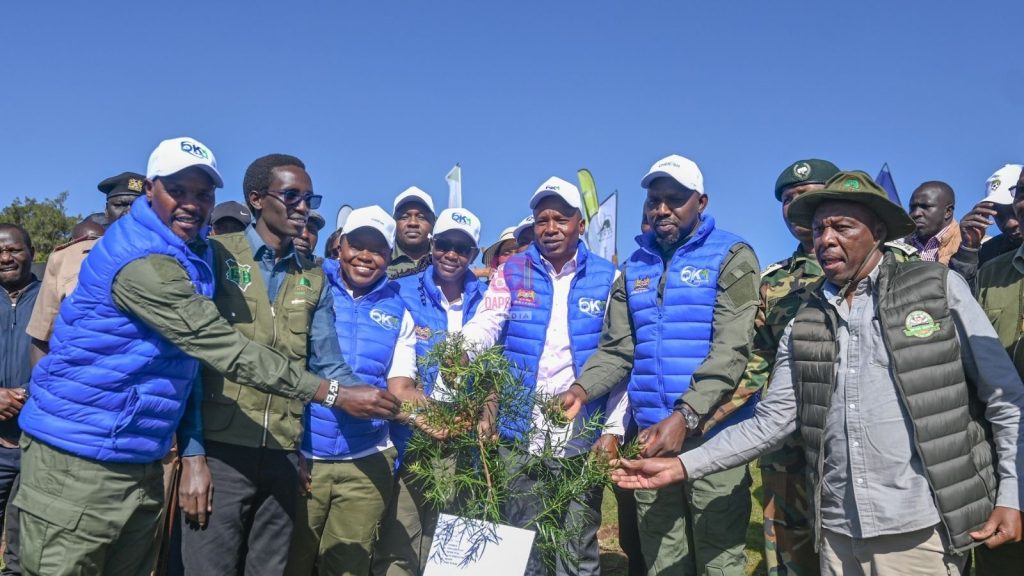
The restoration programme launched in Elgeyo Marakwet seeks to reverse these trends through a multi-sectoral approach. It includes large-scale tree planting, protection and regeneration of degraded forest areas, promotion of climate-smart agriculture, and the introduction of sustainable land-use practices. In addition, the initiative aims to strengthen community forest associations and empower local residents to actively participate in conservation activities while benefiting economically from ecosystem-based enterprises such as beekeeping, ecotourism, and sustainable forestry.
A key component of the programme is livelihood improvement. Government officials noted that conservation efforts cannot succeed without addressing the economic needs of communities living around forest ecosystems. As such, the initiative incorporates alternative income-generating activities to reduce dependence on forest exploitation. This includes training programmes, access to green financing, and partnerships with development agencies to support small and medium-sized environmental enterprises.
Security and peacebuilding also feature prominently in the restoration agenda. The government acknowledged that competition over natural resources has, at times, contributed to tensions between communities in parts of the North Rift region. By restoring the ecosystem and creating shared economic opportunities, the programme is expected to reduce such conflicts and promote long-term harmony among neighbouring communities.
During the launch event, leaders also underscored the importance of collaboration between national and county governments. Elgeyo Marakwet County leadership was praised for its commitment to environmental conservation and for working closely with national agencies to implement restoration projects. Community elders and local conservation groups were also recognized for their ongoing efforts in protecting sections of the Cherangany Hills despite limited resources.
Environmental experts present at the event warned that the window for action is narrowing. They noted that climate change is accelerating the degradation of vital ecosystems, and without urgent intervention, the impacts could become irreversible. They called for sustained funding, strong enforcement of environmental laws, and continuous community engagement to ensure the success of the restoration programme.
The launch of the Cherangany Hills Ecosystem Restoration initiative represents a significant milestone in Kenya’s broader environmental policy direction. It reflects an increasing recognition that environmental conservation is inseparable from national development, food security, and social stability. By linking restoration with livelihood improvement and peacebuilding, the programme aims to create a holistic model of sustainable development that can be replicated in other water tower regions across the country.
As the event concluded, leaders reaffirmed their commitment to ensuring that the Cherangany Hills ecosystem is restored to its former ecological health. The message was clear: protecting Kenya’s natural heritage is not just a government responsibility, but a shared national duty that requires active participation from all sectors of society.