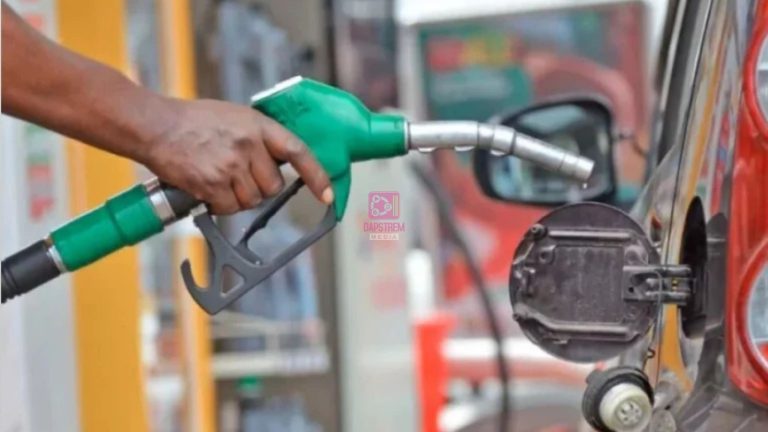

Eric Omondi leads dramatic fuel protest as Kenyans face rising pump prices and growing economic pressure amid worsening cost of living.
Comedian and activist Eric Omondi has once again sparked national debate after staging a dramatic protest against the rising cost of fuel in Kenya. In a bold and symbolic demonstration, he was seen pulling hundreds of empty jerricans along a busy road, a visual statement meant to highlight the pain many Kenyans are currently experiencing due to soaring petrol and diesel prices.
The protest comes at a time when fuel costs in the country have hit record levels, with super petrol rising sharply and diesel recording even steeper increases in recent EPRA reviews. The latest adjustments have pushed transport costs higher, triggering a ripple effect across nearly every sector of the economy—from food prices to public transport fares and even basic household goods. For many Kenyans, fuel is no longer just a utility expense; it has become one of the most pressing daily financial burdens.
Eric Omondi, known for blending comedy with social activism, used the empty jerricans as a powerful symbol of frustration. In his demonstration, the jerricans represented not just fuel shortages, but also the empty pockets of ordinary citizens who are struggling to keep up with the rising cost of living. His message was clear: the fuel crisis is not just an economic issue, but a social one affecting millions of lives across the country.
Following the roadside protest, Omondi went further to call on Kenyans to join him in a larger demonstration planned for Monday in the Nairobi Central Business District. He urged citizens to carry empty jerricans as they converge in the capital, a move intended to draw attention from policymakers and force urgent discussions around fuel pricing, taxation, and government intervention.
The timing of the protest is significant. Kenya has been grappling with persistent increases in fuel prices, largely driven by global oil market fluctuations, a weakening shilling, and high import costs. Since the country imports all of its refined petroleum products, any changes in international crude oil prices immediately affect local pump prices. In recent months, global supply disruptions, geopolitical tensions, and currency depreciation have all combined to push fuel costs upward.
Diesel, in particular, has become a major concern for transporters and businesses. As the main fuel used in public transport, trucking, agriculture, and manufacturing, any increase in diesel prices directly translates into higher costs of goods and services. Matatu operators have already begun adjusting fares in many parts of the country, while freight companies are passing on the increased costs to consumers. This has created a chain reaction that is felt even in remote villages where food and basic commodities are transported from urban centers.
For ordinary Kenyans, the impact is immediate and painful. Households are now paying more for food, transport, and electricity-related costs, as fuel also affects power generation and distribution. Many families are being forced to make difficult decisions about daily expenses, often cutting back on essentials to cope with rising prices. Small businesses, especially those dependent on transport or fuel-powered equipment, are also feeling the strain, with some reporting reduced profits or even closures.
Against this backdrop, Eric Omondi’s protest taps into a growing sense of public frustration. Over the years, he has positioned himself as a voice for ordinary citizens, frequently using street demonstrations, comedy skits, and public stunts to highlight social and economic challenges. His activism has often attracted both praise and criticism, with supporters viewing him as a bold advocate for accountability, while critics question whether such methods lead to real policy change.
The empty jerrican protest has already sparked widespread discussion online, with many Kenyans expressing support for the message behind it. Social media platforms have been flooded with reactions from motorists, boda boda riders, and commuters who say they feel the direct impact of fuel price increases every day. Others have used the moment to call for more structured dialogue between the government, regulators, and citizens to address the root causes of the crisis.
At the heart of the issue is the structure of fuel pricing in Kenya. The Energy and Petroleum Regulatory Authority (EPRA) reviews pump prices every month based on international crude oil prices, import costs, exchange rates, and various taxes and levies. While this system is designed to reflect global market realities, critics argue that the tax burden on fuel remains too high, making Kenyan pump prices among the most expensive in the region.
The government has occasionally intervened through subsidies to cushion consumers, but such measures are often temporary and dependent on fiscal space. With competing national priorities such as debt repayment, infrastructure development, and social programs, maintaining long-term fuel subsidies has proven difficult.
As the debate continues, the broader question remains how Kenya can achieve energy stability in a volatile global market. Experts have long called for increased investment in renewable energy, local refining capacity, and alternative transport systems such as electric mobility to reduce dependence on imported petroleum products. However, such transitions take time and significant investment, meaning that in the short term, Kenyans are likely to continue feeling the pressure at the pump.
Eric Omondi’s protest, whether viewed as symbolic activism or political theatre, has once again placed the fuel crisis at the center of national conversation. His call for a mass demonstration in Nairobi CBD is expected to test the level of public frustration and could potentially attract large crowds if the current economic conditions persist.
Kenyans continue to watch closely as fuel prices remain high and the cost of living continues to rise. Whether the protest leads to policy change or simply adds to the ongoing debate, it has undeniably highlighted one reality: fuel is no longer just a commodity in Kenya—it is a defining factor in the daily struggle of millions of citizens trying to make ends meet.