
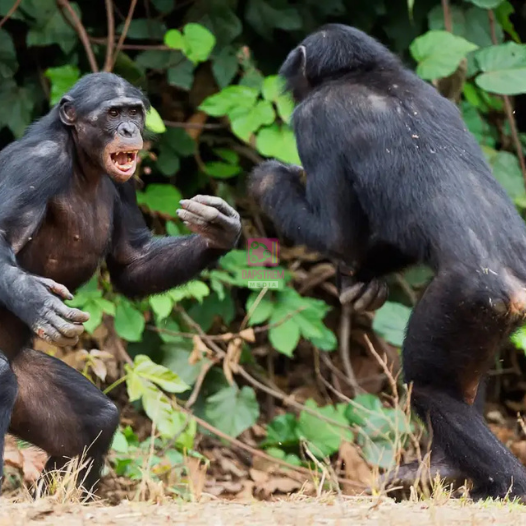
Uganda’s Chimpanzee “Civil War” Shocks Scientists — But Experts Say the Violent Clashes Are Natural and Not New
Deep within the lush forests of Uganda, a dramatic and unsettling story has been unfolding—one that has captured the attention of scientists, conservationists, and nature enthusiasts around the world. Reports of what has been described as a “chimpanzee civil war” have sparked curiosity and concern, painting a picture of intense conflict among one of humanity’s closest relatives. Yet while the phrase may sound alarming, experts say such behavior, though striking, is neither entirely new nor unnatural.
The events have been observed in protected forest regions such as Kibale National Park and Budongo Forest Reserve, areas renowned for their dense chimpanzee populations and long-term research programs. Here, groups of chimpanzees—known as communities—have reportedly engaged in prolonged and sometimes violent clashes, leading to injuries, disappearances, and even deaths among rival factions. To human observers, the scale and intensity of these confrontations resemble organized conflict, hence the dramatic label of a “civil war.”
Chimpanzees, however, are not strangers to aggression. In fact, decades of research within the field of Primatology have documented similar patterns of territorial disputes and intergroup violence. These animals live in complex social systems where hierarchy, alliances, and access to resources play critical roles. When groups grow too large or resources such as food become scarce, tensions can rise, sometimes spilling over into coordinated attacks on neighboring communities.
Historical observations support this. One of the most famous examples occurred during the Gombe Chimpanzee War, studied by renowned primatologist Jane Goodall. In that case, a single chimpanzee community split into two rival factions, which then engaged in a brutal, years-long conflict that ultimately led to the near-elimination of one group. The parallels between that event and the current situation in Uganda have led many scientists to view the recent clashes not as an anomaly, but as part of a broader pattern of chimpanzee behavior.
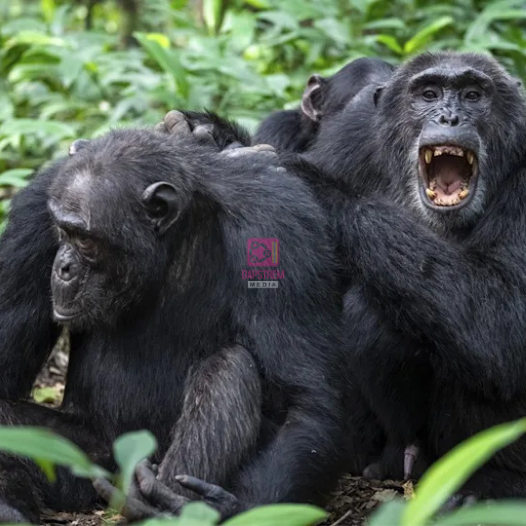
Ugandan authorities and wildlife experts have also weighed in, urging the public to avoid sensational interpretations. Officials associated with the Uganda Wildlife Authority have emphasized that while the reports may sound dramatic, such conflicts are a natural part of chimpanzee social dynamics. According to their statements, the so-called “civil war” reflects internal competition and territorial defense rather than any abnormal or human-like breakdown of society.
Still, the scale and persistence of the current clashes have raised important questions. Scientists are closely studying whether environmental pressures could be intensifying the situation. Habitat loss, human encroachment, and climate-related changes may be placing additional stress on chimpanzee communities, forcing them into closer contact and increasing competition over shrinking resources. In forests where space was once abundant, overlapping territories can lead to more frequent encounters—and, consequently, more conflict.
Another factor under consideration is population density. In protected areas like Kibale, conservation success has allowed chimpanzee numbers to grow. While this is a positive outcome, it also means that more individuals must share the same environment, potentially straining social structures. Younger males, in particular, may challenge established hierarchies, forming alliances that can destabilize entire groups.
Despite the violence, it is important to understand that chimpanzee societies are not defined solely by conflict. They are also capable of cooperation, empathy, and complex communication. Grooming rituals, food sharing, and strong maternal bonds are all central to their daily lives. The same intelligence that allows them to form alliances in conflict also enables them to build lasting social connections.
For researchers, these events offer a rare and valuable opportunity to deepen our understanding of primate behavior—and, by extension, aspects of human evolution. Chimpanzees share nearly 98% of their DNA with humans, and their social dynamics can provide insights into the origins of cooperation, competition, and even warfare in human societies. Observing how and why these conflicts arise may help scientists better understand the delicate balance between peace and aggression in social species.
At the same time, conservationists stress the importance of protecting these habitats to ensure that such behaviors remain part of a natural ecological process rather than a response to human-induced pressures. Preserving forest ecosystems not only safeguards chimpanzees but also maintains the environmental balance that supports countless other species.
Ultimately, the so-called chimpanzee “civil war” in Uganda is a reminder of the complexity of the natural world. While the term may evoke images of chaos and disorder, the reality is far more nuanced. These conflicts, though intense, are rooted in survival, adaptation, and the intricate social lives of one of our closest relatives. As Uganda has rightly pointed out, the phenomenon may sound alarming—but it is not new, nor is it unnatural.
What remains crucial is how humanity responds: with curiosity, respect, and a commitment to preserving the environments where such remarkable—and sometimes unsettling—stories continue to unfold.